
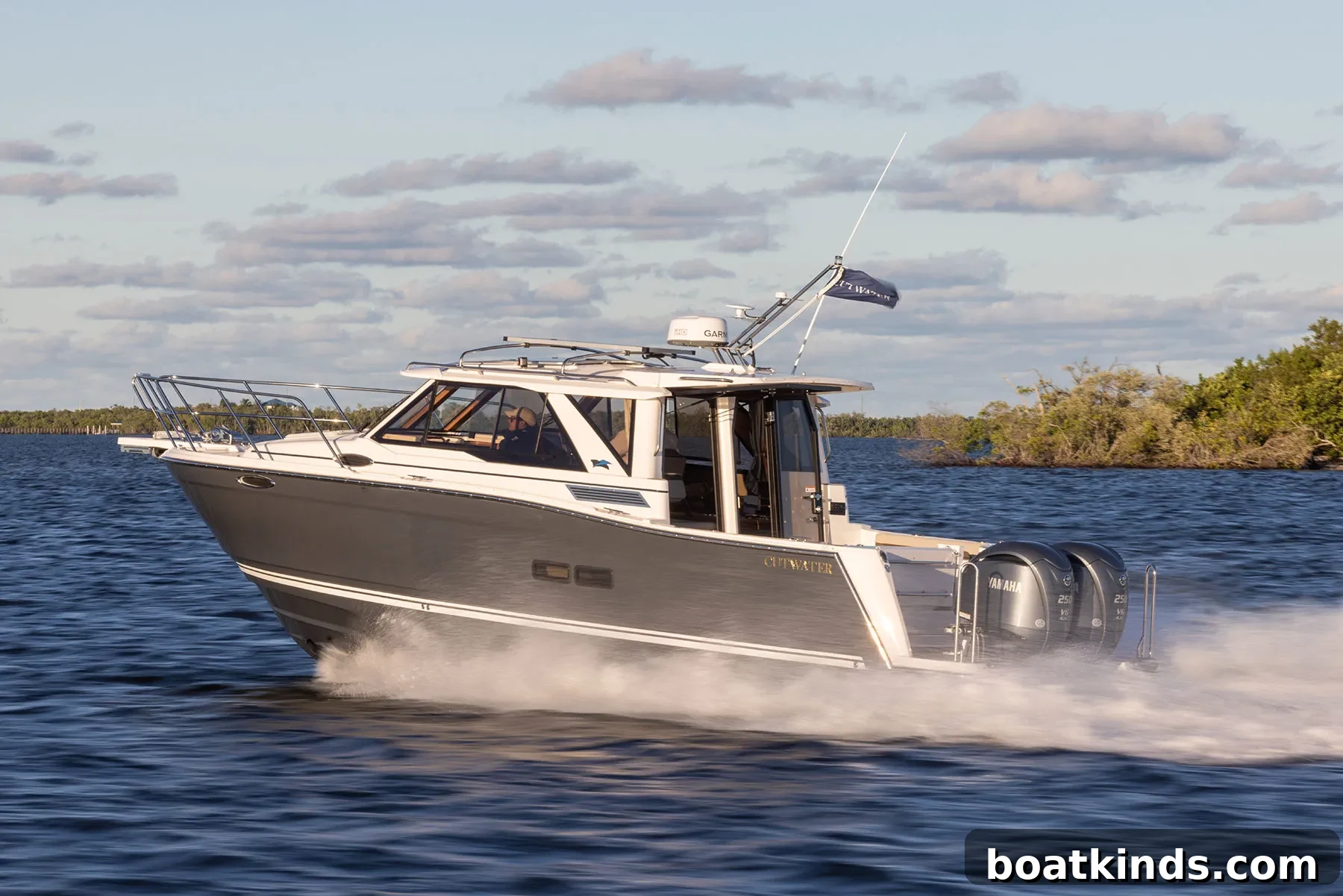
As consolidation reshapes the marine industry, family-owned boatbuilders are increasingly rare. Cutwater Boats of Auburn, Washington, is one of those exceptions — a company still guided by the Livingston family and their long history in boatbuilding.
Dave Livingston, chairman of Fluid Motion LLC, is the founder and a driving force behind Cutwater. A marine veteran with more than five decades in the industry, he holds multiple patents and has been honored by the Northwest Marine Trade Association. His son, John Livingston, serves as president and CEO; John grew up in the business and has extensive experience in marine engineering and design. Together they launched Cutwater in 2011 after acquiring Ranger Tugs, aiming to blend traditional Pacific Northwest styling with technical advances learned from East Coast builders. Their objective: create versatile boats that perform well as both fishing platforms and family cruisers.
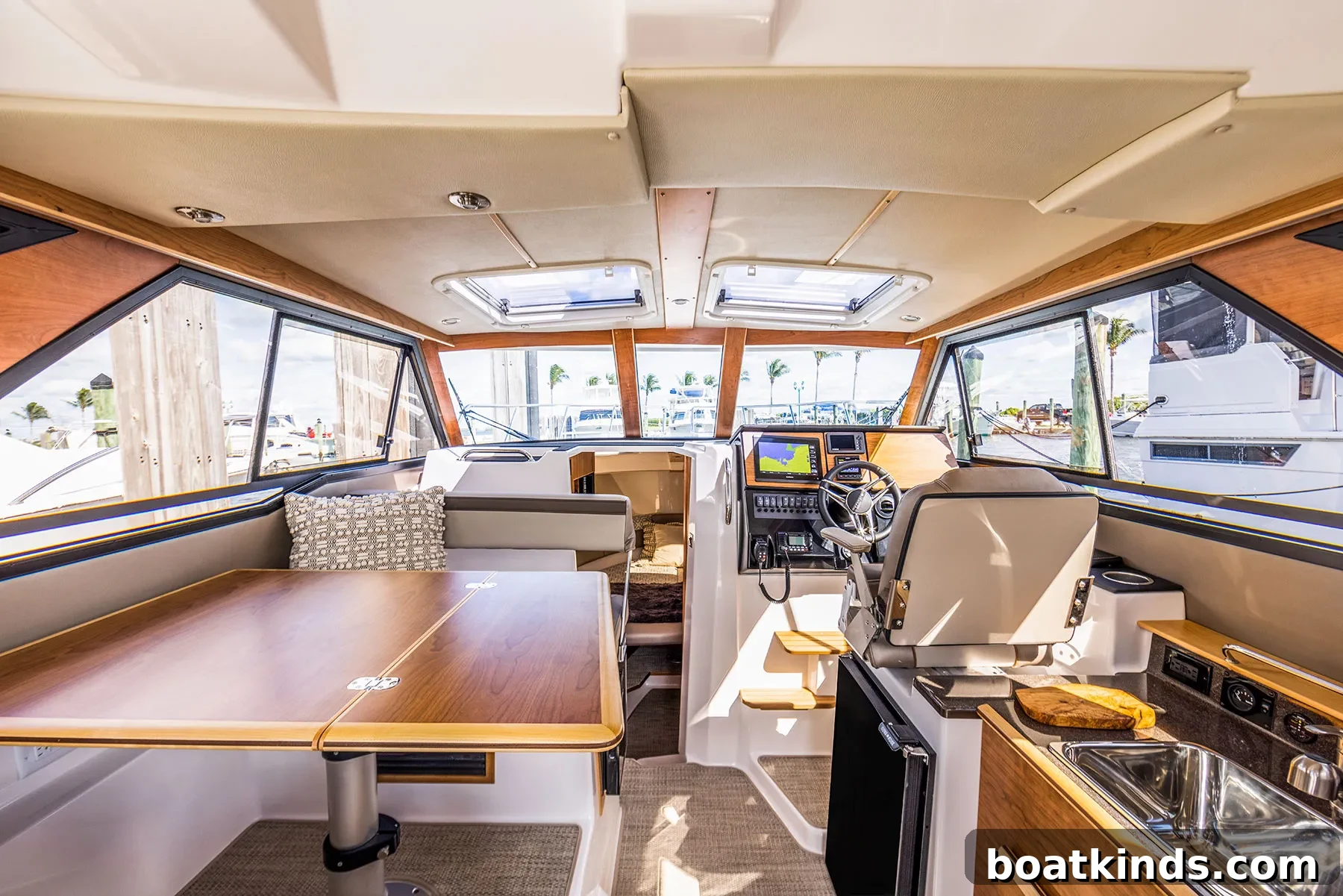
The Cutwater C-288 Coupe continues that vision. Designed as an outboard-powered pocket cruiser, the C-288 replaces the diesel-powered C-28 and targets owners who prioritize trailering capability, efficiency and ease of maintenance. Outboard propulsion has become popular among Cutwater buyers, particularly those who trailer their boats or prefer easier engine access and reduced onboard vibration.
Compared with its predecessor, the C-288 is wider, boasting a full 10-foot beam that produces a more spacious cockpit and interior. Despite that added room, the model retains classic Northwest cues: high freeboard, an upright bow, a clean sheer line and prominent cabin glazing that give the boat strong presence and good interior light. The cockpit is laid out with anglers in mind — integrated rod holders, a dedicated baitwell and ample deck space — yet it doubles as a comfortable social area with seating for up to six passengers.
The hardtop on the cabin includes a solar panel to help keep the house batteries charged while away from shore power, and a sport rack is built in to carry paddleboards or kayaks. Inside the salon, forward-facing helm-adjacent seats and a full galley provide a livable environment: a stovetop, microwave, storage cabinetry and a wine cooler make day cruising and short cruises convenient. For overnighting, the layout includes a private master stateroom with its own head and shower, giving owners a true overnight capability in a compact hull.
The starboard-side helm centers around a Garmin electronics suite with chartplotter, autopilot, sonar and radar, while electronic throttle and shift controls manage twin Yamaha F250 outboards. Those engines are mounted on Cutwater’s Clear Path engine platform, which extends aft to preserve unimpeded access to the swim platform and boarding areas.
Underway, the C-288 uses a stepped hull — a hallmark of Cutwater models — paired with the Livingstons’ patented Laminar Flow Interruptors (LIF). LIF consists of a cluster of small molded dimples in the forward running surface between strakes. The design is intended to reduce surface friction and refine water flow in a way similar to how dimples on a golf ball reduce air resistance. According to the builder, the system yields smoother, more positive cornering, reduced bow rise when accelerating onto plane and improved fuel efficiency.
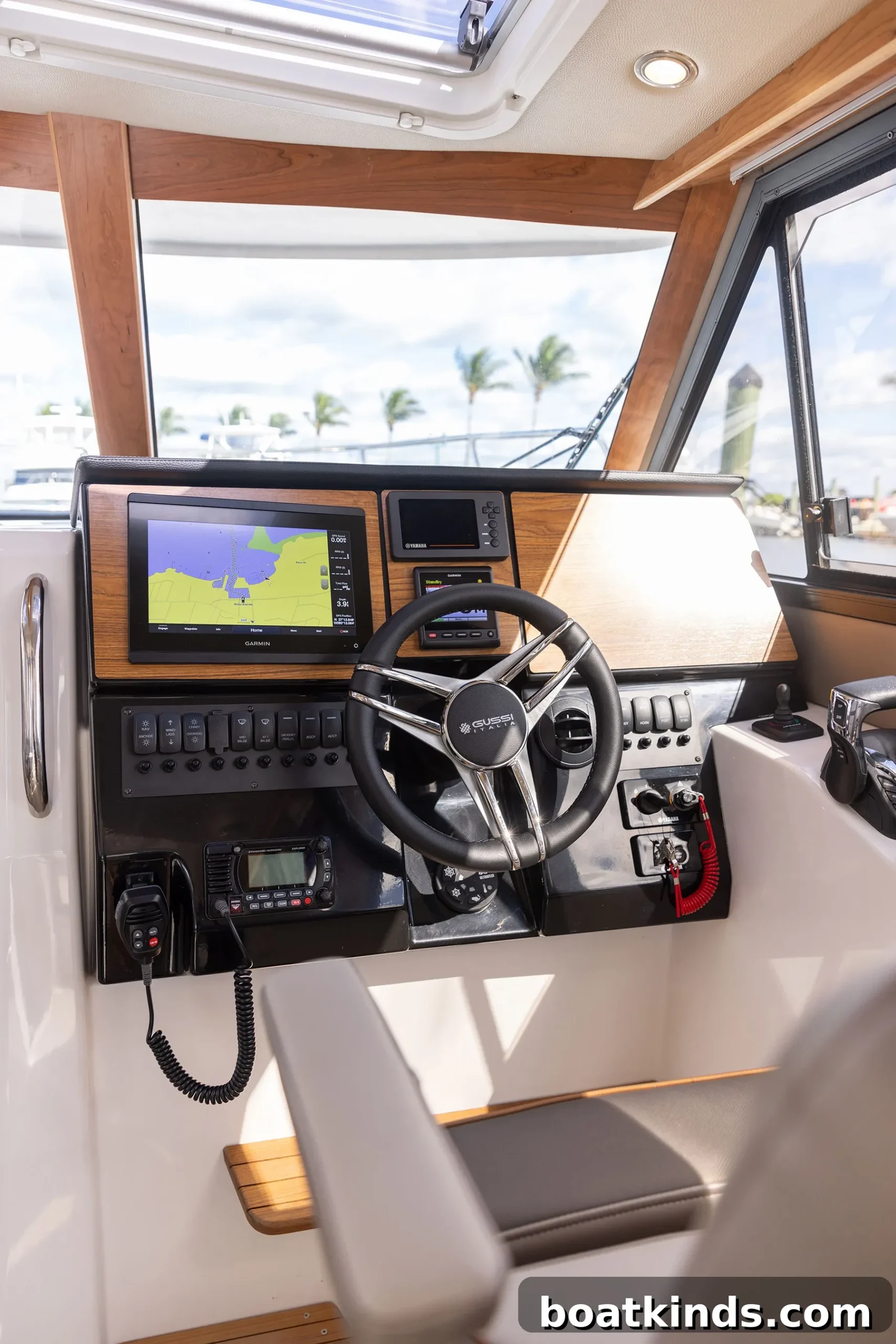
Cutwater offers the C-288 Coupe in two primary trims. The Northwest Edition ($299,937) is aimed at cooler-climate owners who do not require air conditioning, while the Luxury model ($314,937) adds reverse-cycle air conditioning and a lithium-ion battery upgrade that supports an inverter for off-grid AC capability when shore power is unavailable. Both versions come well equipped from the factory with only a short options list, positioning the C-288 as a turnkey choice for active families and anglers seeking a compact yet capable cruiser designed by a family with deep marine roots.
Specifications
LOA: 32’6”
Beam: 10’0”
Draft: 2’8”
Displacement: 48,000 lbs.
Fuel Capacity: 200 gals.
Water Capacity: 41 gals.
Power: (2) Yamaha F250 outboards
Price: $299,937
This article was originally published in the February 2022 issue.