
Why Lake Champlain Is an Ideal Summer Cruise Alternative
It’s summer on the East Coast: hot, humid and prime boating season. Many skippers instinctively think of New England’s coastal towns for summer cruising, but if you want cooler air, clear freshwater and fewer crowds, consider Lake Champlain. This long, narrow lake between New York and Vermont offers line-of-sight piloting, protected anchorages, charming towns and fresh water—a refreshing contrast to New England’s fog, lobster pots, large tidal swings and strong currents.
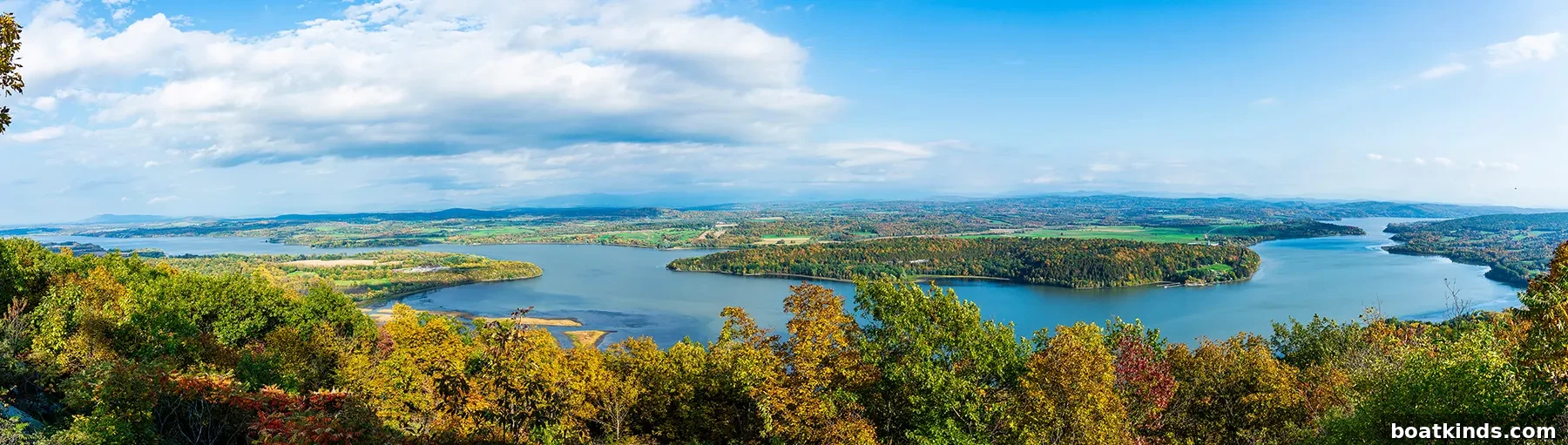
Lake Champlain lies between the Adirondack Mountains to the west and Vermont’s Green Mountains to the east. At about 120 miles long and up to 10 miles wide, it’s the sixth-largest freshwater lake in the United States. The lake is commonly divided into five regions—South, Broad, Malletts Bay, the Inland Sea and Missisquoi Bay—with Broad and Malletts being especially popular. Burlington, Vermont—one of the lake’s liveliest waterfront towns—sits at a latitude similar to Bar Harbor, Maine, so you can expect comfortable summer days and cool evenings.
For those departing from New York Harbor, the approach to Lake Champlain is an appealing alternative to an offshore run up the Atlantic. The journey begins with a scenic 160-mile cruise up the Hudson River to Troy, New York. Without offshore weather to contend with, the Hudson route is engaging and generally straightforward, with many interesting stops—historical sites, castles and riverside towns. Kingston is a convenient halfway stop, with marinas, a municipal dock, restaurants and the Hudson River Maritime Museum for family visits.
At Troy you’ll use the Federal Lock to enter the Champlain Canal, a 64-mile waterway that lifts vessels about 96 feet to the lake level. The canal’s 10-mph speed limit and twelve locks mean it’s sensible to allow a day and a half to cover this stretch. A pleasant stop about 27 miles from Troy is Schuyler Yacht Basin, a small marina where you can overnight and rent a car to visit Saratoga Springs—famous for its horse racing, history and dining.
Before you enter Lake Champlain proper, make sure any black-water discharge systems aboard are disabled or locked; most marinas on the lake provide pump-out services. Once you’re on the lake, you’ll find deep water, well-marked hazards and generally straightforward navigation. Summer breezes can create waves up to around four feet, but there are numerous sheltered anchorages along both the New York and Vermont shores.
Lake Champlain invites island-hopping: more than 70 islands dot its waters, many uninhabited and ideal for quiet anchorages, short hikes and solitude. Cole Island on the New York side is a pleasant starting point. Anchor with a bow anchor and secure a stern line to a tree or boulder to keep your boat facing the main channel and reduce rolling from passing traffic. Even the smallest islands offer room to stretch your legs and explore.
Cruisers accustomed to saltwater will notice several advantages to fresh-water boating. Without salt deposits, cleaning your boat is easier, and fresh water from your washdown can be used without concern. A quick swim and rinse with soap is a real treat. With negligible tidal change, you won’t worry about waking up aground: daily depths are stable, and many anchorages maintain deep water close to shore, making it simple to find shelter from sudden storms.
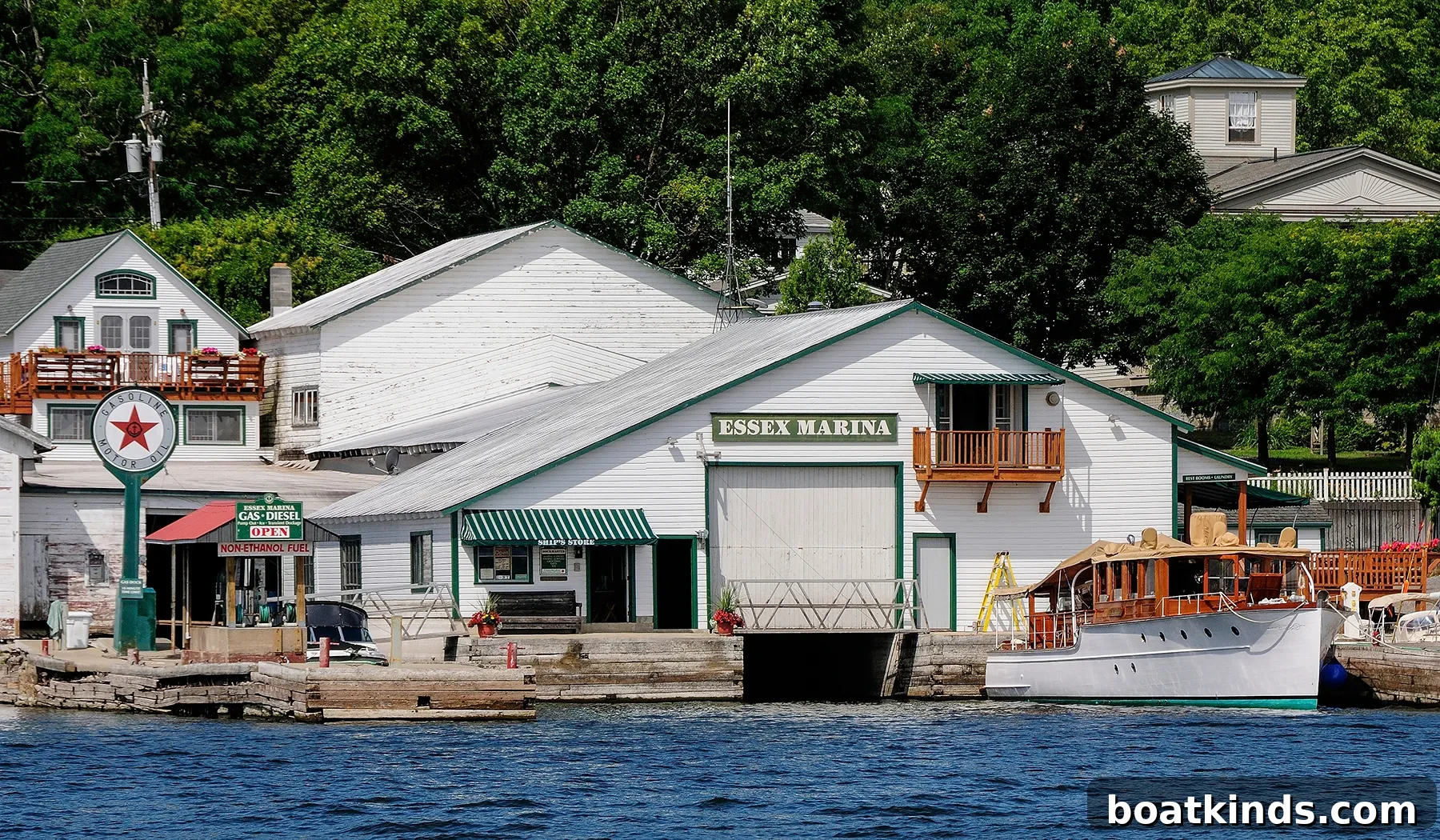
Onshore options abound. Westport Marina in Westport, New York, is a family-run, full-service facility with fuel, a casual restaurant and easy walking access to town for supplies. An Amtrak station nearby makes it convenient to bring visiting friends or swap crew. Public concerts on Westport’s town green offer a pleasant evening scene and a great view of the lake.
Further north, popular weekend anchorages such as Partridge and Barn Rock Harbors can fill up, so consider crossing to the Vermont side where Porter and Kingsland Bays often offer better protection. Point Bay Marina, tucked into Town Farm Bay, is a full-service option with floating docks, fuel, a Travelift and basic supplies.
If you want classic Vermont charm, visit Shelburne Shipyard on the west shore of Shelburne Bay. A working shipyard since the early 1800s, it now operates as a modern service facility. From your slip you can shuttle into Shelburne to explore Shelburne Farms, the Shelburne Museum and family attractions like the Vermont Teddy Bear Company. Shelburne Farms, set on 1,400 acres, offers farm tours, opportunities to milk a cow and a farm store selling local produce and dairy specialties.
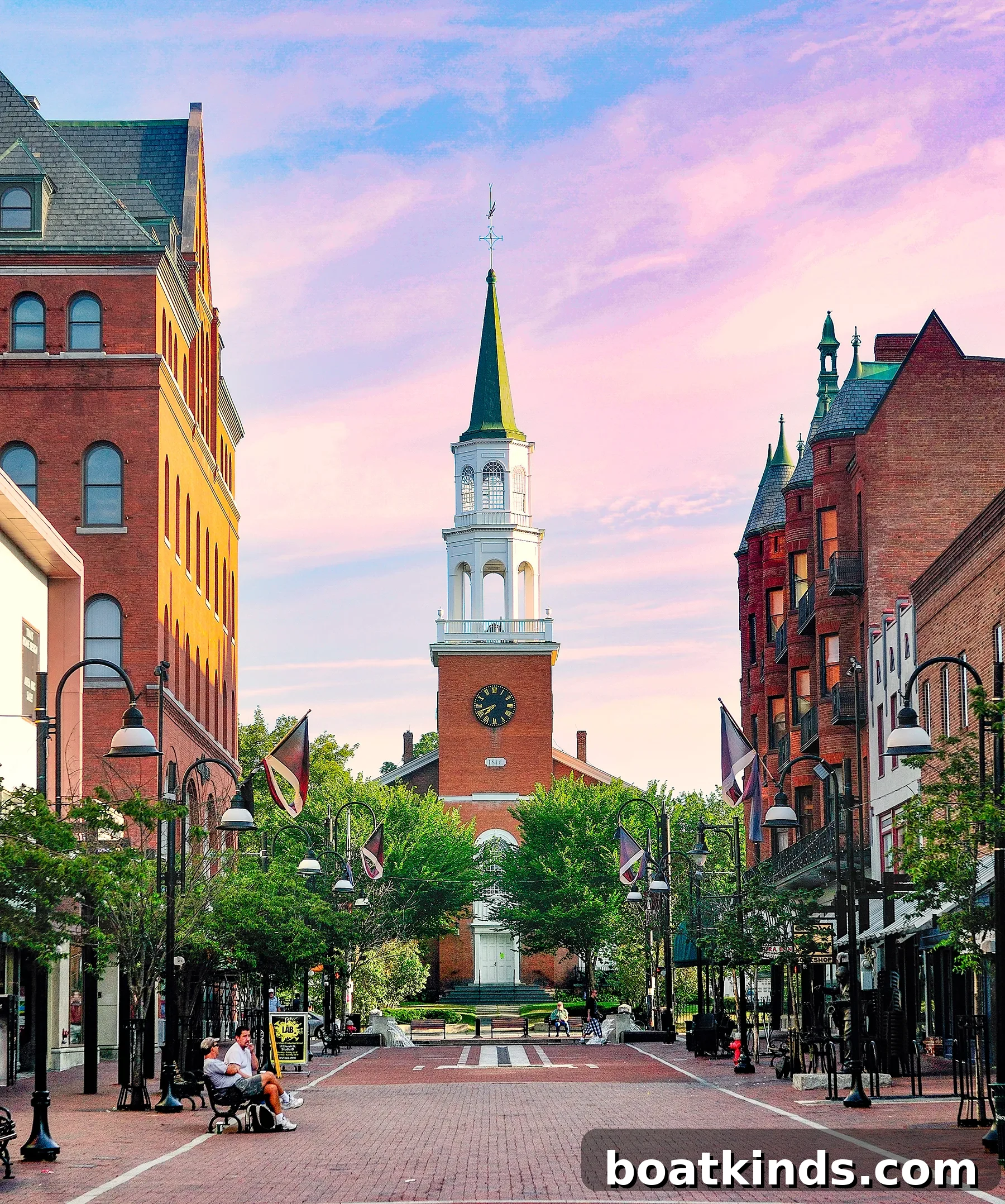
A short hop north brings you to Burlington, Vermont’s largest lakeside city. With a population around 45,000 and home to the University of Vermont, Burlington combines a lively downtown with easy marina access. From the Community Boathouse Marina or the newer Burlington Harbor Marina you can walk to Church Street Marketplace—an all-pedestrian strip filled with shops, bakeries, pubs and restaurants—and enjoy seasonal events like the Vermont Brewers Festival and the Lake Champlain Maritime Festival.
From Burlington you can quickly escape to Valcour Island for protected anchorages and varied shoreline—rocky outcrops, sandy beaches and hiking trails. Sloop Cove is a favorite with room for several boats; typical anchoring involves a bow anchor and a stern line ashore. Valcour Island also carries historical significance from the 1776 Battle of Valcour Island and is now part of New York’s Adirondack Park, protected from development.
With more time you can explore Mallets Bay, the Inland Sea and even continue north past Rouses Point into Canada (with proper documentation) via the Chambly Canal and the Richelieu River toward the St. Lawrence—opening options to Montreal or Quebec City. Whether you spend a week or a month, Lake Champlain’s blend of freshwater cruising, scenic shorelines and accessible towns makes it a destination many boaters return to again and again. No fog, no lobster pots, no large tidal swings—just straightforward navigation and plenty of summer charm.
This article was originally published in the August 2022 issue.