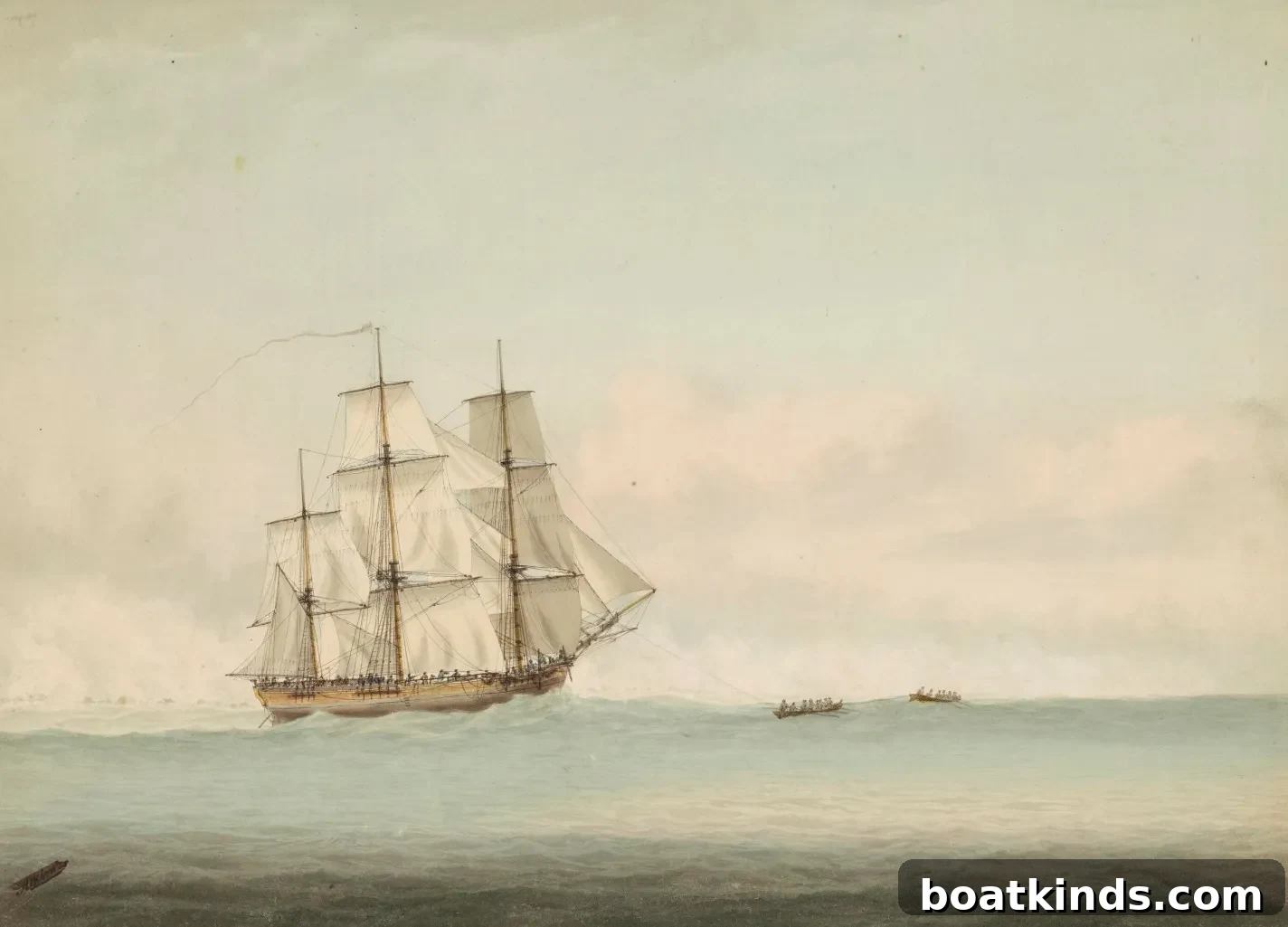
In February, a team of Australian maritime archaeologists announced that a deteriorating wreck off the coast of Rhode Island—recorded as RI 2394—was likely the famous HMB Endeavour, the ship James Cook commanded during his 1768 Pacific voyage. That declaration immediately provoked debate: Rhode Island archaeologists and independent experts contested the identification, arguing that the evidence available so far does not conclusively link the wreck to Cook’s vessel. The dispute highlights both the technical challenges of maritime archaeology and the powerful cultural meanings attached to historic shipwrecks.
RI 2394 remains an unresolved case. Part of the reason the ship’s identity may never be settled is the deteriorating condition of the remains. Reports indicate that the wreck is being extensively damaged by marine borers—commonly called shipworms—and other wood-eating organisms. These organisms can reduce wooden hulls to fragile, fragmentary states over decades and centuries, complicating efforts to recover material evidence such as original hull timbers, fastenings, or diagnostic construction features that would support a confident attribution.
The condition of the wreck has also sparked an ethical and practical debate about what, if anything, should be done. Some archaeologists and heritage advocates argue for intervention: careful excavation, documentation, and possibly partial recovery to preserve what remains and to allow scientific analysis that could prove or disprove the claim that this is the Endeavour. Opponents of intervention point to the high costs and technical difficulty of raising and conserving large, waterlogged timbers, and they caution that intrusive recovery can sometimes destroy context if not executed with rigorous planning and resources.
Into that practical debate has come a pointed public argument that connects historical memory and colonial legacy to conservation choices. Writer Sabrina Imbler, known for reporting on science and culture, has taken an opposing view: rather than mounting an expensive recovery effort to save the wreck, she suggests letting natural processes run their course and allowing the shipworms and other organisms to continue breaking down the structure. Her argument rests on two linked points. First, she contends that the wreck may already be so extensively consumed that meaningful recovery would be prohibitively expensive and yield little new information. Second, she raises moral objections tied to Captain Cook’s historical record, noting that Cook’s voyages had violent and deadly consequences for indigenous peoples across the Pacific and arguing that honoring his material legacy uncritically risks celebrating that history.
Imbler’s position has attracted attention because it reframes a conservation decision as a statement about which histories we choose to preserve and which we allow to pass. She writes, provocatively, that “who are we to take away a feast that has lasted for more than 250 years,” referring to the shipworms, and challenging the assumption that all historic artifacts deserve rescue regardless of their subjects. Supporters of intervention respond that maritime wrecks are nonrenewable cultural resources that can teach us about ship construction, trade networks, navigation, and daily life at sea—even when the named captain or voyage has a contested legacy. They argue that careful archaeological recovery can preserve evidence for study, public education, and reflection, including a candid accounting of colonial impacts.
Beyond the moral debate, practical considerations loom large. Raising a large 18th-century vessel or significant timbers involves specialized equipment, long-term conservation facilities to stabilize waterlogged wood, and multidisciplinary teams. Costs can run high, and success is never guaranteed—especially when timbers have been weakened by centuries of biological attack. Preservation in place, a strategy sometimes used to protect fragile wrecks without excavation, may also be difficult when biological degradation is active and accelerating.
The RI 2394 controversy thus sits at the intersection of maritime archaeology, conservation policy, public history, and ethics. Whether the wreck is ultimately identified as HMB Endeavour or remains an anonymous casualty of time and tide, the choices made now will reflect how communities value tangible links to a past that includes both exploration and violence. For archaeologists, conservators, and the public, the questions are practical—how to document and preserve what remains—and symbolic—whose stories are preserved, and on what terms.
As this debate continues, the wreck of RI 2394 will serve as a high-profile case study in balancing scientific inquiry, resource constraints, and ethical reflection when deciding the fate of maritime heritage threatened by natural decay. Regardless of the outcome, the discussions it provokes are likely to influence future decisions about preservation of shipwrecks, the interpretation of contested histories, and the responsibilities of those who steward the archaeological record.