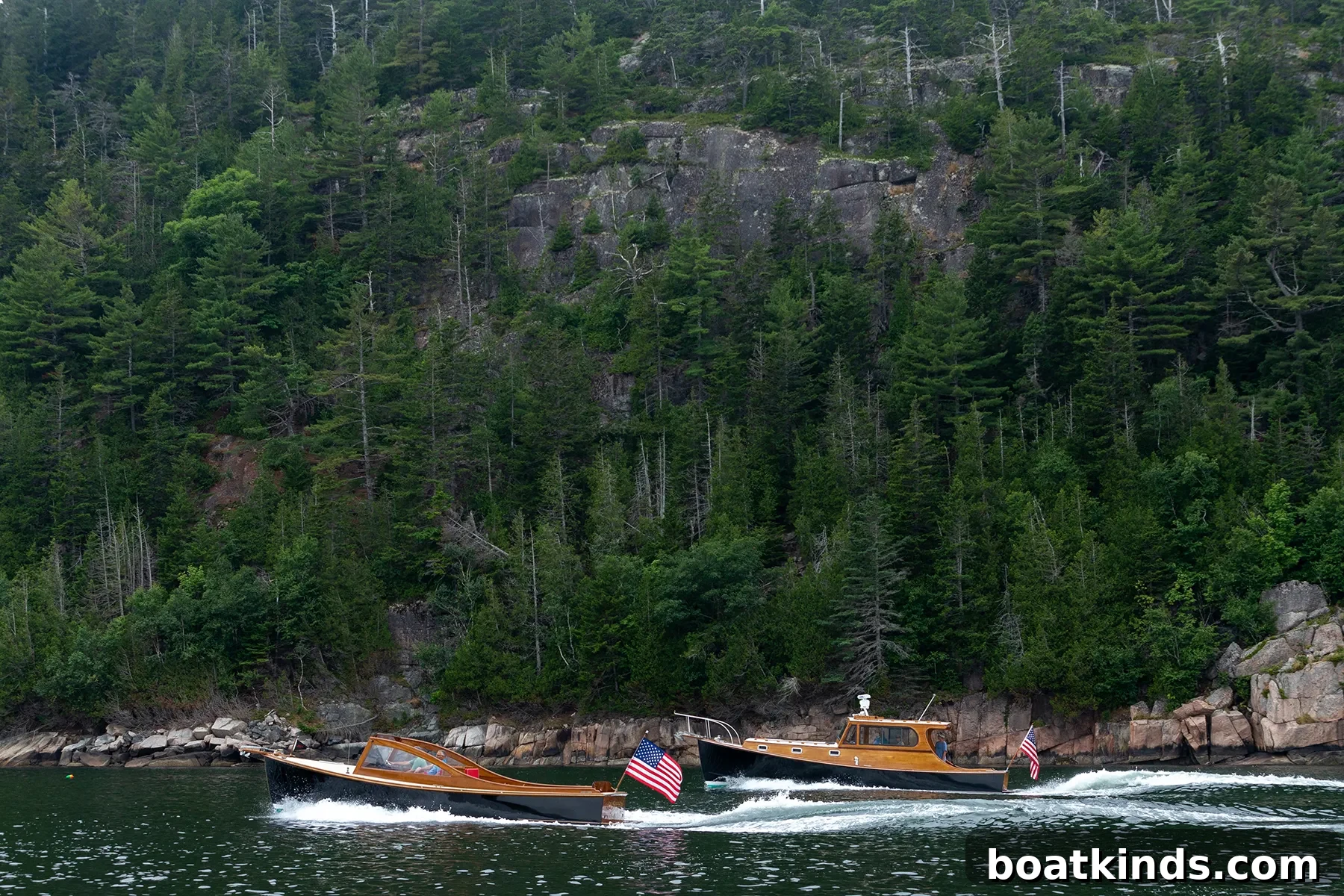
Since the early 1970s, Jock Williams has built hundreds of boats from his yard, John Williams Boat Company, on Mount Desert Island in Maine. This summer his team launched a Williams 28 Bass Boat called Sea Shepherds. Tied up at the boatyard’s dock on Somes Sound—a yard carved from an old stone quarry—the 28 blends seamlessly with the many lobster boats that work Maine waters.
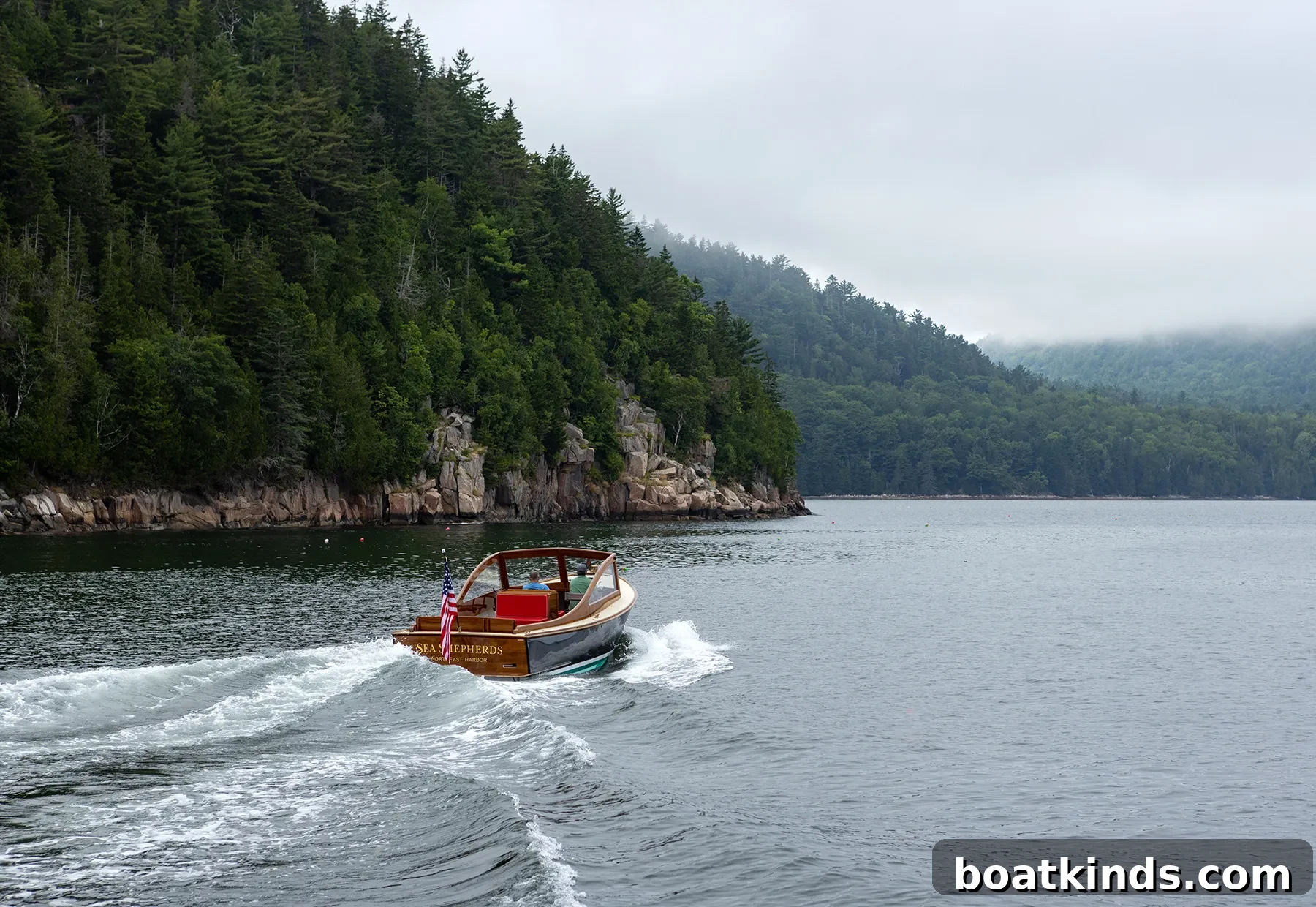
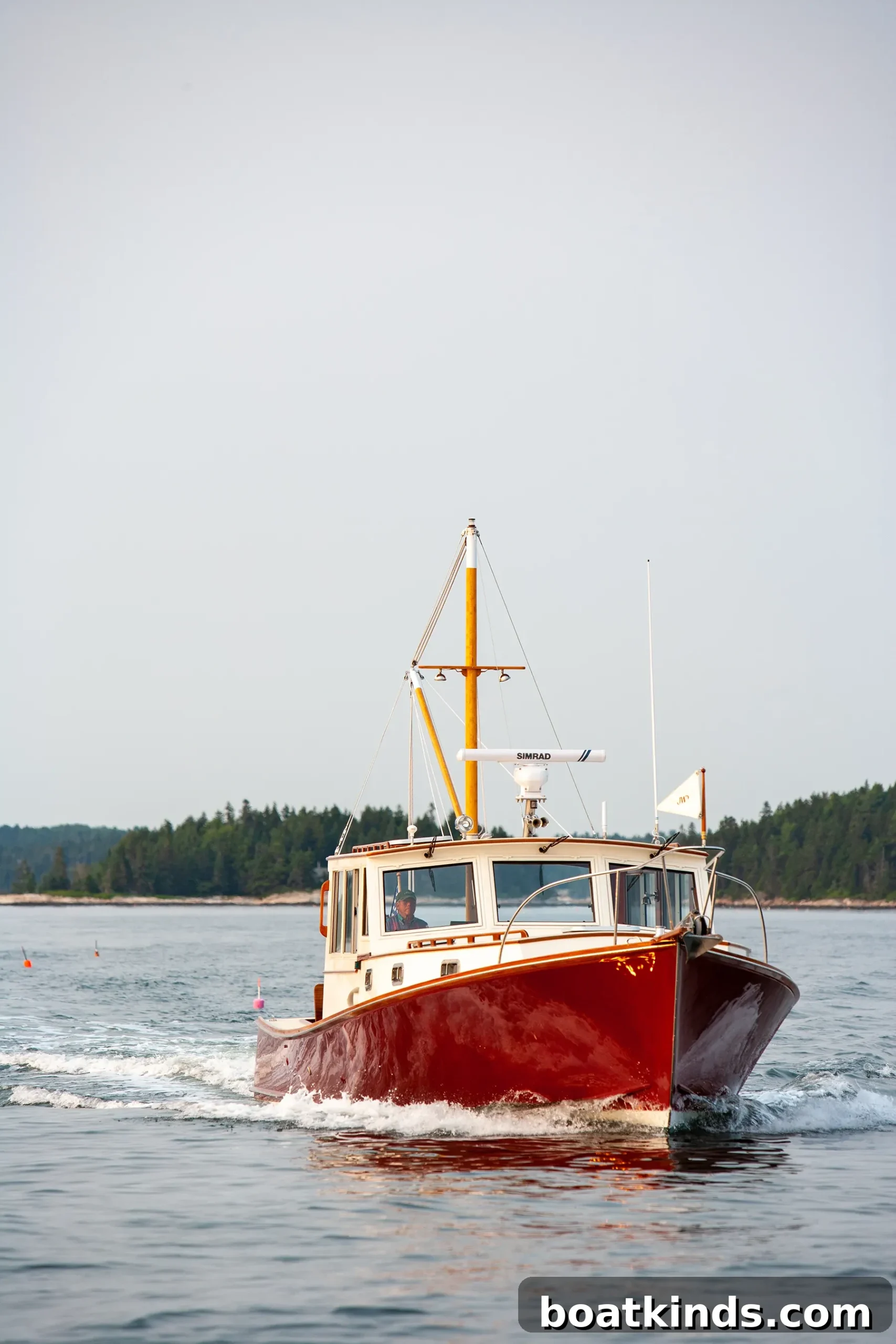
The hull of the Williams 28 is a Lyford Stanley design, and that connection is no accident. Over the past five decades, most of the boats Jock built were Stanley designs by Lyford Stanley, a native Mainer who made a name building wooden lobster boats on Mount Desert Island.
Jock himself came to Maine from away—he grew up in Englewood, New Jersey, across the Hudson River from New York City, where his father ran a knitwear company. His boating life began at 14, when he ran the new gas dock at Martha’s Vineyard Shipyard in Vineyard Haven. Sharing the job with his brother, Jock spent weekends sailing and working at regattas. Over eight summers he sailed in seven Bermuda races, skippering one of them.
In 1960 he sailed in a transatlantic race aboard Ondine, Sumner “Huey” Long’s 57-foot yawl, and that voyage opened doors. Visiting his brother in Europe, Jock also toured Paul Molich’s Danish boatyard and accepted an invitation to apprentice there. After finishing Colby College in 1962, attending Naval Officer Candidate School and serving on a converted fleet tug near Vietnam, Jock coached varsity sailing at the U.S. Naval Academy and helped create the Kennedy Cup, a collegiate regatta sailed in 44-foot Luders yawls.
When his Navy duty ended, Jock and his family flew to Denmark and he began work at Molich’s yard. There he worked on two varnished mahogany Sparkman & Stephens 36s and met Rod Stephens, who visited regularly. Unlike many apprentices, Jock rotated through every task—lofting, building frames and learning the complete boatbuilding process. Earning only $35 a week, he nonetheless called that year “plain pleasure.”
Back in the United States, Jock interviewed at several yards before Bob Hinckley asked him to run a new fiberglass shop at Hinckley in Manset, Maine. Promises of rising to general manager fell apart when Henry Hinckley returned and reorganized the shop. Disappointed, Jock quit, which led him toward a pivotal partnership.
Norma Stanley, who had worked with Jock at Hinckley, encouraged him to team up with her husband, Lyford Stanley. Lyford was largely self-taught but produced fast, well-built boats. In 1973 the two men began building fiberglass versions of Lyford’s wooden designs. Their early work started at Lyford’s shop in Bass Harbor, where they made a mold from a 36-foot lobster hull and finished the original wooden boat before moving to the mold-based production.
That first mold led to an order from Leon Pierce, a respected local line fisherman, and business grew quickly after Jock’s father bought water frontage at the old Hall Quarry on Somes Sound. The quarry location—once an industrial site that provided granite for major public buildings—became the boatyard where the Stanley 36 fiberglass hull gained a reputation.
Through the 1970s Jock and Lyford focused on building rugged lobster-boat hulls. Their method favored strength and seaworthiness over lightness and speed: a thick laminate that included a solid glass layer, foam, and additional heavy glass. The result was an almost indestructible hull with a fine entry and a flat runout that handled trap-work well and brought fishermen home safely.
In 1982 they built a 36-foot pleasure boat for the Milliken family and exhibited it in Annapolis. Customer requests led them to lengthen the hull by 36 inches, creating the Stanley 38. From there they expanded the line to pleasure boats and designed the Stanley 39, 42, and 44—boats used by yachtsmen, commercial fishermen and sportfishermen alike. Lyford also designed the Stanley 28, which Jock found made an excellent launch and a fast, dry cruiser capable of 28 knots.
Over time, service and maintenance became the company’s most reliable revenue stream. Lyford died in 2007 while working on a Stanley 42, and the 2008 economic downturn slowed new construction. The yard didn’t build another boat for about ten years until this summer’s Williams 28 Bass Boat, Sea Shepherds, which combines the Stanley 28 hull with design elements inspired by Crosby bass boats, notably a crowned deck and a forward-set windshield.
To demonstrate the new 28’s performance, Jock took me and general manager Jaime Weir for a run on Somes Sound. He showed how the boat turns within its own radius, how quiet the inboard is at full throttle, and how the tall teak windshield keeps the driver dry and maintains sightlines while standing. Building boats remains a hands-on, exacting endeavor for Jock: during construction he stayed in close contact with the crew via photos while wintering in Hawaii and insisted on changes until the boat met his standards.
Now in his eighties, Jock admits he’s tired. He reflects on the business he built over 50 years—nine buildings, two Travelifts and storage for hundreds of boats—and plans a heart-valve replacement. He says he won’t return to running the operation “tooth and nail,” preferring to slow down, enjoy the view and the small surprises of the harbor, like a seal feeding on pogies.
Even so, his energy lingers. When he spots his classic Stanley 36, Hokulani, his face lights up and he talks of taking her through European canals to Denmark. Jock Williams may be ready to step back, but his lifelong commitment to boatbuilding, seaworthy hulls and hands-on craftsmanship continues to shape the small but storied yard at Somes Sound.
This article was originally published in the December 2022 issue.