
Thompson Brothers: Iconic 1950s Wooden Runabouts and the Move to Fiberglass
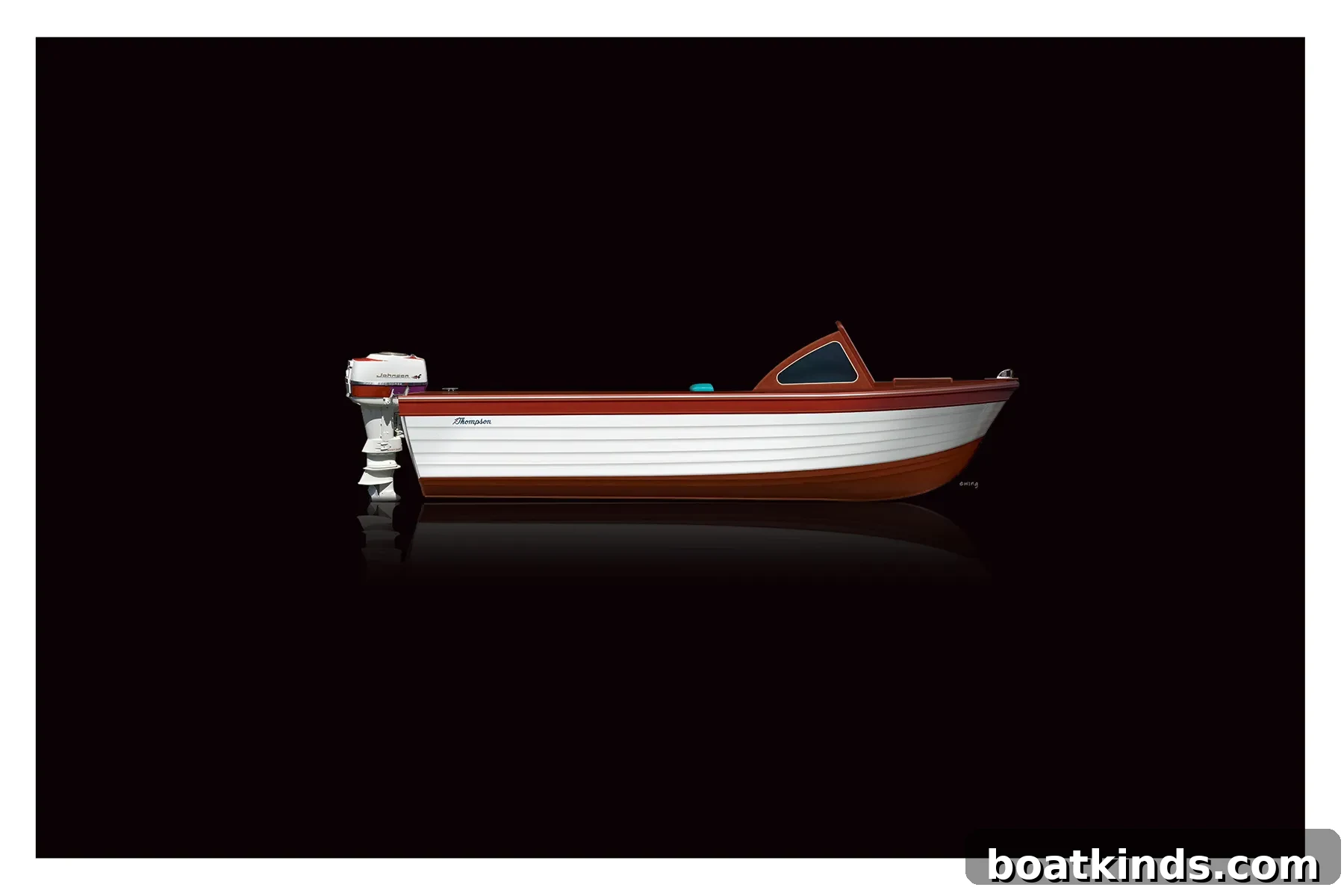
If you grew up boating in the 1950s, you likely remember the era of affordable wooden runabouts that became a common sight on lakes and rivers. Among the best-known names of that period was the Thompson Brothers Boat Manufacturing Company of Peshtigo, Wisconsin. Thompson earned a reputation for beautifully finished, well-built boats that combined classic style with practical performance.
By 1955, Thompson offered a full line of outboard-powered runabouts ranging from 12 to 16 feet. Two years later, in 1957, Thompson introduced model names that would come to define the brand: Sea Skiff, Sea Coaster and Sea Lancer. In the early 1960s the company expanded further with larger models called Off-Shores. Some of the larger boats, including selected Sea Lancers and Off-Shore models, were available with inboard powerplants and outboard-type drives produced by Volvo Penta — a manufacturer that introduced one of the first sterndrive systems to the market.
What set Thompson boats apart was not just their graceful lines and varnished finish but the underlying construction. Thompson’s runabouts were prized for their strength, rigidity, quick planing ability and relatively dry ride. A great deal of that performance came from a distinctive combination of traditional materials and meticulous engineering.
Most Thompson runabouts used a lapstrake-style hull, a construction method in which overlapping hull planks form the outer shell. Keels were made of multiple white oak planks, chosen for durability and structural integrity. The hull laps themselves were crafted from five-ply, 13/32-inch fir plywood faced on both sides with Philippine mahogany, and fastened every two inches with saltwater-resistant nuts and bolts. Inside, hulls were fully ribbed from stem to stern with 3/4-inch steam-bent white oak ribs mechanically fastened on 6-inch centers, creating a rigid, long-lasting framework. Transoms were laminated from two or more layers of solid Philippine mahogany, cross-laminated for greater strength. These construction details produced boats that could handle repeated use while retaining the fine finish that owners expected.
The visual appeal of a Thompson boat was part of its enduring charm. Foredecks and covering boards were finished in highly varnished Philippine mahogany plywood, providing a warm, classic look that appealed to enthusiasts of traditional wooden craft. That high-gloss varnish required regular maintenance, however, and by the 1950s and 1960s many boat buyers began to seek lower-maintenance alternatives.
The rise of fiberglass offered exactly that: less upkeep and a different manufacturing approach. Fiberglass technology was quickly adopted across the boating industry, both to sheath wooden hulls and to produce entirely plastic hulls that replicated successful wooden designs. Thompson responded to market demand without abandoning its heritage. By 1966 the company offered three fiberglass models, and by 1971 the lineup had expanded to six fiberglass options, although many boats continued to feature mahogany decks and trim that reflected the brand’s woodcraft roots.
Despite those efforts, Thompson Boats did not complete a full transition to an all-fiberglass lineup. Economic pressures and changing market conditions led to bankruptcy and the closing of the Peshtigo facility in 1980. A related company, Cruisers, Inc. of Oconto, Wisconsin — started in 1951 as a division of Thompson by another family member — successfully made the shift from wood to fiberglass in its cabin cruiser line and continues to operate.
Today, Thompson runabouts are valued by collectors and classic boat enthusiasts for their workmanship, distinctive lapstrake appearance and the warm look of varnished mahogany. Their legacy illustrates a pivotal period in recreational boating: the shift from traditional wooden construction to modern fiberglass production, driven by changing consumer expectations for maintenance, durability and convenience. Whether admired for their lines, their solid construction, or the era they represent, Thompson boats remain an important chapter in American boatbuilding history.
This article was originally published in the May 2023 issue.