
The newly named Taam Ja, a 900-foot-deep blue hole discovered off Mexico’s eastern coast, has captured scientific and public attention for its scale and geological significance. The name Taam Ja comes from the Mayan language and translates to “deep water,” a fitting description for a near-vertical marine sinkhole that plunges far below the surrounding seafloor. At roughly 900 feet in depth, Taam Ja ranks among the largest known blue holes in the world and is currently considered the second largest after the Sansha Yongle “Dragon Hole” in the South China Sea.
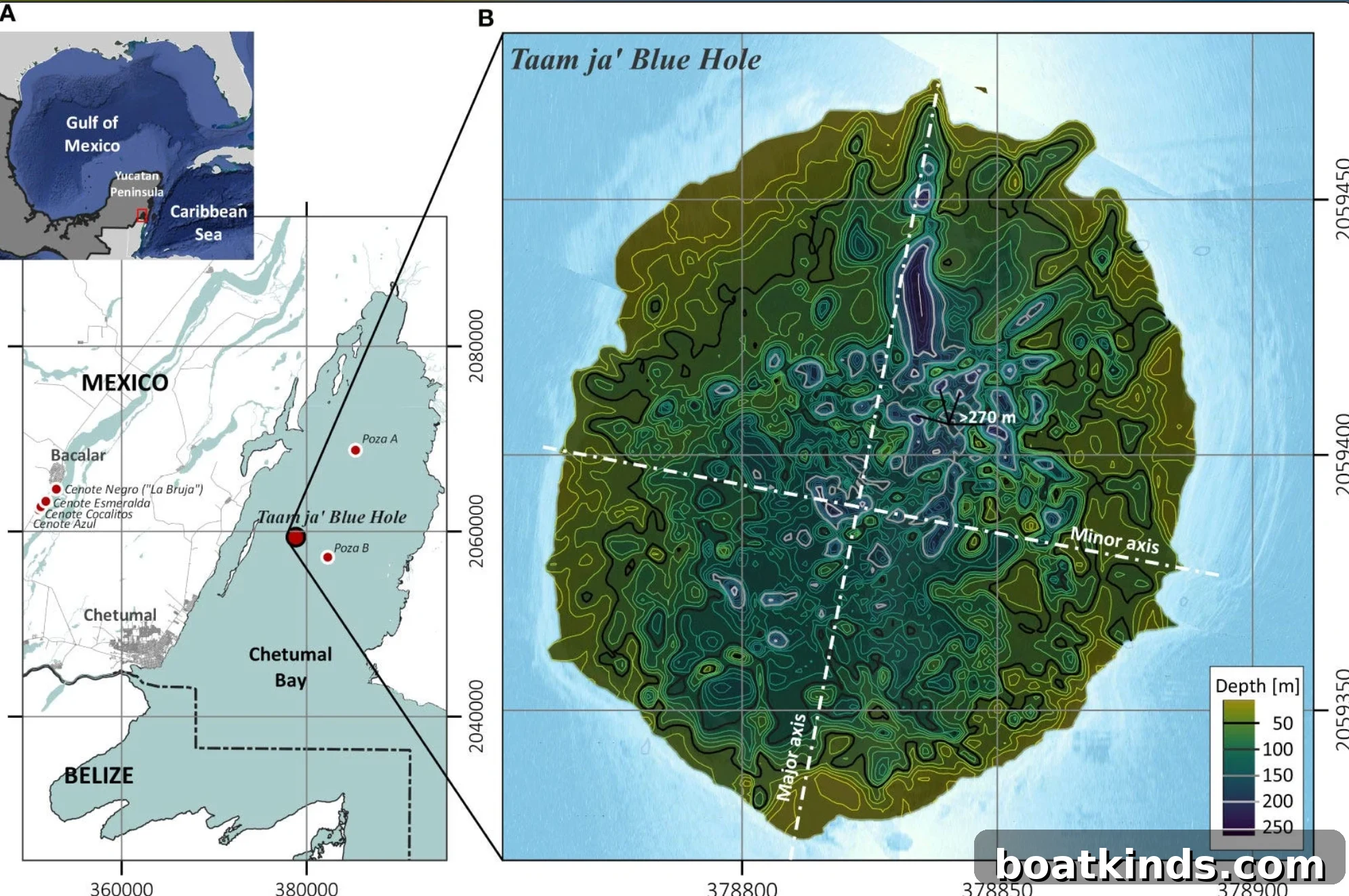
Taam Ja’s entrance is dramatic: the opening lies only about 15 feet below sea level and forms an almost perfect circular mouth that spans approximately 150,000 square feet. The vertical walls of the hole are steep—close to 80 degrees—creating a cavernous shaft that descends rapidly into darkness. These physical characteristics make Taam Ja both visually striking and scientifically interesting, since its geometry and depth influence the water circulation, chemistry, and the types of organisms that can survive within it.
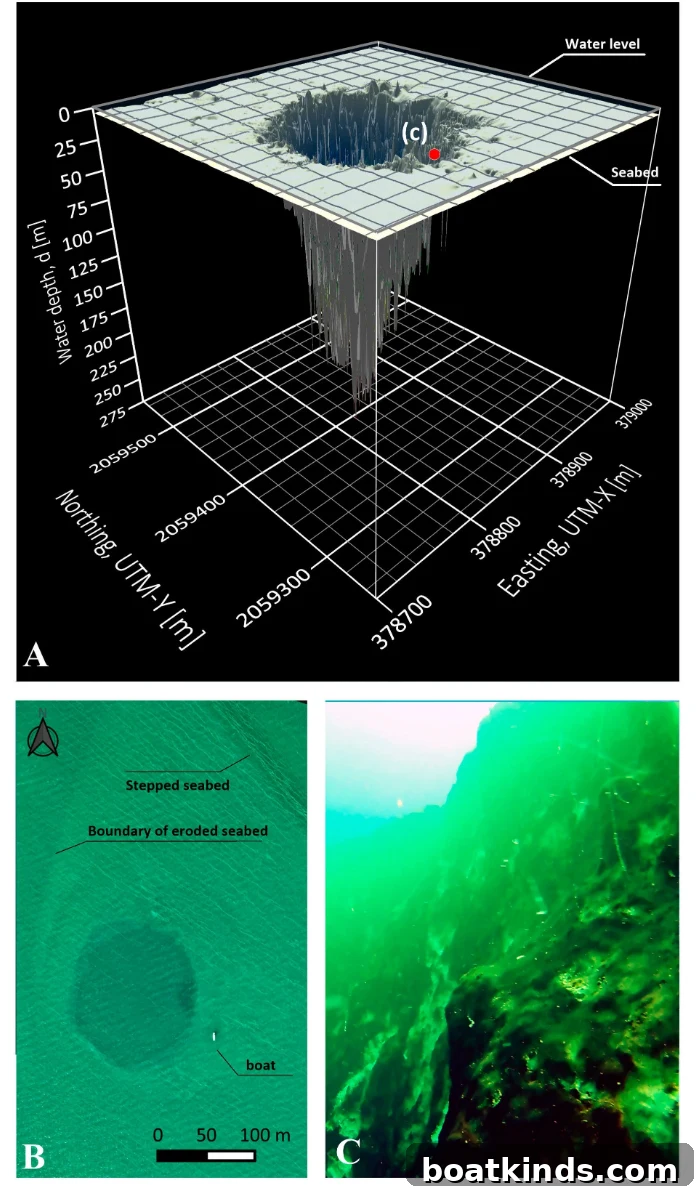
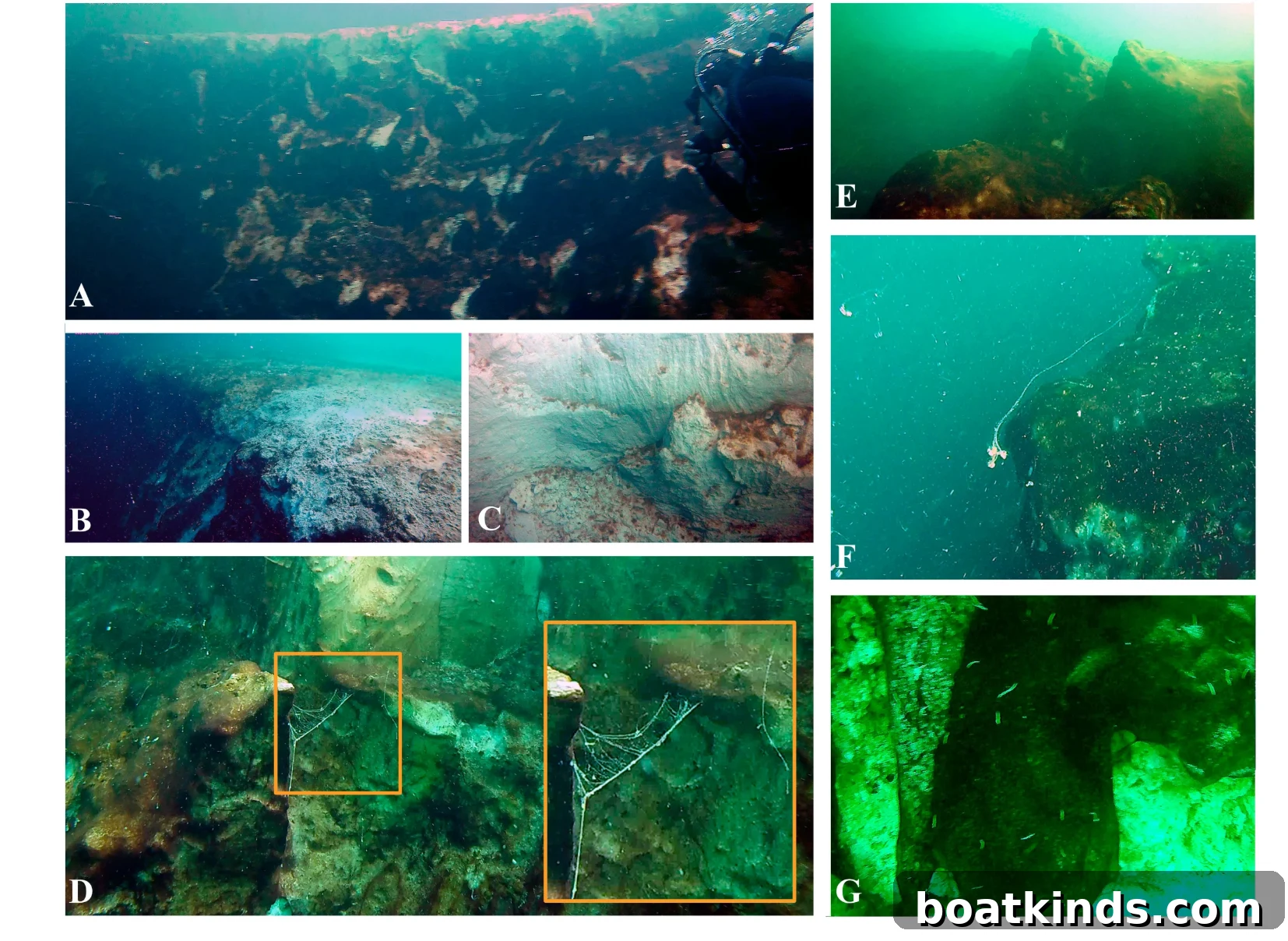
The hole came to light with the help of local knowledge. Two years ago a fisherman named Jesus Artemio guided researchers to the site, working with scientists from Campeche’s El Colegio de la Frontera Sur (ECOSUR) and Mexico City’s Consejo Nacional de Ciencia y Tecnología (National Council of Science and Technology, CONACYT). Following the initial discovery, researchers carried out systematic explorations using scuba diving teams, sonar mapping, and water sampling to build a detailed picture of the blue hole’s form and environment. Their findings were documented and published in the peer-reviewed journal Frontiers in Marine Science, contributing to the growing body of research on these rare geological features.
Blue holes like Taam Ja are valuable to science for several reasons. Their sheltered, stratified waters often contain layers with very low oxygen levels, which slow decomposition and help preserve organic matter and sediments. This can create natural archives of climatic and environmental history, including records of past sea-level change, storm events, and shifts in local ecosystems. The unique chemical and physical conditions inside blue holes also support specialized microbial communities and sometimes unusual fauna adapted to low-oxygen environments. Studying these communities can expand our understanding of biodiversity, microbial processes, and how life persists under extreme conditions.
Geologically, most blue holes are thought to have formed around the end of the last Ice Age, about 11,000 years ago, when falling sea levels exposed coastal limestone caves. Limestone is highly susceptible to dissolution by slightly acidic rain and groundwater, which can carve caverns and voids over long timescales. When the ice sheets melted and global sea levels rose, seawater flooded these caverns, collapsing passages and creating the vertical sinkholes now known as blue holes. Taam Ja’s limestone-dominated structure aligns with this broadly accepted formation model, and its size suggests a long history of karst processes followed by marine inundation.
Beyond their geological and ecological value, blue holes also serve as important sites for collaborative research that links local communities, regional institutions, and international science. The involvement of local fishers like Jesus Artemio highlights the critical role of traditional knowledge in locating and documenting remote marine features. Scientists emphasize the need for careful, sustainable exploration to avoid disturbing fragile environments and to preserve blue holes as natural laboratories for future study.
Ongoing and future research on Taam Ja will aim to refine its bathymetry, chart chemical gradients, and inventory the organisms that inhabit its depths. Such work can improve our understanding of how coastal karst systems respond to climate change and human impacts, while also revealing new facets of marine biodiversity. As investigations continue, Taam Ja stands as a reminder of how much remains to be discovered in the world’s oceans and how combining local knowledge with scientific methods can uncover natural phenomena of global importance.