Nimbus Boats: Midsummer, Manufacturing and the New W11
I lose track of the hour. Is it midnight? Two in the morning? The sun has barely dipped below the horizon and I’m floating off the Swedish coast—not on a boat, but in the water. The water is cold, yet surprisingly comfortable. Nimbus Brand Manager Jonas Göthberg is nearby, and the sun’s glow hangs just under the skyline. Our boat hasn’t sunk; it’s Sweden’s summer solstice and we’re celebrating Midsummer with a night-time sauna followed by a cold-water dip.
I came to Sweden at the invitation of the Nimbus Group, builder of Nimbus Boats and seven other brands, to join a dozen North American yacht brokers and see how the company designs and constructs its boats — and how Swedes use them. Nimbus also wanted to introduce its newest model, the Nimbus W11.
My visit began in Gothenburg, Sweden’s second-largest city, the day before Midsummer. After breakfast at the airport with Nimbus America Vice President Justin Joyner and the brokers—many of whom had flown in from Nimbus’ Polish facilities—we boarded a bus for the three-hour drive to the Nimbus factory in Lugnås. Lugnås sits in the Central Swedish Lowland, just south of Vänern, the largest lake in the EU.
Nimbus was founded in 1968 in Långedrag, a Gothenburg suburb, and began building boats in Lugnås in 1969. Harald Wiklund, then managing director of Volvo Penta, started the company to stimulate marine-engine demand. The first model, the Nimbus 26, designed by Olympic sailor Pelle Petterson, won European Boat of the Year in 1970 and helped make Nimbus a household name in Sweden. Over the decades the company collaborated with notable figures — from tennis legend Björn Borg in marketing to Italian designer Nuccio Bertone on styling — and introduced innovations such as vacuum injection in 1997 and its first electric boat in 2009.
Despite selling more than 10,000 boats across Europe, Nimbus took nearly five decades to enter the U.S. market. In 2015 it brought the 305 Coupé and 365 Coupé to the United States and opened a North American office in Annapolis in 2022 after gaining traction with American buyers.
Outside the Lugnås plant, COO Jakob Brandstedt showed us a machine that captures roughly 95 percent of volatile organic compounds, such as acetone and styrene, and destroys them through catalytic combustion before releasing the cleaned air. Although Swedish law requires this equipment, Nimbus plans to install the same system in its Finland and Poland factories voluntarily. This commitment is part of a long-standing sustainability program: Nimbus switched to Forest Stewardship Council–certified teak nearly 25 years ago, constantly evaluates the environmental credentials of its materials, and offers electric propulsion options including Torqeedo motors and BMW batteries on select models.
The Lugnås facility was recently expanded to accommodate the new flagship, the 465 Coupé, Nimbus’ largest model to date, slated for its European debut in 2024 and a U.S. debut in 2025. Brandstedt climbed into the first 465’s hull to explain how the stringer grid was infused with the hull during construction to achieve a stronger bond between structures.
At the back of the plant a C11 sat in a test pool for water intrusion trials; de-ionized water was sprayed at cabin windows. The C11 we saw was among the last built in Sweden. To make room for larger Coupé models, future production of the 9- and 11-series Commuters, Tenders and Weekenders — including the newly launched W11 — will move to Nimbus’ Polish facilities.
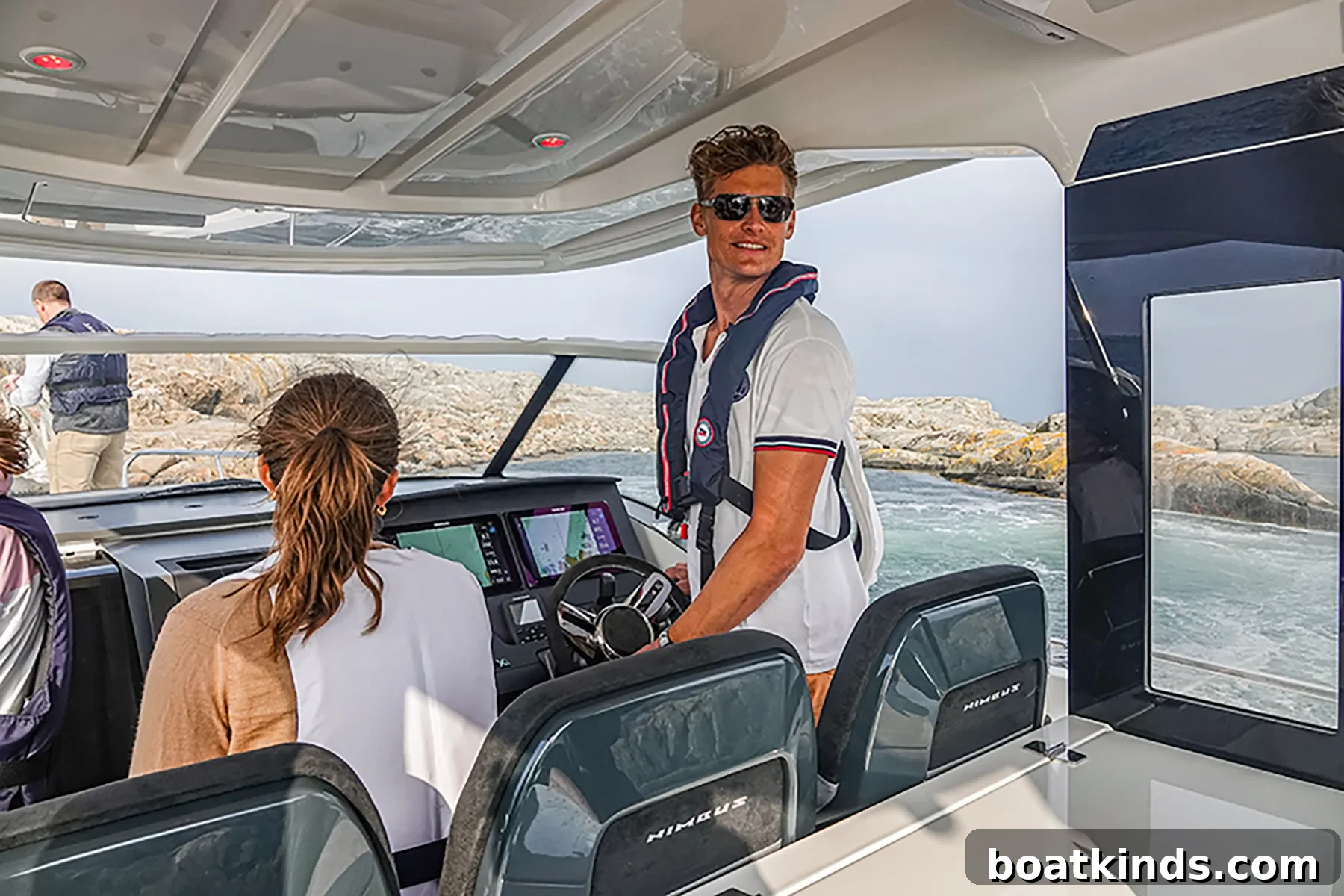
After lunch we returned to Sweden’s west coast to Långedrag headquarters and boarded four models: the new W11 with twin 400-hp Mercury V-10s; a T11 with twin Volvo Penta inboards; a C8 with a 300-hp Mercury; and a T9 with a 400-hp Mercury. Niclas Augustin, Nimbus’ marketing and technical sales lead, piloted the T11 and guided our flotilla through the scenic southern Gothenburg archipelago.
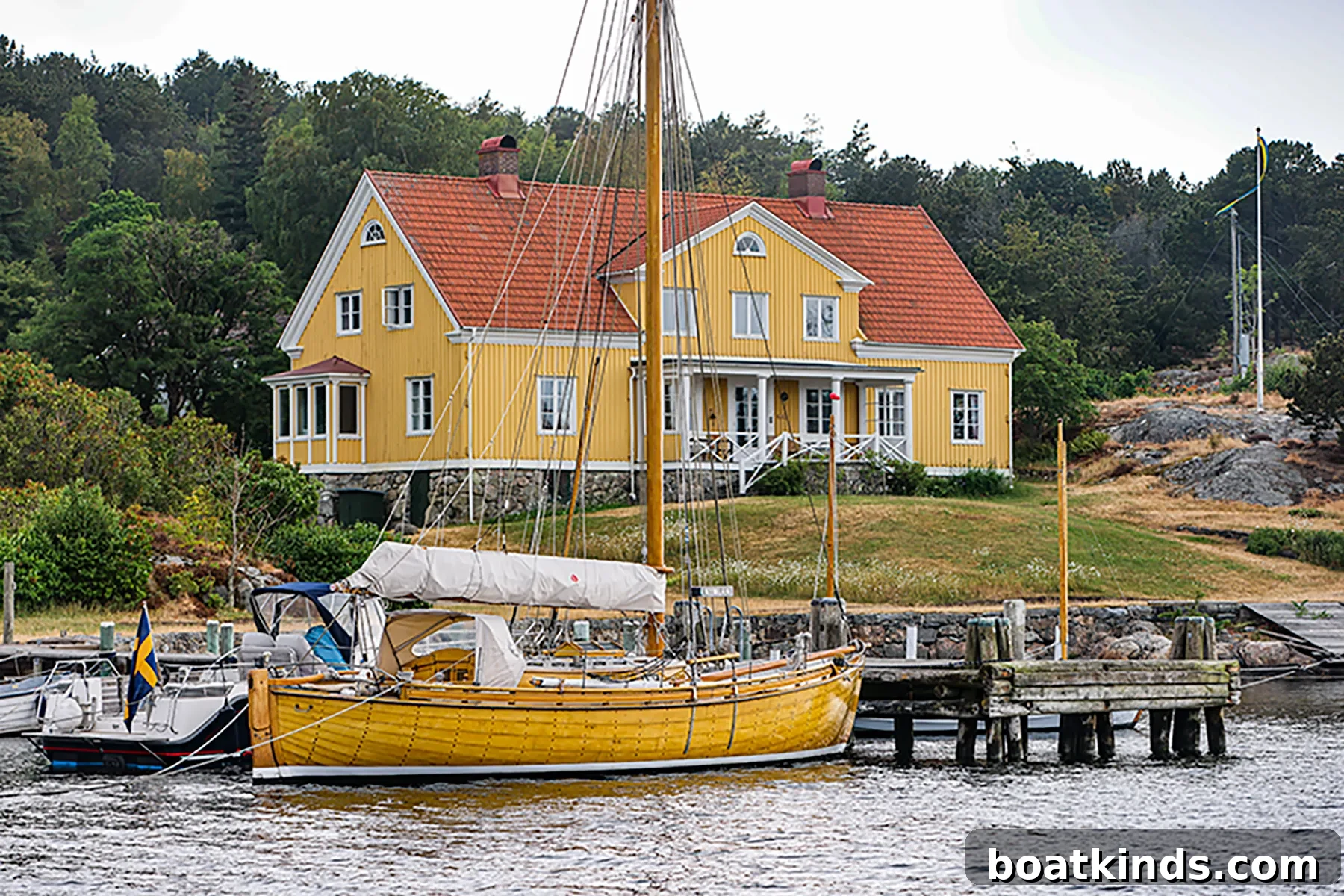
The archipelago comprises more than a hundred islands, home to about 5,000 year-round and 6,000 summer residents. In Norse sagas it was called Elfarsker, the river islets, and historical accounts suggest Vikings used some islands for holmgång, a formal duel. As we cruised, Augustin steered past Brännö, tied in some Anglo-Saxon lore related to Widsith and Beowulf.
At one point Augustin maneuvered the T11 into a narrow cove and asked broker Mike Moes to jump onto the rock to secure a strap to a granite eyelet. Nimbus’ open bow railings make boarding from a rock or dock quick and safe without having to climb over the rail. Instead of deploying the stern anchor, Augustin used twin engines and the bow thruster to turn the 40-foot T11 inside a cove barely 50 feet wide, a demonstration of impressive handling on a lee shore. He then had another broker tie the bow to a second eyelet. The maneuver showcased the T11’s agility and Augustin’s skill, all performed with a grin.
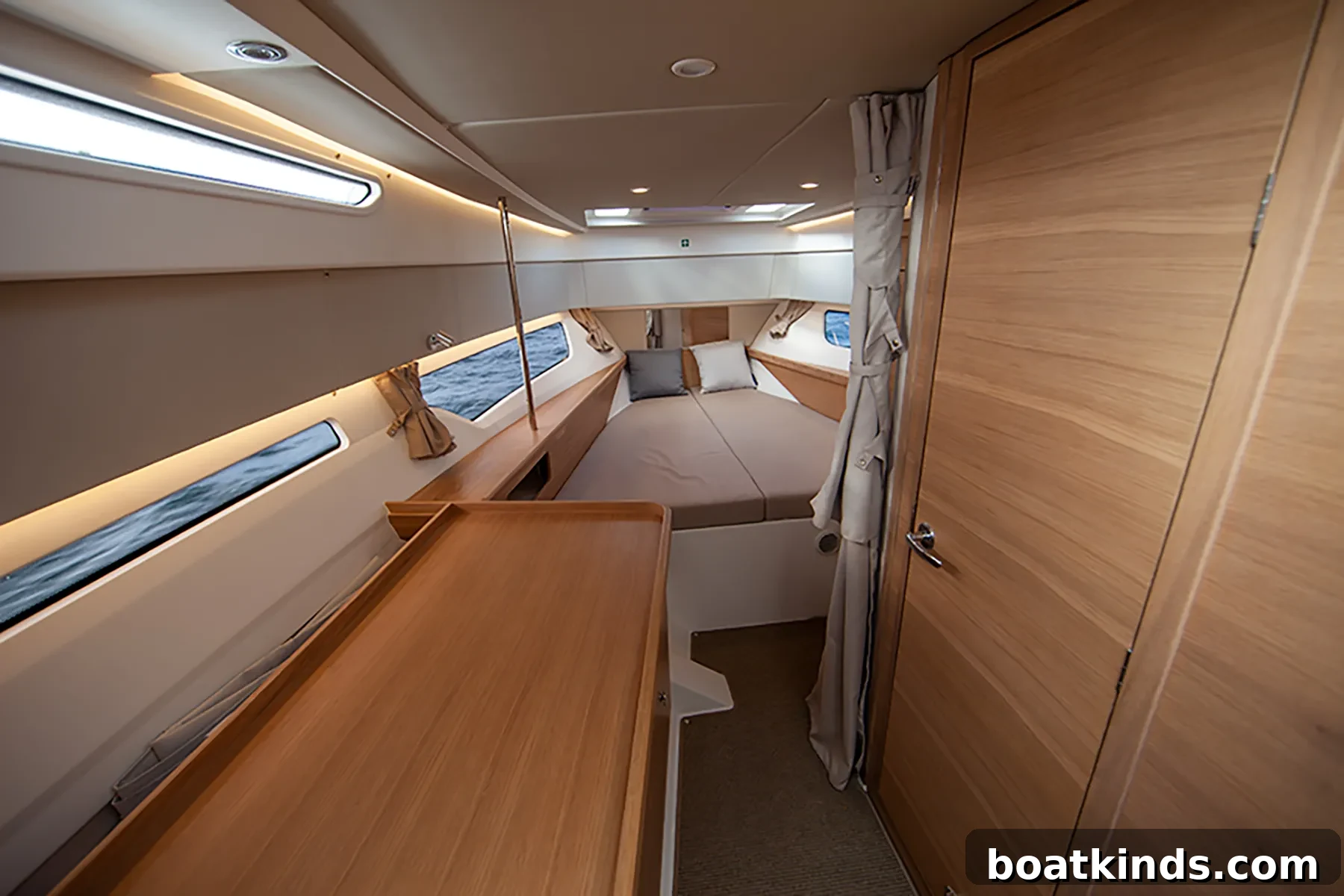
When it got breezy inside the cove, we moved to Donsö island and docked in front of Hotel Isbolaget, where we’d spend the night. During cocktail hour I spoke with Nimbus Chief Designer Joacim Gustavsson, who explained how his background in interior architecture, product development and even time at IKEA informs his approach to boat interiors. The convertible cockpit seats on the T11 that flip forward, aft and sideways spoke to his furniture-design sensibility: smart, flexible solutions tailored for small spaces.
Gustavsson, who joined Nimbus in 2007, oversees in-house design. Nimbus collaborates with naval architects on hull engineering and performance, but the company draws and refines the lines and interiors internally. The 11-series (T11, C11 and W11) share a thoughtfully compact head-and-shower arrangement: the spaces are not separated, but a well-designed cover keeps the head dry during showers while maintaining attractive Scandinavian styling.
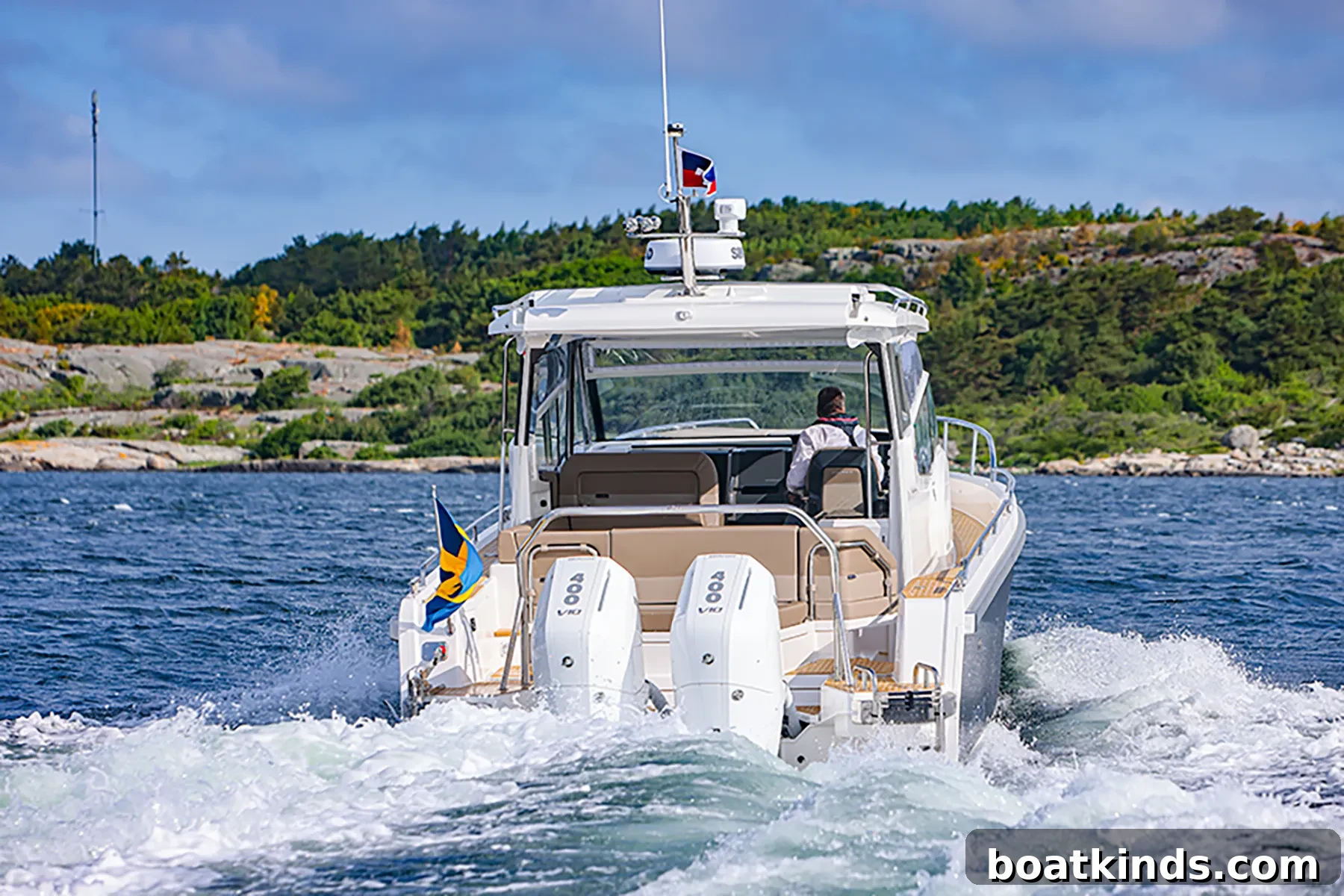
I’d noticed the T11’s stability while photographing the W11 from its cockpit. Series-11 models use Zipwake trim tabs and offer a Seakeeper option. The air-lubricated, twin-stepped hull, paired with a relatively narrow beam for a 40-foot boat, delivers steady performance with minimal roll even when crossing wakes at speed.
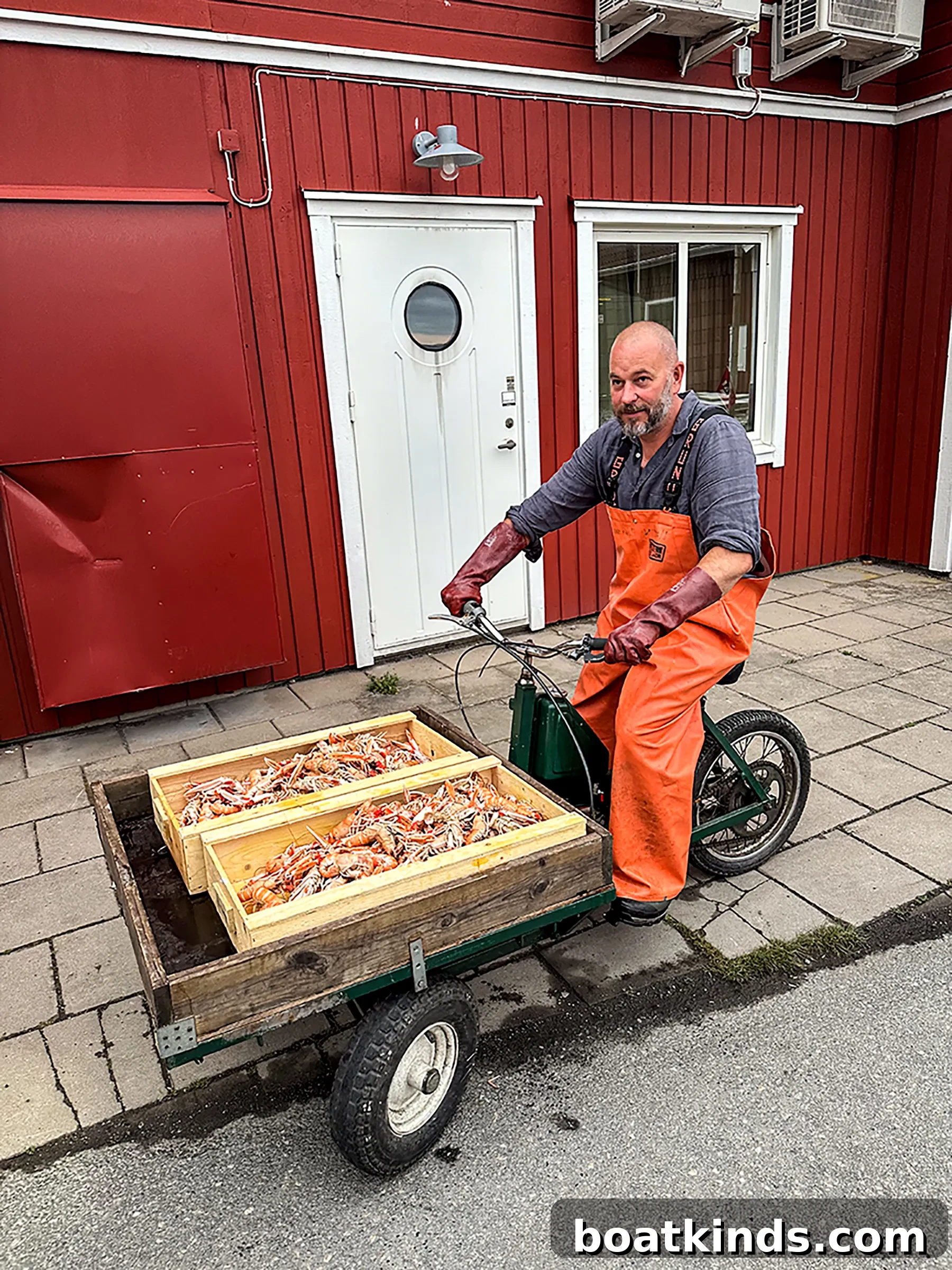
Back at Hotel Isbolaget, a repurposed icehouse, Göthberg pointed out shovel marks high on the wooden walls where fishermen once scooped ice to preserve their catch. Göthberg — an enthusiastic host with a love for Swedish customs — led us to meet local fisherman Ola, who boiled freshly caught crayfish for our midsummer feast. Though crayfish are often served cold, Göthberg insisted they’re best warm. We sampled tails straight from the pot, washing them down with beer and wine from Ola’s icebox.
Donsö is car-free; residents use bicycles, mopeds, electric carts, ferries or boats. Ola strapped two crates of boiling crayfish to his motorized tricycle and delivered them to the hotel for the evening’s smorgasbord: Västerbotten cheese pie, hard-boiled eggs with shrimp, and a host of traditional Swedish delicacies. We were taught to sing Helan går, the classic drinking song about downing a shot of aquavit, and we sang with gusto—if not always perfectly on key.
Music followed dinner. Nimbus America Marketing Manager Jane Moede picked up a guitar and sang; broker Bob Chace joined on a bright pink electric guitar that Göthberg had supplied, and Gustavsson added percussion on a stainless-steel pan. Eventually Göthberg announced it was sauna time, which is how I found myself floating in Donsö’s harbor well after midnight.
After only a few hours’ sleep, Göthberg and I met for breakfast with plans to test the W11. Donsö’s commuter lifestyle was on display: a suited businessman pulled his commuter boat to the dock, stepped ashore with a briefcase and, half an hour later, left aboard another boat. The island remains an important fishing and ship-owning community; several maritime companies operate from Donsö and rely on fast, seaworthy commuter boats.
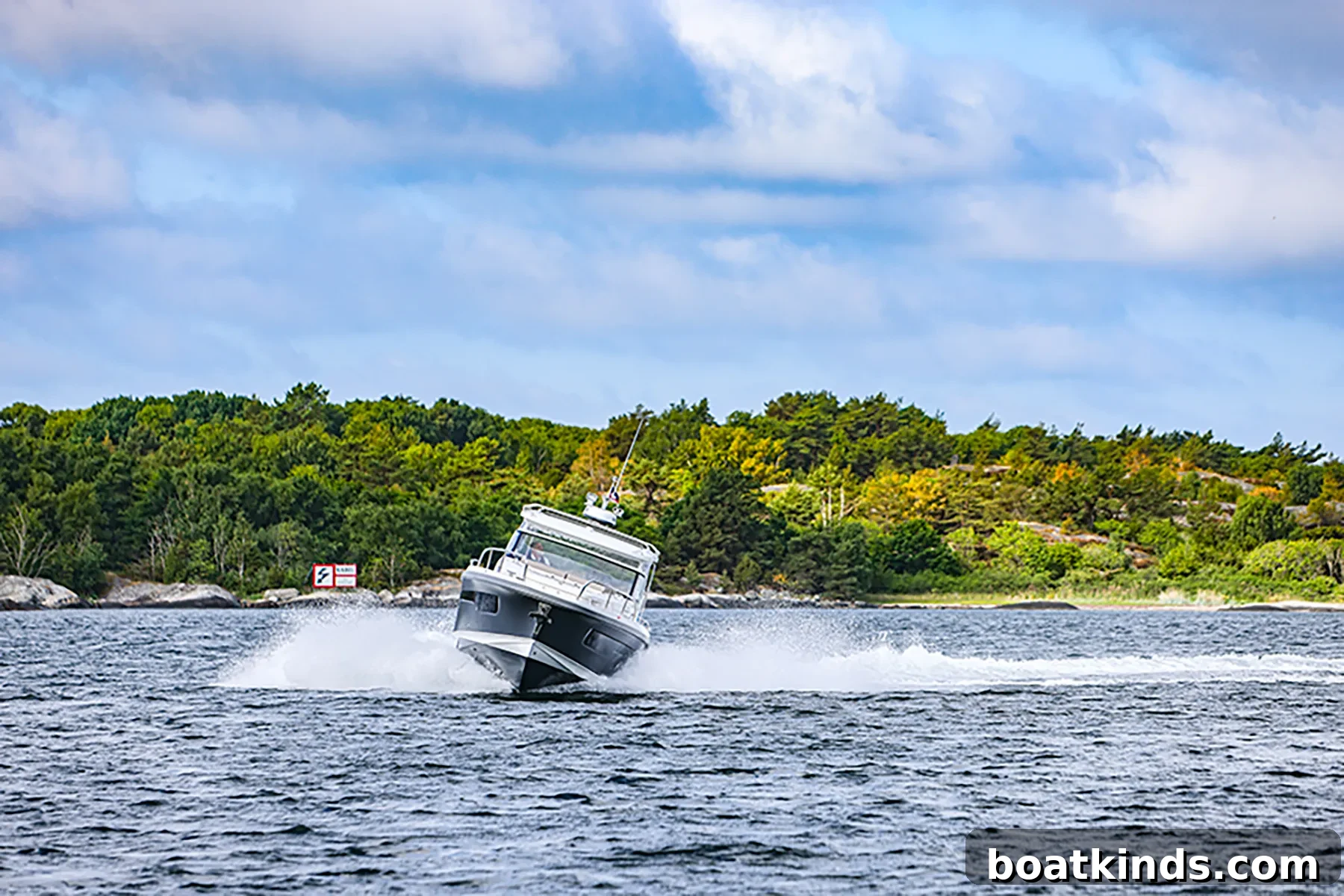
At 7:30 a.m., with the sun already high, Göthberg piloted the W11 while Augustin and I boarded the T9 so I could photograph Nimbus’ latest Weekender. Göthberg put the W11 through its paces, demonstrating its speed: with optional twin 400-hp Mercurys she can exceed 50 knots. Nimbus offers multiple propulsion choices for the 11-series, including twin and triple outboard packages and planned twin Volvo Penta diesel or gas inboard options.
I later took the helm. The W11 impressed: minimal bow rise, rapid acceleration, and excellent handling. Visibility over the bow was generally very good, though I found the windshield cap rail sat near my eye line while standing. By adjusting the steering tilt, moving my feet forward and seating myself against the bolster, I improved sightlines and enjoyed the boat’s commanding feel. From idle to 50 knots the W11 trimmed itself smoothly, and the cockpit layout and controls made piloting straightforward.
Built to CE and ABYC standards and certified by Det Norske Veritas, the W11 blends Scandinavian design with practical American appeal: folding side balconies, an outdoor galley, ample seating and sunpads, and two double berths make her an excellent platform for entertaining and weekend cruising in warmer U.S. climates. The enclosed C11 has already found buyers in North America; the W11’s open-air options should broaden Nimbus’ appeal.
We looped the island at moderate speed, giving way to a classic tender and admiring traditional island homes. Returning to the harbor, Gustavsson boarded with his briefcase to head back to Långedrag while the W11 returned to technicians for final tweaks. Augustin held the W11 at the dock so Gustavsson could step aboard, then backed away and sped off for the mainland.
Beautiful islands, good food, late-night saunas, cold dips, live music and warm company — my 24 hours with Nimbus and the Swedish boating lifestyle convinced me: this is boating done well.
This article was originally published in the September 2023 issue.