Reza Baluchi Arrested Off Tybee Island After Three-Day Standoff
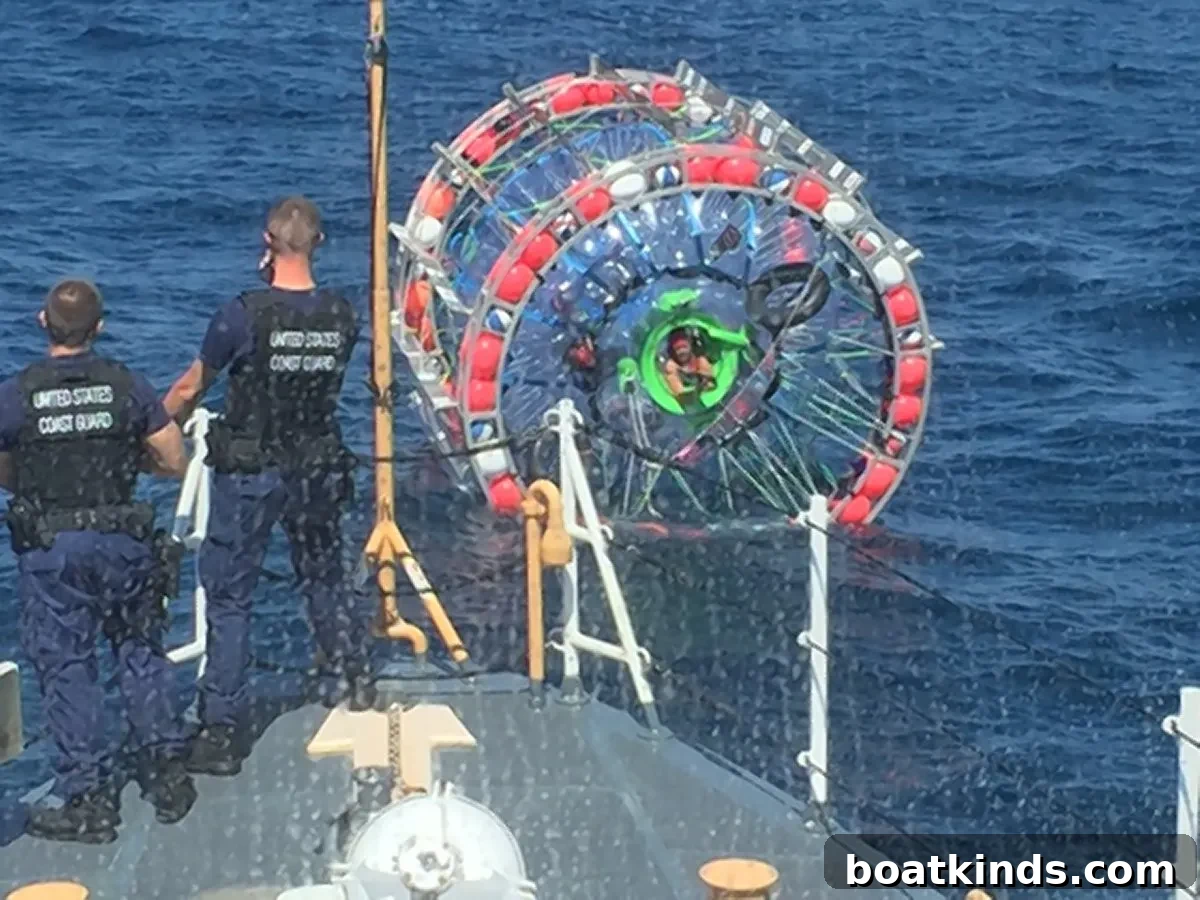
Reza Baluchi, an Iranian-born adventurer living in Florida, was arrested by the U.S. Coast Guard after a tense, three-day standoff roughly 70 miles off Tybee Island, Georgia. Baluchi had set out in a self-designed, human-powered vessel — a large, wheel-shaped craft he calls a “hamster wheel” — with the declared ambition of making the roughly 5,000-nautical-mile crossing to London, England. The craft’s design centers on a metal drum fitted with paddle wheels that provide buoyancy while being propelled by human effort.
The Coast Guard cutter Valiant located Baluchi at sea and attempted to board the vessel. Authorities say that during the encounter Baluchi threatened to take his own life with a 12-inch knife if anyone tried to arrest him and initially claimed he had an explosive onboard. After two days of negotiation and contact, Baluchi admitted there was no explosive device and ultimately climbed aboard the Coast Guard vessel, where he was taken into custody.
Federal charges have been filed against Baluchi, including obstruction of a boarding and violation of a Captain of the Port order. Both charges are prosecuted at the federal level. This was Baluchi’s fourth attempt to cross the Atlantic in his human-powered wheel; he has repeatedly stated that his crossings are intended to raise funds for charity.
Coast Guard officials and maritime authorities have repeatedly warned that such attempts are hazardous. The unique design of Baluchi’s craft and the isolation involved in crossing open ocean present significant risks not only to the person attempting the voyage but also to other mariners and responders who may be called upon to assist. Officials have urged Baluchi to cease these crossings for his own safety and to avoid putting rescue personnel at risk.
The episode highlights tensions that can arise when unconventional solo maritime adventurers encounter federal safety orders and boarding attempts. Authorities are responsible for enforcing navigational rules, safety regulations and any port-specific orders designed to protect life at sea and other vessels. When an individual resists inspection or fails to comply with orders, the situation can escalate quickly, requiring coordinated response from Coast Guard cutters and boarding teams.
Supporters of extreme solo voyages often point to the determination, endurance and publicity such attempts generate, including charitable fundraising efforts. Critics and safety officials emphasize the potential for maritime rescue operations, the cost and risk to responders, and the precedent set by allowing risky, unauthorized ocean crossings that ignore established safety orders.
Baluchi’s case underscores the complex balance between individual liberty and public safety at sea. While private adventurers may pursue unconventional projects and record attempts, enforcing safety regulations and Captain of the Port directives remains a priority for maritime authorities. Federal charges against Baluchi will proceed through the legal system, where the circumstances of the standoff, the alleged threats, and the violation of port orders will be examined.
For now, the Coast Guard’s handling of the situation has concluded with Baluchi’s arrest and the removal of any claimed threat from the vessel. Authorities continue to remind would-be ocean voyagers that the open sea demands careful planning, compliance with safety directives and cooperation with maritime officials to reduce risks for everyone involved.