The sky is slate-gray over Texel, the largest of the Dutch Wadden Islands, and a stiff breeze is whipping across the Wadden Sea. On downwind stretches, local cyclists coast without pedaling. The wind is so strong that even sheep huddle in the lee of the dikes to avoid it.
When I arrive in Oudeschild, a picturesque harbor village on Texel’s east coast, the wind is a Force 6, tearing whitecaps off the waves. Sheltered inside the harbor I find the shrimp vessel TX20 Walrus, licensed to carry passengers. I ask the skipper whether he’ll take passengers out this morning.
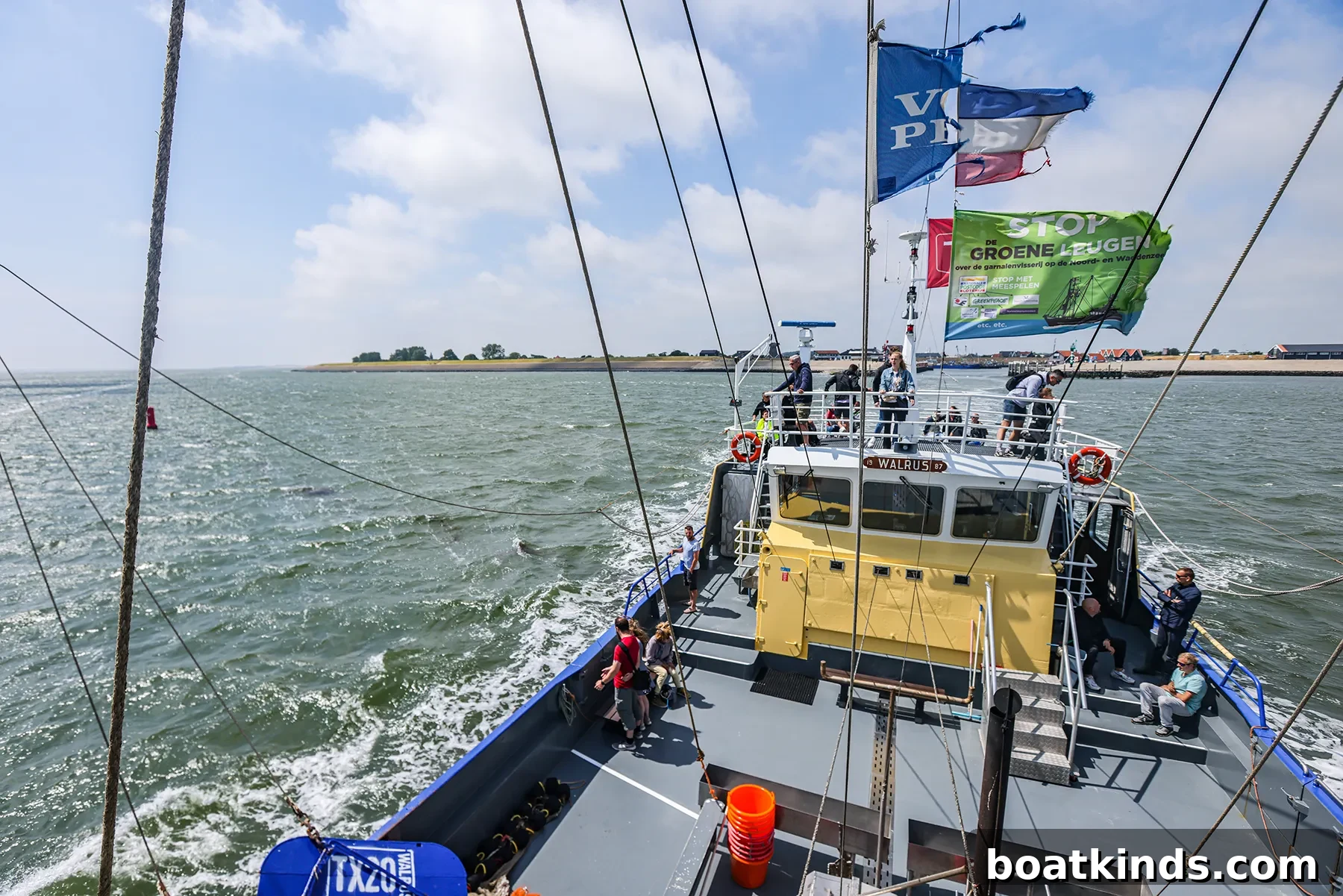
On the boat’s website I had read the promise: “The windier the day, the greater the adventure.” With the sea conditions as they are, I hoped to experience the bracing ride billed as “Deadliest Catch, Texel style.” The captain tells me bluntly he won’t leave until the afternoon. “Two o’clock,” he growls, and disappears into the wheelhouse. Disappointed — the forecast suggested the wind would ease by then — I have a few hours to explore.
Texel is endlessly appealing, with wide views over flat pastures, dikes, dunes and the wide shallow seas. In town I fortify myself with a broodje kaas and a kopje koffie (a cheese sandwich and a small, strong coffee) and then drive the island’s coastal road counterclockwise. The landscape is still largely agricultural and sheep are everywhere. Texel sheep look ordinary at first glance, until you notice their muscular build and robust faces; a tough native breed, some resemble small, woolly Rottweilers. In 2020 a 6‑month‑old Texel ram famously fetched a record price in Scotland.
Heading north I stop at a roadside memorial to Allied airmen whose Lancaster bomber crashed on the island during World War II. In May 1945 Texel was the scene of one of the last European battles of the war. I visit an old polder windmill, admire rows of red poppies, climb the lighthouse, walk a vast beach and explore the dune system, now part of a Dutch national park.
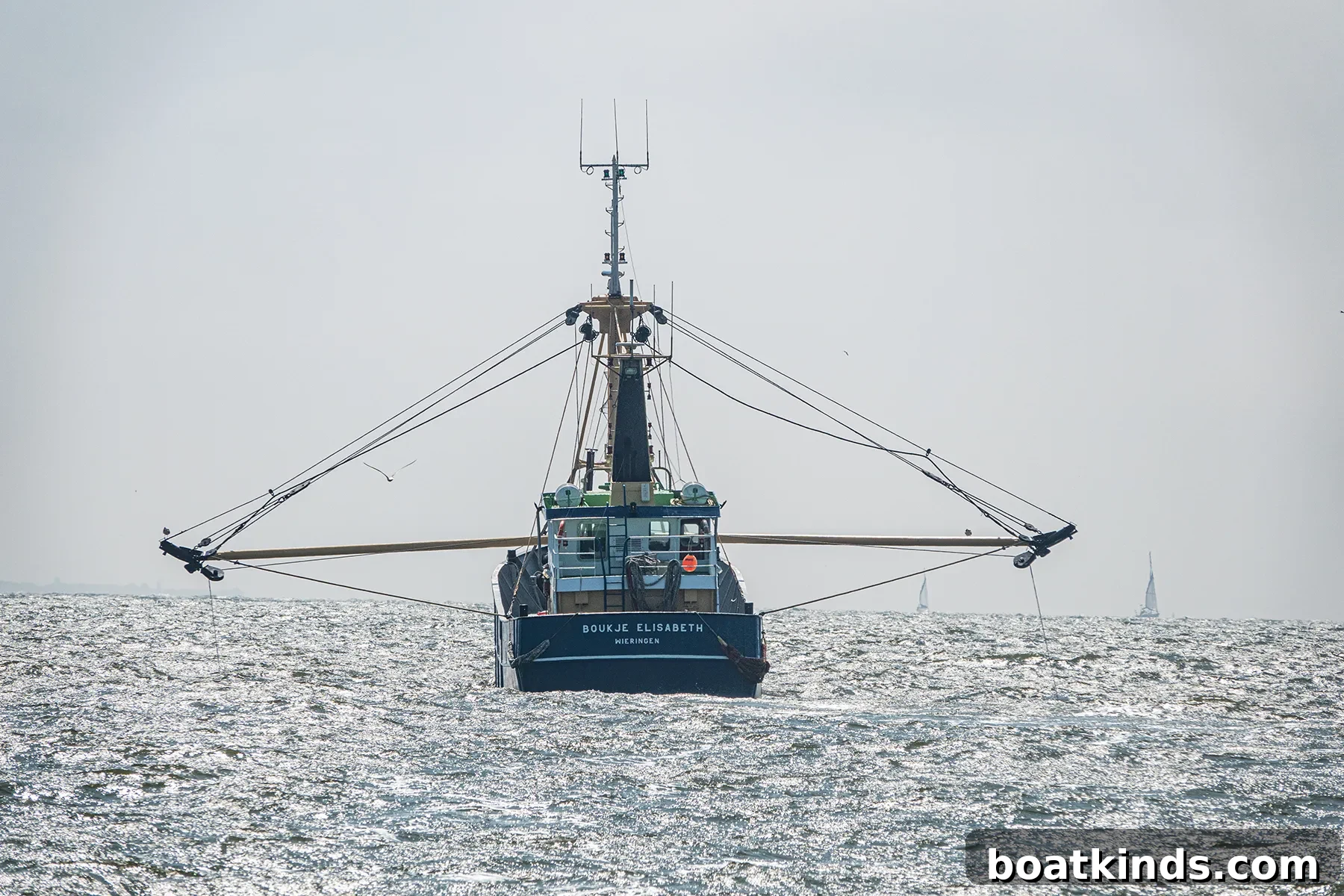
Back in Oudeschild, I board Walrus. Built in steel in 1985, the 101‑foot kotter is powered by twin Volvo Penta diesels. The pilothouse sits aft, outriggers extend from both sides for the nets, and a midship processing station separates shrimp from bycatch. There’s even a boiling station to cook shrimp on deck. Once, hundreds of kotters worked the Wadden Sea and filled this harbor; today the Dutch shrimping fleet has shrunk to a few dozen boats.
Early in 2023 the government ordered four of the seven remaining kotters in Oudeschild to be dismantled. The TX20 is exempt because it operates primarily as a demonstration vessel, catching only a small amount of shrimp for educational tours. With a draft of only about 2 feet, the TX20 can navigate the Wadden Sea’s shoals and shallow waters.
The Wadden Sea is an intertidal zone stretching between the Frisian Islands that separates parts of the Netherlands, Germany and Denmark from the North Sea. Its mudflats and tidal wetlands form a vital nursery for marine species and a resting ground for migratory birds. At low tide vast shoals appear; at high tide those same shoals are submerged. Channels carved by storms and shifting tides make navigation hazardous. Average tidal range is around 6 feet, but storm surges can add up to another 16 feet and trap floodwaters for days. Historic floods are a major reason the Dutch built dikes and causeways across this coastline.
In Dutch the word wad means mudflat. When the tide recedes it exposes wide expanses of seabed and people sometimes walk between the mainland and nearby islands in organized groups. Wadlopen—walking the Wadden Sea flats—can be a thrilling activity but must only be attempted with experienced guides; the tide returns fast and can be deadly.
The Wadden Sea’s intertidal habitat supports a rich seafood tradition: crabs, flounder, sole and, notably, shrimp. The TX20 targets a small, sweet species: Crangon crangon, known in English as common, bay, sand or brown shrimp, called de grijze garnaal in the Low Countries and la crevette grise in French.
Crangon crangon use the tidal flats as nursery grounds, growing quickly—often an inch in the first month—and reaching 1.2 to 2 inches as adults. They live around three years and spend most of their lives on or nearly on the seabed. Because they mature quickly and reproduce over a long season, their populations can recover rapidly from mass die-offs; for example, after a 1990 juvenile whiting invasion decimated the shrimp, numbers rebounded within a year.
Most of these shrimp are harvested by Dutch and German trawlers; British, Belgian and Danish boats also fish them. The TX20 demonstrates traditional shrimping techniques and offers passengers a close view of the process. I had hoped for a small professional crew experience, but short on time and curious about the “Deadliest Catch” marketing, I pay my fare and take a forward spot on the upper platform between the outriggers.
Before we cast off the captain lowers the drying nets to the deck. The gear includes heavy steel doors that spread the mouth of each net in the water. The captain jokes about their size—formidable blue plates that look capable of crushing an elephant—while parents and children pass by with little concern.
Once under way the TX20 leaves the harbor and begins to roll in the exposed sea. We cross the deeper Texel‑stroom channel and then settle onto the shallows. The captain, through a microphone in Dutch and German, mixes facts and tall tales, entertaining the passengers with dry humor and rough edges. He explains the rolling from the deep channel and warns that we’re now crossing a shoal only about 3 feet deep.
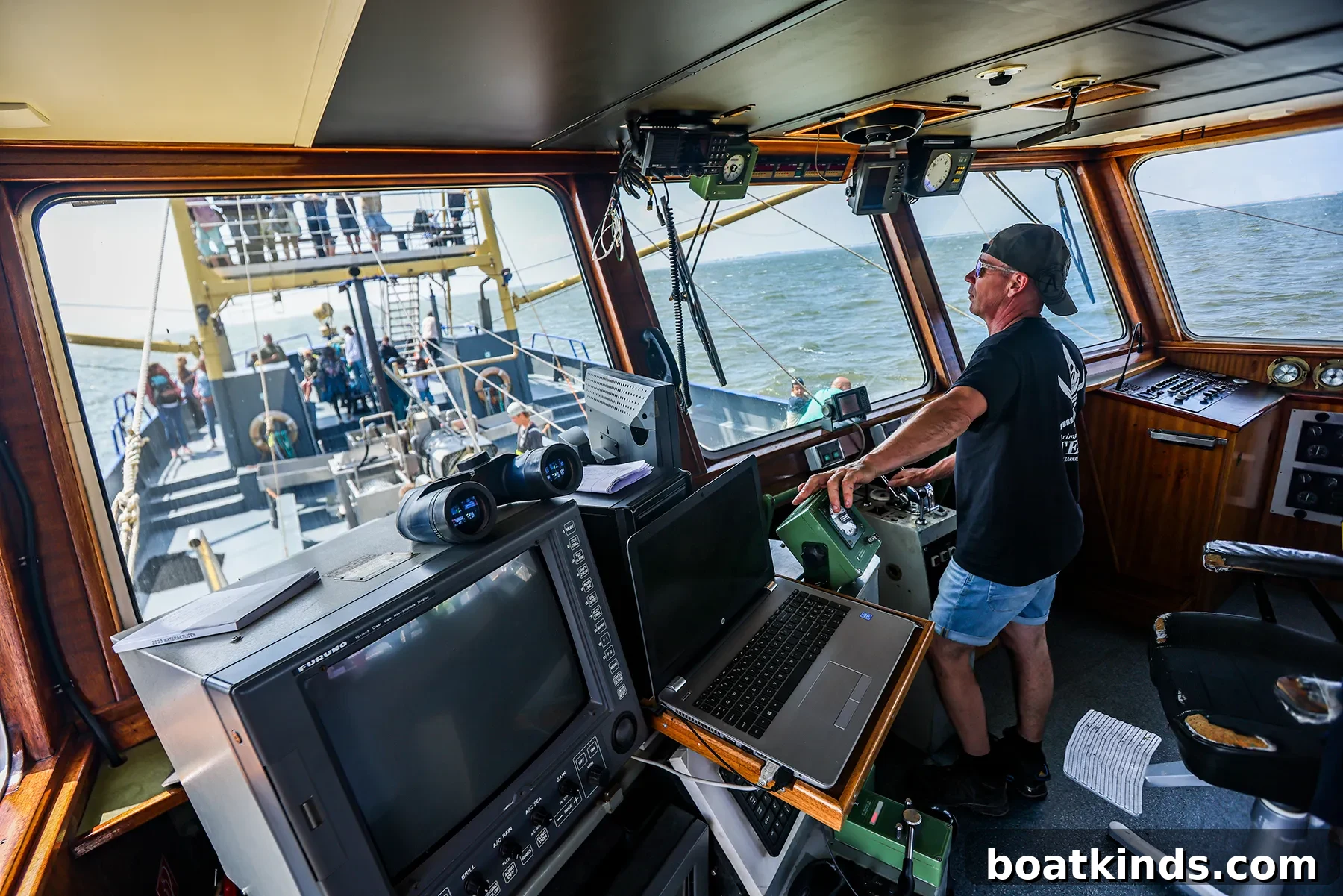
I join Herman Blom, the skipper, in the wheelhouse. “My whole life,” he says when I ask how long he’s been shrimping—he’s a Texelaar, born and raised. He explains the shrimping setup: each outrigger supports one net and two steel doors controlled by cable. When the nets enter the water the doors are forced apart and run roughly 25 feet apart. To flush shrimp from the sand, the net’s leading edge has a row of rubber wheels—the klossenpees—that vibrate and bounce across the bottom, frightening shrimp into the net.
Blom defends his trade against environmental critics, insisting the nets are designed to minimize damage and highlighting concessions fishermen have made—area closures, buyouts, shared data and improved nets that allow juveniles to escape. He recently started flying a protest flag reading “Stop de groene leugen over de garnalenvisserij” (“Stop the green lies about the shrimp fishery”) to challenge what he calls unfair narratives about shrimping.
About 30 minutes in, Blom sets the port net and then the starboard, the boat slowing as the gear opens and drags along the seabed. Speed drops from roughly 6 knots to about 3 knots. We fish near a sunlit shoal where seals and seabirds forage. When a net comes aboard the catch spills onto a stainless sorting table—mostly seaweed, crabs and small fish. The shrimp are there, mostly hidden among the residue.
A small conveyor feeds the catch through rotating trommels with progressively smaller holes to separate bycatch from marketable shrimp and to return undersized shrimp to the sea. About half the shrimp are too small to sell; nearly 90 percent of those juveniles survive being returned to the water. But a waiting gauntlet of gulls descends whenever bycatch is dumped—dozens of birds swoop in for an instant feeding frenzy.
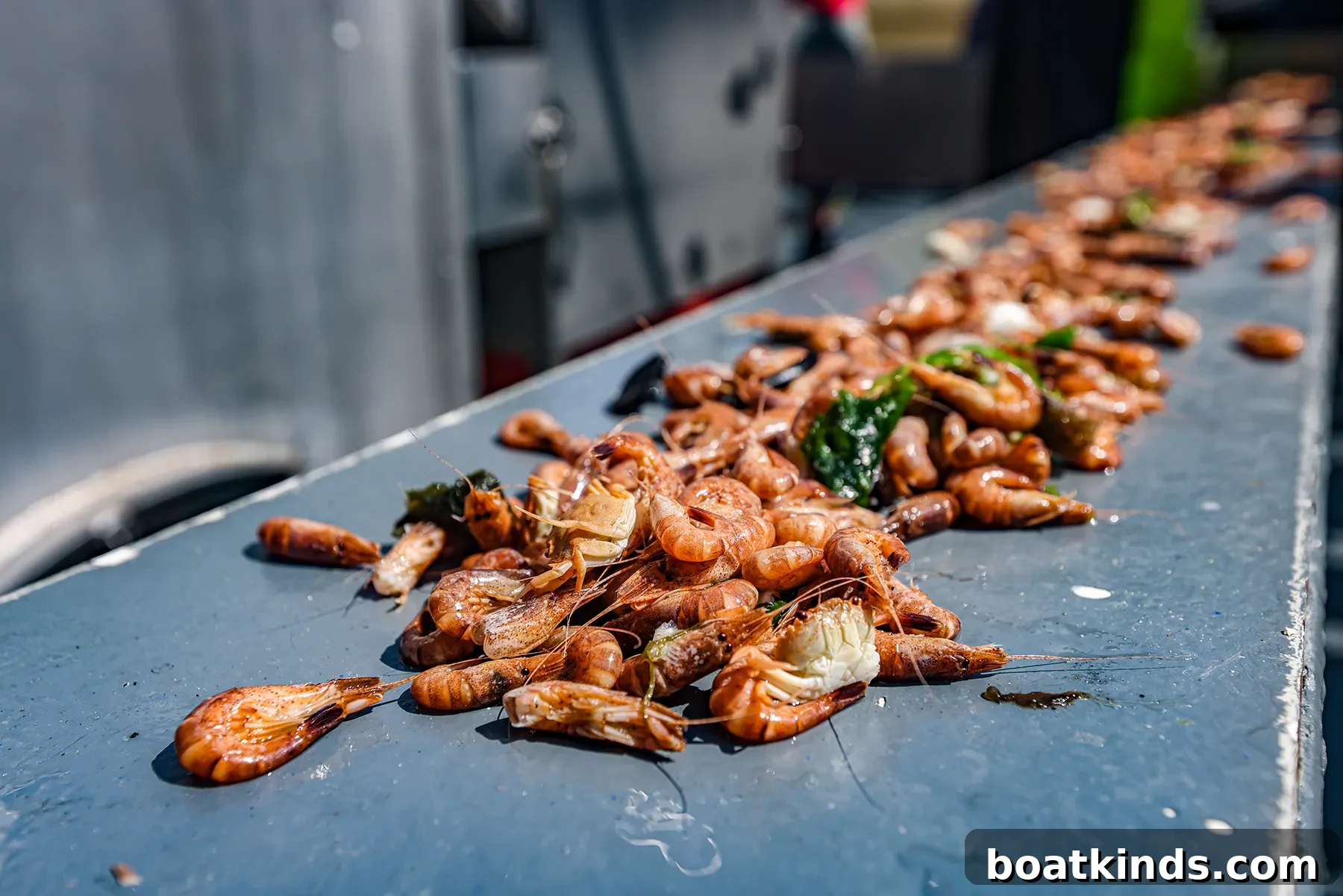
After the second tow, Blom and his deckhand anchor near a shoal and boil the catch in seawater. The cooked shrimp are spread out on long stainless bars for passengers to peel and eat. These Crangon crangon are tiny and require patience to peel, but their flavor is delicate and slightly sweet. Blom shows me his quick peeling trick: pinch the head and tail, then flex the tail to crack the shell and extract the meat. The shrimp taste nothing like the treated shrimp sold in supermarkets.
For hygiene and quality reasons, commercial home peeling—thuispellen—was banned in 1990. Now unpeeled shrimp are transported to Morocco for manual peeling by large workforces, then trucked back to northern Europe; the trip can take about 11 days. To prevent bacterial growth during transport some processors use preservatives such as benzoic and sorbic acid, which alters the flavor compared with freshly cooked shrimp straight off the boat.
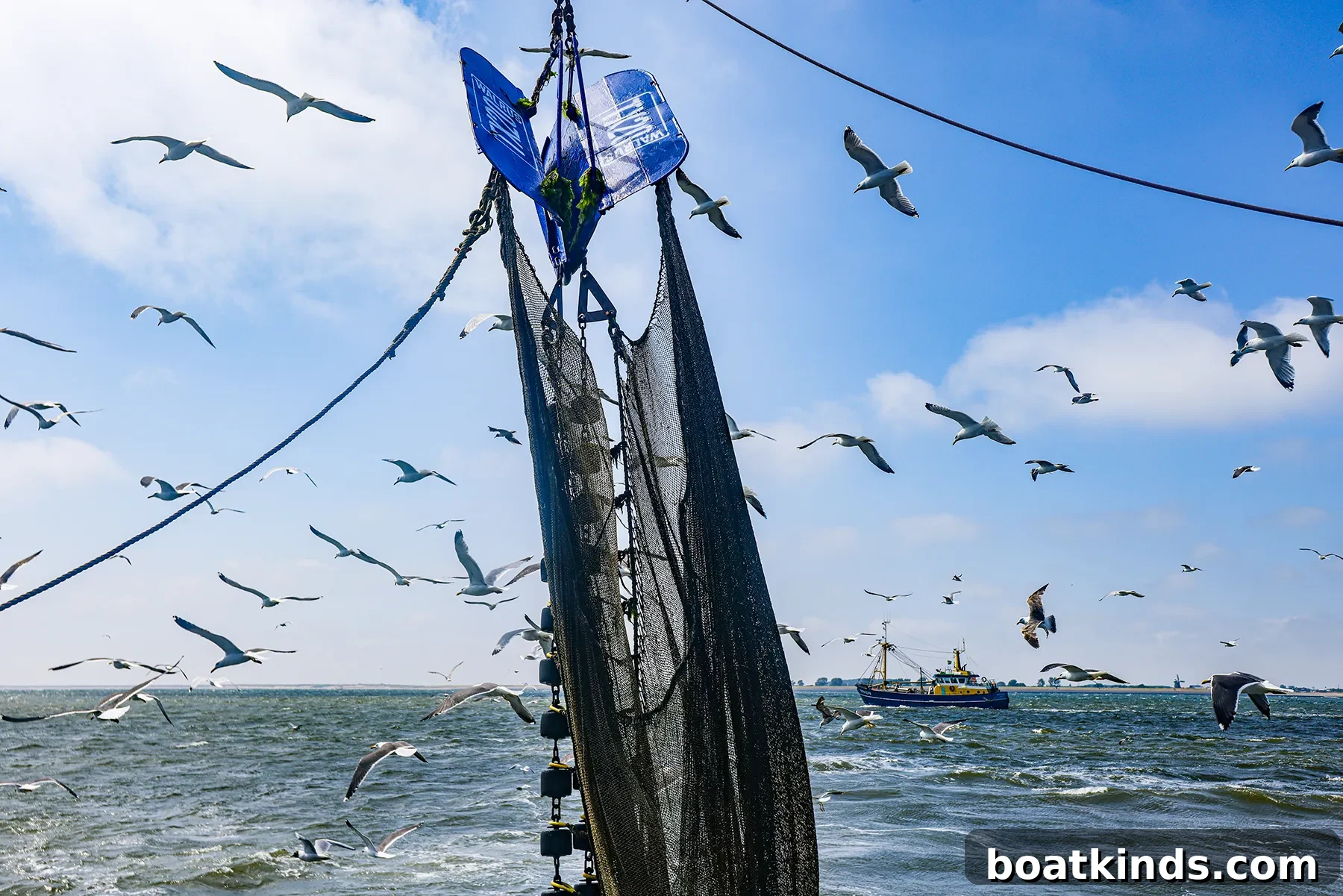
We head back to port with nets stowed and the deck cleaned. The two-hour trip was an education in small-scale shrimping on the Wadden Sea: a fragile ecosystem, a centuries-old livelihood and a modern industry under pressure from environmental regulation and public perception. The weather and the TX20’s heavy steel doors weren’t nearly as deadly as the marketing suggested, but Blom’s abrasive humor and outspoken views kept the ride lively. Over the loudspeaker he invites passengers to buy a bag of cooked shrimp and advises, with his characteristic bluntness: “Take the shrimp home, open a bottle of wine, turn on some romantic music, sit down with your woman and peel away.”
This article was originally published in the October 2023 issue.