77-Foot Doggersbank Offshore Built at Altena for Pacific Northwest Cruising
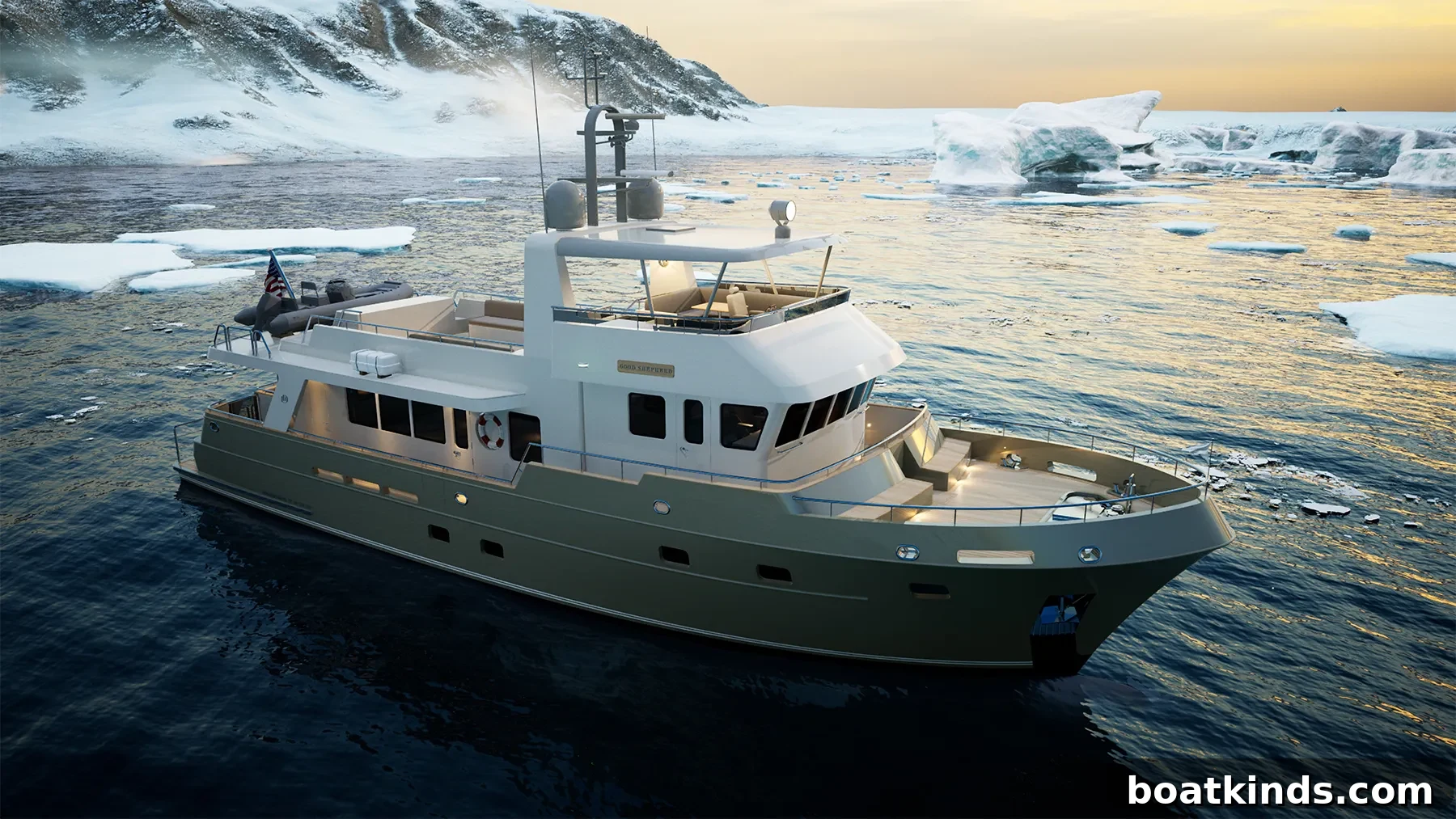
A new, owner-operated Doggersbank Offshore—at 77 feet the largest Doggersbank ever commissioned—is currently under construction at the Altena shipyard in the Netherlands for an American owner who intends to cruise the Pacific Northwest. The build revives a classic rugged design with modern systems and an eco-minded propulsion package.
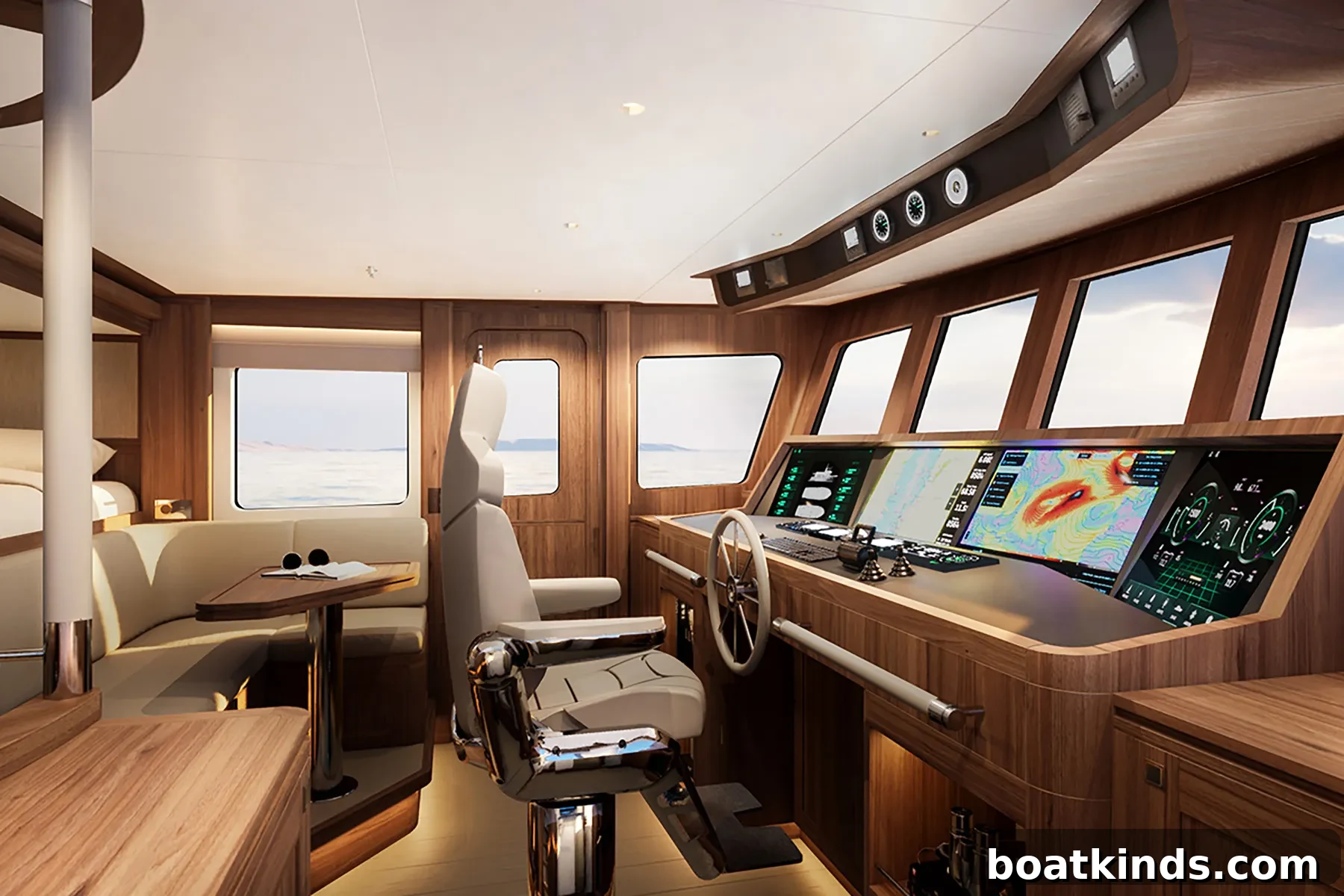
“He’s a very experienced owner and comfortable with the size,” says Joost Mertens, sales manager at Dutch design house Vripack. “With today’s bridge technology life is much easier. Bow and stern thrusters, remote-control units that let you steer from almost anywhere, and capstans built into the bulwarks give assistance at every mooring point. Technology helps at every place you need to be.”
Mertens, often called “Mr. Doggersbank” inside Vripack, has spent recent years guiding the effort to revive the Doggersbank line. The brand began in 1968 when Vripack’s founder Dick Boon drew the first Doggersbank, a 35-footer. Since then, hundreds of Doggersbanks have been built in a variety of sizes and by different yards worldwide—owners today keep them in homeports from the Great Lakes and Northeast U.S. to Southeast Florida and beyond.
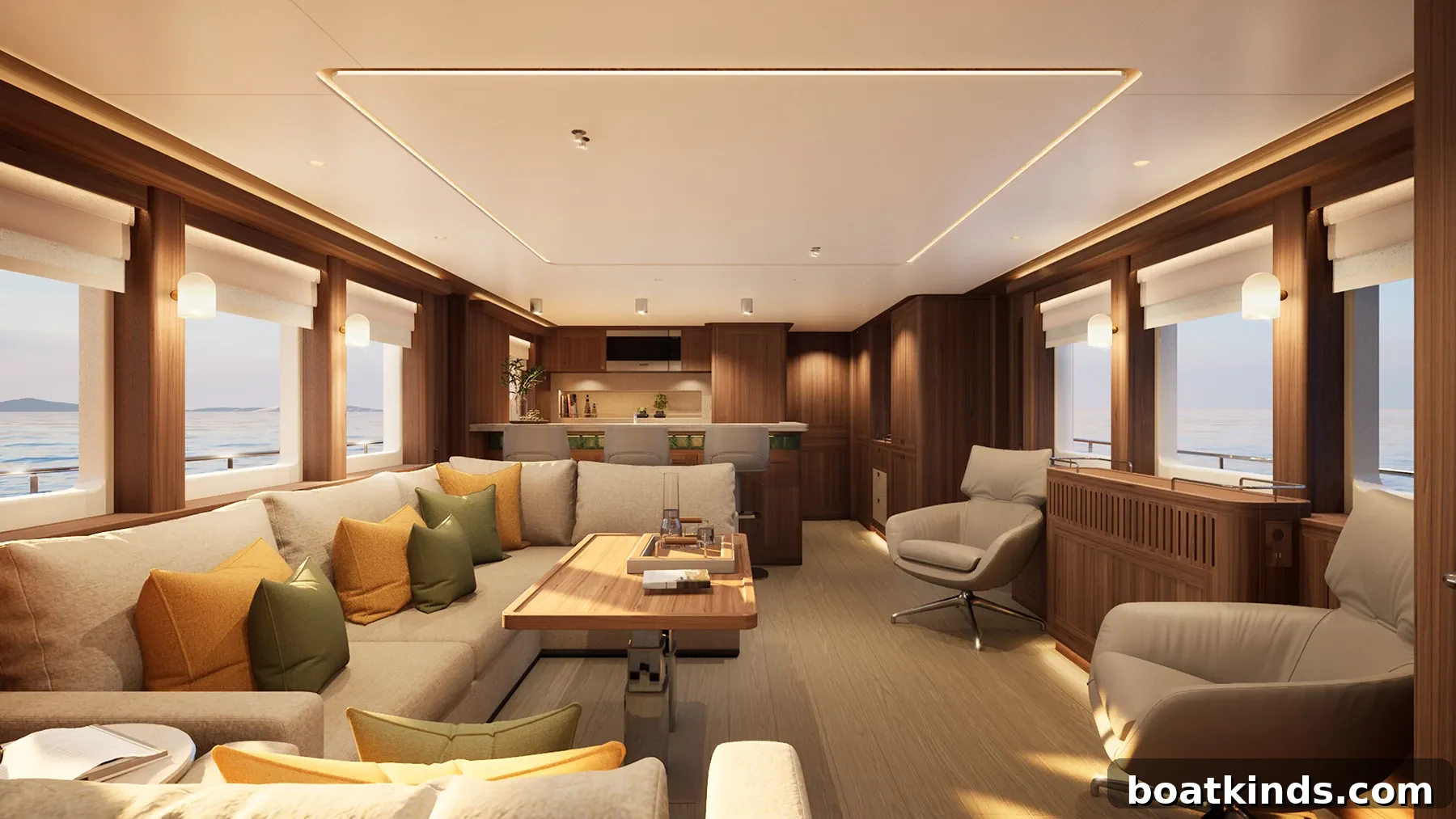
Doggersbanks were often offered as building kits and CNC cutting packages decades ago, Mertens explains, allowing owners to assemble hulls and structures in many different ways. That variety means each Doggersbank can be unique in finish and propulsion, but they all follow the same core design principles.
Those enduring principles include a steel hull with an aluminum superstructure, a round-belly round-bilge hull form and the distinctive transom immersion that Dick Boon developed. The slightly immersed transom alters water flow to improve fuel consumption and contributes to the proven long-range cruising capability that has taken Doggersbanks into the Northwest Passage, the Galápagos, Antarctica and far northern Norway.
After a lull in new Doggersbank production in the early 2000s, Vripack’s earlier revival attempt around a decade ago did not take hold. The current relaunch emphasizes the Offshore models popular in the 1980s, including the 77-foot example being built for the Pacific Northwest owner.
This owner has been closely involved in the project, especially in laying out the engine room. “He enjoys being there and doing daily maintenance for fun,” Mertens says. He specified a layout that allows full access around the single engine, a workbench and sink—space and equipment organized for practical, hands-on ownership and routine service.
One of the most significant innovations on this Doggersbank is its propulsion system. It will be the first Doggersbank to use a single-engine PTO/PTI hybrid setup. At a slow cruise speed of about 6 knots, the system lets the boat run silently on batteries for up to two hours; when the main engine is needed, reported fuel burn is roughly 13 gallons per hour. The arrangement enables electrical energy recovery and storage, and the owner can use power takeoff to run the shaft without firing the main engine at low speeds entering or leaving port.
“It’s super cool,” Mertens says of the hybrid arrangement. “You create electricity and store it in your battery bank. If you don’t use the main engine at lower speeds you can use the power takeout to run the shaft.”
The yacht will include at least one generator, but the battery bank is expected to handle hotel loads at anchor, including air conditioning for periods of time. Vripack is applying experience from its superyacht work to integrate electrification intelligently into a rugged offshore platform.
“We’re one of the studios with significant knowledge of electrifying boats,” Mertens notes. “We’re now developing a 70-meter sailing yacht that will carry no fuel on board—so the expertise we’ve developed is being applied across projects.”
John Clayman of Seaton Yachts, Vripack’s partner for Doggersbank builds in the Americas, is enthusiastic about the electric-first approach. “This boat will have no hydraulics—everything’s electric,” he says. “It’s much simpler. Ten years ago I would have been skeptical, but the technology has advanced significantly.”
Going forward, Vripack intends to continue evolving Doggersbank with eco-friendly systems. While long-range, fuel-free exploration remains out of reach for many full-size offshore cruisers, hybrid and electric technologies can markedly reduce emissions and noise in sensitive cruising areas. That matters for destinations Doggersbank owners favor—fjords, Alaska and other pristine regions—where quieter, cleaner operation preserves the experience for current and future generations.
“In fjords and places like Alaska, you don’t want to be the boat with diesels spewing into the environment,” Mertens says. “Our grandchildren will inherit the results if we don’t act now.”
This article was originally published in the November 2023 issue.