
Jacksonville Beach Sailboat “Aquilon” Washed Ashore; Owner Given Derelict Vessel Notice
On October 23, 2023, Luke Rehberg was returning to his home port in Jacksonville, Florida, after attending the Jacksonville Sea & Air Show when his 40-foot Hughes Boat Works sailboat lost power and its anchor failed roughly a quarter mile from shore. Forced to abandon ship, Rehberg swam to safety while the vessel — named Aquilon — drifted and eventually came ashore. The U.S. Coast Guard has since informed Rehberg that he is responsible for removing the boat from the beach.
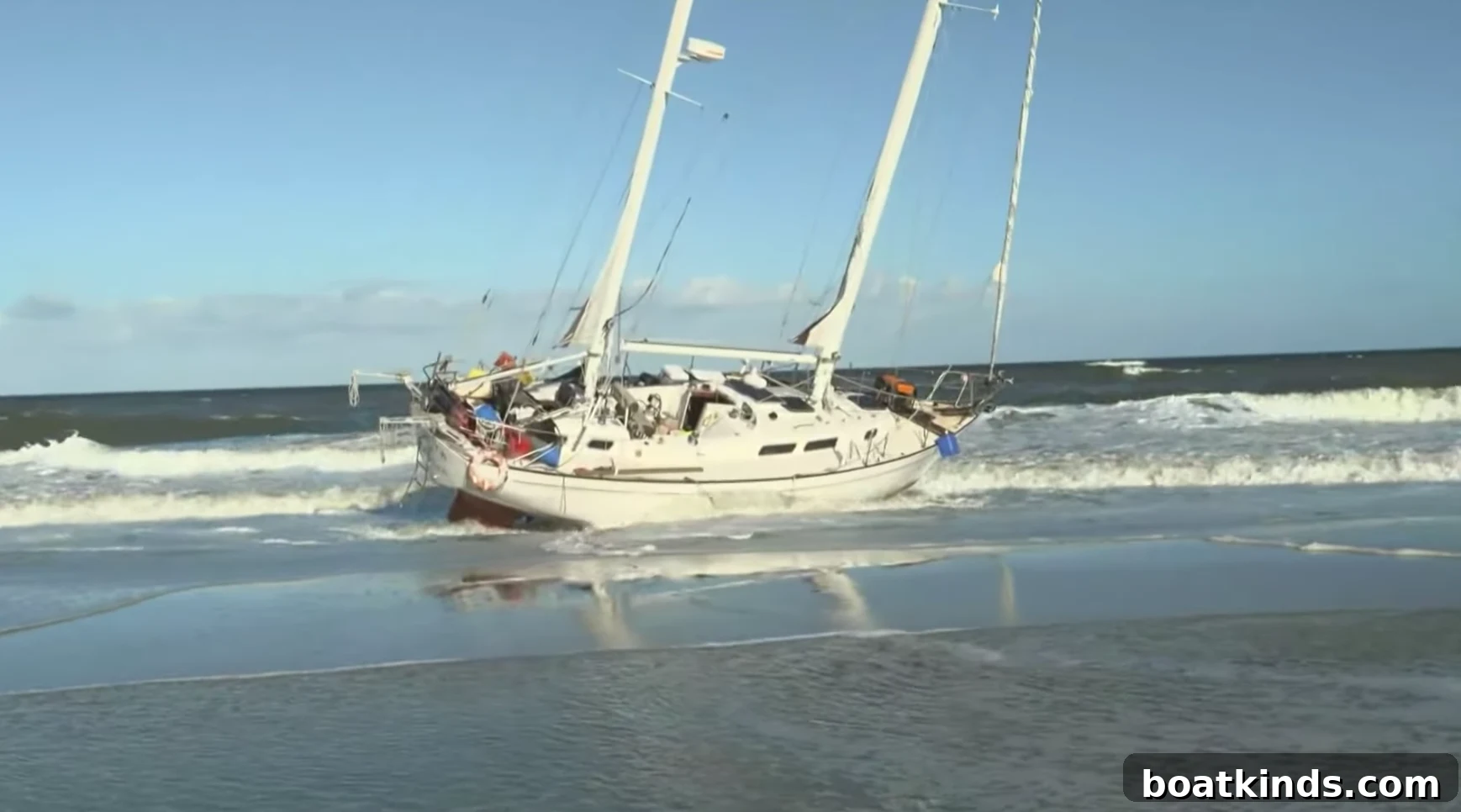
Aquilon is a 35,000-pound boat and Rehberg’s only residence, which makes its recovery particularly urgent and personal for him. Jacksonville Beach officials issued a derelict vessel notice that gives Rehberg three weeks to remove the sailboat; failure to comply could result in a fine of up to $15,000. The city’s notice reflects local derelict vessel ordinances designed to protect public beaches, navigation and the environment.
Moving a large sailboat like Aquilon from shore typically requires specialized equipment and professional crews. Rehberg estimates that hiring an industrial tugboat to pull the vessel back to deeper water would cost about $12,000, a sum he does not currently have. He also estimates roughly $10,000 in damage to the boat as a result of the incident and the time it has spent on the beach.
The grounded sailboat has drawn significant attention from beachgoers, residents and passersby who stop to look at the unusual sight. Several people have offered assistance. One visitor even offered to help tow Aquilon on a high tide using a small tug, but Rehberg declined, citing concerns about the safety of an improvised attempt. That caution reflects the real hazards of attempting to move a heavy, damaged vessel without the right equipment or experienced personnel.
Community fundraising efforts have begun. Two GoFundMe pages have been launched to raise money for the safe salvage and repair of Aquilon, and members of the public have shared offers of labor, gear and advice. Local news outlets covered the episode, bringing broader attention to Rehberg’s situation and the looming deadline set by authorities.
Options typically available in cases like this include coordinating with licensed marine salvage contractors, applying for any necessary permits or extensions from local authorities, seeking reimbursement through insurance if coverage exists, and raising funds through community donations or crowdfunding. Each option has trade-offs: professional salvage ensures safety and minimizes environmental risk but can be expensive; informal or volunteer attempts can place both vessels and people at risk and may run afoul of local regulations.
For now, the practical challenge for Rehberg remains securing the funds required for a professional salvage operation or negotiating a legally acceptable alternative with Jacksonville Beach officials before the derelict vessel deadline expires. The combination of legal obligations, safety concerns and the emotional reality that Aquilon is his home adds urgency to the situation.
This incident highlights several broader issues connected to boats washed ashore: the financial vulnerability of liveaboard owners, the logistical complexity of safely refloating and removing large vessels, and the role of municipal and federal authorities in enforcing derelict vessel rules. It also emphasizes the value of community support in emergency maritime situations when owners lack the resources to resolve problems alone.
Anyone interested in helping Rehberg can consider contacting the organizers of the crowdfunding efforts or reaching out to local boat salvage firms and Jacksonville Beach officials to learn how to assist legally and safely. Timely, coordinated action will be essential to protect the shoreline, avoid fines and, if possible, return Aquilon to the water where it belongs.