
Being a safe boater is straightforward when you prepare for the question, “What if?” Anticipating a range of scenarios — from the obvious to the unlikely — is the foundation of responsible seamanship. Most boaters plan for the obvious risks: man overboard, fire, or running aground. What often gets overlooked are the less obvious emergencies that can escalate quickly at sea. For owners of modern long-range power cruisers, the range and reliability of these boats make distant exploration possible, but they do not remove the need to prepare for nature’s unpredictability. Deciding in advance how you will respond to each “what if” is the difference between a controlled situation and a crisis.
From my experience as a delivery and training captain and as the owner of a long-range cruiser, two pieces of safety gear are frequently undervalued: the speed-limiting storm drogue and the sea anchor. Both are essential for controlling your vessel in heavy following seas or when steering and propulsion fail, yet too many boats leave port without them.
The Storm Drogue
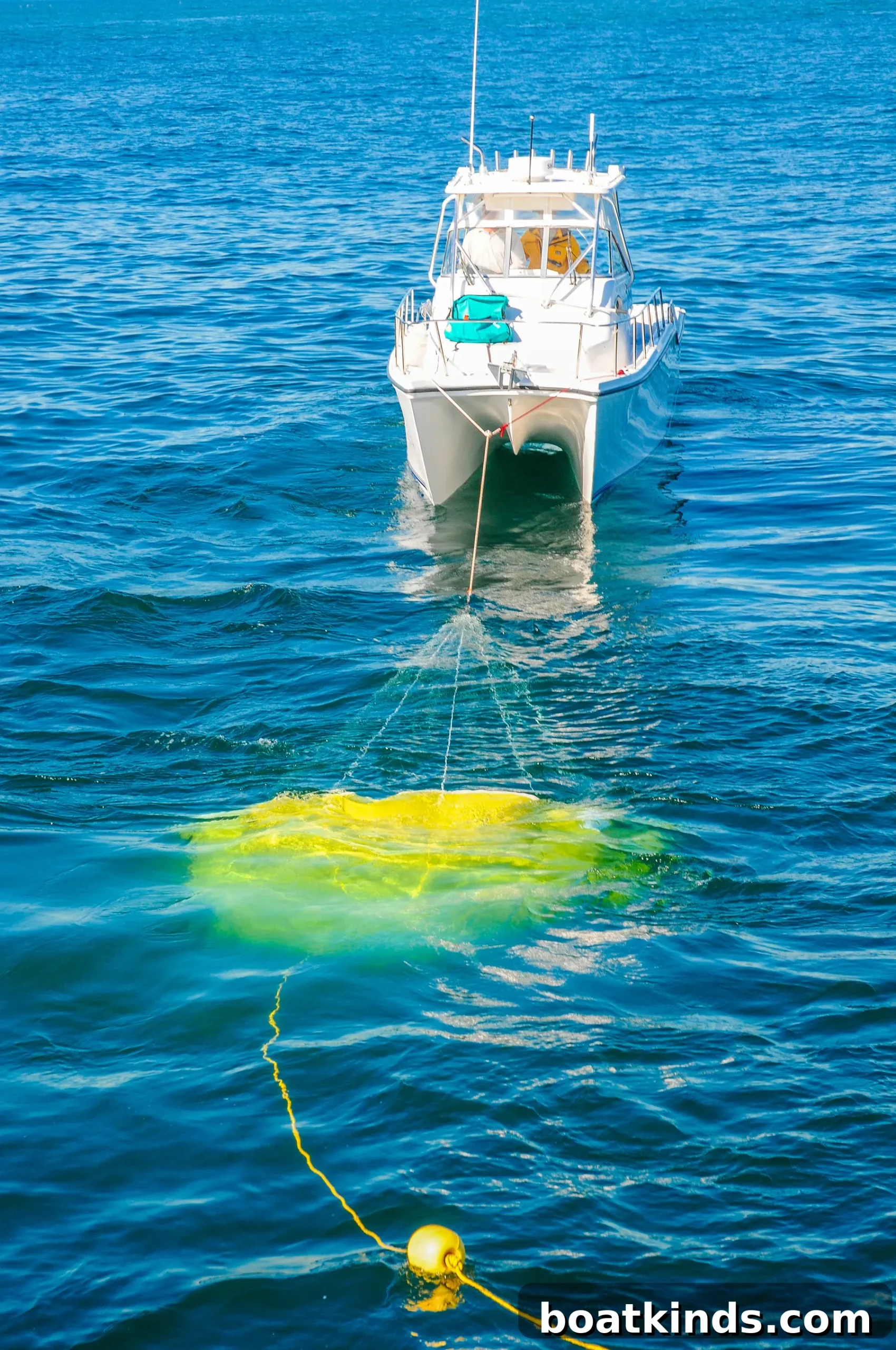
A storm drogue is deployed from the stern and towed submerged to slow the boat and keep the stern aligned with following seas. It’s often confused with a sea anchor, but their functions differ greatly. While a drogue reduces speed and increases directional stability, a sea anchor is used from the bow to stop the boat and hold its bow into the wind and waves.
Drogues have a long history in seamanship. Dragging a device from the stern has been a reliable method to moderate a vessel’s speed and prevent it from being yawed or pivoted by waves — a situation that can quickly lead to broaching. Trawlers and other displacement-hull powerboats handle following seas better than many planing craft because waves can pass under the hull, but when seas build in height and energy, a boat can pick up dangerous speed. A properly designed and deployed storm drogue limits that speed and helps keep the stern square to the waves, reducing the risk of losing control.
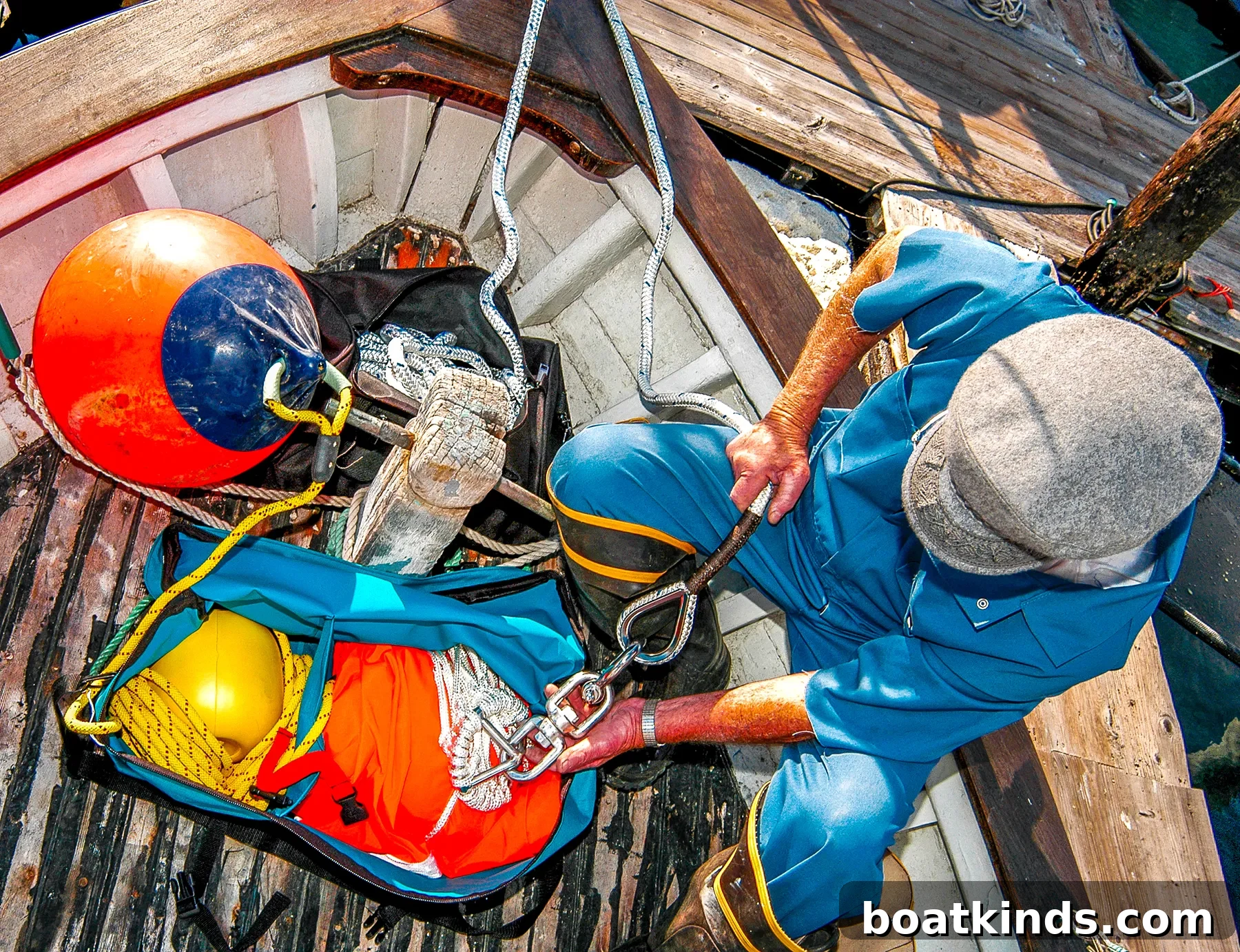
Modern drogues come in a variety of shapes and materials, often made from heavy-duty nylon or Dacron with openings that allow water in while limiting its exit to create controlled drag. For effective use, the drogue should be attached securely and centered on the transom, typically via a bridle. A bridle setup with one line on a block and the other fixed allows you to shift the load from side to side, much like a traveler on a sailboat. This can help keep the stern aligned with a quartering sea and preserve steerage when navigating inlets or confined waters under adverse conditions. Given that you will most likely deploy a drogue in rough conditions, a ready-to-throw single-package setup greatly simplifies the process and reduces risk during deployment and retrieval.
When used correctly, a drogue reduces downhill speed on the wave face and prevents the stern from being pushed or pivoted beam-on to the waves, significantly lowering the chance of broaching. It’s a practical, relatively simple piece of gear that can provide valuable control in severe weather or challenging sea states.
The Sea Anchor
There are circumstances when slowing the boat is not enough — when you need to stop forward movement entirely, when water is too deep to set a ground anchor, or when you lose propulsion and cannot steer the bow into the seas. In these cases, a sea anchor is the appropriate tool. Deployed from the bow on a long rode (commonly several times the length of the vessel), a sea anchor acts like an underwater parachute, trapping water and generating strong drag.
With a sea anchor properly secured to a solid point on the bow, wind and waves will hold the vessel bow-on, reducing drift and lateral movement. This orientation is the safest for resisting the full force of wind and waves and can be crucial for protecting a disabled boat from being pushed toward shore or a lee shore. Sea anchors are particularly valuable when you cannot reestablish propulsion or when attempting to ride out a storm far offshore.
Quality drogues and sea anchors are manufactured to match vessel size and displacement. Some products are rated by length, others by displacement, and many manufacturers provide sizing guidance to help you choose the right unit. Given the potential for these devices to prevent disaster, it’s wise to include both a storm drogue and a sea anchor in your safety inventory if you plan extended passages, whether coastal or transoceanic.
There are countless accounts from mariners whose lives and vessels were saved by properly deployed drogues and sea anchors. If you’re preparing for extended cruising, add these two “what if” solutions to your checklist: a storm drogue for controlling stern-to seas and preventing broaching, and a sea anchor for holding your bow into the weather when stopping or drifting is necessary. Both are compact investments in safety that can make the difference between a recoverable situation and a serious emergency.
This article originally published in the October 2023 issue of Passagemaker magazine and the January 2024 issue of Soundings.