
Christian Carraway stands at the helm of the Grady-White Canyon 386, a fresh addition to the builder’s lineup showcased prominently at the Fort Lauderdale International Boat Show. As product designer, he’s responsible for the boat’s look, ergonomic layout and user experience. “We have smart people on staff who figure out how to make it work—engineers and naval architects, the ones who understand math,” he says with a wry tone. “But we work together, with a lot of negotiation and compromise.” The result is a vessel that preserves Grady-White’s rugged reputation while introducing refinements that lift the Canyon series to a new level.
The Canyon 386 replaces the company’s popular 376, a model that served both anglers and cruisers for 12 years—longer than the typical model lifecycle. Initially the team planned a modest update to the 376, but as ideas accumulated the scope grew until a full redesign made more sense. “We realized it was time for a change,” Carraway explains. “So, we came up with the new 386, incorporating several elements from our 456 flagship to advance the Canyon line.”
Underneath, the 386 retains the proven SeaV2 hull used on the 376, delivering the predictable ride Grady-White buyers expect. Above the waterline the deck is new, and the designers capitalized on the boat’s 13-foot 2-inch beam to create spacious gunwales and roomy cockpit areas. That beam-to-beam space is immediately noticeable on a walk-through.
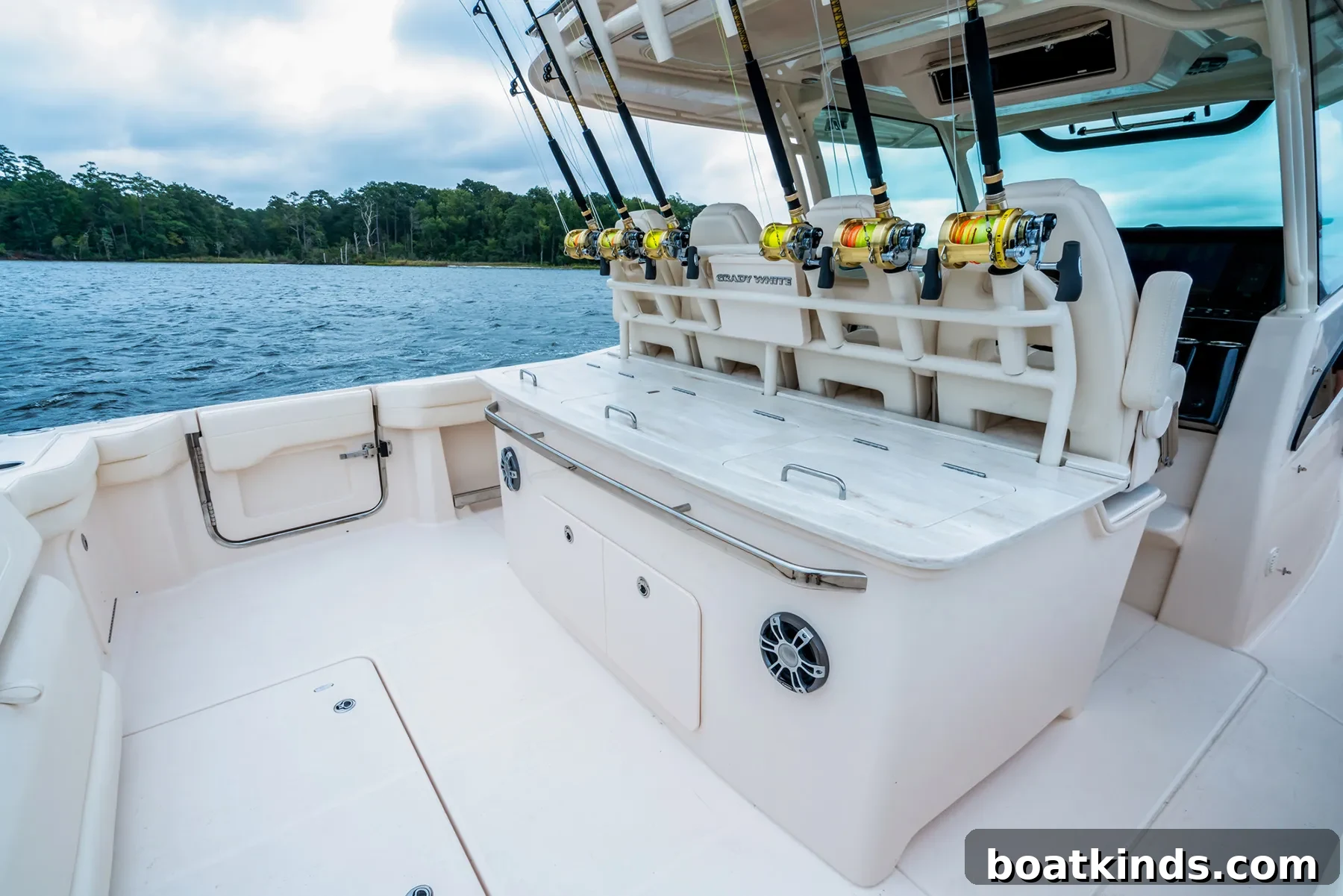
Grady-White kept the 376’s strong fishing characteristics front and center while adding practical upgrades. Where the 376 offered a single transom door, the 386 has dual transom doors to port and starboard, making it easier to handle a fish without hauling it across the cockpit. The transom layout centers anglers with two livewells flanking a large freezer box, built-in cutting boards, tackle storage and multiple rod holders. “We simply don’t want to compromise the boat’s fishability,” Carraway says. The new layout increases rod stowage in the cockpit to at least six positions near the stern, compared with five on the previous model.
At the same time, the Canyon 386 recognizes many Grady-White owners value ride quality, build integrity and comfort over fishing gear. To accommodate both priorities, the cockpit incorporates a meal-prep area aft of the lean bar with a grill, a sink and Corian countertops—amenities designed for entertaining without encroaching on fishing functionality. Carraway emphasizes the balance: adding creature comforts while preserving the boat’s core purpose.
Almost everything on the 386 comes standard, with a few options such as outriggers and enclosures. Grady-White says a robust standard equipment package simplifies purchasing for customers and helps control retail pricing through more predictable inventory and cost distribution.
One notable standard feature is the helm seating: four seats instead of the three- across arrangement typical for this class. The extra pair of seats is protected under a hardtop with a sunroof, so occupants on the ends enjoy the same shelter from wind and spray as center passengers. The layout gains the additional seats by widening the gunwales a couple of inches per side near the helm while still preserving broad sidedecks for safe passage forward. Grabrails and coaming bolsters further enhance safety and comfort.
The helm itself blends modern styling and functionality: a black carbon-fiber dash with stainless accents, twin 17-inch screens for navigation and systems, and a steering wheel with front-and-back grips. A joystick integrates with the trio of 450-hp Yamaha outboards—the sole power option—providing precise control. Grady-White estimates cruise speeds in the low to mid-30 mph range and a top end near 60 mph with this propulsion package.
Belowdecks the Canyon 386 marks a meaningful upgrade over the 376. The cabin entry is aft-facing rather than via the side deck, which improves comfort and accessibility. Inside there’s more than 6 feet of headroom, a convertible dining area that becomes a berth, a compact galley, and a private head with a separate shower. The spatial planning makes the cabin comfortable for day trips and capable for overnight stays when needed.
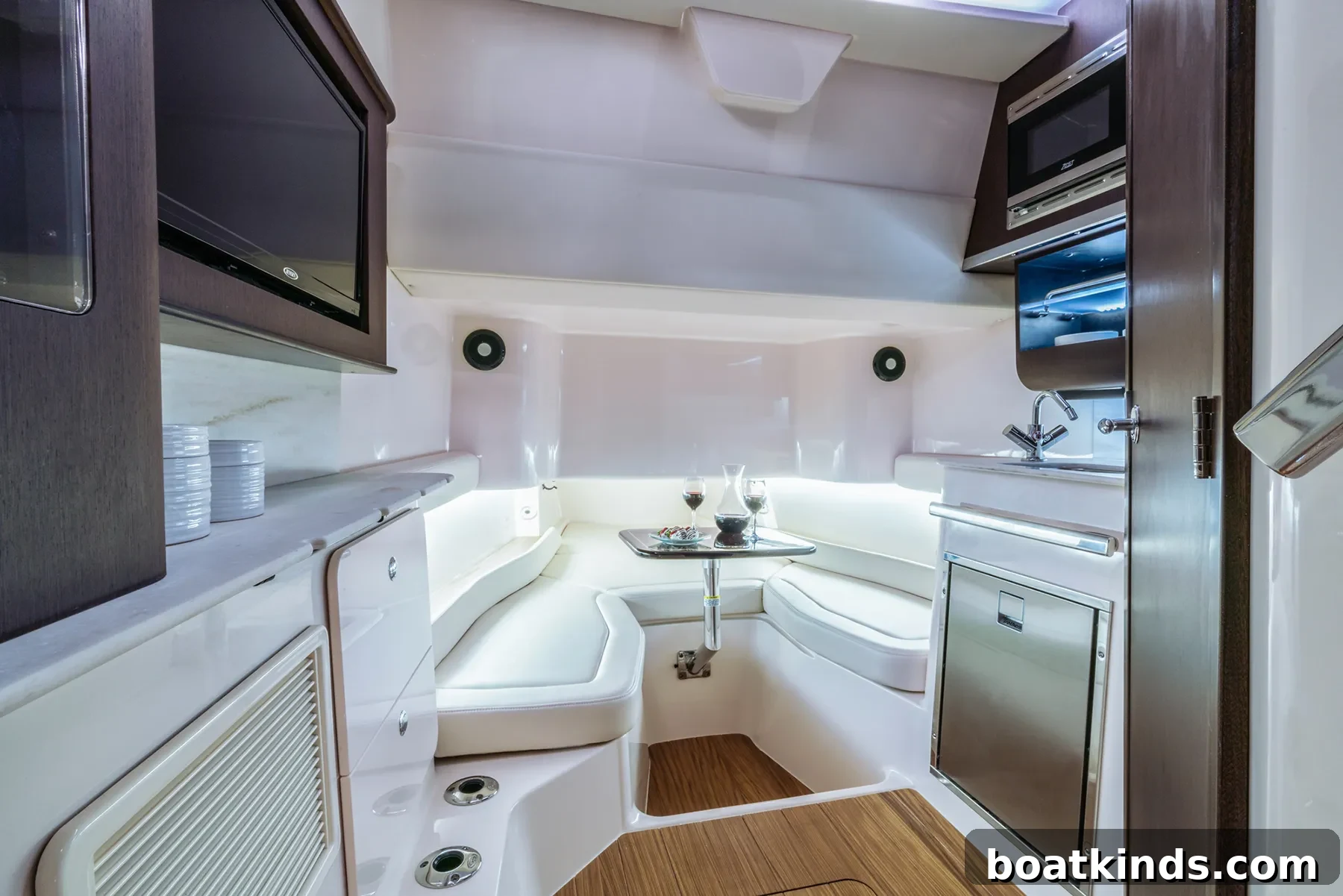
Cabin finishes draw inspiration from the 456 flagship: LED lighting, off-white Ultraleather upholstery, stainless-steel trim and solid teak accents create a modern yet timeless interior. “We wanted to elevate people’s expectations of the brand,” Carraway says. He notes Grady-White’s conservative design approach contributes to strong resale values—materials and styling chosen to remain appealing over time.
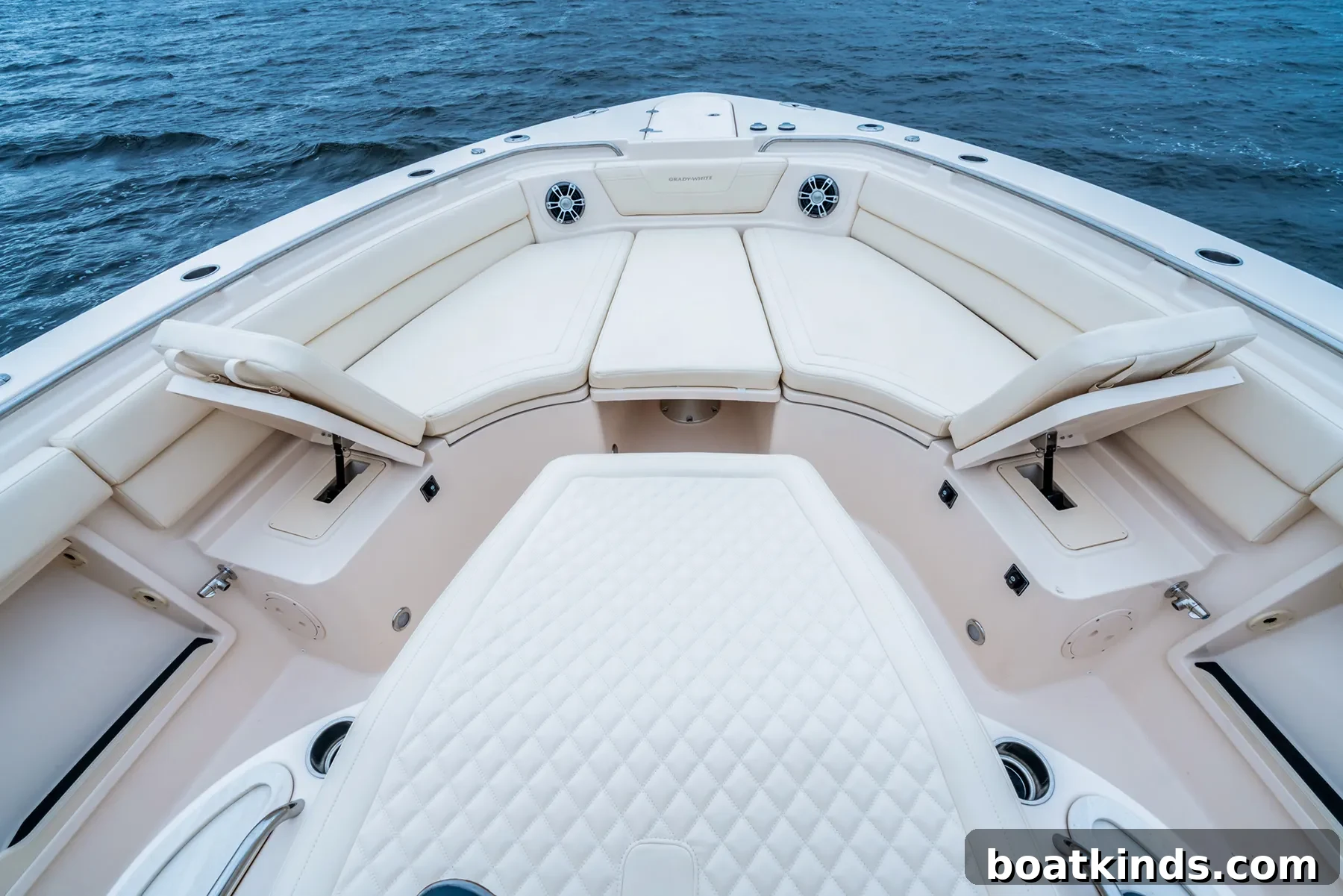
Forward seating is thoughtful and ergonomic. The lounge seat at the forward end of the console is designed for taller adults with good lumbar support and a contoured cushion that keeps occupants secure at speed. Flanking settees include electric backrests; add a filler cushion to form a sunpad or remove cushions entirely to reveal a casting deck finished with Grady-White’s diamond non-skid.
“It’s the little things that add up to big things,” Carraway reflects. The Canyon 386 showcases how detailed design choices—seating ergonomics, storage layout, standard amenities and refined cabin finishes—combine to distinguish the model while preserving the brand’s reputation for seaworthy performance and thoughtful craftsmanship.
Grady-White Canyon 386
LOA (w/o engines): 36’6”
Beam: 13’2”
Draft: 2’4”
Displ.(w/o engines): 14,950 lbs.
Fuel: 410 gals.
Power: (3) 450-hp Yamahas
This article was originally published in the February 2024 issue.