
Taking a few minutes at the start of a project to run quick, rough calculations can save both time and money later. That’s particularly true when working with epoxy—until you develop a feel for coverage and spread, it’s easy to over- or under-estimate how much material you need. The figures below are practical reference points gathered from experience using WEST SYSTEM® accessories and epoxy products, and they will help you plan material quantities and avoid surprises.
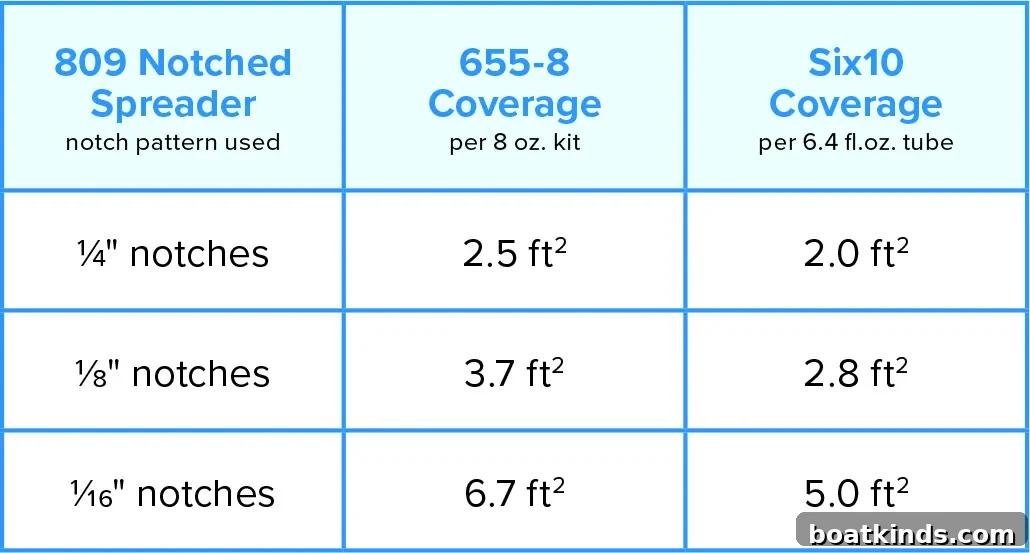
Spreading Epoxy with an 809 Notched Spreader
The WEST SYSTEM 809 Notched Spreader is a useful tool for controlling and measuring epoxy film thickness. It’s ideal for creating an even film coat of neat (unthickened) epoxy on flat surfaces such as tabletops, or for spreading thickened epoxy when bonding and fairing.
When you use the ¼” notch of the 809 Notched Spreader to apply 105 Epoxy Resin® mixed with 207 Special Clear Hardener® on a smooth, waxed glass surface, the resulting coverage is approximately 3.2 fl oz per square foot with a film thickness near 35 mils. On porous materials like wood the initial coat will soak in and produce a thinner finish unless the surface is sealed first.
The tool also works well with pre-thickened adhesives such as G/flex® 655 and Six10® Thickened Epoxy Adhesive, and with thickened 105/20X and specialty systems. The notched spreader leaves V-shaped ridges in thickened mixtures; this pattern creates a consistent bond-line thickness and provides channels for air to escape when parts are clamped together, improving glue-up reliability.
Fillets with 804 Reusable Mixing Stick
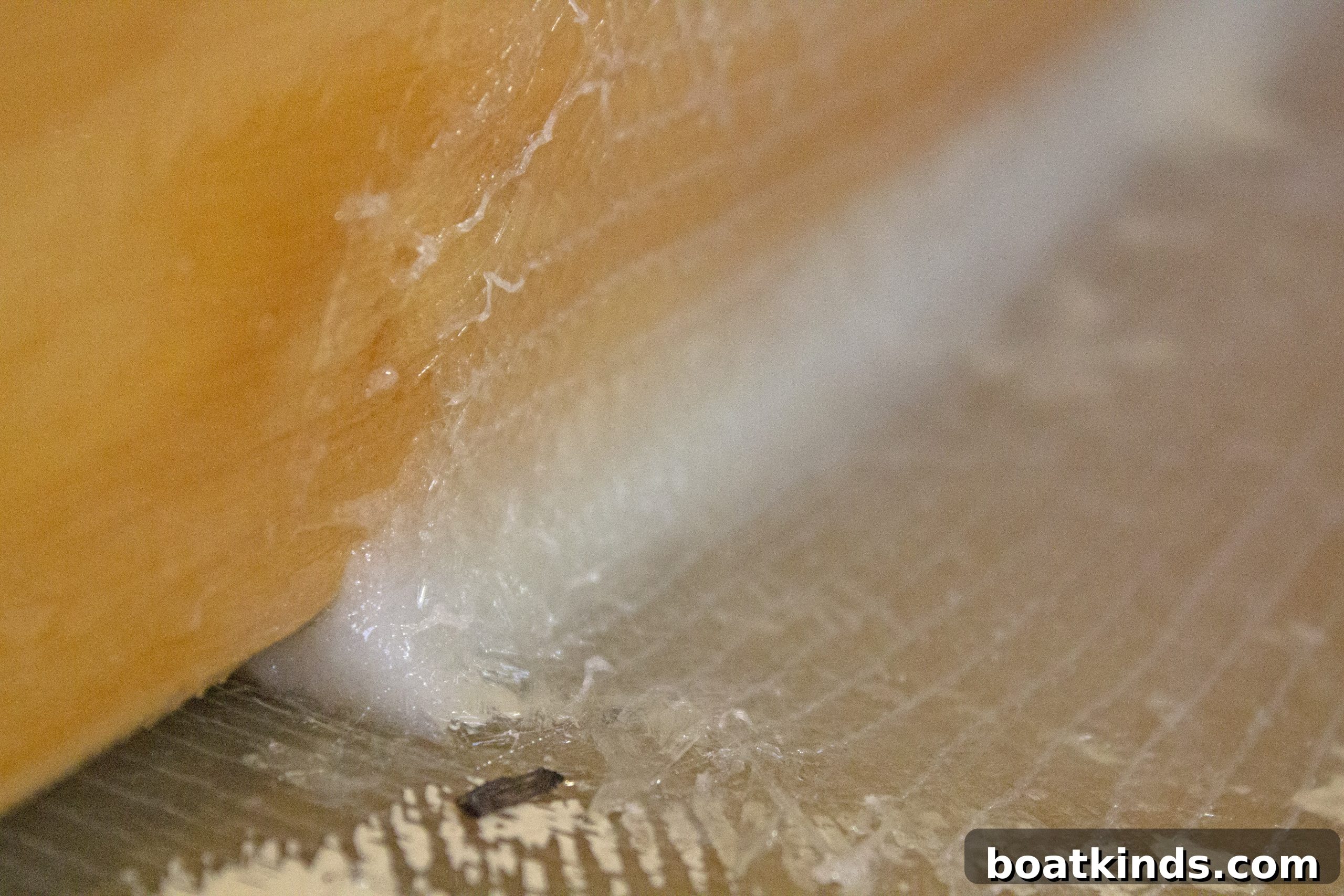
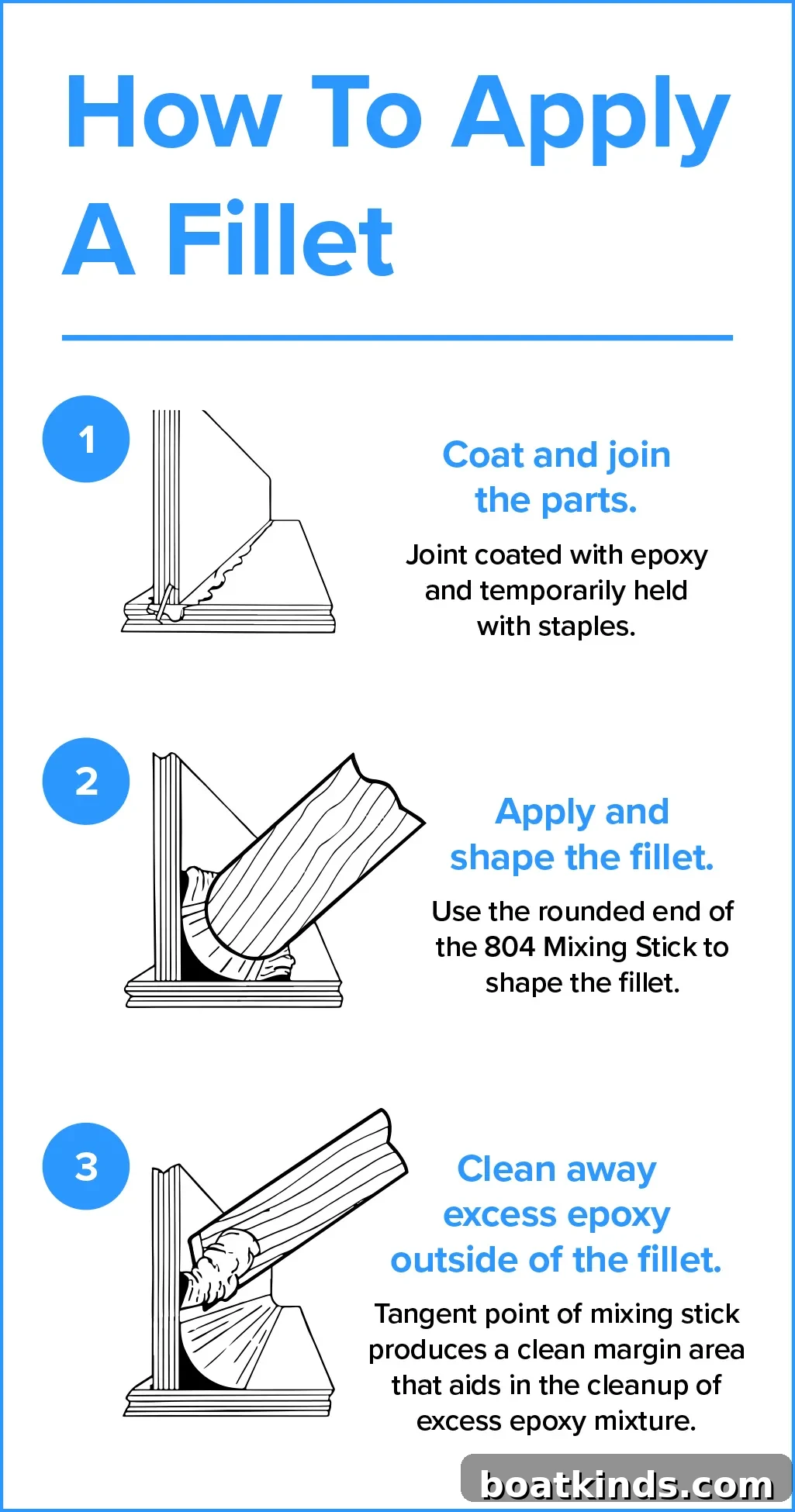
Fillets made from thickened epoxy provide smooth transitions in corners so fiberglass cloth can lay cleanly across two surfaces. The round end of the 804 Reusable Mixing Stick is sized to form a clean 3/8″ radius fillet, a commonly used shape that reduces trapped air and makes applying lightweight fiberglass simpler.
Hold the mixing stick at 90° to the corner to form a 3/8″ radius. Tilting the stick to about 45° produces a larger, more gradual fillet suitable for medium-weight fabrics. These simple adjustments let you tailor fillet shape to the fabric you’re using without extra tools.
If you want to estimate material needs, consider these practical data points and behaviors:
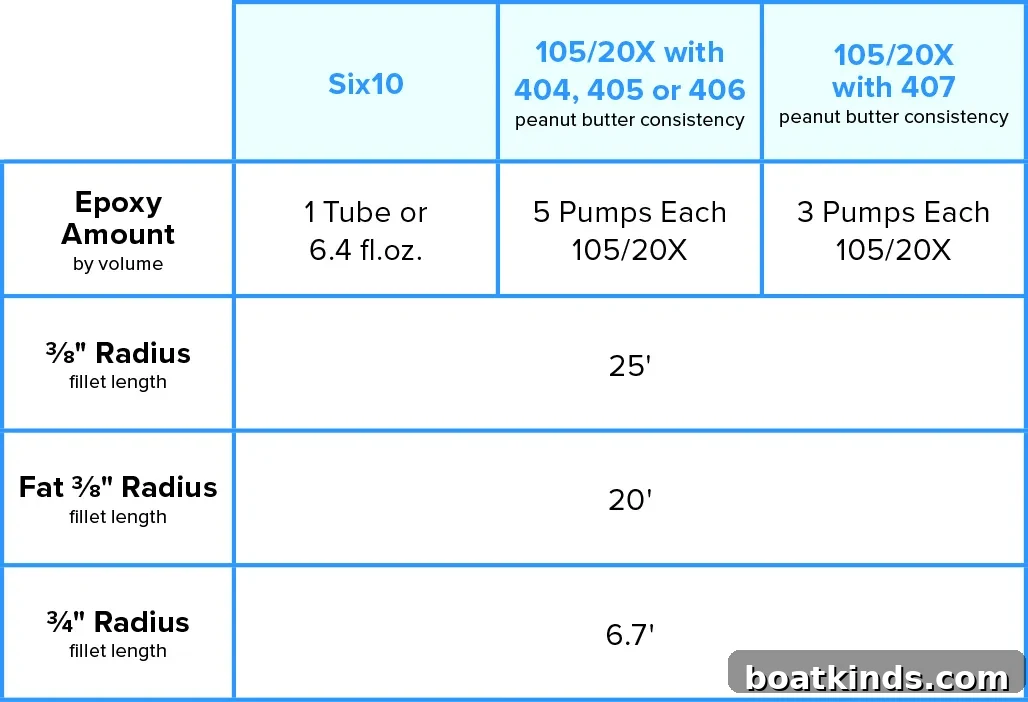
– Increasing a fillet radius from 3/8″ to 3/4″ uses more than twice the epoxy volume, so small changes in geometry can greatly affect material consumption.
– Fillets made with 407 Low-Density Filler will save weight and volume, but they deliver about half the strength of fillets made with higher-density fillers such as 404, 405, or 406.
– When you use higher-density fillers, they add relatively little to the final mixed volume. By contrast, 407 Low-Density Filler increases the final volume substantially: thickening 3 fl. oz. of epoxy with 407 to a peanut-butter consistency yields roughly 6 fl. oz. of mixed product. Plan for that increase when you batch materials for fillets or fairing.
Cartridges and Fillable Caulking Tubes
Laying a consistent bead is easiest with a caulk tube. Six10 is packaged in a two-part caulking cartridge that fits standard caulk guns; cut the nozzle for a ¼” bead and you can expect roughly 16 feet of continuous ¼” bead from a full Six10 cartridge (this is a practical estimate for planning, assuming an experienced applicator).
If you prefer the caulk-tube workflow but need a different epoxy or filler, WEST SYSTEM 810 Fillable Caulking Tubes accept your mixed, thickened epoxy and let you dispense it like a manufactured cartridge. The 810 tubes hold about 10 fl. oz., so a ¼” bead should yield nearly 25 feet from a full tube under ideal conditions.
Important dispensing notes: do not use rodless pneumatic caulk guns with these cartridges. Rodless guns can allow product to flow back out the rear or dispense at the wrong ratio in two-part cartridges. If you use a powered caulk gun, choose one with a physical plunger to avoid these problems.
Every user’s technique and speed produces some variation in actual epoxy usage. Estimating the right amount of material without running out takes practice, but having reliable reference numbers accelerates that learning curve. A few minutes spent calculating expected coverage and volumes before you mix will make your epoxy work more efficient and reduce waste and frustration on the job.

Visit the manufacturer’s website to download the user manual and product guide for complete specifications and application tips.