
Robert B. Dance: “Storm on Machias Bay” and a Life Devoted to Maritime Painting
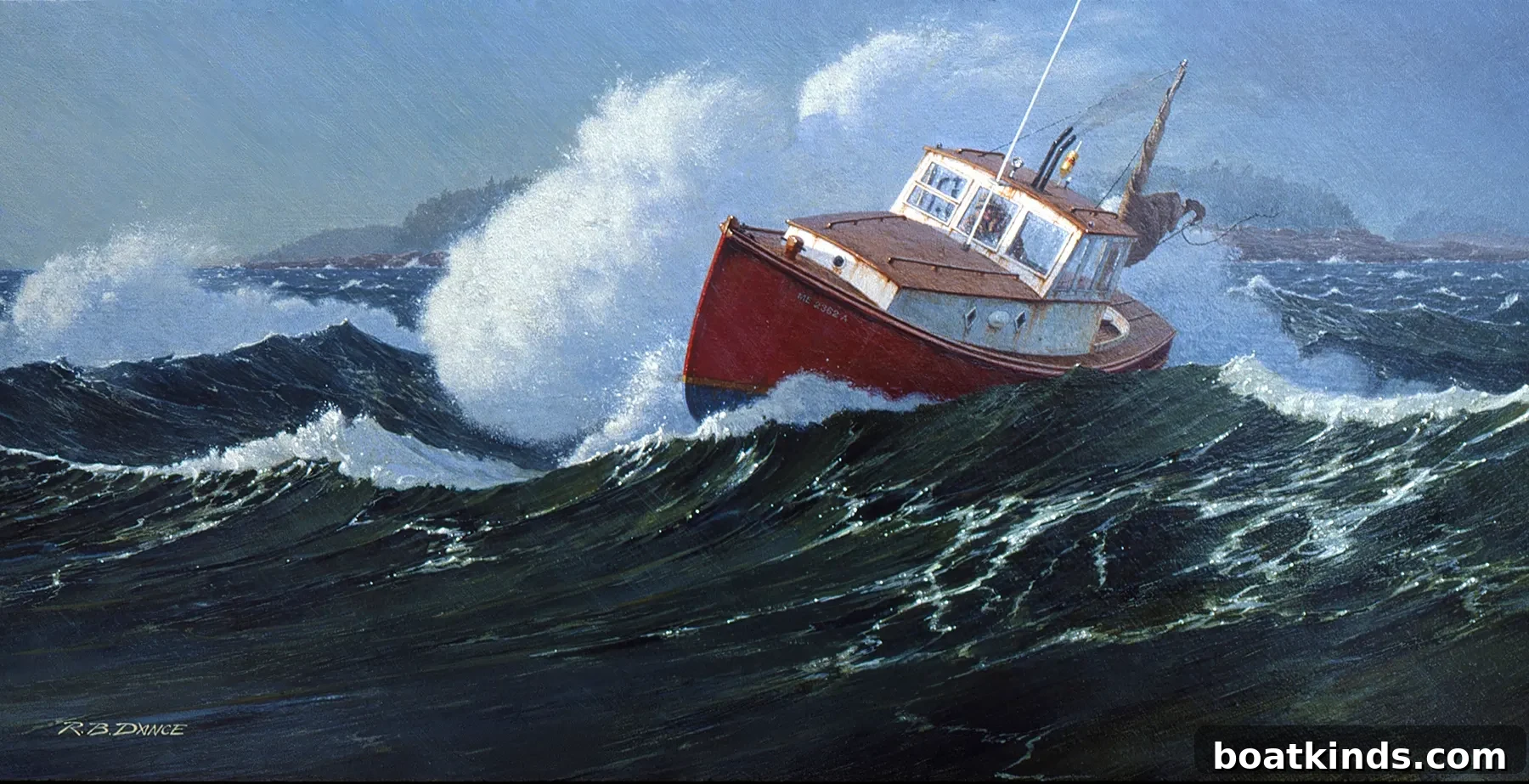
In Storm on Machias Bay, Maine, Robert B. Dance captures the raw force of a coastal storm with a combination of precise boat knowledge and a painterly sense for atmosphere. The composition centers on a red Downeast‑style lobster boat cutting through towering seas beneath a slate sky. Dark greens and grays of the ocean meet a heavy sheet of rain, and the painter’s brushwork conveys the velocity of wind and water. From behind the helm windshield, a captain leans into the wheel as spray lashes the glass—an intimate detail that reveals Dance’s familiarity with working vessels and the realities of seamanship.
Atmosphere, Motion, and Marine Detail
Dance’s handling of color and texture is key to the work’s impact. He balances broad, expressive strokes for the storm and sea with focused details—the glint on the wheelhouse, the profile of the boat, and the silhouette of the captain—so the viewer feels both the scene’s scale and its human element. The painting does more than depict weather; it communicates the tactile sensations of cold rain, driving wind, and the rough rhythm of waves. This combination of technical accuracy and emotional resonance is a hallmark of Dance’s seascapes.
Early Life and Artistic Formation
Robert B. Dance was born in Tokyo in 1934 during a turbulent historical period. His family returned to the United States shortly before the bombing of Pearl Harbor. An artist from childhood, Dance began painting at the age of six and later honed his skills at the Philadelphia Museum College of Art, from which he graduated with distinction. His training provided him with a strong foundation in draftsmanship and composition, tools he would use throughout a long career focused largely on landscapes and seascapes.
Exhibitions and Recognition
Dance’s work has been shown across the Eastern Seaboard and has reached audiences through a variety of public venues. His images have been used in museum logos and on a National Park stamp issued in 1988. One of his pieces, Hatteras Standing, was displayed in the Great Hall of the Smithsonian and was presented to President Bush at the White House—testimony to the broad appeal and institutional recognition his work has received.
Subjects, Sources, and Process
Much of Dance’s oeuvre revolves around water—coastal shorelines, harbors, and the small working craft that populate them. He frequently discovers vessels at local docks and reimagines them within atmospheres that suit his vision. When human figures are needed to enliven a composition, his own family often contributes: several of his sons have posed for scenes over the years. These personal connections help give Dance’s paintings a lived‑in authenticity.
Life Today and Continuing Practice
Now living in Kinston, North Carolina, with his wife, Dance remains active as an artist. Three sons who are involved in various creative pursuits surround him, and the family ties continue to influence his work. Even in his nineties, Dance spends as much time as possible in his home studio. In a 2022 interview with local news, he summed up his commitment simply: “I live to paint. I think that’s why I’ve outlived all my friends.” That declaration reflects a lifelong devotion to craft and an ongoing engagement with the subjects he loves.
Why “Storm on Machias Bay” Matters
Beyond its technical merits, Storm on Machias Bay, Maine stands as an example of Dance’s ability to fuse maritime expertise with evocative painting. The work invites viewers into a moment of tension—where human determination meets elemental force—while celebrating the vernacular forms and rhythms of coastal life. It is both a study of weather and a tribute to the resilience of mariners, rendered by an artist who knows both boats and paint intimately.
This article was originally published in the March 2024 issue.