
Scientists Map the Largest Known Deep-Sea Coral Reef off the U.S. Southeast Coast
Picture holding a flashlight close to a desk: the lit area is small and sharply defined. Now imagine the same light from a rooftop—suddenly a much wider area is illuminated. That analogy describes how modern sonar mapping reveals seafloor features at vastly different scales. Mounted beneath research vessels, arrays of sonar transducers emit broad, fan-shaped pulses that “paint” the ocean floor, producing high-resolution maps that reveal structures previously only hinted at.
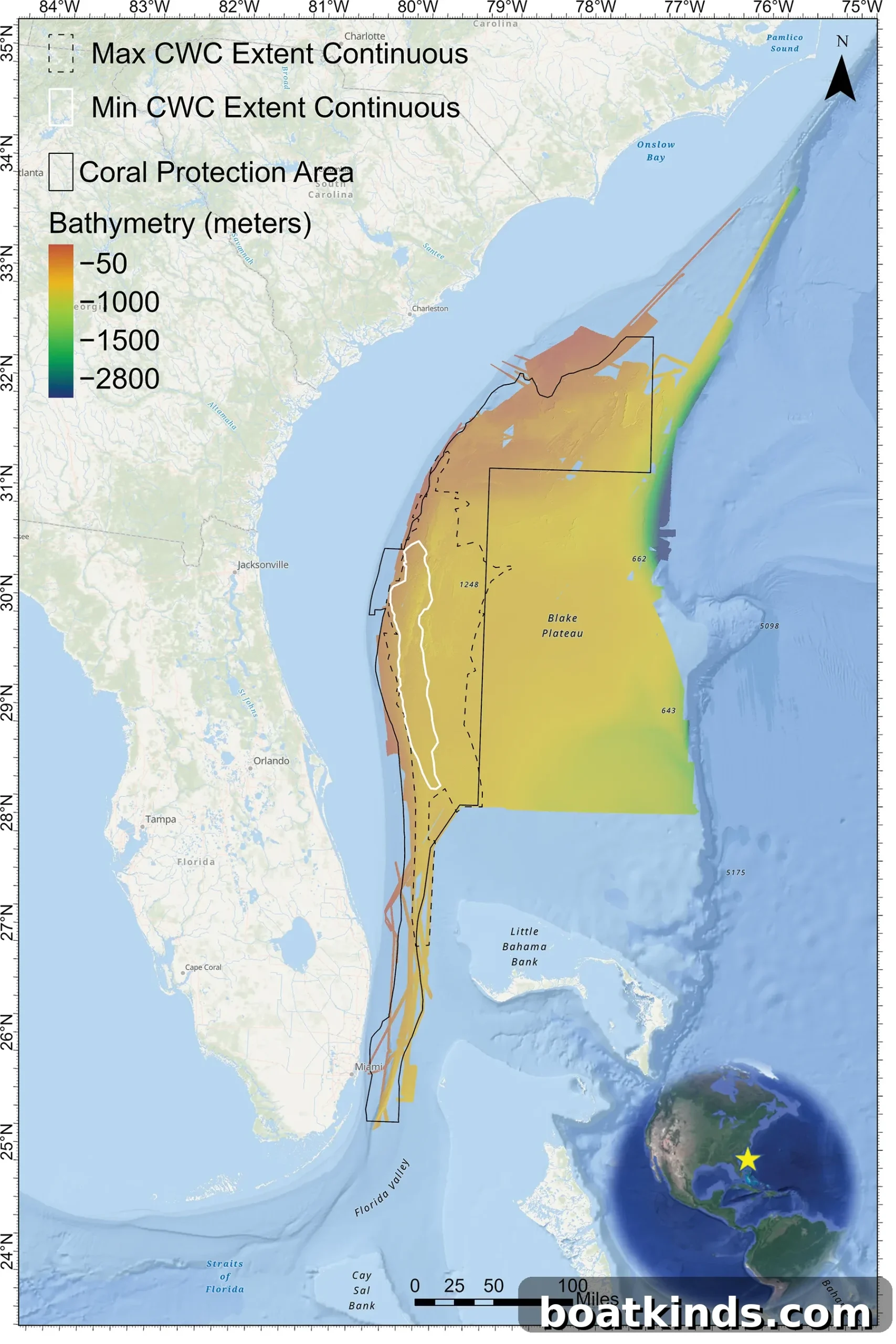
Using this approach, researchers have now documented a deep-sea coral reef that stretches farther than many expected—covering an area larger than the U.S. state of Vermont and running from South Carolina to Florida. This reef grows where sunlight cannot penetrate, at depths from about 655 feet down to 3,280 feet (roughly 200 to 1,000 meters). Because it exists well below the photic zone, the reef is built by filter-feeding, cold-water corals rather than by photosynthetic symbionts common to tropical shallow reefs.
Structure and Biodiversity
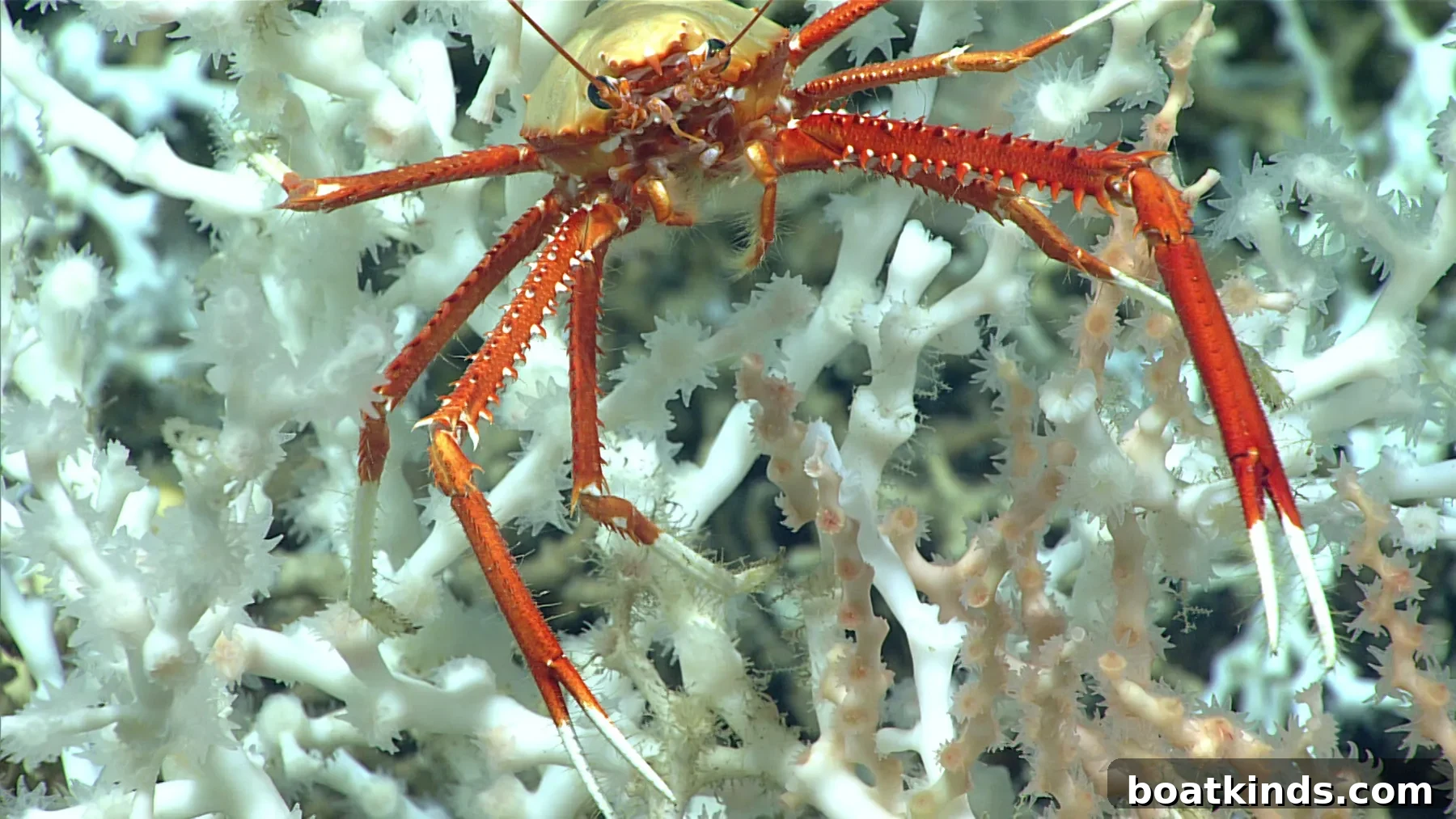
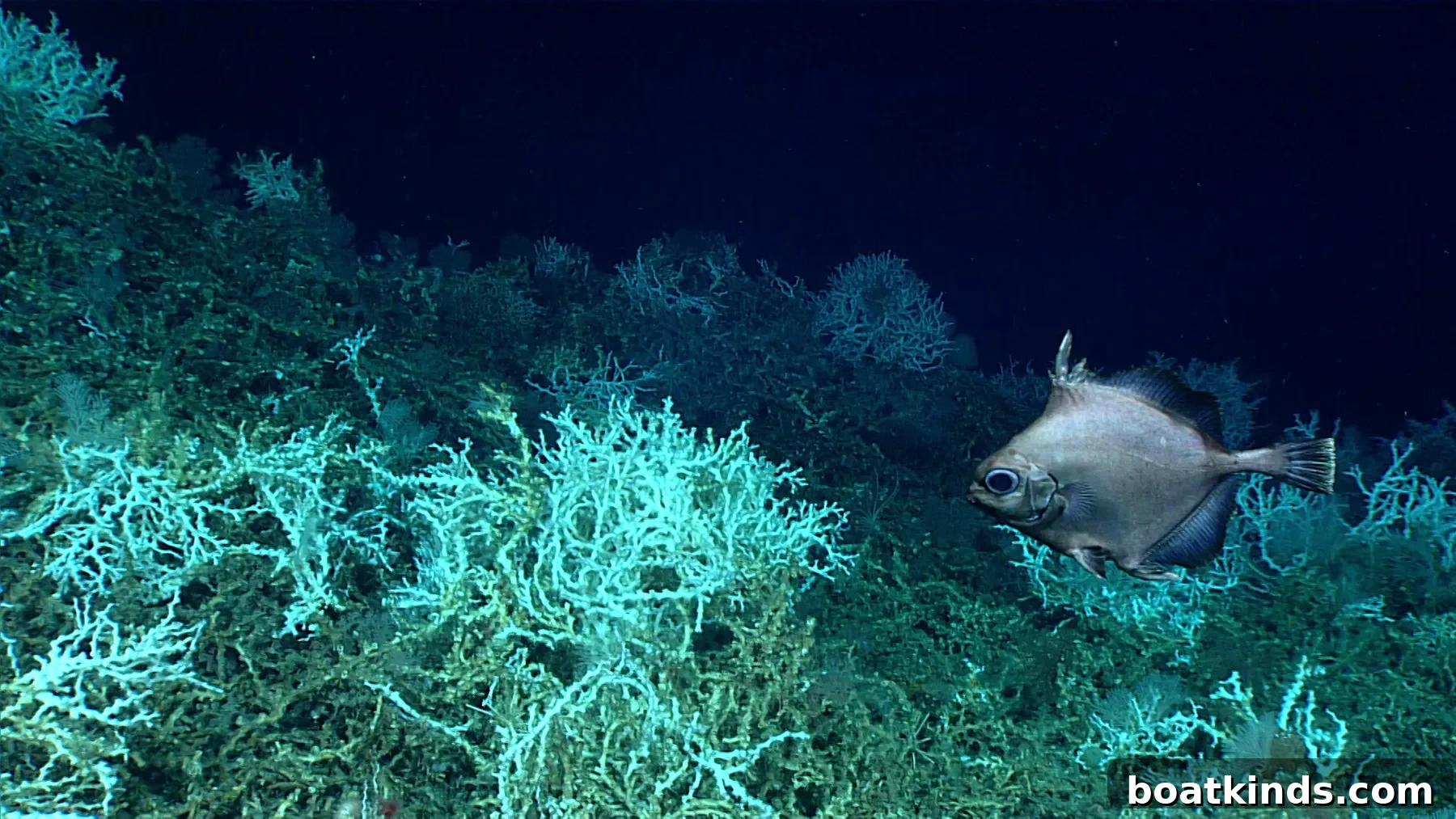
Though different in origin from tropical reefs, the deep-sea coral habitat performs many of the same ecological roles. The coral colonies create complex three-dimensional structure—mounds, ledges and crevices—that provide shelter, foraging grounds and nursery areas for a wide range of marine life. Scientists observed species such as swordfish, hake, skates, sharks, eels, crabs and squat lobsters using the reef, demonstrating its importance within the regional food web.
In the absence of sunlight, these corals subsist on organic particles carried by currents. Their slow-growing, filter-feeding communities thrive in cold, dark conditions, and, despite the harsh environment, support rich biological diversity adapted to deep-water life.
How the Reef Was Mapped
What makes this discovery notable is the reef’s scale. Over three years, researchers compiled bathymetric data from 31 multibeam sonar surveys to create nearly complete three-dimensional maps of the Blake Plateau, a broad feature roughly 100 miles off the Southeast U.S. coast. The core zone of high-density coral mounds spans an area up to 158 miles long and 26 miles wide. The largest cluster of these mounds has been informally dubbed “Million Mounds.”
Modern multibeam systems provide much sharper resolution than earlier mapping efforts. As Derek Sowers, mapping operations manager for the Ocean Exploration Trust and lead author on the study, explains: having today’s technology is like moving from a blurry satellite image to a crisp close-up—the difference reveals previously unseen complexity on the seafloor.
Expedition and Technology
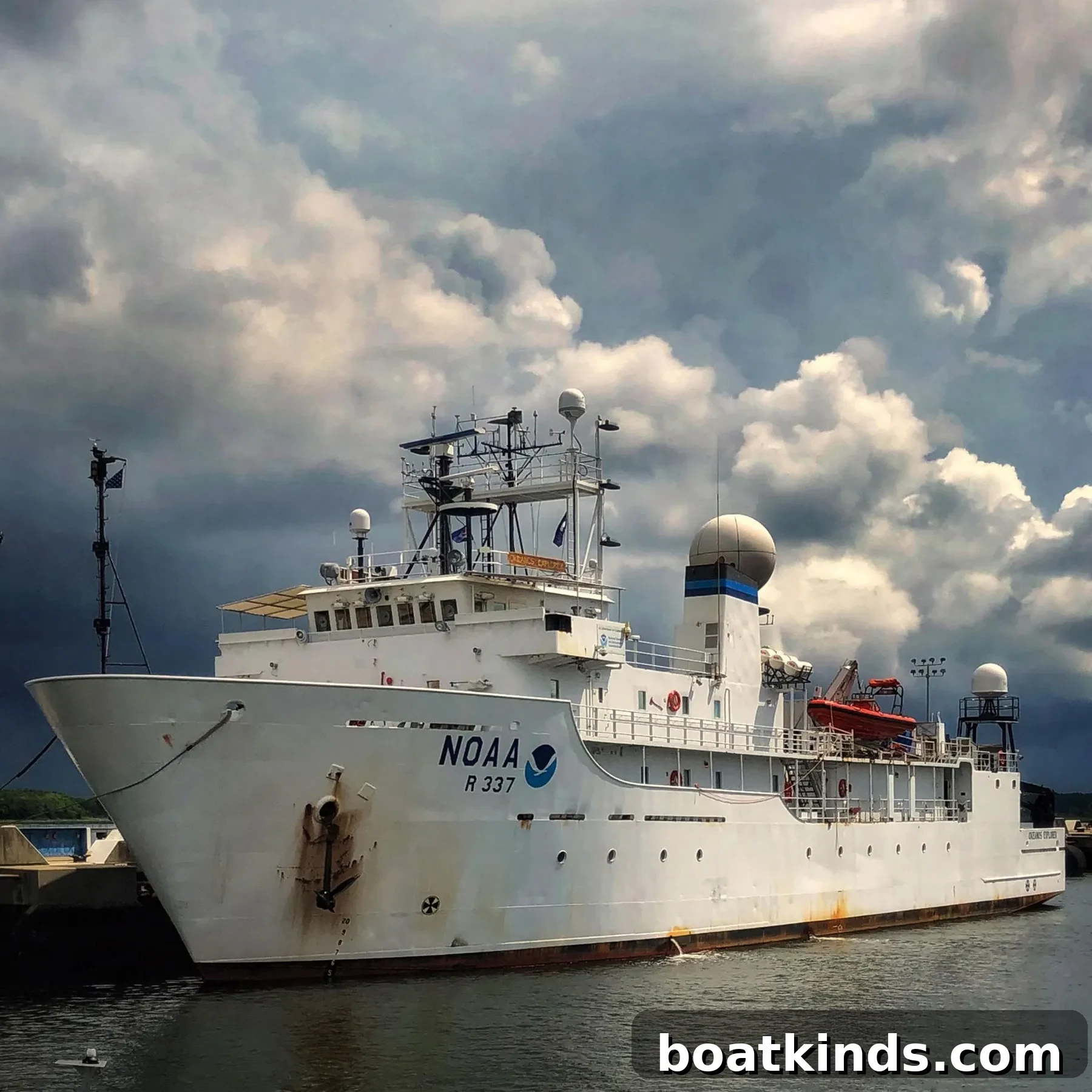
Much of the mapping was conducted aboard NOAA’s Okeanos Explorer, a converted U.S. Navy vessel outfitted with centerline multibeam transmit arrays and wide receiving arrays port to starboard. These large arrays are installed on dedicated research vessels because the hardware and hull space needed for deep-water surveys simply won’t fit on smaller boats. Mapping operations often run around the clock, maximizing data collection while the ship is at sea.
Fieldwork is expensive: at-sea science platforms can cost tens of thousands of dollars per day. That funding and ship time are the primary constraints on expanding high-resolution seafloor mapping worldwide.
Why This Mapping Matters
Only about a quarter of the global ocean has been mapped with comparable sonar technology. Gaps in mapping leave important habitats uncharted, which complicates conservation and resource-planning efforts. Without reliable maps, human activities such as cable and pipeline placement risk damaging sensitive coral mounds and the species they support.
Accurate, up-to-date seafloor maps allow conservation managers to redraw protection boundaries as new habitats are discovered. In this study, researchers found many coral mounds both inside and outside previously mapped protected areas—evidence that existing conservation maps for the Southeast U.S. continental shelf may require revision.
“We can’t manage or protect what we don’t know about,” Sowers says. Systematic ocean exploration and improved bathymetric mapping are essential first steps toward identifying priority habitats and informing policy decisions that safeguard deep-sea ecosystems.
This article was originally published in the April 2024 issue.