
Wreck of USS Stewart (DD-224) — the “Ghost Ship of the Pacific” — Found Off California After Eight Decades
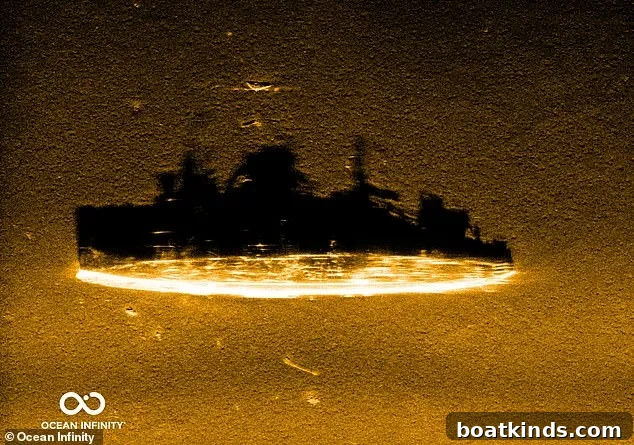
The wreck of a U.S. Navy destroyer that became the only American warship to be used by Japan during World War II has been located on the floor of the Pacific Ocean off the California coast, nearly eighty years after it was last seen. The vessel, long nicknamed the “Ghost Ship of the Pacific,” was identified almost 3,500 feet beneath the surface using advanced robotic sonar and autonomous survey technology.
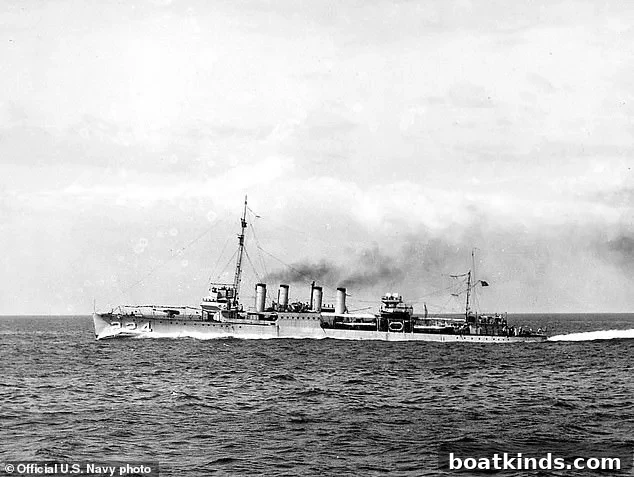
Designated DD-224 and known as the USS Stewart, the 314-foot destroyer served the U.S. Navy in the interwar years and into World War II. After joining the Atlantic Destroyer Squadron in 1921, the Stewart later operated around Chinese ports and in the Philippines before the outbreak of global conflict. For her wartime service she ultimately received two battle stars.
In 1942, while operating off Java, the Stewart suffered heavy damage from Japanese attacks. Shellfire breached her hull below the waterline, flooding her engine room and impairing propulsion. Later attempts to raise and repair her in a floating drydock at Surabaya, in the Dutch East Indies (now Indonesia), resulted in the ship capsizing onto her side in shallow water and being further damaged. A Japanese bomb inflicted additional harm as Allied forces evacuated the port.
Despite these setbacks, wartime reports from U.S. pilots later confirmed sightings of what appeared to be an American destroyer deep in enemy-controlled waters. Japanese forces had salvaged and repaired the damaged vessel and pressed her into service as a convoy escort for their navy.
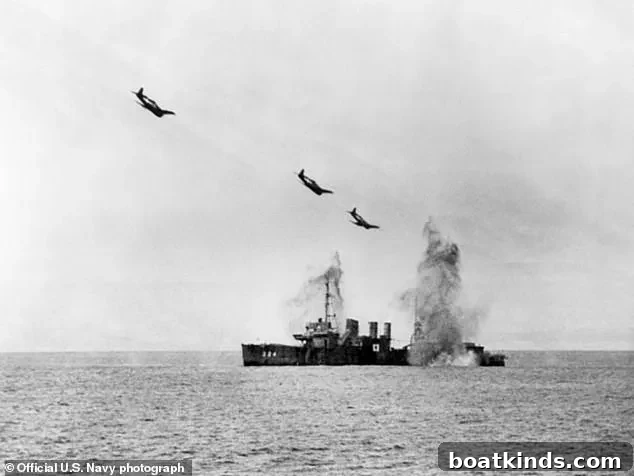
The Japanese moved the ship to the naval base at Kure in 1944. In April 1945 the vessel was struck and damaged by U.S. Navy bombing, and by the war’s end the Stewart had returned to American possession. She was recommissioned in October 1945 at Kure under the informal designation “RAMP-224,” standing for Recovered Allied Military Personnel, and briefly re-entered U.S. naval service.
After mechanical problems left her dead in the water near Guam, the ship was towed to California. She was formally decommissioned in May 1946 and subsequently used as a target vessel off San Francisco. Following approximately two hours of live-gun practice, the former destroyer sank, marking the end of a service life that had spanned peacetime patrols, battle damage, capture, enemy service, and recapture.
For 82 years the exact resting place of the Stewart remained unknown. That changed when Ocean Infinity, a company that operates one of the world’s largest fleets of autonomous underwater vehicles (AUVs), undertook a search of the Cordell Bank region off the California coast. Ocean Infinity is known for using autonomous drones and high-resolution seafloor mapping systems to locate historic wrecks and other underwater features.
Ocean Infinity had previously assisted in locating other notable shipwrecks, including the U.S.S. Nevada in 2020 and the expedition ship Endurance, which sank during Sir Ernest Shackleton’s 1915 Antarctic expedition. For the Stewart search, the company deployed multiple large autonomous drones simultaneously to test capabilities and to cover a large search area efficiently.
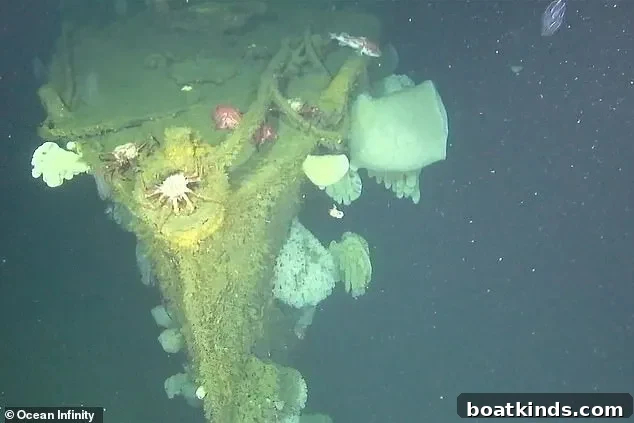
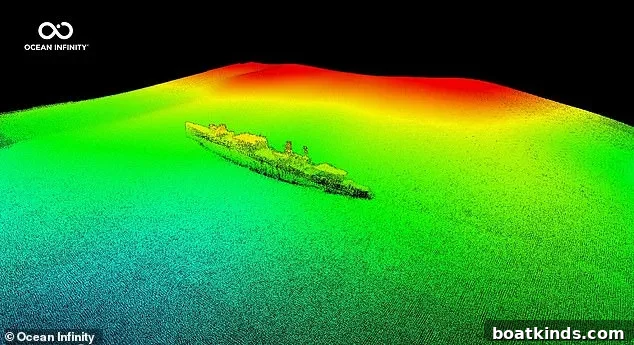
The search task called for mapping about 37 square nautical miles of seafloor, an effort that under traditional methods could have taken weeks. Instead, the autonomous systems located the ship within hours. The wreck was found upright, remarkably intact, and well-preserved for a U.S. Navy “four-piper” destroyer type. That preservation makes the Stewart one of the best-preserved examples of her class on the seafloor.
Jim Delgado, senior vice president at SEARCH, Inc., a firm specializing in maritime archaeology that participated in the discovery, said the find carries deep human resonance. “This ship, in its own way, basically was humanized by the Navy,” he told reporters. “People pour so much into ships—and we have since the beginning of time. They represent us.”
Russ Matthews, a member of the discovery team, explained that although the operational history of the Stewart was well documented in archival records, the missing piece had been the ship’s current physical condition and exact location. A U.S. Navy communiqué from 1946 provided a promising lead that narrowed the likely search area to what is now designated as the Cordell Bank sanctuary. Ocean Infinity’s AUV survey confirmed the site and produced imagery that lets researchers and historians see the long-hidden remains of this unique World War II vessel.
The discovery of the USS Stewart adds an important chapter to maritime archaeology and naval history, revealing a vessel that witnessed dramatic turns during wartime service and survived through an extraordinary and unusual wartime trajectory before finally coming to rest on the Pacific seafloor.