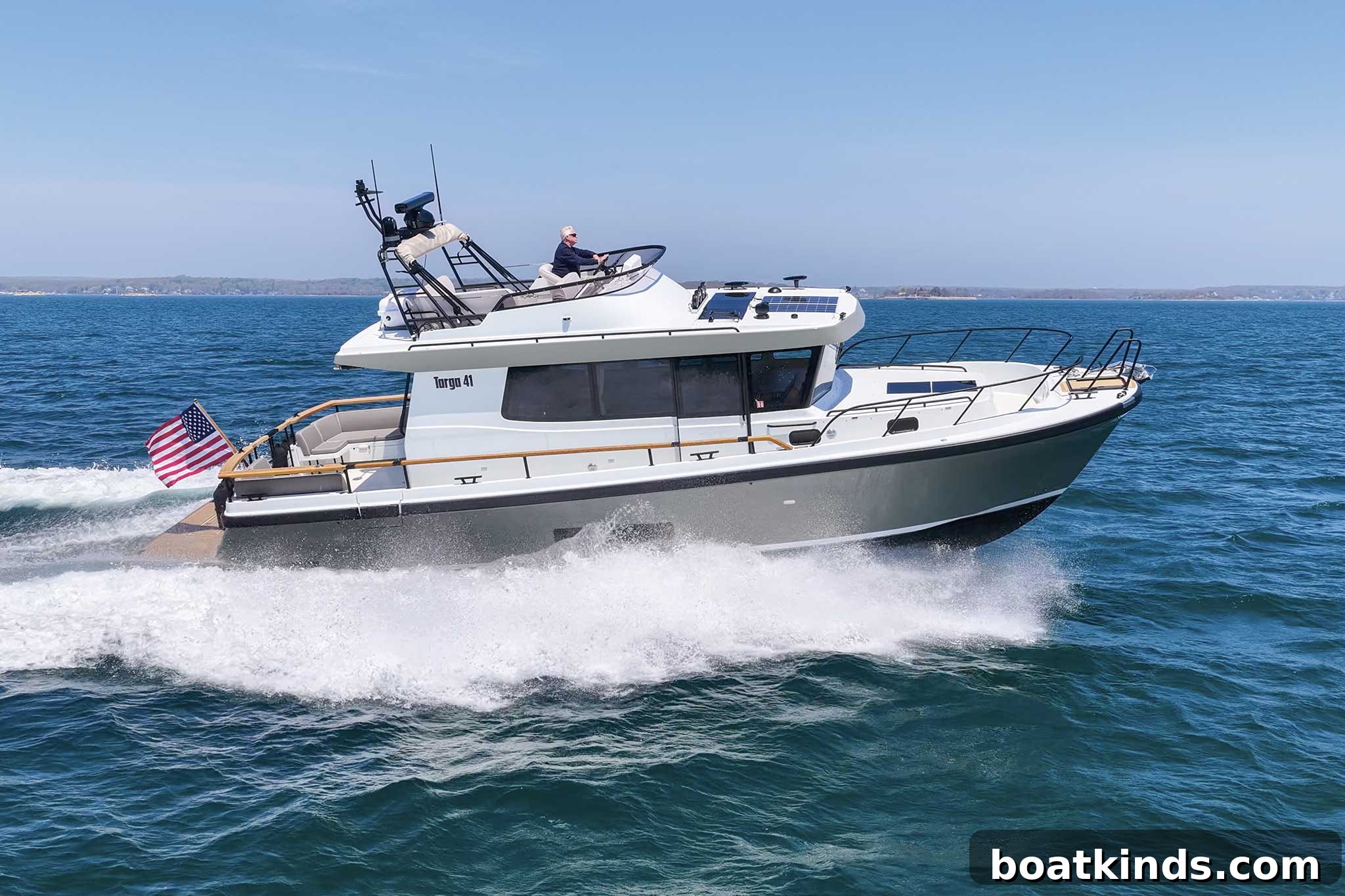
As we approached the boat tied to the dock, Ben Knowles didn’t lead with its dramatic lines or the deep-V hull that slices through a chop. He didn’t dwell on the square-shouldered pilothouse, either. Instead he pointed out something more elemental: the wide side decks. For captains who cruise with family or run short-handed, those decks matter. They let a passenger move around the boat confidently, aided by high bulwarks and secure handholds. The trade-off is a bit less interior volume, but Knowles—an experienced boater who has raced and cruised throughout the Northeast and the Caribbean—says the safety and ease of movement are worth it. “Once you understand what these can do for you, it’s hard to accept anything else,” he told me.
Knowles is president of East Coast Yacht Sales (ECYS), the Targa dealer for the eastern United States, and a fan of Nordic boat design—particularly the work from Botnia Marin in Finland. “The Fins like going fast, and they like rough weather, but they’re also very practical,” he said. That practical mindset informs the Targa 41’s overbuilt construction and its focus on offshore comfort and reliability. Knowles plans to run this 41 to Newfoundland for a couple of weeks with his wife and three young children, a testament to the model’s long-range cruising intent.
Our day’s plan was more modest: a 40-mile run from ECYS in Mystic, Connecticut, down to Montauk, New York, and back. The conditions were perfect for evaluating an all-weather cruiser—steady rain, limited visibility and cool temperatures in the low 50s. The Targa 41 is marketed to leave the dock when others don’t, and this gray, damp day was an ideal proving ground.
We left the slip with Knowles at the wheel. The pilothouse door to starboard was open, and its generous opening made stepping on and off the deck effortless—another small feature that encourages practical use. “The flow here is easy, and if it’s easy, you’re going to use it more often,” he remarked.
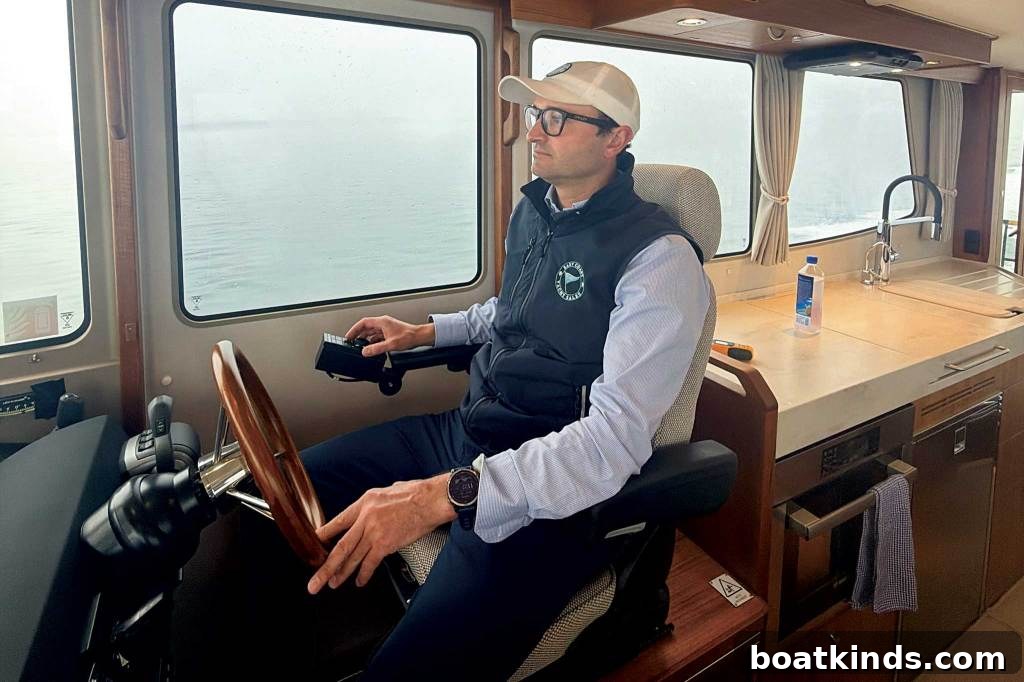
Once in Fishers Island Sound, the 41 showed its mettle. A defroster—rare in this size class—cleared condensation quickly and improved visibility through the reverse-raked windshield. Knowles noted the practical benefit: reduced glare for night runs, a reason many commercial and naval vessels use similar windscreen angles.
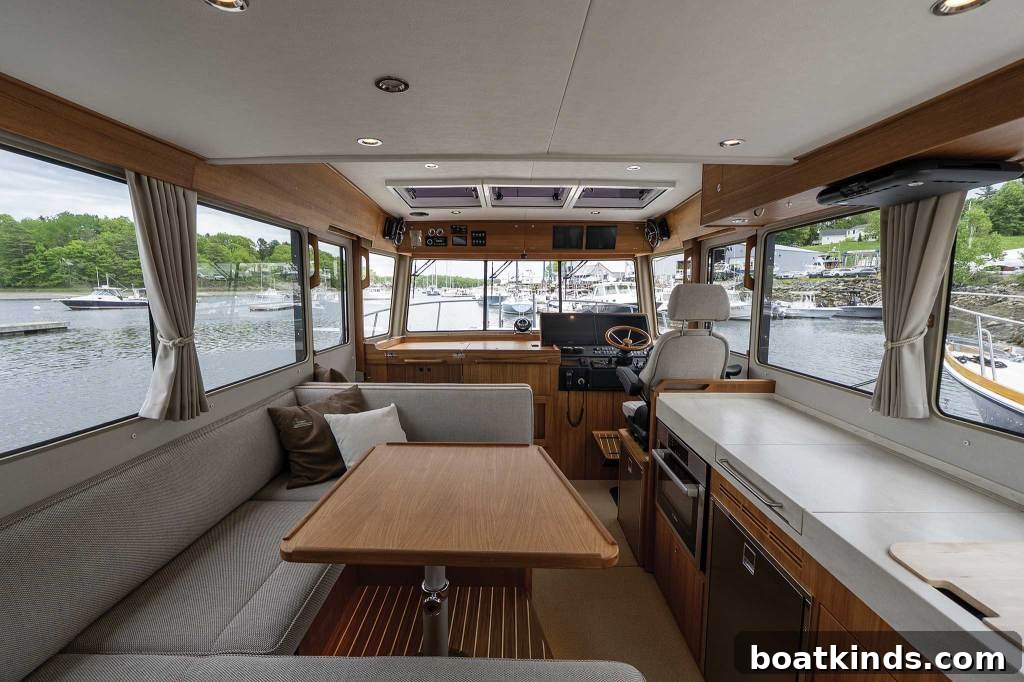
Cabin noise stayed in the low 70-decibel range while cruising. Knowles quoted typical long-range cruise numbers: at 80 percent engine load the Targa 41 cruises at about 31 knots, burning roughly 35 gph, giving a practical range of more than 300 nautical miles. Power comes from twin 480-hp Volvo Penta D6 DPI diesel sterndrives. From the long bench opposite the helm I appreciated the room for legs and the diesel-fired forced-air heat—comforts that make shoulder-season cruising far more enjoyable.
The boat’s hull and bow handled seas with confidence. At The Race off Montauk, where deep water, shallow shoals and fast tidal currents can conspire to make conditions messy, the 41 remained purposeful and controlled. Knowles turned off some automatic trims to show how easily the boat can be trimmed and finessed; when pushed, it responded like a sportboat, heeling and carving in turns and reaching 38 knots wide-open.
At the helm, Targa favors a traditional electrical layout with dedicated physical switches rather than fully digital switching—an intentional approach that prioritizes reliability for owners venturing offshore. That conservatism doesn’t mean a lack of technology. Options include open-array radar, a satellite compass, low-light cameras, Seakeeper stabilization and lithium-ion battery systems. “The boat represents a good balance,” Knowles said. “Right-sizing technology is an important consideration if you’re going farther afield.”
The Targa 41, which debuted in the U.S. in 2025, reflects years of refinement and owner feedback. Upgrades include hull windows in place of traditional ports and large frameless salon windows that flood the interior with light and views.
Inside, the starboard-side raised galley offers strong storage, good headroom (6 feet, 6 inches) despite the flybridge above, and thoughtful touches—like a paper towel holder placed for convenience. Opposite, a convertible dinette and pop-up TV add versatility. Natural teak cabinetry throughout the boat reinforces a classic, maritime aesthetic—one that resonates with Knowles, who spent years selling Grand Banks models and still associates teak with “a real boat.”
Below decks, the Targa 41 features a forward owner’s stateroom with an en suite head and separate shower. A notable surprise is the full-beam midcabin accessed by its own staircase aft in the salon, arranged with double and single berths and located close to the day head—useful for families or guests.
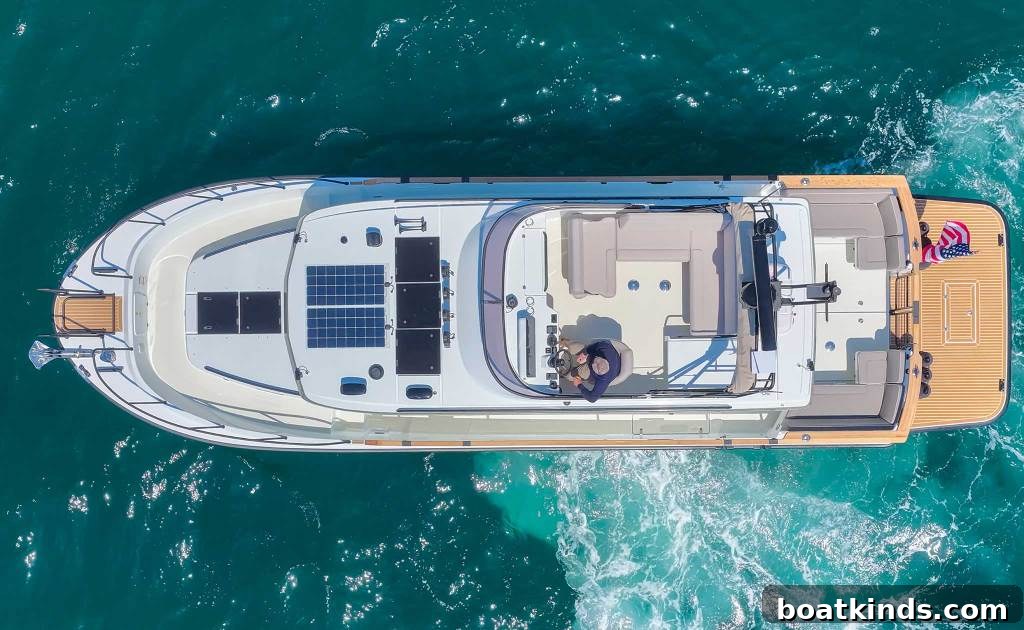
The cockpit continues the theme of practicality: twin gates ease dock access and improve traffic flow, a built-in staircase leads to the flybridge, and forward-hinged engine-room hatches provide unobstructed service access. Abaft the cockpit, a large swim platform includes a central hatch giving a view of the props and can carry a tender—an important feature for extended cruising and exploration.
After lunch at Safe Harbor Montauk Yacht Club, we headed back to Mystic. Knowles explained why ECYS represents Targa: it’s a family-owned brand founded in 1976 and still run by the Carpelan family. Targa’s low-volume, high-quality approach, with substantial in-house engineering and construction, lets dealers like ECYS “Americanize” certain systems—air conditioning brands, through-hulls, sea strainers and other components—to simplify maintenance for U.S. owners.
By the time we returned to Mystic, the Targa 41 had quietly proven its case. On a day when many boats stayed tied to the dock, this Targa logged miles comfortably and without drama—a fitting endorsement for a vessel designed to go when others won’t.
This article was originally published in the August 2026 issue.