

Most people get an annual physical even when they feel fine. A doctor can spot problems early and either treat them or refer you to a specialist. Your boat benefits from the same preventive care: a professional marine surveyor—and sometimes a mechanic or electrical technician—can inspect systems you might not routinely check. A thorough survey can reveal hidden issues, prioritize repairs, and help you avoid far more costly problems down the road. If you plan to haul out for the winter, that season‑end timing is ideal for a full checkup.
Having your own boat surveyed is different from a pre-purchase inspection. You already know the obvious issues—if the air conditioning struggles, the water pressure is low, or the holding tank smells, you likely know who to call. A surveyor focuses on problems you may not see: Has water intruded into the hull or deck core? What caused a new vibration at the end of the season? Why does the bilge pump run so often? A good surveyor acts like a detective, finding the cause before a minor issue becomes a major repair.
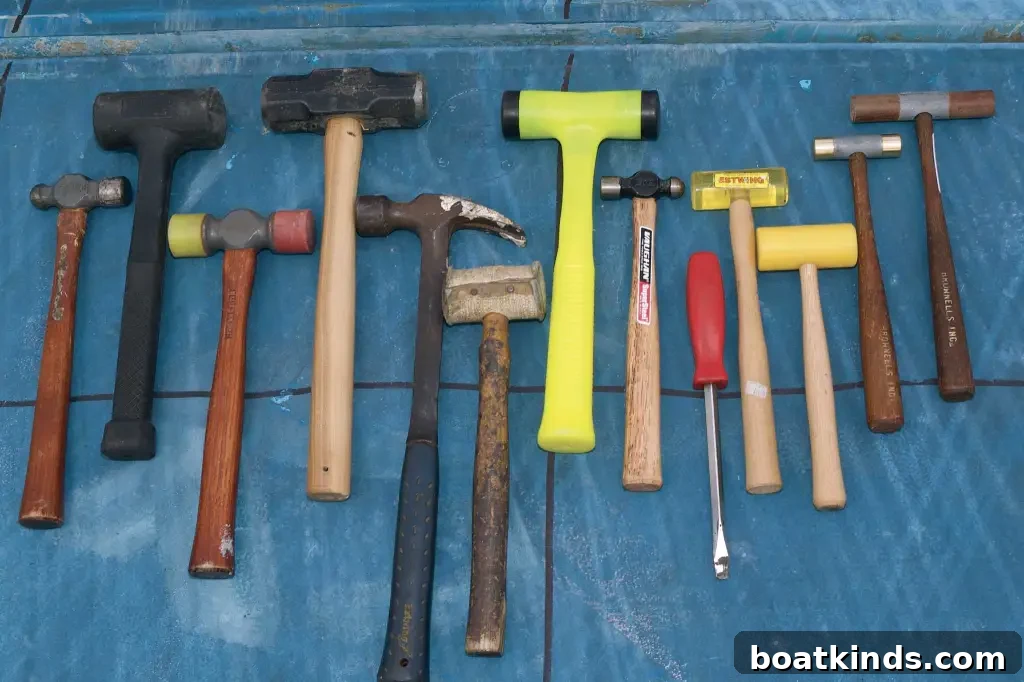
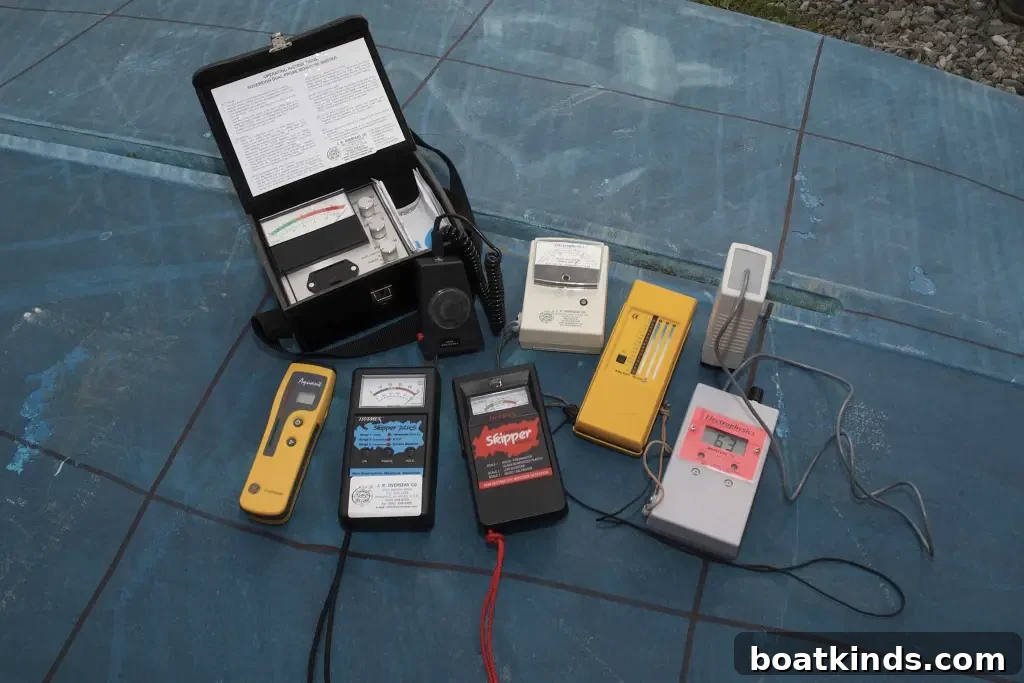
Common findings include excessive corrosion on underwater gear, which can indicate galvanic problems; cracking around deck hardware that allows water to reach the core; and soft or damaged laminate indicating delamination. Moisture meters and percussion testing with a soft-faced hammer are two ways to investigate these issues, and a skilled surveyor knows how to interpret both tools’ results.
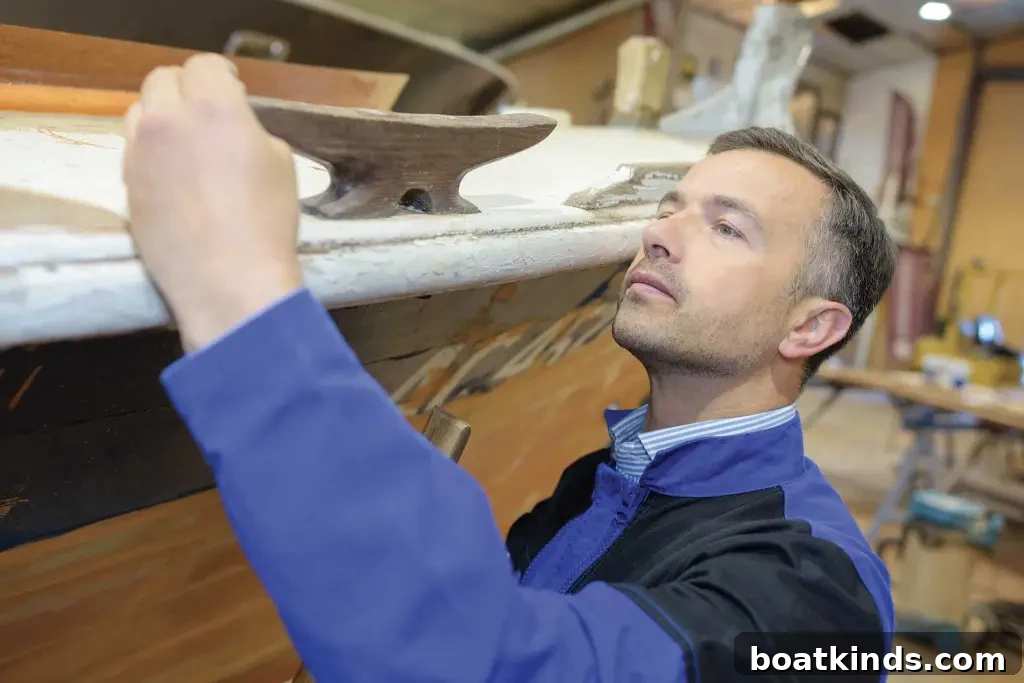
Detecting wet core early is crucial—repairing a saturated hull or deck gets expensive quickly. A surveyor might spot rust stains at stanchion bases and remove a fastening to check for crevice corrosion. Left unchecked, corrosion can reduce stainless fasteners to a dangerous condition that may go unnoticed until someone is injured. Surveyors also look for hoses that need replacement, the source of oil in the bilge, and other engine-room or plumbing problems that commonly arise with age and use.
A sharp, experienced surveyor will uncover many issues you might otherwise overlook. While some discoveries will be unwelcome, identifying problems early gives you options: immediate repair, a planned schedule for maintenance, or monitoring to ensure the issue doesn’t worsen.
There are limits to what a surveyor typically does. Most surveyors do not disassemble components, perform engine compression tests, or pull oil samples for lab analysis—those tasks are better handled by certified mechanics who have the specialized tools and diagnostic software for modern outboards and large diesels. A surveyor can, however, identify issues and provide estimates for repair costs. Annual oil sampling through a lab kit remains a sound maintenance practice.
“I don’t get many calls from people having their own boats surveyed,” says John Lowe, a surveyor from Stony Brook, New York, immediate past president of the Society of Accredited Marine Surveyors and a longtime board member. “Not that it’s a bad idea. It’s a good idea.” He advises owners to be explicit about their goals: this type of inspection is neither a pre-purchase survey (which includes a sea trial) nor a condition-and-valuation survey for insurance. It’s a custom inspection targeted to the owner’s concerns—systems that caused trouble during the season, unexplained noises, or persistent leaks.
Most surveys are normally billed by the foot, but targeted owner surveys are commonly charged by the hour. Structural inspections for delamination or water intrusion must be done before freezing temperatures arrive, because ice can mask moisture readings and give misleading percussion test results.
Finding a qualified surveyor takes some research. Reputable professionals are typically accredited or certified through organizations such as the Society of Accredited Marine Surveyors (SAMS) or the National Association of Marine Surveyors (NAMS). These trade organizations use peer review, experience requirements, and testing to verify a surveyor’s skills. Candidates for full membership generally must show multiple years of surveying experience, submit sample surveys for review, agree to a code of ethics, and complete continuing education. Look for surveyors with credentials specific to your vessel type and a solid track record of unbiased inspections.
Some surveyors hold U.S. Coast Guard captain’s licenses or other professional credentials, and many belong to industry bodies like the American Boat & Yacht Council or the National Fire Protection Association. These memberships are useful but do not replace formal accreditation by SAMS or certification by NAMS.
If a surveyor uncovers even a portion of the issues that could become costly or dangerous later, the fee is money well spent. Following a surveyor through the inspection is also educational and helps you understand how to maintain systems going forward. Make periodic surveys part of your maintenance plan, and keep a trusted surveyor on your list for future inspections or when you shop for another boat.
To Tap, or Not to Tap?
If you’ve watched a surveyor at work, you’ve likely seen them tap the hull with a small plastic hammer—a technique called percussion testing. With experience, a surveyor listens for changes in tone that indicate water intrusion into a core, delamination, or simply structural elements behind the surface. A dull “thud” can signal compromised laminate, poorly bedded fittings, or core saturation; a clear “ring” usually indicates solid structure.
Moisture meters are a modern tool that many surveyors use alongside the hammer. Originally designed for wood, these meters can provide useful information on laminate moisture content but have limitations. Interpretation matters: different meters probe to different depths, and some models can give misleading “dry” or “wet” readings depending on construction and the distance to the core. That’s why skill and experience are essential when combining meter readings with percussion testing.
At a SAMS continuing-education class held at a salvage yard, surveyors compared meter readings with destructive tests on derelict hulls. In several cases, areas that registered as “dry” on meters were actually saturated when cut open—so wet that water ran from the test holes. Some meters proved consistently more accurate than others, while a few performed poorly. Overall, an experienced surveyor’s hammer and ear remain among the most reliable diagnostic tools when used by a knowledgeable professional. —M.S.