

Navigation Lights: Essential Nighttime Seamanship and Safety
Long before electronics and radio traffic, keeping watch at night included simple, reliable routines. A bow lookout might turn, face aft and shout to the mate on the bridge; at sunset a sailor would call out, “The lights are shining brightly!” That old-fashioned habit still matters. Checking your navigation lights at sunset and understanding the lights on other vessels are basic rules of good seamanship and lifesaving practice.
Failing to display or recognize navigation lights can have fatal consequences. This past summer, two recreational boaters were killed and three others injured on the Great Lakes when their vessel was struck while underway on a dark, moonless night. The collision involved an unlit boat; the operator had not confirmed that navigation lights were on and functioning. Accidents like this are avoidable if crews perform routine checks and remain vigilant.
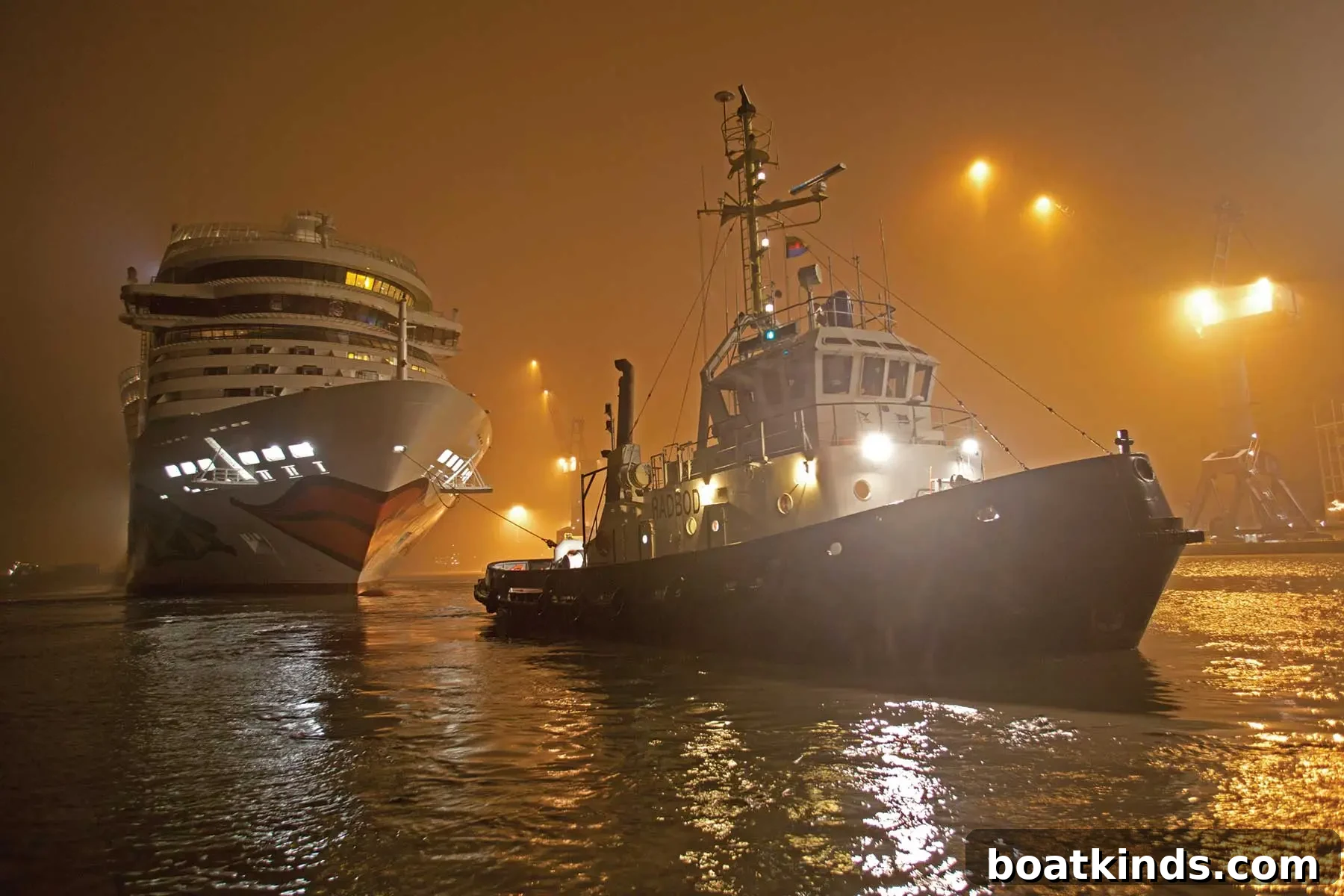
Beyond simply turning lights on from sunset to sunrise, you and your crew must be able to read other vessels’ light patterns. Misreading lights can be catastrophic: on Long Island Sound years ago, a sportfisherman misinterpreted a towboat’s lighting and crossed behind the tug. The fishing boat fouled the towing cable, was disabled, and was struck by the following barge. Nearly everyone aboard perished. Learning the differences between towing astern, alongside, or pushing ahead is critical.
Study the rules, but also practice in real conditions. Observe traffic at dusk and dawn so you can see light configurations together with the vessels that carry them. Watching at those times reveals how masthead lights change with heading, when sidelights appear or disappear, and how vessel size and placement affect what you see. These observations make light patterns for passing, crossing, overtaking, and right-of-way intuitive.
Onboard training helps. When I was a young sailor, an experienced mariner would ask, “What do you see on the starboard bow?” With binoculars up, I learned mnemonics and practiced until recognition became automatic — for example, “white over red, pilot ahead” versus “red over white, fishing at night.” Use whatever method works for you: apps, the rule book illustrations, flashcards, or simple ditties. Repetition builds confidence.
Train your senses to spot common patterns and subtle cues. The spacing of masthead lights suggests a ship’s length; changes in that spacing show heading changes. If white masthead lights line up vertically with red and green sidelights visible, the vessel is coming straight at you. In cluttered harbor or urban backdrops, look for silhouettes that block background lights, then focus on the specific light pattern to identify the vessel.
In narrow channels or busy approaches, consider two people on watch or a dedicated lookout. Electronics — radar, AIS, chartplotters — are invaluable, but they are not substitutes for visual awareness. Combining reliable electronics with practiced visual skills makes you a better, safer seaman.
Maintaining your own navigation lights is as important as knowing how to interpret others’. Preventive maintenance prevents problems at sea: inspect lenses for cracks, check for water intrusion, worn O-rings, corroded connections, and loose or damaged wiring. Verify that arc-of-visibility shields are correct so your lights show the proper sectors; incorrect arcs can affect right-of-way claims. Keep an inventory of spare bulbs of the correct wattage, clearly labeled for quick replacement.
Some larger vessels have redundant bulbs or backup systems you can switch to, but for most recreational boats the rule is “know before you go.” Test all navigation lights before leaving the dock; you’ll be glad to address a burned-out bulb in harbor rather than in open water. Also ensure nothing stowed on deck—a paddleboard, dinghy, or gear—can block a light when underway. Check your vessel from a dinghy or the dock to confirm how it appears to others.
Be mindful of improper or confusing lighting. I once saw a sailboat whose masthead white was blinking like an SOS; the crew cheerfully waved and toasted as we approached, unaware they were signaling distress. Likewise, running anchor lights, strobes, halogen work lights, or deck party lights while underway adds confusing signals. Less is more: display only the required navigation lights so your size, type, heading, and right-of-way status are communicated clearly.
Cruise ships and party vessels can complicate night navigation with decorative lighting that obscures sidelight positions and makes it hard to tell one end of the ship from the other. When uncertain about the course or speed of a large ship, slow down or stop and let it pass — a cautious decision that reduces risk and keeps your watch uneventful.
It’s easy to take navigation lights for granted until something fails or is accidentally obscured. Because the consequences can be severe, keep your lights in good repair, practice reading others’ configurations, and make night-safety checks a routine part of every cruise. Reliable lights and practiced observation are essential to avoid becoming another accident statistic.
This article originally appeared in the January 2020 issue.
