
Delos 2.0: Brian Trautman’s Next-Generation Cruising Catamaran
Brian Trautman, his wife Karin Syrén, their daughter Sierra, now five, and Brian’s brother Brady make up the core crew of the family’s well-known boat, Delos. Over the years they have completed several long ocean passages, logging more than 85,000 nautical miles and visiting 45 countries. Along the way they developed a strong following as travel and sailing videographers with the popular YouTube channel Sailing SV Delos, which features more than 300 videos and serves an audience of roughly 846,000 subscribers.
The original Delos is a 53-foot Amel Super Maramu, a bluewater-rated fiberglass cruiser designed for long offshore passages. Rigged as a ketch, the boat has a 15-foot beam, a draft just under 7 feet, and displaces roughly 35,000 pounds. Built in La Rochelle, France, in 2000, the Amel offers comfortable accommodations for six and has been outfitted for extended periods away from shore. “Delos is able to turn saltwater into fresh water, sun into energy, provide food and shelter, travel for months on end without visiting a dock and best of all, be the place we have called home,” Trautman has said, summarizing why the vessel has been such a successful liveaboard and cruising platform for the family.
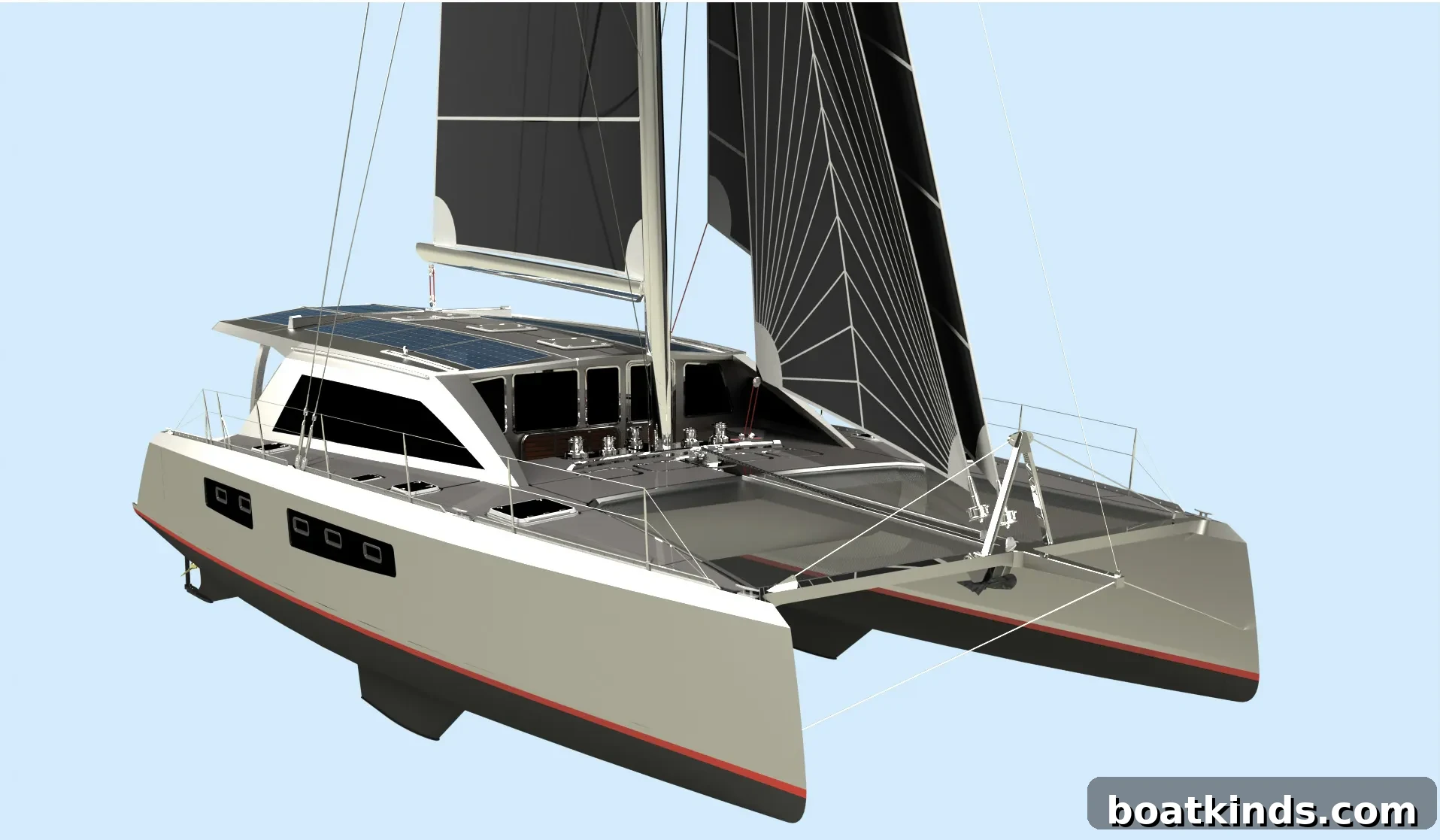
After more than a decade and a half of offshore experience, the crew began planning their next chapter. That planning led them to a different hull form: a welded aluminum cruising catamaran. The choice is not a dramatic rejection of monohull sailing so much as a deliberate solution to meet the family’s evolving priorities—more interior volume, greater stability at anchor, and increased payload capacity for long-term independence. The result of those conversations and design iterations is the Delos Explorer 53, a DeVilliers-built welded aluminum catamaran currently under construction in Australia.
The Delos Explorer 53 measures 52 feet, 6 inches overall and features an impressive 25-foot, 7-inch beam with a moderate draft just under 4 feet. Designed as a comfortable, go-anywhere cruising platform, the catamaran incorporates robust features that reflect lessons learned during years afloat. Below the waterline, four fixed keels are planned to protect running gear and offer added stability in shoal areas or in the event of impact with submerged objects. On deck the layout emphasizes safe, efficient sail handling; there is a spacious sail-handling cockpit forward of the deckhouse that can be accessed through a watertight door, while aft the extended deckhouse roof creates ample room for solar array installation and dinghy stowage. That roof also improves protection from sun and provides a surface for water catchment. A wide diving platform spans the stern, making watersports and boarding easier when at anchor.
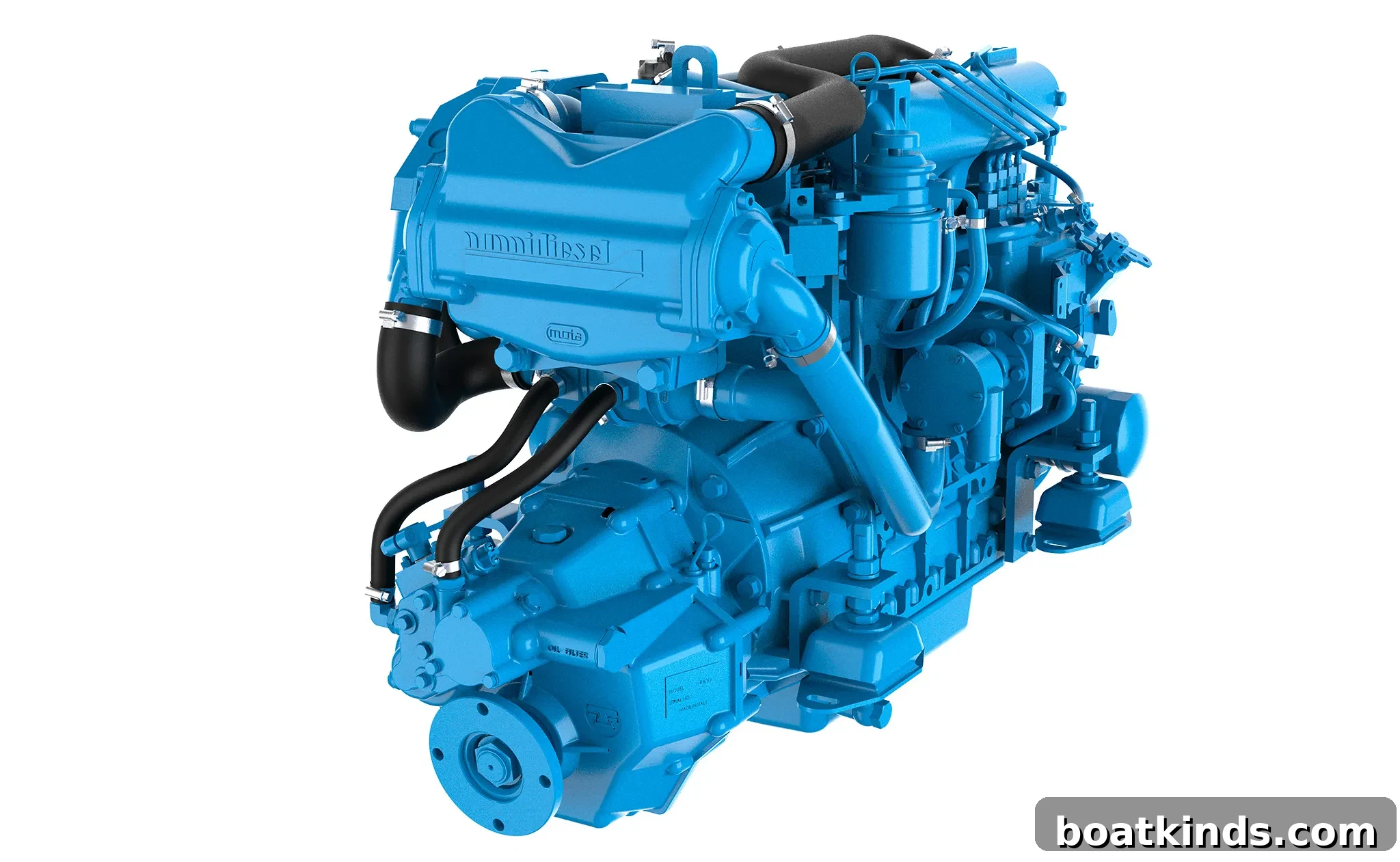
Energy and propulsion were central to the design brief. Trautman’s research led him to specify a hybrid propulsion package that balances efficiency, redundancy and environmental considerations. The plan calls for a Nanni N4.80 diesel engine with an in-line Combi 25-kW electric motor in the port hull, and a single Combi 25-kW electric motor in the starboard hull. The Nanni is a turbocharged, intercooled 80-horsepower, 4-cylinder, 4-stroke diesel unit with closed cooling, built from a marinized Kubota platform. Kubota’s global sales and support network—reported to operate in roughly 90 countries—helps ensure serviceability. The Combi electric motors will not only provide quiet, efficient propulsion but also act as generators for battery recharging, supporting extended periods away from shore power.
Stradbroke Yachts in Brisbane, Australia, was chosen to fabricate the hulls and structure, bringing expertise in precision aluminum welding. The vessel will be built from 5083 aluminum plate in H321 and H116 tempers, materials selected for their proven weldability, mechanical strength and resistance to corrosion. Those characteristics make aluminum a logical choice for a long-range expedition craft intended to operate in remote locations and challenging conditions.
The crew affectionately refers to the new build as Delos 2.0, a nod to the boat’s technical evolution and perhaps a playful reference to Trautman’s earlier career working as a Microsoft engineer. After around 18 months of detailed discussions with DeVilliers, Trautman settled on a platform aimed at delivering a safe, capacious and self-sufficient family cruiser. The Delos Explorer 53 represents the family’s accumulated cruising knowledge distilled into a purpose-built design—intended to be at home crossing oceans, exploring remote anchorages and supporting the lifestyle they’ve shared with hundreds of thousands of followers.
The Delos Explorer 53 was reported to be approximately 18 to 24 months from completion as of January 2025, and it has been conceived and engineered to be a next-generation cruising home for a family that plans to keep voyaging for years to come.
January 2025