
Paul Spencer and Spencer Yachts: Carolina Craftsmanship Meets Modern Propulsion
Under a tin shed in Manns Harbor, North Carolina, with no electricity or plumbing, Paul Spencer founded Spencer Yachts in 1996. Today his Wanchese-based company builds custom sportfishing yachts from 37 to 87 feet, blending classic Carolina flare with contemporary Florida styling. Spencer Yachts produces boats that range in price from about $1.3 million to $9 million and is known for striking lines, practical layouts and strong performance.
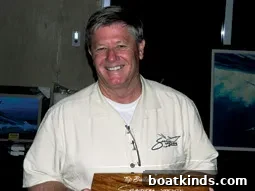
Spencer keeps the yard on the leading edge of boatbuilding technologies, using lightweight composite core materials and exploring the latest in propulsion systems. The company’s work includes an 87-foot custom with four pod drives and joystick helm control, as well as smaller twin-outboard express fishing boats. The shipyard employs roughly 125 workers and also provides repair and maintenance services, metal fabrication and brokerage.
Raised around Oregon Inlet, Spencer started on the water as a teen deckhand, earned his captain’s license at 20 and sold the first boat he built—originally intended for his own use—before it was even finished. He still fishes frequently and races his designs in tournaments; three of his five children now work in the business. Spencer lives in Manteo, North Carolina, with his wife, Shelly.
Embracing Pod Propulsion and Joystick Controls
Q: What role do you think pod propulsion and joystick technology will play in the next few years at Spencer?
A: I’ve always believed there’s a better mousetrap, and I like to test new ways to improve boats. Pod drives and joystick systems have added a new dimension to maneuverability and efficiency. We’ve built a range of pod-driven boats and have learned a lot through each project. They aren’t right for every owner, but they’ve proven successful in many configurations and they don’t intimidate me. Like any innovation, they require a learning curve, but they can deliver measurable gains in handling and performance.
The 87-Foot Spencer: Performance and Efficiency
Q: Describe the 87, which I believe is the largest boat you’ve built.
A: Our 87-footer is outfitted with four Caterpillar engines and ZF pod units. This client wanted a bigger, faster boat that was also more maneuverable for fishing. The result is impressive: where a previous 76-footer cruised at 32 knots burning about 220 gallons per hour, the 87 with pods cruises at the same speed while burning roughly 160 gph. That’s a significant improvement in fuel efficiency without sacrificing speed.
Q: Is weight or drag a drawback for pods?
A: The extra weight of pods isn’t as much of an issue as some assume because they remove the need for long shafts, rudders and other inboard hardware. Shifting the boat’s longitudinal center of gravity aft can also improve performance. Overall, the tradeoffs are often beneficial.
Q: What size range of pod boats have you built?
A: We’ve produced pod-driven hulls in a variety of sizes—43, 45, 49, 57, 60, 61 and 87 feet—each with different configurations tailored to customer preferences. We still build more conventionally powered boats than pods, but two of the eight boats currently under construction are pod-driven.
Weight Savings, Speed and Practical Design
Q: Is there a project you’re particularly excited about?
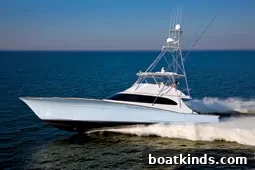
A: We’re building an 87-foot boat for an owner who values speed and fishing performance. Over the past decade we’ve adopted many small improvements—lightweight materials, refined hull treatments and systems simplification—that add up to big gains. By combining a number of weight- and drag-saving measures, we’ve increased cruise speeds by several knots. This particular 87 is designed to cruise comfortably at 42 knots and should exceed 46 knots at top end.
Q: What do you see as common flaws in many contemporary boats?
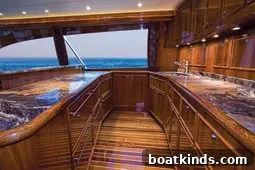
A: A lot of boats look great from the outside but are difficult to work on. Accessibility is often an afterthought: you shouldn’t have to disassemble half the interior to service an engine or reach a component. That applies across the vessel—engine rooms, staterooms, heads and helms all need practical planning so owners and technicians can access systems easily.
Favorite Boats and Early Beginnings
Q: What’s your favorite Spencer boat?
A: The 87 is one of my favorites because its performance usually surprises people—they don’t appreciate how well it rides until they step aboard. I’m a speed enthusiast, so I love boats that cruise around 40 knots. I’ve built several of those and appreciate being able to cover ground quickly when fishing long distances.
Another meaningful boat was a 61-foot vessel called Anticipation—the second boat I built. It became a real fish magnet and helped put Spencer Yachts on the map. I ran it as a charter boat early on, and it played a big part in establishing our reputation.
Q: How did you start Spencer Yachts?
A: I ran charter boats and needed a new vessel I couldn’t afford, so I built one. My wife and I mortgaged our house, sold a small boat and raised a tin shed—no doors, no plumbing, no electricity—and built a 58-foot charter boat. That first boat, The Sizzler, performed well and led to immediate interest from other owners. That’s how the business grew: one satisfied customer led to another.
Design Philosophy and Construction Methods
Q: Do you design the boats?
A: I do most of the design work. I’m not a naval architect by trade, but I sketch concepts and refine them in collaboration with naval architects and engineers when necessary. We rarely build two boats exactly the same; most are incremental evolutions of previous models. In the end, each vessel reflects a Spencer signature—lean, fast and seaworthy.
Q: How does Spencer Yachts build its boats?
A: We build custom yachts and use a variety of construction methods depending on owner preference. Early on we used cold-molded wood construction, layering thin wood over a mold and glassing it. Today we rely heavily on advanced composite cores such as Core-Cell and Divinycell for lighter, stronger hulls, though we still accommodate clients who prefer traditional wood cores. The shift toward composites improves strength-to-weight ratios and helps achieve better fuel efficiency and handling.
Smaller Boats and Market Trends
Q: Have you built smaller open powerboats?
A: Yes. We’re completing a 26-foot center console designed to echo the look of our larger boats. It will be powered by twin 175-hp outboards and is expected to cruise in the mid-40-knot range. Buyers increasingly want smaller boats that carry the styling and capabilities of a full-sized sportfisher, and this model aims to meet that demand with thoughtful detailing like a broken sheer and teak covering boards.
Q: What are customers looking for these days?
A: Many owners are scaling back on luxury finishes while still wanting a high-performance, fishable boat. They seek value and practical features rather than excessive interior appointments. That means we’ve worked to trim costs without sacrificing quality or core functionality. A 60-foot boat can be built in many different ways: a stripped-down $2 million version or a highly finished $3.5 million yacht—both are 60-foot hulls but serve different buyer priorities.
Ultimately, building boats that are usable, comfortable and fast matters most to me. I still fish regularly and use the boats we build—sleep on them, wake on them, test their functionality—and that hands-on approach informs every design decision.
February 2013 issue