
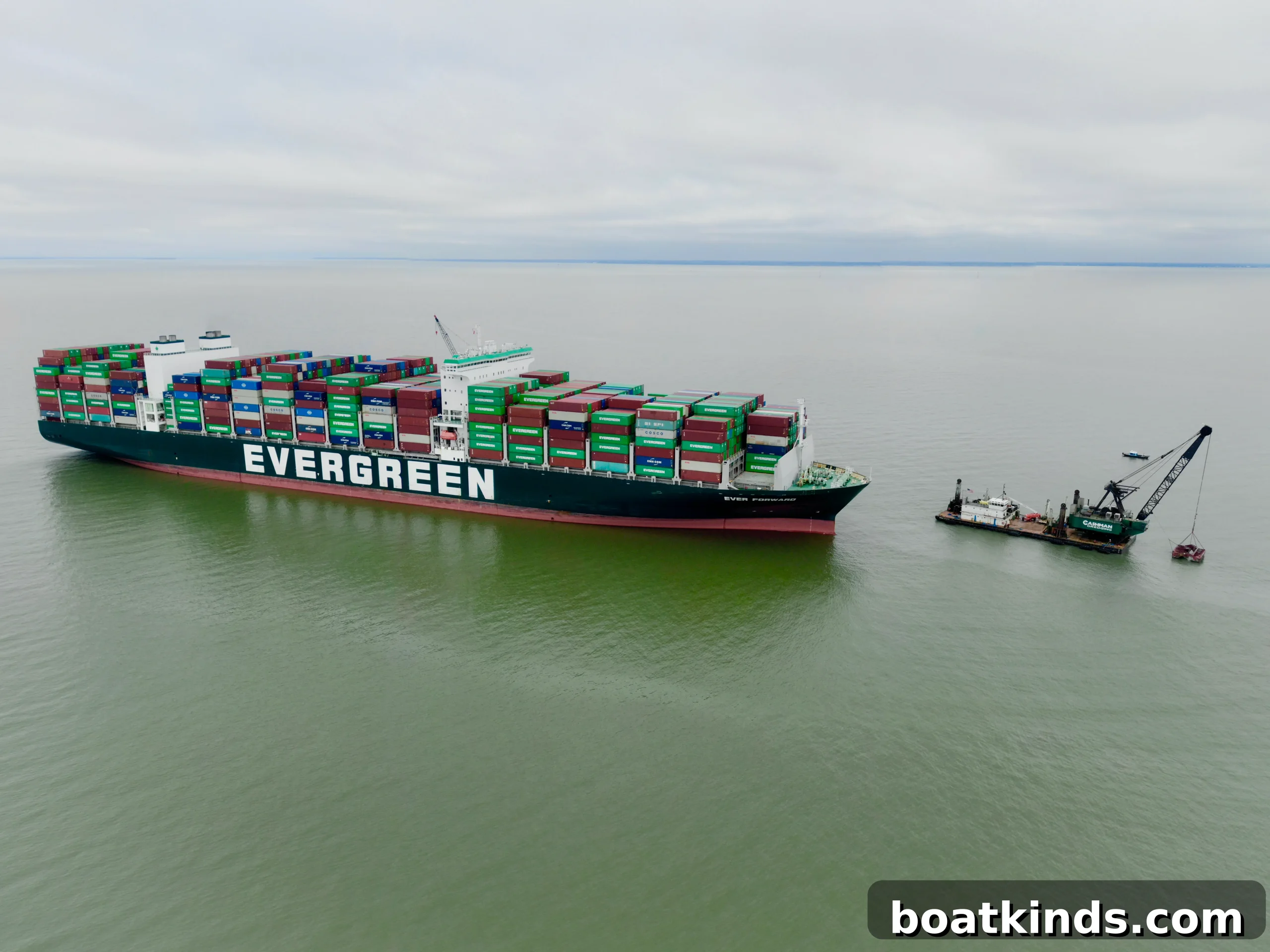
Ever Forward Grounded in Chesapeake Bay: Partial Offload Planned to Free Container Ship
The 1,095-foot container ship Ever Forward, which has been lodged in the mud of Maryland’s Chesapeake Bay for the past three weeks, will be partially offloaded as part of a renewed effort to refloat the vessel. U.S. Coast Guard officials say the plan calls for the use of heavy cranes and barges to remove a portion of the ship’s load in hopes of reducing its weight and enabling tugs to pull it back into the channel.
Planned Offloading and Salvage Effort
Following two unsuccessful attempts to refloat the ship, authorities announced that offloading operations will begin this weekend or early next week. The operation will remove a few hundred of the approximately 5,000 containers currently aboard the vessel. Salvage teams intend to lighten the ship enough to change its draft and trim, improving the chances that tugs can tow the vessel free of the shoal where it is stuck.
Crane barges and specialized lifting gear will be deployed to transfer containers from the ship onto barges. Once offloaded, those containers will be transported to shore for temporary storage and later disposition. This phased approach is a standard tactic in complex salvage cases when other attempts to move a grounded ship have failed.
Location, Navigation and Immediate Impact
The Ever Forward is grounded in about 23 feet of water roughly 20 miles south of Baltimore. The vessel is outside the deep-water shipping channel and, according to officials, is not obstructing commercial traffic in the main channel of the Chesapeake Bay. Because the ship is not blocking the primary shipping lane, the immediate disruption to bay traffic has been limited, though monitoring and navigational advisories remain in place.
Local authorities and the Coast Guard continue to monitor conditions around the vessel for changes in tides, weather and shoal migration that could affect salvage operations. Safety zones and temporary restrictions may be enforced in the vicinity while heavy equipment and support vessels operate.
How the Grounding Happened
The container ship ran aground on March 13 after departing the Seagirt marine terminal in Baltimore. The vessel was en route to Norfolk, Virginia, when it left the marked shipping channel and grounded on a shoal. The incident is currently under investigation to determine the cause, and officials have said they will review navigation data and other evidence as part of that inquiry.
Vessel Owner and History
The Ever Forward is operated by Evergreen Marine Corp., the same shipping company whose vessel, the Ever Given, became widely known after it blocked the Suez Canal for six days in March 2021. That high-profile incident brought global attention to the risks and ripple effects of large containership groundings. The current situation in the Chesapeake Bay has renewed focus on navigation safety, cargo handling and emergency response procedures for large container vessels operating in confined waterways.
Environmental and Safety Considerations
Priorities during the salvage operation include protecting the marine environment and ensuring the safety of personnel. Salvage teams typically take precautions to prevent spills and to limit disturbance to sensitive habitats. Oil and fuel inventories are monitored closely, and contingency plans are prepared to respond to any release. Authorities are also mindful of the potential for debris or damaged containers to pose hazards to other vessels or shorelines.
Next Steps and Ongoing Oversight
Once a portion of the cargo is offloaded and the vessel’s weight is reduced, tugs will attempt another pull to return the ship to the navigable channel. Salvage operations, inspections and the investigation into the grounding will continue in parallel. The Coast Guard, port authorities and the ship’s operator will coordinate the timeline and sequence of actions, adjusting plans as conditions evolve.
As the situation develops, updates from official agencies will provide details on the progress of offloading, any changes to navigation advisories, and the findings of the ongoing investigation. For now, the focus remains on safely refloating the Ever Forward while minimizing environmental impacts and preserving the security of regional maritime traffic.