
Absecon Inlet in Atlantic City, New Jersey, is a study in contrasts. On one shore, glass-clad casino towers glint in the sunlight and reflect onto the blue-green water. Just across the inlet, dunes of pearly sand rise with ribbons of pastel green grass, softening the scene with natural texture.
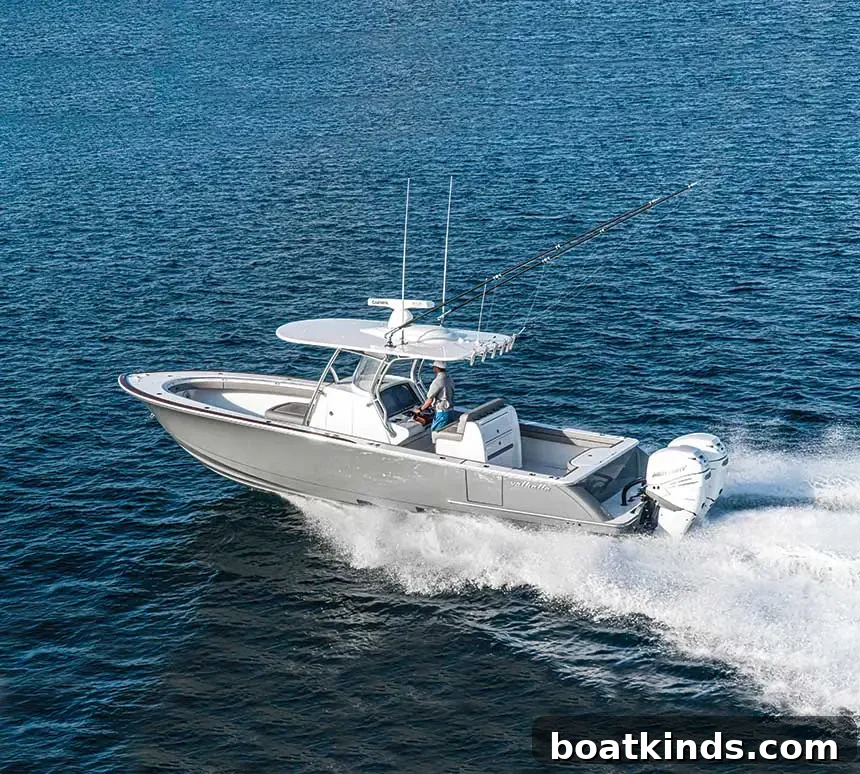
LOA: 32’10” Beam: 9’9” Draft (engines up): 2’1” Fuel: 327 gals. Power: (2) 400-hp Mercury Verados Price: $315,000
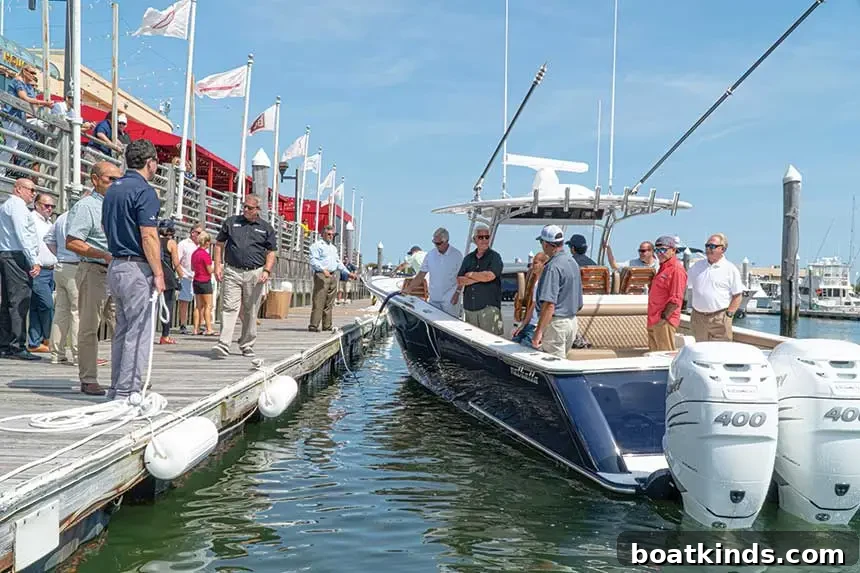
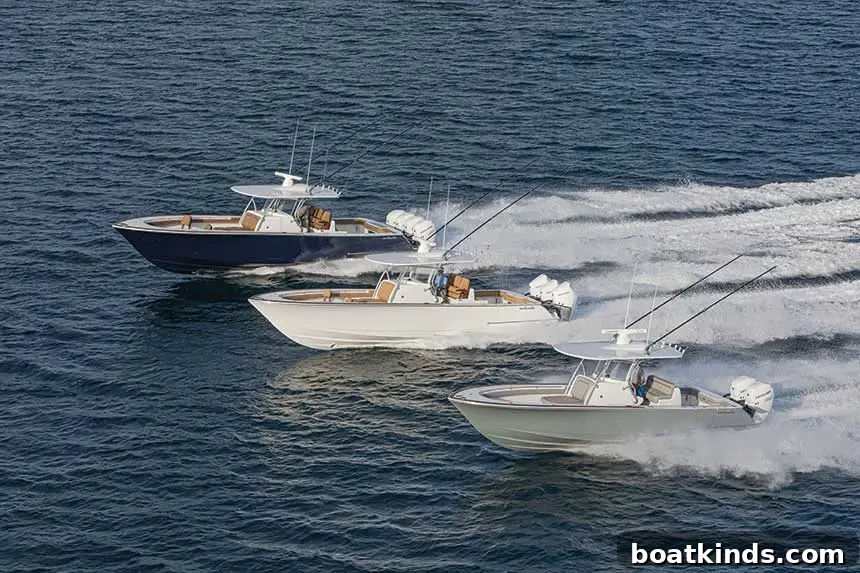
That same inlet framed the launch of Valhalla Boatworks’ V-41 during a demo run with Sean Healey at the helm. Out of a no-wake zone we surged forward in a dark-blue V-41 powered by four 400-hp Mercury Verado outboards. The moment Sean opened the throttles, the boat climbed onto plane with instant authority and pinned us to our seats; soon afterward we were streaking past the casinos at nearly 64 knots. The raw speed was exhilarating, but what impressed me most was how confidently the hull handled turns: slowing into a hard-over, 35-knot corner, the twin-stepped hull held the line as if glued to the water, never slipping or skidding.
The V-41’s sure-footedness is characteristic of the new Valhalla models—the V-33, V-37 and V-41—concepts largely driven by brothers Justin and Sean Healey. Their passion for fishing and hands-on experience in Viking Yachts’ production facilities shaped the boats. Their father, Pat Healey, is Viking’s president and CEO; their grandfather, Bill, co-founded the company in 1964. The brothers earned their stripes on the factory floor, learning every station of production and bringing that practical knowledge to Valhalla’s design and build process.
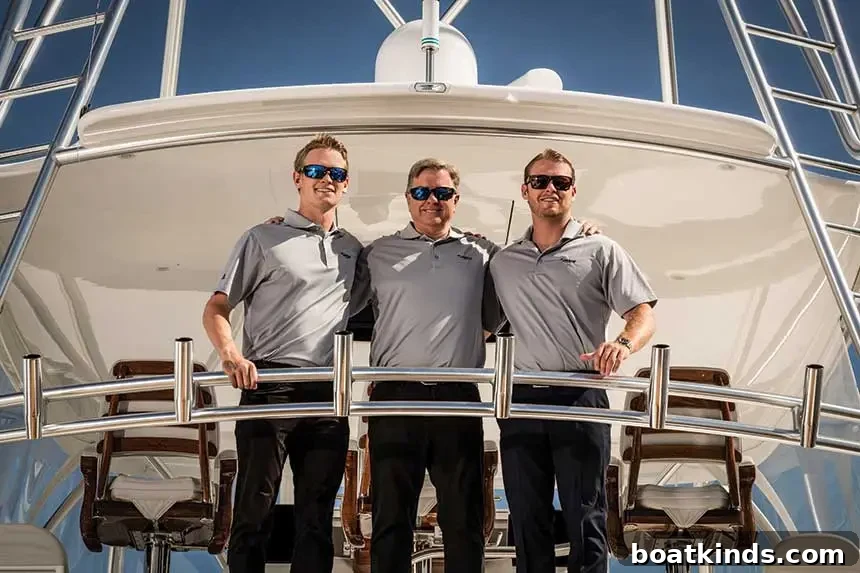
Fishing was the catalyst for the Valhalla idea. The Healeys grew up chasing fish around Ocean City, New Jersey, learning the sea in small boats and later competing in local fluke and offshore billfish tournaments. Those experiences shaped their priorities for Valhalla Boatworks: build center-console boats that excel as fishing platforms without sacrificing comfort or finish.
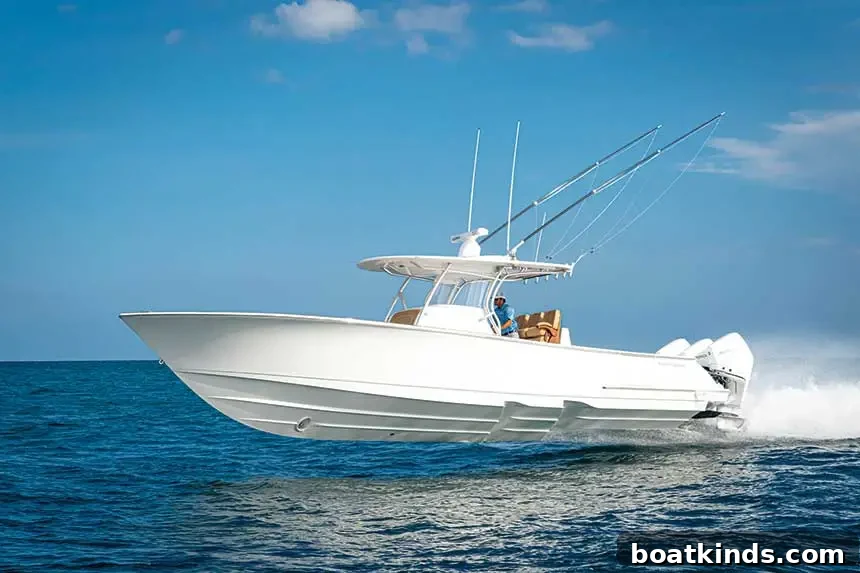
LOA: 36’9” Beam: 10’ Draft (engines up): 2’2” Fuel: 470 gals. Power: (3) 300-hp Yamaha F300s Price: $390,000
The Valhalla program traces back nearly two decades of planning. Sean notes that he and Don Gemmell, part of the design team, along with Pat Healey, began conceptual work years before production began. The 2008 recession stalled progress, but when Viking acquired the Ocean Yachts facility near the Mullica River in Egg Harbor City in 2016, momentum returned. By 2017 the Healey brothers persuaded their father to greenlight Valhalla, and in 2018 Viking tapped naval architect Michael Peters to design the running surfaces for the new center consoles.
Central to the Valhalla design is a stepped hull with a ventilated tunnel. Peters provided a two-step, ventilated-tunnel running surface that funnels fast-moving water toward the transom and effectively stabilizes the boat. Viking’s engineering team then refined the rest of the hull lines and structural details. The result is a hull that combines lift and control, delivering both high speed and predictable handling in choppy seas.
Valhalla Boatworks builds the hulls, structural grids, machinery installation, deck and final assembly at the Mullica facility while using Viking’s New Gretna operations for component production. Construction uses resin infusion and composite techniques with robust structural grids. Each hull is engineered with dedicated mounts for Seakeeper gyros and avoids wood entirely—even decorative elements are composite. For example, the signature teak toe rails are molded and hand-painted to resemble varnished wood while remaining maintenance-free.
Valhalla models wear visible Viking DNA: generous bow flare, transom livewells, Release helm seats and steering pods, and twin parallel bow cleats—practical features familiar to sportfish enthusiasts. Above all, these boats prioritize functionality for anglers. Layout choices were made with a fisherman’s workflow in mind while still offering family-friendly options.
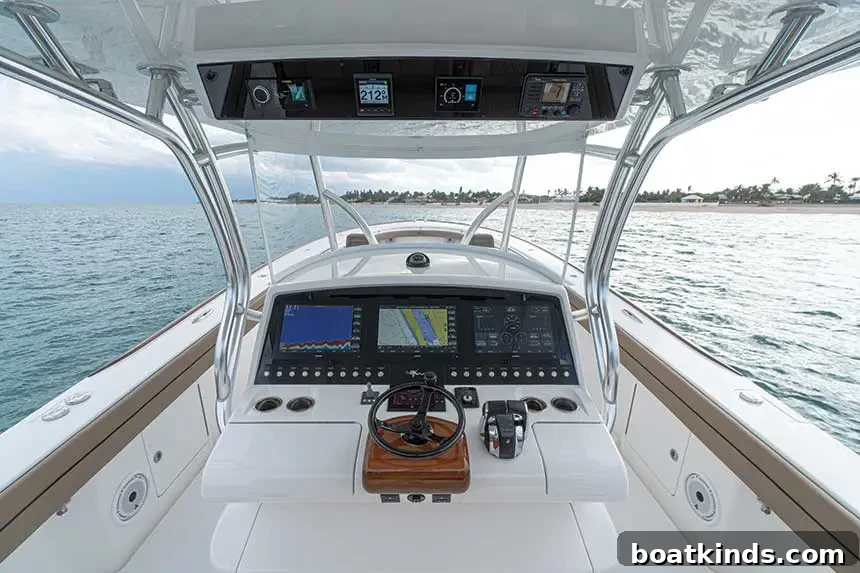
Every Valhalla includes a port-side diver door, transom livewell, flip-down transom seats and self-draining fish lockers forward and in the cockpit. The two larger models provide an aft-facing bench behind the helm, while the V-33 offers a tackle unit with a slide-out cooler that doubles as seating. Below the low-profile console is a practical cabin area with an electric head, a sink with a shower wand and freshwater mixer, rod storage and the electrical panel. Access is via a heavy-hinged pivot door that seals tight against the console, and forward of the console each boat features a two-person lounge. Optional forward bench seating is available as two lounges with removable backrests that preserve clear access to the bow.
Fit and finish across the line impressed me. I inspected lockers, piping, welds and upholstery and found careful execution throughout: neat wiring runs, precise pipework, and tailored diamond-pattern upholstery. Small details reflect the brothers’ cumulative fishing experience, with many design choices arrived at after extensive discussion and hands-on testing.
I tested all three boats through the tricky chop of Absecon Inlet and the larger groundswell of the Atlantic. Each Valhalla handled the mixed conditions with the same reassuring behavior—landing on swells with a cushioned, pillow-like feel and slicing through confused seas without pounding. Valhalla’s published performance numbers reflect that balance: the V-37 with three 300-hp Yamahas reaches about 55 knots; the V-33 with twin 400-hp Mercs tops out near 56 knots; and the quad-400 V-41 can approach 64 knots, with comfortable cruise ranges where the boats remain efficient and stable.
Before the model series was widely displayed, Valhalla had already logged more than 70 orders, a testament to the market’s appetite for a well-built, fishing-first center console with high-speed capability and refined construction. With Viking’s manufacturing resources and the Healey brothers’ fishing-driven design focus, Valhalla Boatworks has arrived with boats that deliver performance, practicality and premium finishing—right out of the gate.
This article originally appeared in the January 2020 issue.