
Anchoring Restrictions, Waterfront Property Pressure, and the Future of Shared Waterways
When Chris Edmonston, president of the BoatU.S. Foundation, learned last year that Georgia lawmakers were considering broad limits on overnight anchoring, he felt both frustrated and unsurprised. “This isn’t just a Georgia thing,” Edmonston says. “We’re seeing proposed anchoring rules in other places too. In Florida, municipalities try to adopt rules that affect only their towns. We’re seeing similar conflicts on the West Coast.”
Edmonston identifies two forces driving this trend along America’s coastlines. First is the problem of abandoned and derelict vessels: boats that have been left to deteriorate, becoming eyesores and public hazards. Local governments face significant costs and enforcement challenges when vessels are abandoned or when nonfunctional boats become long-term nuisances. In some places, notably where homelessness has increased, derelict boats are a visible and growing concern.
The second force is pressure from new waterfront property owners who want unobstructed views. High-end buyers who pay premium prices for waterfront real estate often object to boats anchored offshore. Edmonston notes that waterfront properties generally command higher prices than comparable inland homes, and the buyers of the most desirable parcels tend to be affluent. When those owners have influence with local legislators, their preferences can shape policy in ways that restrict public use of adjacent waterways.
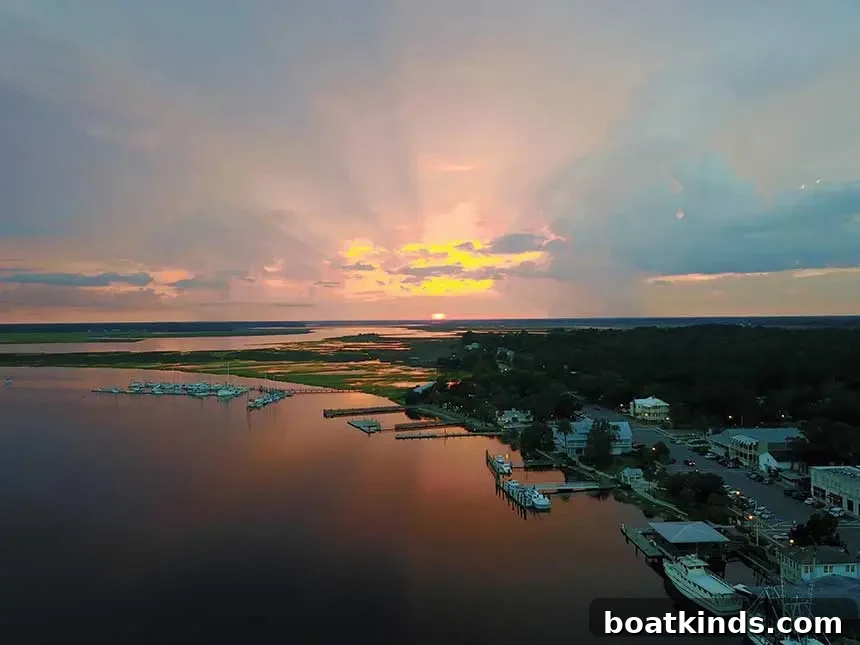
In Georgia, those pressures produced specific proposals. The Georgia Department of Natural Resources proposed restricting overnight anchoring within 1,000 feet of any structure—public or private—such as docks, wharves, bridges, piers and pilings, except in designated marina zones. The proposed rule would allow boats to anchor as close as 300 feet to facilities that provide fuel, dinghy access, provisions, maintenance or other services, but it would otherwise push boaters farther from shore.
“This can only lead to the conclusion that the greater offset from privately owned structures was meant to give waterfront landowners near-exclusive use of our shared waterways,” Edmonston says. His concern is that a blanket distance requirement prioritizes private views over the traditional public use of navigable waters.
Edmonston emphasizes that responsible boating and considerate behavior are part of the solution: “Boaters need to share the waterways respectfully. I’m a waterfront owner myself—I don’t want someone dropping anchor in front of my house and staying there indefinitely, and I don’t appreciate noisy wakeboarders circling with loud music. The boating community must police its own.”
At the same time, he stresses that waterways are intended for public use. In Georgia, for example, state law explicitly affirms residents’ rights to use and enjoy navigable waters. Restrictions that severely limit where boats can anchor risk undermining that principle.
As discussions continued, Georgia officials and boating advocates searched for balanced solutions. Josh Hildebrandt, director of public and governmental affairs for the Department of Natural Resources, told Soundings that new legislation was moving through the committee process to address anchoring more precisely. The BoatU.S. Foundation and other stakeholders are watching closely and are advocating for practical measures such as temporary anchoring permits that allow several weeks in one spot and safe-harbor protections so boaters are not forced from anchorages during storms.
Until new rules are finalized, uncertainty and enforcement gaps remain. That uncertainty affects local boaters and transient cruisers alike, including seasonal visitors traveling between Florida and New England. A one-size-fits-all rule can unintentionally punish responsible visitors, discouraging them from stopping to purchase fuel, provisions, and services that support local economies.
Beyond fines and inconvenience, broad anchoring bans raise safety concerns. Restrictive rules can prevent boaters from anchoring in safe locations during inclement weather or emergencies, putting lives and vessels at risk and creating additional costs for the marine industry. For now, Edmonston says, the BoatU.S. Foundation has not faced similar statewide proposals in the Northeast—but the trend bears watching nationwide.
This article originally appeared in the May 2020 issue.