
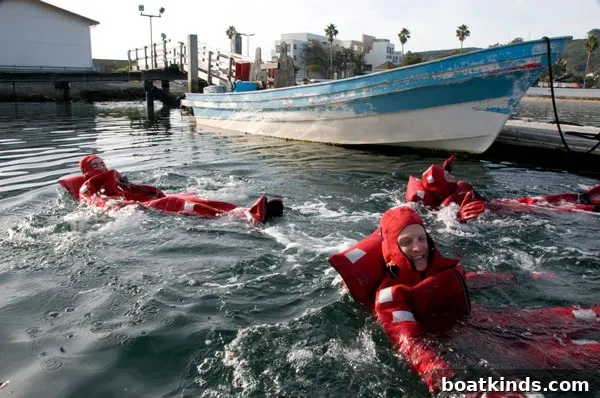
I once spoke with a North Carolina Highway Patrol officer who said, “I’ve never unbuckled a dead man.” He used the seat-belt analogy to explain how critical restraints are on the road, then added, “Kind of like life jackets, right?” The truth is harder: people drown while wearing life jackets every year. A life jacket can save you, but it isn’t a simple seat belt you can trust without ongoing care and familiarity.
Most drownings involving life jackets occur in cold water, an issue worth exploring separately. Equally important, many boaters don’t survive accidents because the safety gear they relied on either failed or was used incorrectly. Modern survival equipment—especially inflatables, EPIRBs, immersion suits and life rafts—is often complex. Buying the gear is only the first step; you must inspect, protect, check and practice with it to actually increase your chances of survival.
You Need to Inspect
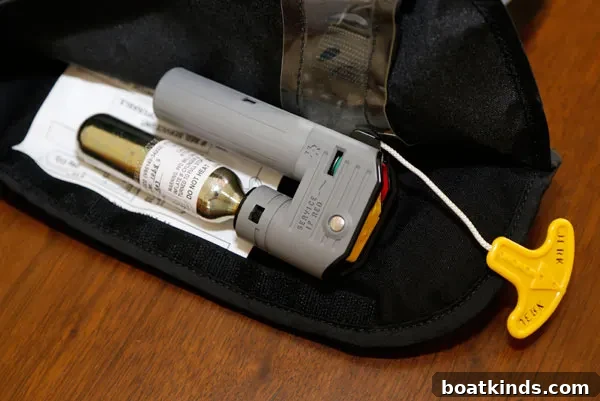
When I served as a survival petty officer in the Coast Guard, we weighed thousands of CO2 cylinders used in inflatable life jackets and other emergency devices to detect leaks. Properly maintained pressurized cylinders are usually reliable, but that reliability ends when inspection and maintenance fail. I’ve pulled dozens of lanyards that did nothing, encountered corroded pins and seen hydrostatic releases fail to operate. In my experience, more than 20 inflatables did not inflate when expected.
All manufacturers publish minimum inspection and maintenance recommendations for life jackets (inflatable and foam), immersion suits and life rafts. If you haven’t read those instructions, do it now. Create an inspection schedule and follow it. Many impending failures are visible to the naked eye—but you must look. For inflatable jackets, open and unfold the bladder and visually inspect every square inch of the flotation section. Check CO2 cylinders, pull lanyards where practical, and ensure pins and seals are corrosion-free.
You Need to Protect
I’ve seen very old life jackets still work because they spent decades on a climate-controlled shelf. But most boating gear lives in far harsher conditions. Sunlight, heat, moisture and salt begin degrading gear the moment it comes aboard. Store life jackets and other survival equipment in a cool, dry place whenever possible. A practical, cost-effective approach is to use sealable plastic bins with desiccant packs to reduce moisture exposure—these packs are inexpensive and extend the life of fabric, foam and mechanical components.
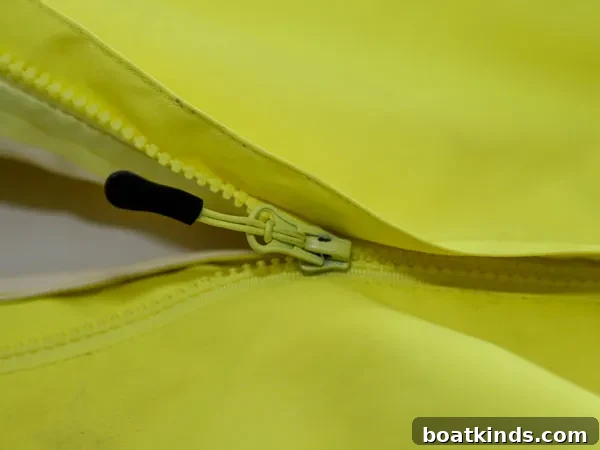
Lubricate zippers—yes, even plastic ones—at least once a year. Commercial zipper lubricants are often beeswax-based; products like Zipper-Ease work well when used every six months. Keep lubricant in sealed plastic bags to preserve it. Most importantly, always rinse anything exposed to salt water or spray with fresh water, then dry thoroughly before storage. Salt and time are the fastest way to turn serviceable gear into worthless, deteriorated items.
You Need to Check
Items stored improperly can fail without warning. I’ve seen fire extinguishers seize in their mounts due to corrosion, life rings where mold has eaten through lifelines, and life jackets put away wet that later became mildewed and unusable. Before each day on the water, check all survival gear: life jackets, EPIRBs, VHF radios, immersion suits and life rafts. If you don’t already use a pre-departure checklist, adopt one—think of it as “Boat Like an Airline Pilot”—and run through it every trip.
Familiarity with gear starts with handling it. Put on the life jackets, take the EPIRB out of its cradle, hold the VHF and practice basic operations. You don’t need to fully don an immersion suit every time, but trying it on periodically helps you understand its fit and function. These routine checks catch problems early and make you more prepared in an emergency.
You Need to Practice
Being able to answer practical questions about your emergency gear without consulting the manual is essential. Can you tell, by feel, which EPIRB button tests versus which one activates? Do you know which side your life jacket inflation lanyard or oral inflation tube is on? Can you open an inflatable vest’s casing and access the oral inflation tube while in the water? How many feet of line must you pull to deploy your life raft, and which buttons on your DSC-capable VHF transmit a distress? If you can’t answer these quickly and confidently, you need practice.
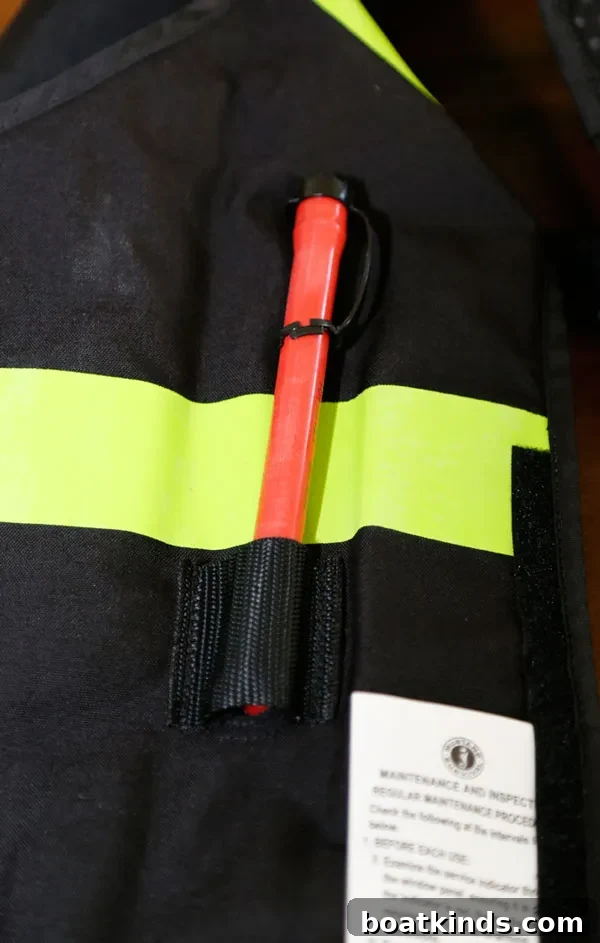
Practicing is inconvenient: it usually gets you wet and requires rinsing, drying and re-stowing equipment afterward. But avoidance is what causes most failures—people who don’t know how to use their gear spoil their odds of survival. Train like you fight: inflate life jackets in the water, practice radio procedures on your DSC VHF, test EPIRBs according to the manufacturer’s instructions and take a life-raft-specific course if you own one. Regular hands-on practice with the exact equipment on your boat is the single best way to ensure it will work when you need it.
Life jackets are not simply the maritime equivalent of seat belts. The survival equipment you carry is more complex and more vulnerable to neglect. Inspect it regularly, protect it from sun, salt and moisture, check it before each trip and practice using it until the procedures are second nature. Doing these four things—inspect, protect, check and practice—will meaningfully increase your chances of surviving the unavoidable “bad day” on the water.