
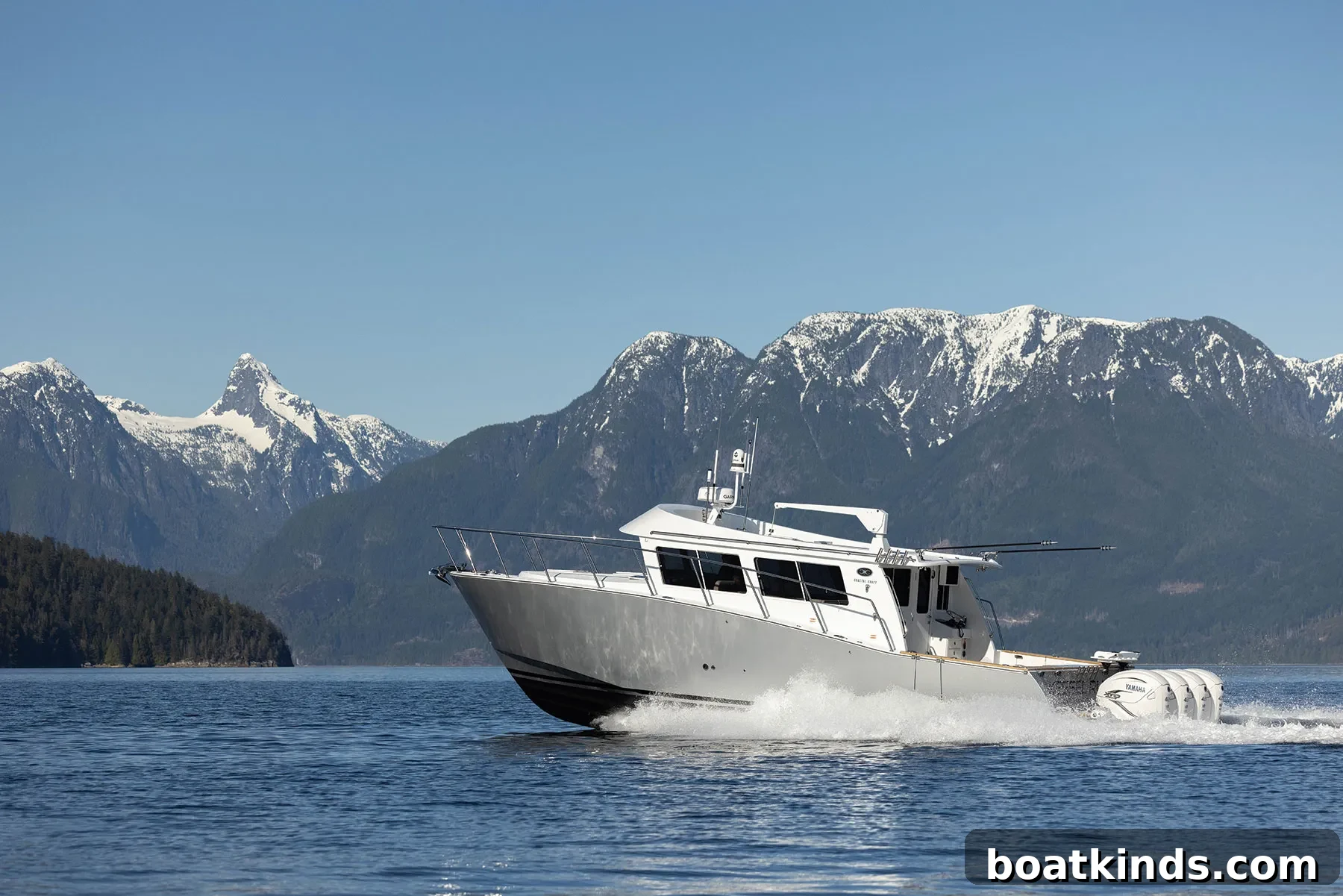
The seaside town of Gibsons sits on British Columbia’s Sunshine Coast, only about 10 miles from Vancouver as the crow flies, but the rugged topography and deep coastal channels make it feel worlds apart. Steep hills, narrow passes and the absence of direct roads mean residents and visitors rely on ferries and floatplanes. With water surrounding the community, boats are central to life here — for work, transport and recreation.
Coastal Craft’s president, Jeff Rhodes, grew up on the Sunshine Coast and traces his family’s presence back to the early 1900s. After years working on commercial fishing boats and captaining tugs and barges to Alaska, Rhodes shifted in 1996 from crewing to building vessels, focusing first on water taxis that transported workers to remote logging camps. Harsh weather often rules out flying in the region, so reliable boats were essential.
For the first five years, Coastal Craft built heavy-duty aluminum workboats powered by Volvo sterndrives, designed to deliver a dozen passengers and crew up to 50 miles into British Columbia’s deep inlets. Rhodes emphasizes aluminum’s advantages when handled properly: it requires more labor, but produces a stronger, longer-lasting hull that stands up to demanding coastal conditions.
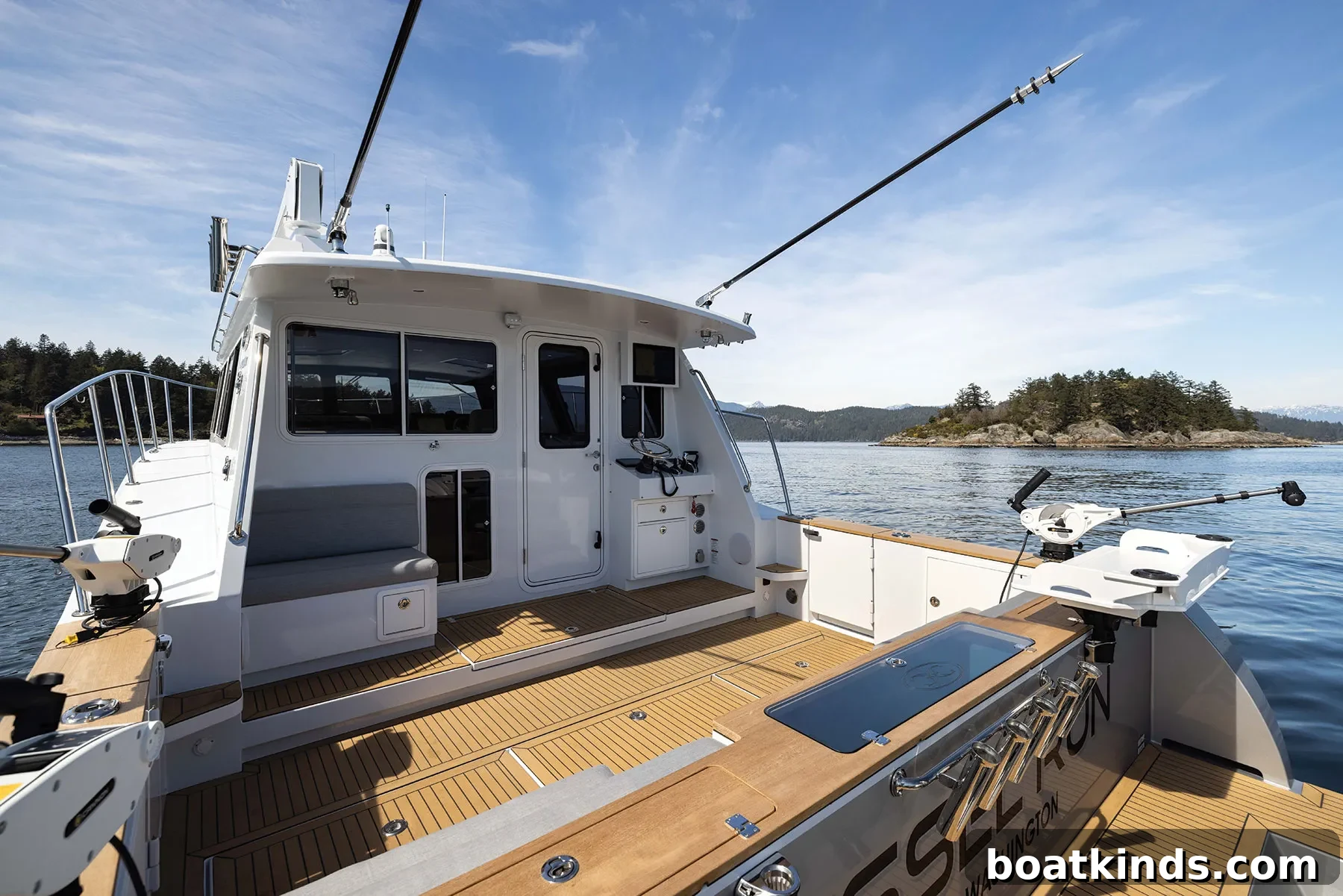
Around 2000 the company began to pivot. A 25-foot water taxi built for a Vancouver doctor — essentially a personal commuter boat — drew attention at the Vancouver Boat Show and helped launch Coastal Craft’s move into pleasure craft. Over the next decade the firm evolved from utilitarian workboats to larger yachts. In 2012 Coastal Craft introduced a 56-foot motor yacht with twin Volvo IPS 1200s, followed in 2014 by a three-stateroom 65-foot model able to hit 33 knots. Both models earned praise for seaworthiness and fit and finish, though the company ultimately found its geographic location made some larger models less practical.
In 2018 Coastal Craft returned to the small-boat market with outboard-powered sportfishing models in the 30- to 40-foot range. Their most recent release, the 41’ T, is a two-stateroom, single-head offshore sportfisher with impressive performance: with quad 425-hp Yamaha outboards it can exceed 55 knots, making it a standout in its class for speed and offshore capability.
The 41’ T builds on earlier Coastal Craft designs. Rhodes notes it is a natural evolution from the company’s 40- and 45-foot inboard-powered models from the early 2000s, but with significant hull refinements: a deeper V, aggressive planing strakes, and wider, slightly reversing chines. Those features improve high-speed stability in challenging sea states and were chosen so the boat could safely handle offshore runs in quartering seas.
Buyers can choose triple or quad outboard packages from Suzuki, Mercury, or Yamaha, producing between 1,275 and 1,700 total horsepower. Coastal Craft also plans inboard IPS versions of the 41’ T and of the closely related 42’ ExpressFish, which shares the same hull with a slightly longer bow overhang to suit its cabin design. With twin Volvo IPS 650s, the inboard variants are expected to reach around 38 knots, and removing the outboard pods lengthens the hull’s running surface by approximately 27 inches for improved offshore tracking.
Design work on the 41 was a collaboration: Rhodes and his team developed the styling, deck layout and underwater lines, while Bruce Cope’s Vancouver Island firm provided the structural engineering. Rhodes draws a direct line between Coastal Craft’s commercial roots and its yacht designs: refined curves, a softer shearline and a civilized interior transform a rugged Pacific Northwest workboat into a capable, attractive yacht — much as Hinckley adapted the lobster boat into a modern classic.
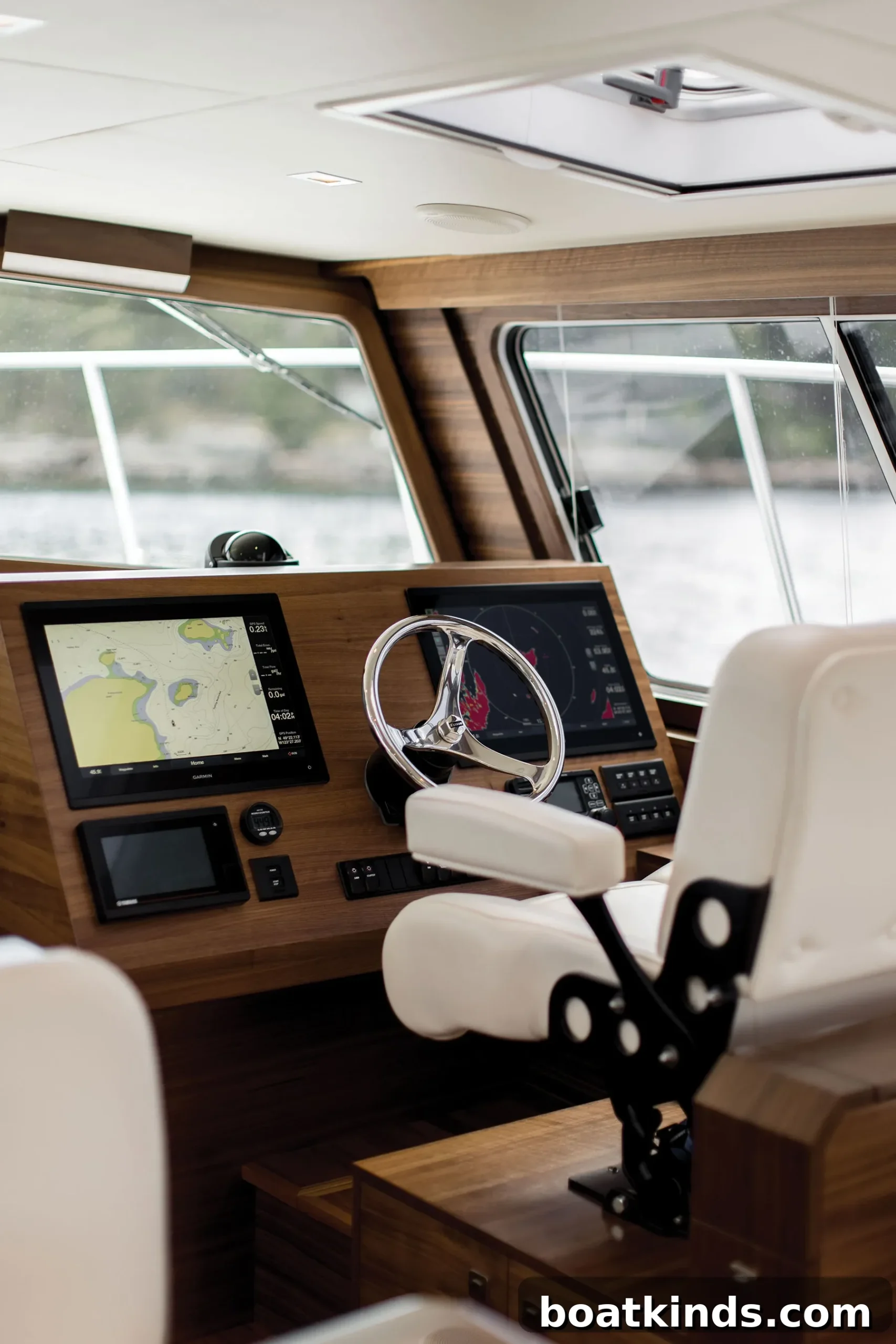
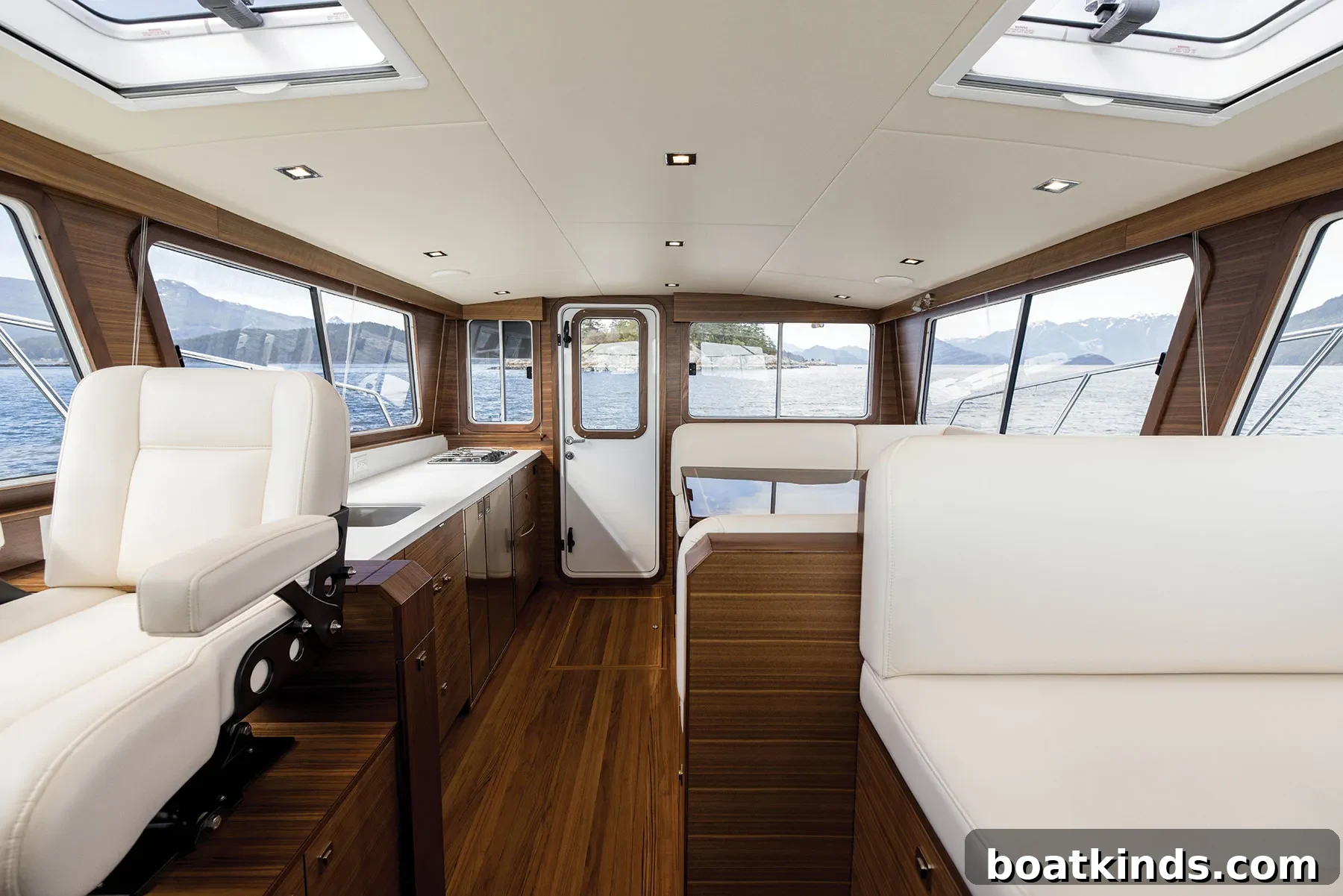
Inside, the 41’ T features a contemporary black walnut finish across the salon, galley, head and staterooms. The master stateroom offers a queen island berth; the guest stateroom converts two singles into a queen. Recognizing aluminum’s tendency to be colder and noisier than other materials, Coastal Craft incorporates polyurethane foam insulation, dedicated sound insulation and vibration-damping materials throughout the hull and cabin to create a warmer, drier and quieter onboard environment.
Although the 41’ T clearly appeals to sportfishermen — capable of chasing albacore, tuna, salmon and halibut — Rhodes envisions a broader role for the boat. Many owners will use it for cruising, island-hopping to summer homes in the San Juan Islands, long coastal runs from Maine to the Canadian Maritimes, or serious offshore crossings. Its design supports a wide range of missions, from fast coastal commuting to blue-water passages across the Gulf of Alaska or even Gulf Stream crossings toward the Bahamas.
Specifications
LOA (with outboards up): 49’6”
Beam: 14’0”
Draft: 2’6”
Displacement: 30,000 lbs.
Fuel Capacity: 600 gals.
Water Capacity: 90 gals.
Power: (4) 350-hp Mercury Verado outboards (typical)
Base Price: $1.1 million
This article was originally published in the July 2021 issue.