
Cold-Water Survival: Why a Life Jacket Can Save Your Life
The brutal reality is simple: without a life jacket, surviving in cold water is unlikely beyond about 10 minutes. With a properly fitted personal flotation device (PFD), many people can survive for an hour or more before hypothermia becomes the primary threat.
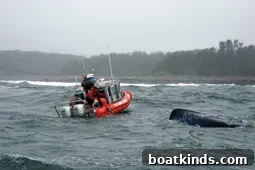
When water temperatures are at or below roughly 59°F (15°C), the body’s ability to move and control limbs deteriorates rapidly. After 10 minutes submerged in such cold water, most people lose the strength and coordination needed to swim or even tread water. Despite this, hypothermia—the dangerous drop in core body temperature—often takes longer to set in. That delay gives someone wearing a life jacket time to take survival actions, a point emphasized by Cold Water Boot Camp USA (www.coldwaterbootcampusa.org).
Rear Admiral Alan M. Steinman (Ret.), a public health physician and former Coast Guard director of health and safety, who is widely recognized for his work in cold-weather medicine, stresses how critical wearing a PFD is. Cold shock on initial immersion can be disorienting and can last a minute or two. If you are not already wearing a life jacket, putting one on during that period is likely to be extremely difficult.
Cold shock triggers an involuntary gasp; if the head is underwater at that moment, drowning can occur immediately. A properly worn PFD reduces the likelihood that your head will go under during that reflex and can therefore be decisive for survival.
In response to updated medical findings and increasing polar-region traffic as warming reduces snow and ice, the International Maritime Organization revised its “Guide for Cold Water Survival.” The guide highlights that knowing what to expect when you enter cold water and preparing to respond are vital steps that significantly increase the chance of rescue.
Immediate Risks and the First Rule
The first and most important rule: avoid entering the water unless absolutely necessary. If you can board a survival or rescue craft without entering the water, do so. The body’s initial responses to sudden cold-water immersion include a gasp reflex, uncontrollable breathing (hyperventilation), and significant cardiovascular stress. These reactions are stronger the colder the water and typically last one to three minutes before easing. Stay calm, keep your head above water and avoid panicking so you do not inhale water or hyperventilate into unconsciousness.
The IMO guide recommends that, during the first few minutes of immersion, you remain as still as possible until you regain control of your breathing. Once that immediate cold-shock period passes, the priority shifts to reducing further heat loss.
What to Do After the Initial Shock
If you cannot reach the boat, a life raft, or shore within five to 15 minutes, you must move quickly from short-term reactions to actions that extend survival time. The goal is to widen the window of opportunity for rescue.
Where possible, get as much of your body out of the water as you can—climb onto an overturned vessel or any floating debris. Exposing less body surface to cold water dramatically slows cooling and increases your chance of survival. Heat loss from immersion far outpaces heat loss from wind chill.
If you cannot get out of the water, minimize movement. The body responds to immersion by reducing blood flow to the skin and superficial muscles to preserve heat in vital organs. By swimming or thrashing, you force warmer blood from your core to the limbs, increasing heat loss to the surrounding water. Instead, float quietly to conserve core heat.
Curling into a fetal position (legs drawn up, arms crossed over the chest) reduces heat loss. This posture is best if you are wearing a PFD designed to maintain a safe, stable position. If a full fetal position is unstable in your PFD, adopt a semifetal posture—keep your arms close to your sides and flex the hips—so long as the PFD keeps your airway clear.
If you are not wearing a PFD, use a slow dog-paddle to keep your airway above water. Do not attempt “drown-proofing”—an upright float with the face submerged—which dramatically increases heat loss in cold water. If others are in the water, huddle together and hold onto one another to conserve warmth.
Clothing, Dexterity, and Signaling
Wearing protective clothing helps because trapped air in garments provides insulation and slows heat loss. The IMO guide warns that tasks requiring grip strength or manual dexterity—such as tightening clothing or adjusting a life jacket, finding a whistle, or turning on a light—should be performed as soon as possible after the initial shock. Hands and fingers lose mobility quickly in cold water, so early action is essential.
After you have secured your airway and minimized heat loss, activate signaling devices and call for help if possible. Use a whistle and shout to attract attention while remaining as still as practicable to conserve heat.
Factors That Affect Cooling and Rescue
Once you settle to wait for rescue, your core temperature will drop at a rate determined by several factors: the clothing and protective gear you wear (immersion suits and layered clothing slow cooling); your body composition (people with more body fat generally lose heat more slowly); and how much you move (minimizing movement reduces heat loss). Violent shivering and numbness are common and may be distressing, but they are part of natural physiological responses. Act quickly before you lose full use of your hands.
Rough sea conditions make survival more difficult. Waves and chop force you to expend energy to keep your airway clear, increase water flushing through clothing and accelerate heat loss, reduce the effectiveness of signaling devices, and make you harder to see for rescuers.
The IMO guide also points out a sobering truth: some people die just before, during, or immediately after rescue. Causes include sudden relaxation, loss of buoyancy from an unfastened life jacket, or inappropriate rescue handling that fails to keep the body horizontal or near horizontal—an important consideration to help prevent cardiac arrest during recovery.
Mental Preparedness and Final Advice
Mental attitude matters. Maintain hope and remain mentally active in following survival procedures. Fight to stay alert and cooperative during rescue; relaxing too soon can cause a person to slip underwater before being hoisted aboard.
The overarching message is clear: survival in cold water is possible—even for many hours—if you are prepared, wear a PFD, understand how your body will react, take immediate protective actions, and use signaling devices to attract rescuers. Being mentally prepared and knowing what to expect significantly improves your odds.
See related material: How the body responds (title referenced)
April 2013 issue