

Sam Devlin has been using the stitch-and-glue method to design and build wooden boats at Devlin Designing Boat Builders in Olympia, Washington, for more than four decades. Over the years he has completed more than 400 wood/epoxy boats ranging from 8 to 48 feet and has sold plans worldwide to home builders and professional yards alike. The stitch-and-glue process relies on temporary wire stitches to hold shaped panels in place while epoxy and fiberglass tape join seams permanently. After stitching and fairing, hulls are sheathed with fiberglass or Dynel cloth and coated to create a continuous, watertight surface that combines lightweight construction with strong, durable results. To make that technique accessible to more people, Devlin recently published the second edition of Devlin’s Boatbuilding Manual, and in this interview he explains why the new edition was needed and what builders can expect from it.
What motivated you to release this latest book?
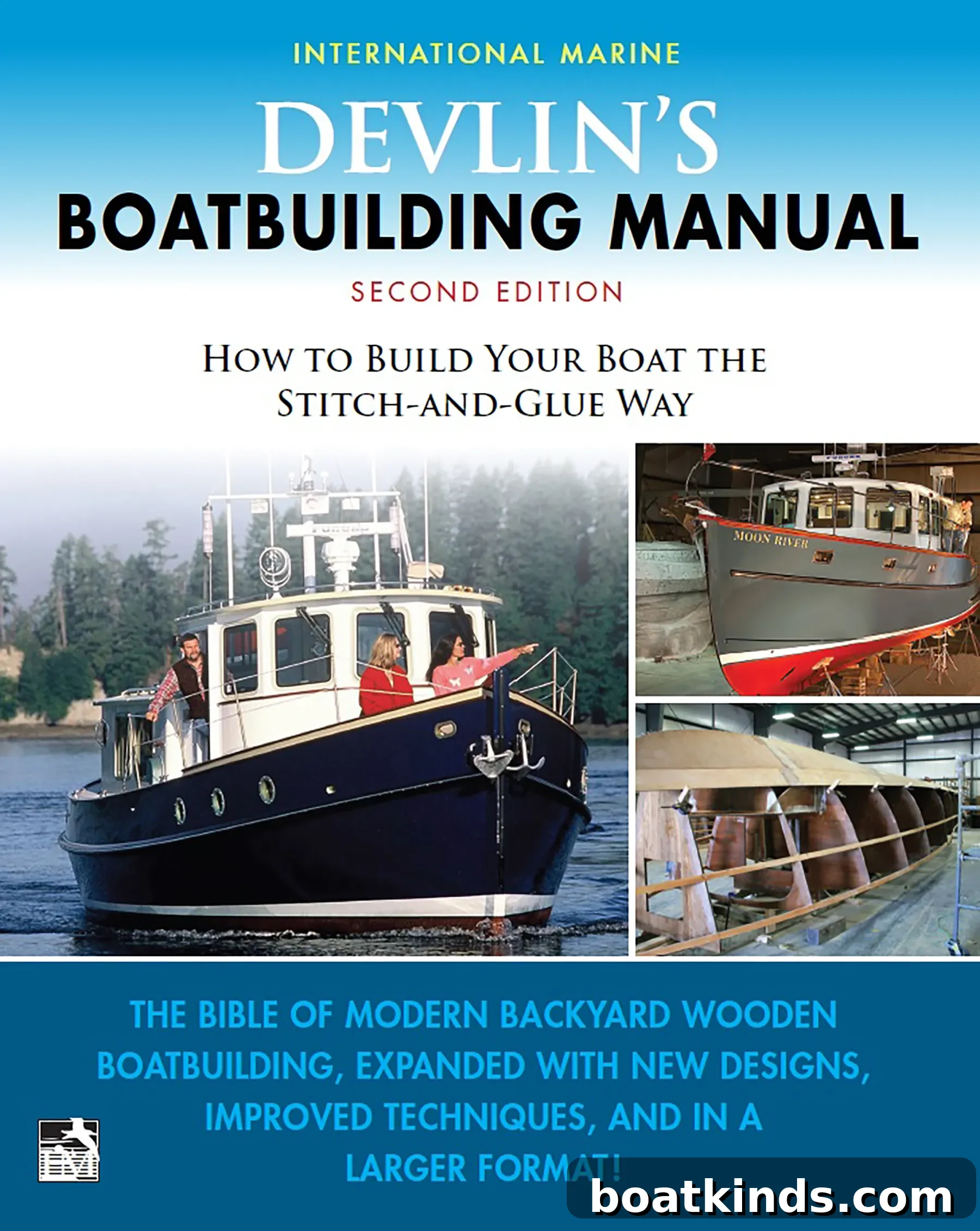
When I wrote the first edition 25 years ago, my goal was to introduce stitch-and-glue construction to a broader audience and show that high-quality wooden boats didn’t require large, expensive shops or advanced specialized tools. Over the years the method itself and the materials available have evolved, and more builders have adopted wood/epoxy techniques. The new edition refines that original introduction, updates practical advice, and shows how nearly any committed DIYer or small yard can tackle a successful build—whether it’s a small skiff or a larger pilothouse project. My intent was to clarify key steps, improve illustrations and troubleshooting guidance, and give builders the confidence to start and finish a boat with predictable, professional results.
How does this book differ from your previous titles?
This edition goes deeper into the stitch-and-glue process and focuses on common pitfalls that can slow a project or compromise the finished hull. Compared with earlier versions, it includes more detailed sequences for fairing and glassing, expanded coverage of materials and adhesives, and clearer guidance on lofting, jigging, and hull assembly. The aim is to reduce guesswork and help builders avoid mistakes that are easy to make but hard to correct later. The added detail is practical rather than theoretical: step-by-step explanations, clearer photographs and diagrams, and hands-on tips from decades of shop experience.
Is there a section you particularly enjoyed putting together?
Producing any technical manual takes time and persistence, but I enjoyed revisiting shop practices and refining explanations that bridge the gap between professional builders and enthusiastic amateurs. The most satisfying parts were the sections where I could share solutions to recurring challenges—ways to streamline fairing, methods to ensure consistent fillets, and approaches for achieving a strong, smooth glassed hull. Putting those practical insights into an organized, easy-to-follow format was rewarding, and I’m already exploring additional ways to share this knowledge through workshops and demonstrations.
Are any of your recent projects highlighted in this book?
Yes. I kept the project references focused on work completed in the last five to eight years at our shop so readers see contemporary builds and realistic examples. Those case studies show how modern materials and refined techniques are applied in real projects, and they illustrate the range of boats that can be successfully built using the stitch-and-glue approach.
Can you tell us more about your professional background?
I’ve been designing and building wood/epoxy boats for 46 years, and much of my experience comes from testing boats in the water as well as in the shop. I hold a 100-ton Master Captain’s license and currently operate a small harbor tug business, which keeps me connected to practical, operational needs of working vessels. Over the years my team and I have built 427 stitch-and-glue boats, and I’ve sold plans to builders in more than 110 countries. Those experiences inform the book’s guidance, because the methods presented come from repeated, real-world application rather than theory alone.
Which design is your most popular?
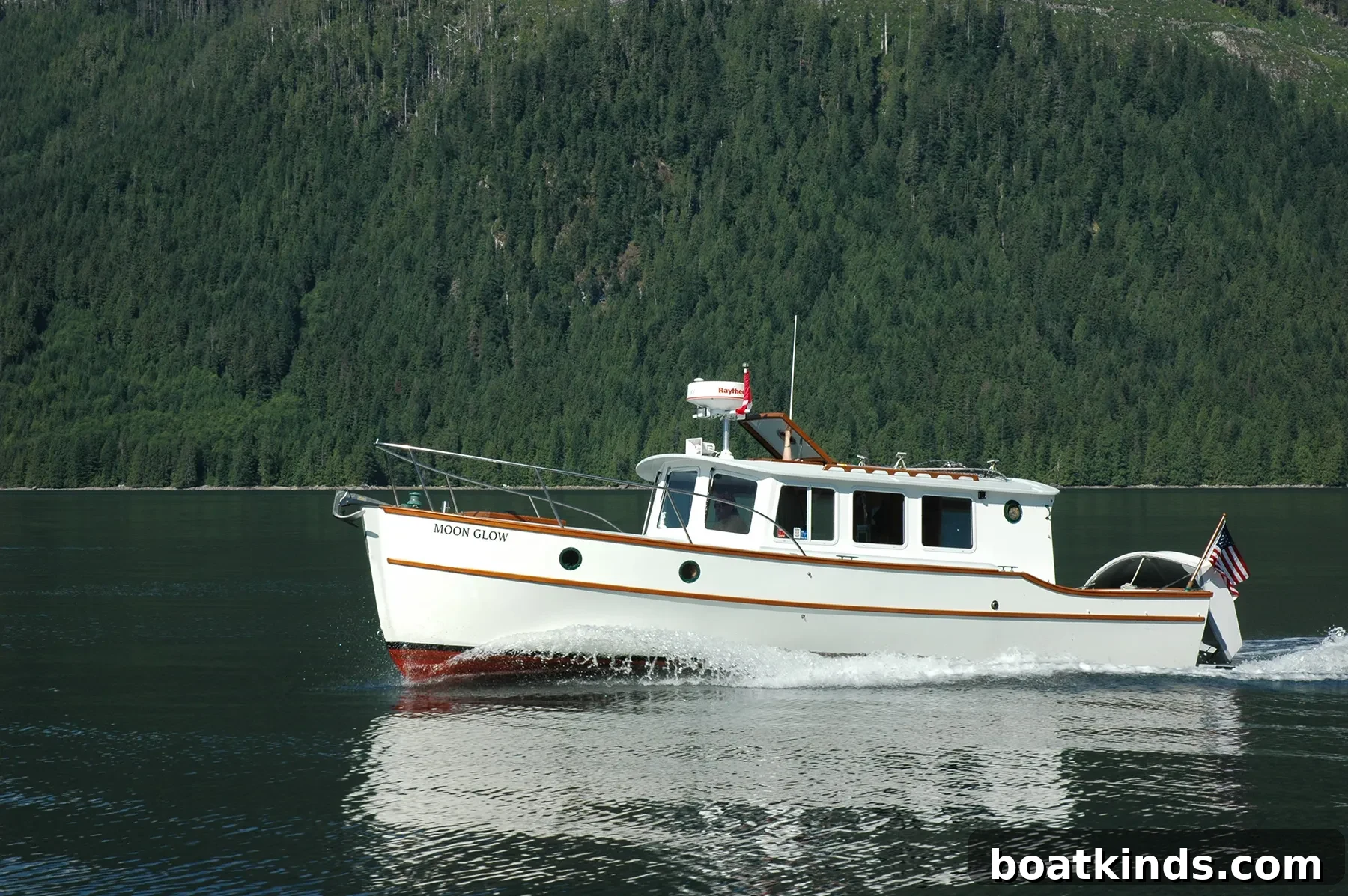
Among the semi-large designs, the Surf Scoter 22 proved especially popular as a small pilothouse boat. Its combination of manageable size, sensible layout, and efficient construction makes it an attractive choice for builders seeking a practical, comfortable cruiser.
What type of boat do you want to build in the future?
Looking ahead, I’m interested in building the Oysta 42 motorsailer. It’s a design that blends cruising comfort with efficient hull form and the versatility of a motorsailer, and it represents the kind of longer-range project that benefits from refined stitch-and-glue techniques.
What boat do you run and where do you like to cruise?
I’m beginning a new chapter with a long cruise to Alaska and back this coming summer aboard Puffin, a 47-foot trawler-style vessel powered by a Gardner diesel. That passage will be a practical opportunity to evaluate systems and seakeeping firsthand—valuable feedback that also feeds back into design thinking and future publications.
This article was originally published in the February 2024 issue.