
Mystery Aboard the Sage Sagittarius: Inquest Exposes Risks of Flag-of-Convenience Shipping
An Australian coroner’s inquest into the deaths of crewmembers aboard the 800-foot coal carrier Sage Sagittarius has revealed a complex and troubling picture. The proceedings opened a window into the pressures on ships registered under “flags of convenience” and into the psychological and operational breakdowns that can follow when crews work under fear, poor management and minimal oversight.
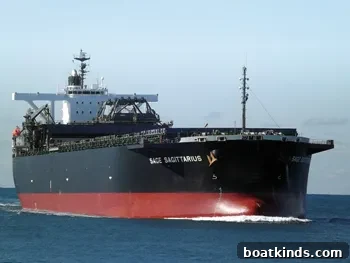
The Japanese-managed, Panamanian-flagged Sage Sagittarius—nicknamed the “Death Ship” by some—was on a routine voyage from Kudamatsu, Japan, to Newcastle, Australia, to collect coal when a series of fatal incidents occurred. On Aug. 30, 2012, 42-year-old chief cook Cesar Llanto, a Filipino seaman, disappeared and was presumed lost overboard about 450 nautical miles northwest of Cairns. Two weeks later, on Sept. 14, chief engineer Hector Collado, 57 and also Filipino, died after falling about 36 feet down an engineering shaft while preparing to disembark at Newcastle. A third death occurred on Oct. 6, when 37-year-old Kosaku Monji, an operations superintendent for the ship’s Japanese manager Hachiuma Steamship, was crushed in a conveyor belt while the vessel was being unloaded in Kudamatsu. Monji had joined the ship in Australia after the first two deaths; Japan’s Transport Safety Board later ruled his death accidental.
Three deaths within six weeks aboard the 15-year-old vessel prompted intense scrutiny. Testimony at the New South Wales Coroner’s Court inquest described a ship rife with conflict: bullying, harassment, and a “culture of silence.” Witnesses told investigators there had been intense interpersonal disputes, mutual mistrust among crewmembers and specific allegations of harassment against a young gay galley hand, Jessie Martinez, who had been at sea only two months.
The court heard that Captain Venancio Salas Jr., 44, acknowledged selling mail-order handguns to crew members and earning commissions—activity that violated company policy and exacerbated tensions on board. Some crew members testified they purchased weapons to stay in the captain’s favor. Those dynamics contributed to an atmosphere of fear and intimidation, which counsel to coroner Sharon Freund said hindered investigation by Australian authorities.
Central to the inquest was a dispute that followed the arrival on board of Martinez, 26, who alleged sustained bullying after being “outed.” Martinez and other crew said Captain Salas bullied and assaulted him; Salas denied violent intent, telling the court by Skype that any physical contact was minor discipline or jest. The episode escalated when Martinez, encouraged by shipmate Raul Tunacao Vercede, 34, drafted a complaint on Llanto’s computer to submit to the International Transport Workers’ Federation in Australia. The complaint reportedly set out grievances about captain conduct and the alleged gun sales.
Llanto, who had acted as a mentor to Martinez, strongly advised the young seaman not to file the complaint, warning it could harm those who had helped Martinez gain employment at sea. This led to a bitter argument between Llanto and Vercede. Martinez ultimately decided not to file and told the captain he had reconsidered. Counsel for the coroner said Captain Salas learned of the complaint plan on the morning Llanto disappeared and ordered Martinez to remove the draft from Llanto’s laptop.
Additional evidence raised further concerns about discipline and safety culture. One crewmember testified to overhearing a heated argument between Llanto and the captain about an instruction to reduce food portions, a change that would have cut galley expenses and raised questions about who benefited. Multiple witnesses said they feared for their personal safety after Llanto vanished; some disembarked at Port Kembla out of concern. Testimony also suggested the late engineer Collado had not been sleeping well in the days before his fatal fall.
Investigators also found anomalies with the ship’s data recordings. Audio files from the upper decks that should have been preserved on the voyage data recorder for the period of Llanto’s disappearance were overwritten rather than saved, contrary to legal requirements. Representatives of Hachiuma Steamship reported the overwrite to the court but provided no clear explanation.
At the time of the inquest, the Coroner’s Court had not reached a definitive finding on the causes of Llanto’s and Collado’s deaths, and no criminal charges had been filed. Public coverage by national media and investigative programs prompted broader public concern and led to parliamentary scrutiny: the events contributed to an Australian Senate inquiry into the use and regulation of flag-of-convenience shipping.
Flag-of-convenience (FOC) shipping allows shipowners to register vessels in jurisdictions with less stringent labor, safety and inspection rules—countries such as Panama, Liberia and the Marshall Islands—reducing costs but often complicating oversight and accountability. Maritime unions and safety advocates say that jurisdictional gaps can enable poor working conditions, unchecked bullying and weak enforcement of safety standards.
“The murky world of FOC shipping needs to be investigated,” said Dean Summers, Australia coordinator for the Transport Workers’ Federation. “Intimidation, bullying and harassment are often an unfortunate part of life on board FOC vessels, and it’s allowed to happen because of jurisdictional blurred lines and a lack of regulation.”
The inquest into the Sage Sagittarius deaths highlights broader concerns about maritime safety, crew welfare and the regulatory challenges of a globalized shipping industry. Beyond the individual tragedies, the case underscored the need for clearer oversight, stronger protections for vulnerable seafarers and better mechanisms for reporting and addressing misconduct at sea.
This article originally appeared in the September 2015 issue.