
How a Hudson River Solar Boat Inspired a Nonstop Solar-Electric Voyage to Alaska
What began as a pioneering solar-electric tour boat on New York’s Hudson River unexpectedly sparked a West Coast experiment that became, earlier this year, what is believed to be the first nonstop solar-electric voyage from Washington state to Alaska. The story links designers, builders and a small, quiet boat named Wayward Sun — and it underlines how practical solar propulsion has become for calm, recreational cruising.
In spring 2017 the Hudson River Maritime Museum began construction of Solaris, the first solar-powered commercial tour boat certified by the U.S. Coast Guard. Solaris used the Solar Sal 44 platform developed by David Borton of Solar Sal Boats in Troy, New York. Naval architect Dave Gerr provided design input while Olympia-based designer Sam Devlin consulted on the project. Devlin liked the design and soon began picturing a smaller, West Coast variant tailored for local conditions and clientele.
Devlin’s idea sprang from a simple observation: a cluster of affluent homeowners around Seattle live on the shores of two large lakes, and many would appreciate a quiet, emission-free afternoon cruise. That concept resonated with David Borton’s son Alex, who lives in Bellingham and serves as vice president of Solar Sal Boats. By the Seattle Boat Show in January 2019 the team had a demonstrator: a compact Solar Sal 27 they called Wayward Sun.
Wayward Sun was conceived as a pure solar-electric dayboat with no fossil-fuel backup. The design emphasized minimal maintenance, silent operation and modest performance suitable for leisurely lake and near-coastal use. Cruising speed was listed at about 4.5 to 5 knots, with a top speed near 6.5 knots. The boat was also advertised to sustain up to eight hours on its battery backup and to offer effectively unlimited range in daylight.
Response at the show was mixed but promising. Many visitors who understood electric vehicles and rooftop solar thought the concept was “really cool.” Others were skeptical that a small solar-electric hull could achieve reliable range. The Solar Sal team took that skepticism as a challenge: if Wayward Sun could complete the Inside Passage to Alaska, it would be unmistakable proof that solar-electric propulsion could handle serious coastal trips.
That decision introduced both technical and logistical hurdles. The Inside Passage is notorious for variable weather and cloud cover, and the trip took place during the Covid-19 pandemic, which meant the crew spent roughly 20 days in Canadian waters without setting foot ashore. The boat itself was configured primarily as a dayboat: it had a forward cabin with two berths but no galley, and a Laveo head that uses disposable waste bags rather than a holding tank. It was not designed as a long-distance passagemaker.
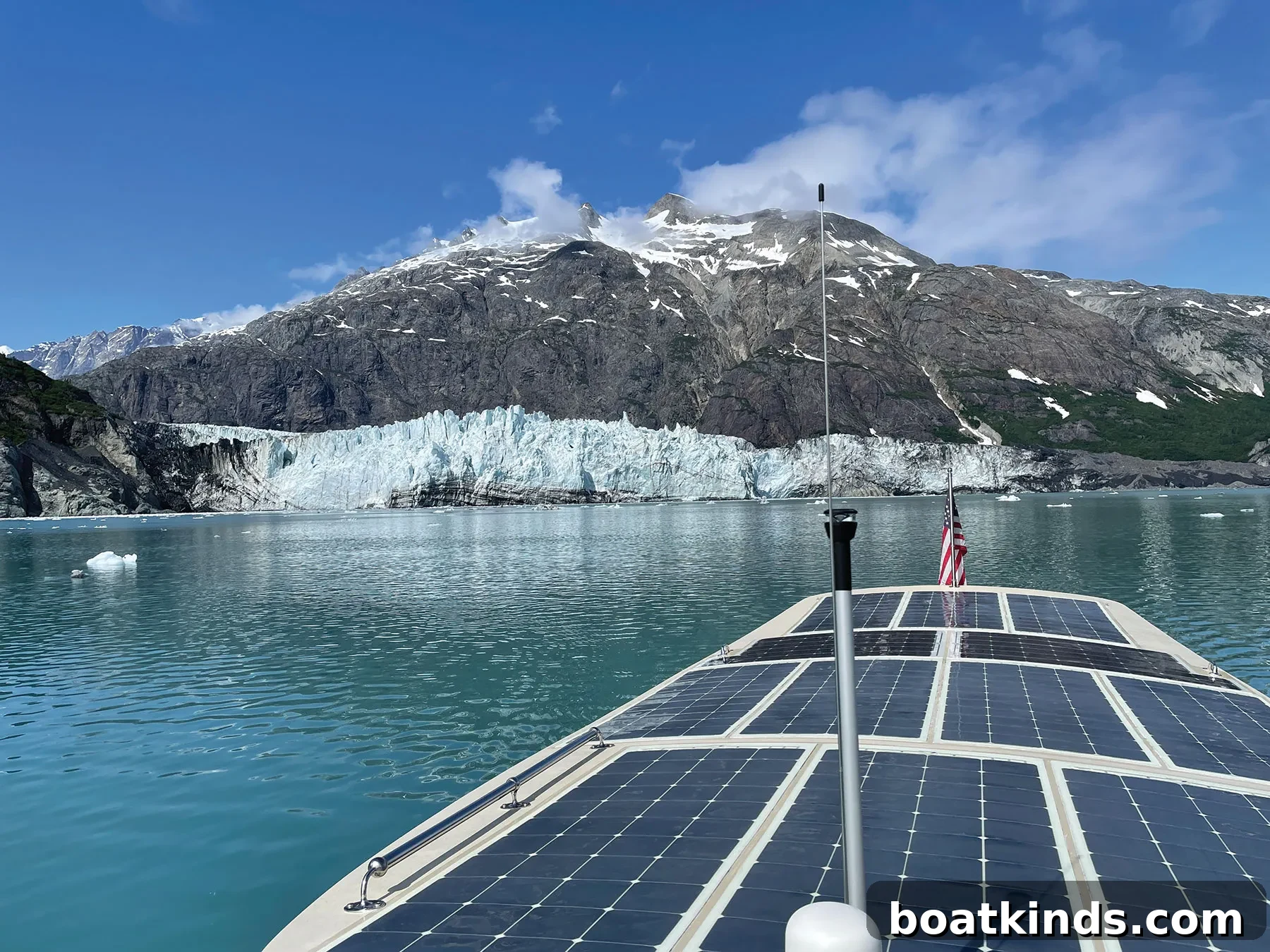
Undeterred, the Bortons departed Bellingham on May 25 and headed north. Wayward Sun relied solely on 12 flexible Solbian solar panels that produced a combined 1,730 watts. That power fed six Torqeedo 24-3500 lithium batteries, which ran a Torqeedo Cruise 4.0 pod drive. There was no generator and no diesel or gasoline backup — the voyage depended entirely on solar input and battery management.

On the helm, the crew managed speed and charging deliberately. One practical advantage of electric propulsion became obvious: precise, real-time information on energy flow. The instruments showed watts delivered to the motor and watts coming in from the panels, so the skipper could make instant decisions — slow slightly to allow the panels to recharge the batteries, or increase throttle briefly knowing how much power remained. Typical speeds during the trip ranged from about 3 to 7 knots, adjusted to balance progress and energy intake.
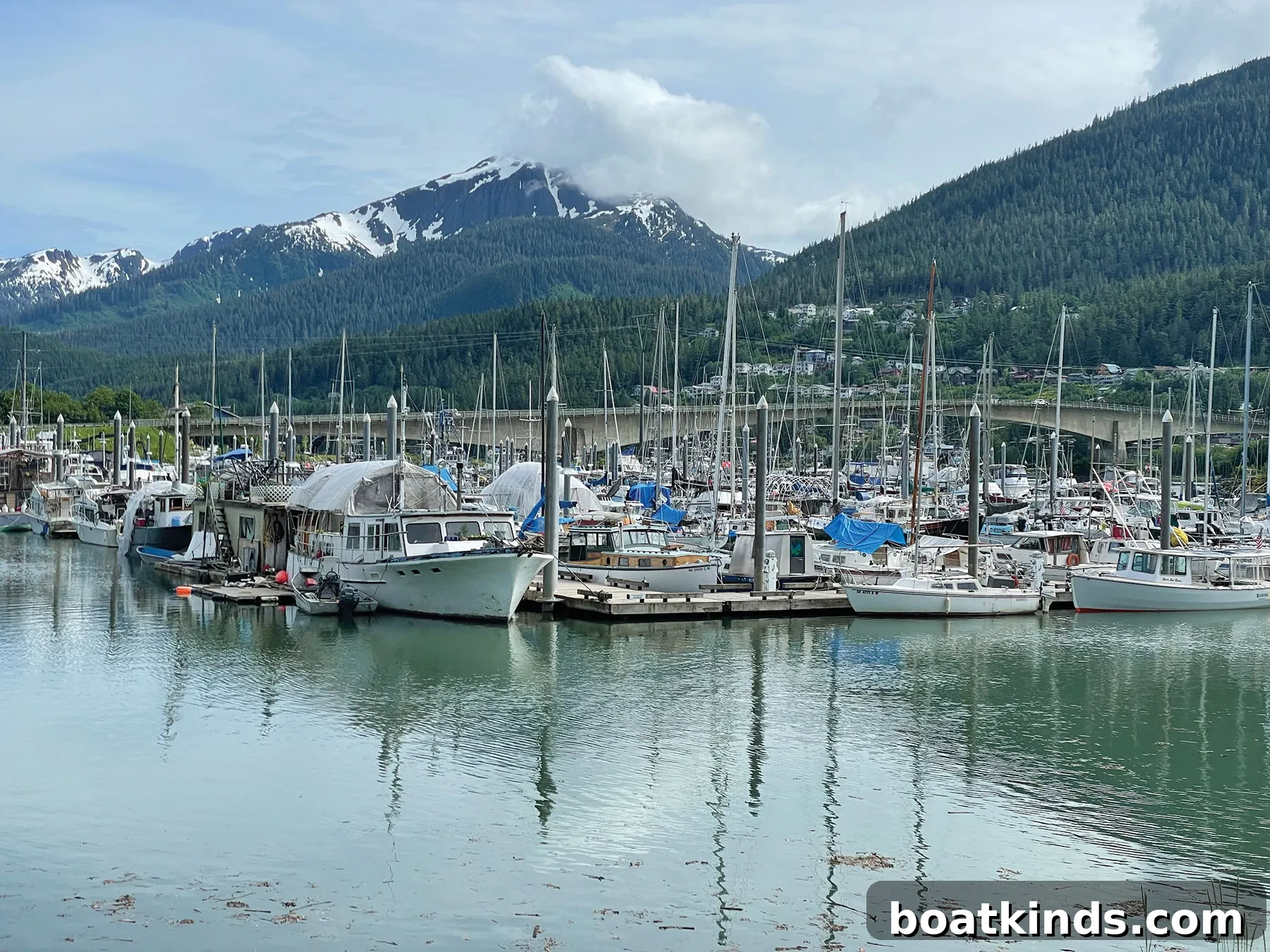
On June 13 the team reached Ketchikan, Alaska, and continued to Glacier Bay and Juneau. The entire run covered approximately 1,400 miles. Along the way the crew enjoyed spectacular scenery and abundant wildlife: snowcapped peaks, calving glaciers, eagles, brown and black bears, moose, whales, sea otters, sea lions and playful dolphins.
Designer Sam Devlin, who has made the Inside Passage trip many times, praised the Bortons’ planning and nerve. “There are some gulper areas where the weather might not cooperate,” he noted, underscoring that route planning and seamanship remain critical even with reliable propulsion. For the Bortons, the voyage was a bucket-list achievement and a vivid demonstration that a small, well-managed solar-electric boat can make long coastal trips in mixed conditions.
One particularly memorable moment came in Glacier Bay when the sun broke through as the crew sat before a calving glacier. “The glacier was calving and making lots of noise,” Borton recalled. “We saw eagles and seals hitching rides on the icebergs. That was just awesome.”
With Wayward Sun now offered for sale, the Solar Sal team is developing the next generation: the Solar Sal 24, scheduled for a spring 2022 debut. Their aim is not speed or racing performance but a low-cost, low-maintenance cruising experience: no fuel bills, fewer mechanical services, quiet operation and a lighter environmental footprint. For boaters who value tranquility and sustainability over top-end speed, solar-electric boats like Wayward Sun illustrate an increasingly practical alternative for recreational cruising.
This article was originally published in the November 2021 issue.