
Deer Harbor Boatworks: A Small Yard Preserving Wooden-Boat Tradition on Orcas Island
Turning off Channel Road just before it crosses the new bridge that separates the saltwater of Deer Harbor from the silted Cayou Lagoon, a car pulls up beneath a weathered sign: Deer Harbor Boatworks. The yard refuses to follow the usual script. There’s no website, no yard office, no hoist or Travelift. Boats are hauled and launched from a concrete ramp using a hydraulic trailer and the help of the spring tide as it draws most of the water away.
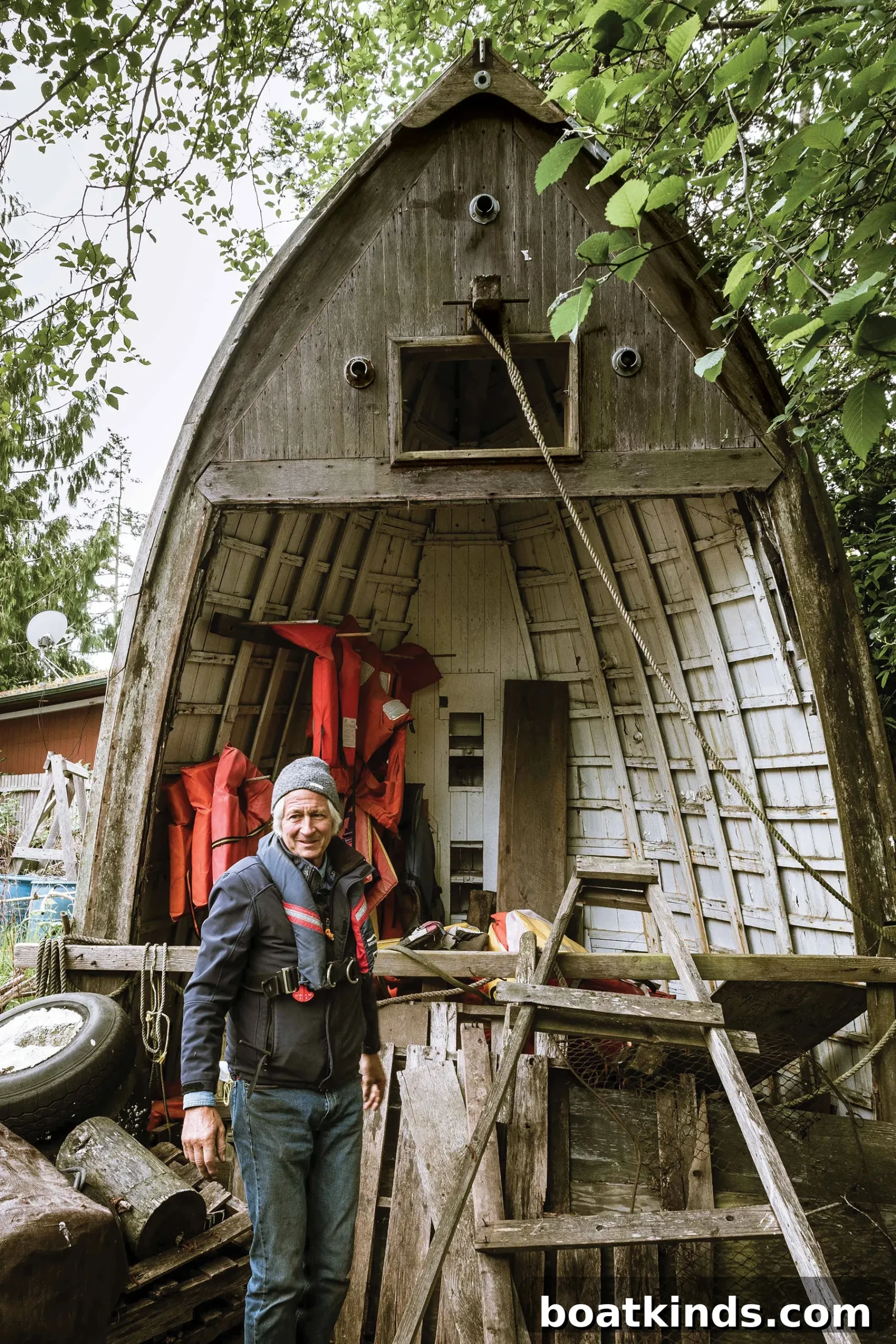
The single-acre property is tightly packed. Beyond the main building, which also serves as the owner’s home, Quonset Hut–style work tents, storage containers and a variety of vessels jostle for space. Most of the boats are modest in size and older in vintage—not showpieces but far from derelicts—arranged with an almost accidental sense of purpose.
“I moved to Orcas in 1977 to build a 25-foot Atkin design that was pointy on both ends,” says Michael Durland, 69, who founded Deer Harbor Boatworks in 1986. A South Dakota native who moved through Idaho and Seattle, Durland learned boatbuilding from Cecil Lange of Cape George Marine Works in Port Townsend. His background includes service in the U.S. Coast Guard and years of cruising and charter work—the kind of practical experience that informs his approach to repair and restoration.
Tall and tanned with a mop of silver hair, Durland matches the yard’s slow, steady pace. He established the business long before the San Juan Islands became a major tourist destination and a magnet for retirees and remote workers, and the place still reflects that earlier, more hands-on era.
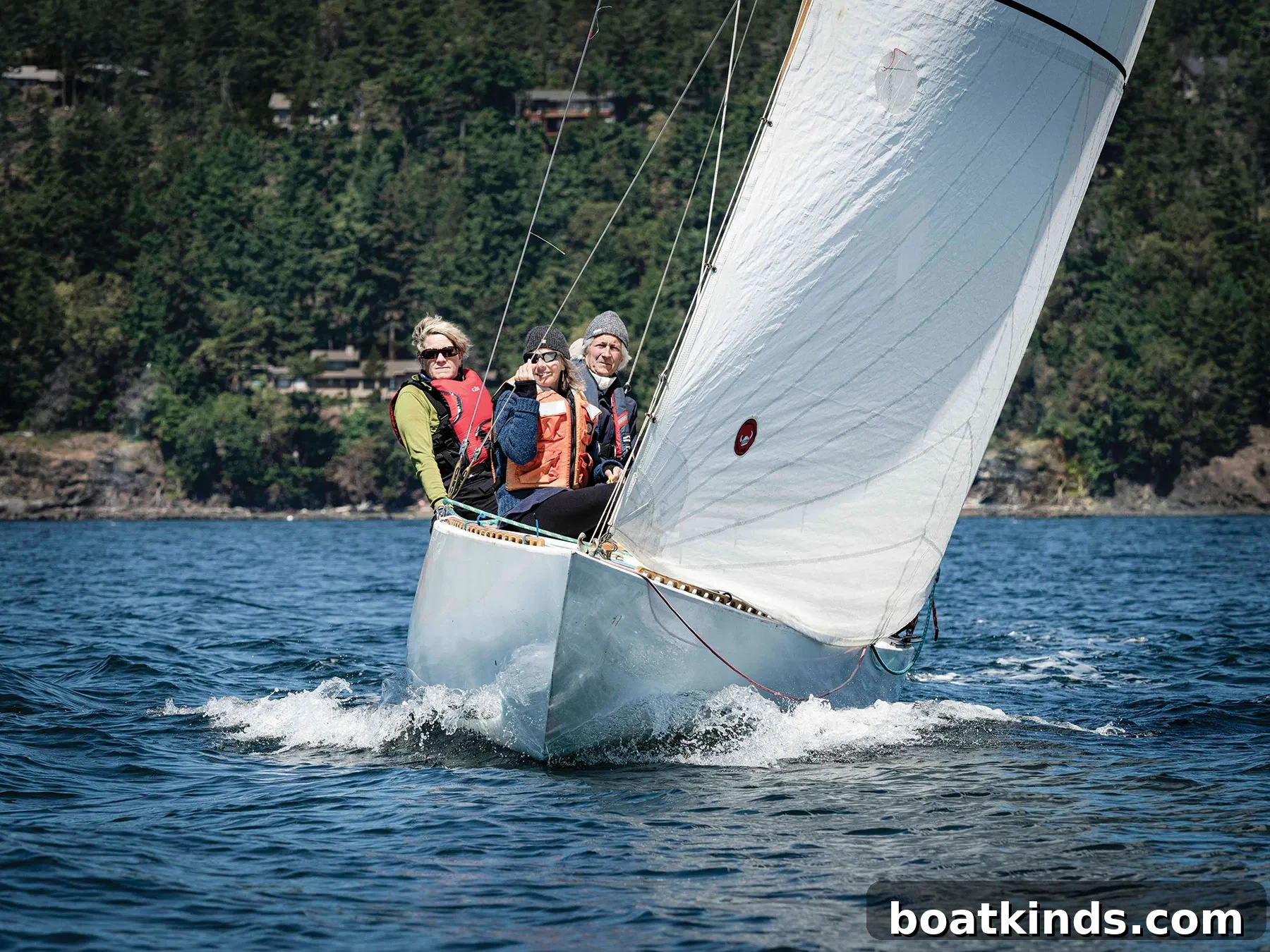
Not all customers can afford standard yard rates. Durland makes room for people learning to work on their own boats, teaching them the skills they need and sometimes supplying salvaged parts. “These people always wanted to work on their own boats. It was hard years ago, but now it’s nearly impossible,” he says, noting that many commercial yards limit customer involvement for liability reasons. “I like to see people pursuing their dream of boat ownership in an environment increasingly stacked against them.”
Leanne Sarco and Frazer O’Hara are typical examples. With Durland’s guidance they patched the seams on La Casita, their cedar-planked Richardson 31 express cruiser from the 1960s, and got the boat’s old Chrysler 318 gas engines running again. Durland sources parts, shows them how to clean spark plugs and rebuild carburetors. “I don’t think we’d be on the water without him,” O’Hara says.
At its busiest, the yard employed three people. Since 2003 Durland has scaled back to handle service calls, small refits, wooden-boat repairs and engine overhauls himself. The local boating scene changed: smaller, older boats gave way to newer, more powerful vessels owned by affluent newcomers—many from the tech world—so the steady flow of traditional repair work declined.
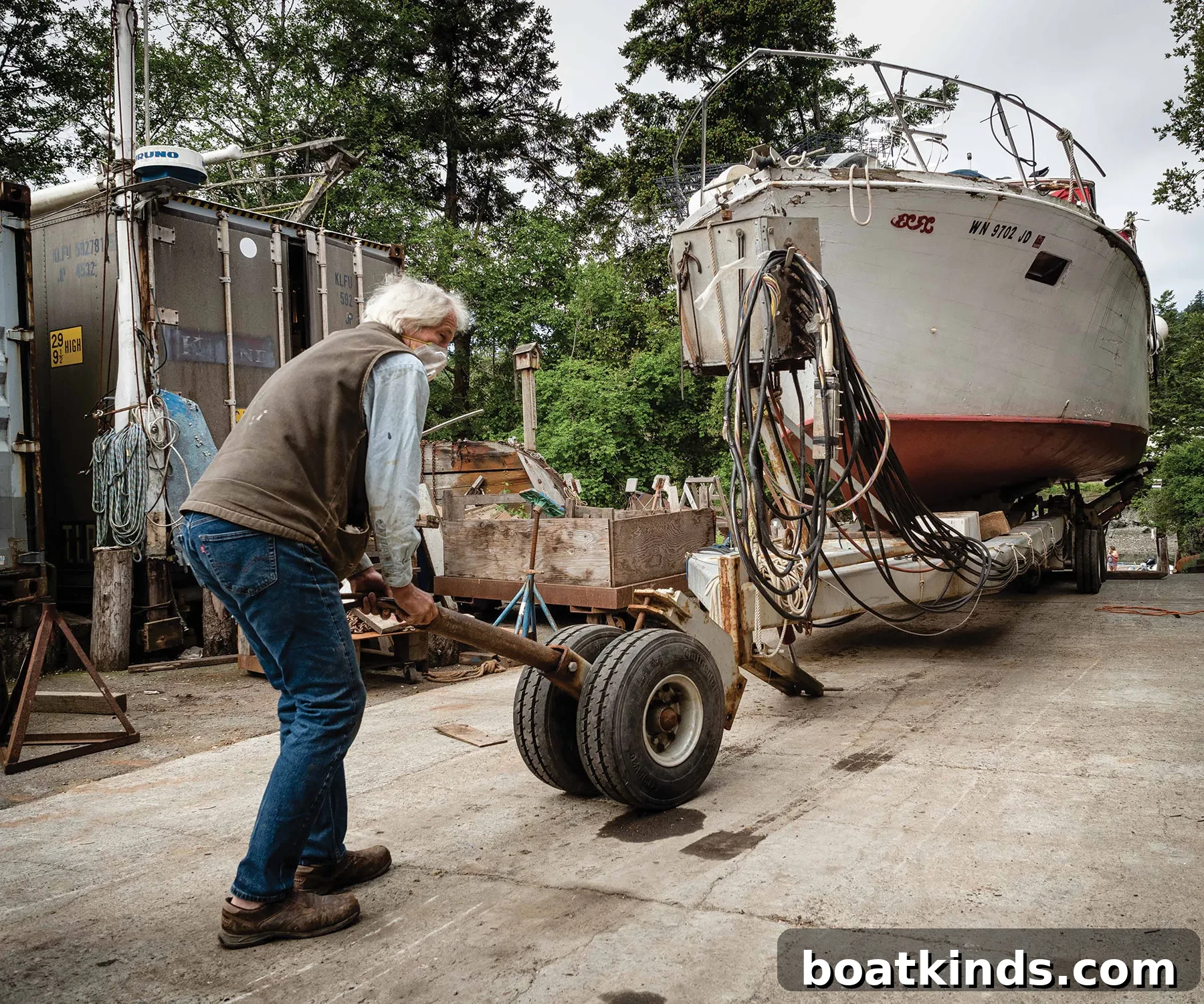
Durland also works with San Juan County and the Washington State Department of Natural Resources to dismantle and remove condemned vessels. Thieves sometimes strip these boats before he can salvage parts, which complicates his efforts to build a useful inventory of vintage components. Cataloging and selling those parts online is a massive undertaking that neither he nor his partner, Kathleen Fennel, 60, has chosen to pursue yet.
Fennel, a trained geologist from Iowa, met Durland in the Caribbean after joining his charter crew as a chef. She moved to Orcas in 2000 and quickly became active in the island community, founding Deer Harbor’s Wooden Boat Rendezvous, which became a popular event. “It’s a nice location. People either love us or hate us,” she says, acknowledging the tensions that come with running a boatyard in a gentrifying area.
While Durland’s craftsmanship earns respect, the yard has not been without controversy. A 2011 newspaper story covered a dispute with the Orcas fire chief over access to a water source used for fire suppression. The case reached the State Supreme Court and was decided against him. “Things have settled down, but you never know who will pop up next with complaints against an ugly boatyard in a residential neighborhood,” Durland says.
Running Deer Harbor Boatworks is more than a business—it’s a way of life. The couple keeps pygmy goats, Coco and Andy, to manage vegetation and provide compostable manure. “Weed whacking got cumbersome and expensive,” Fennel explains. “Goats cost less and take care of the growth, just not instantly.”
Classic wooden boats remain central to the yard’s character. On any given day you might find Intrepid, Henry Ford’s Eight-Meter; Flirt, an International One Design; Sweetie, an M-20 Scow built for the Kaiser estate; and Challenge, a 1934 Second-Rule Six-Meter that Durland restored after trading an outboard motor for the hull.
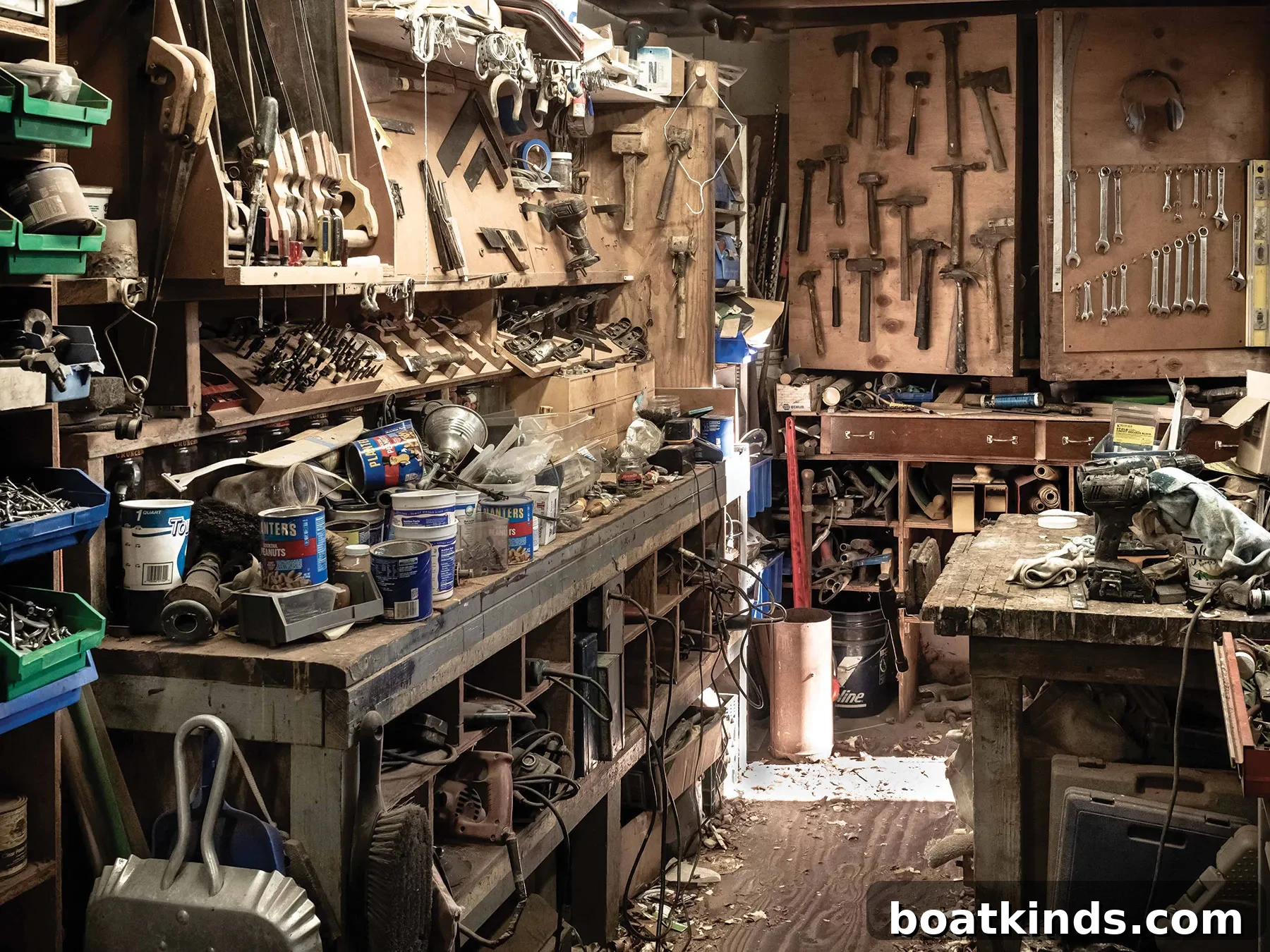
Looking ahead, Durland and Fennel are cautiously optimistic. “The key for a small business like ours is being flexible and recognizing the ebb and flow,” Fennel says. They acknowledge challenges: stricter environmental regulations, rising boatyard liability insurance, competition from larger mainland yards and changing ownership patterns as longtime operators retire. Jensen’s in Friday Harbor, a longtime local yard, was acquired by the Port and turned over to a management company, and other island operations are changing hands. “Small boatyards will be in the hands of large corporations once the owners retire, as there aren’t many options for keeping them open,” Durland observes. “If we ever sell, it’ll never continue as a boatyard, unless as a nonprofit.”
Despite those concerns, a sale is not imminent. The couple loves their life here and strives to keep affordable repair and maintenance options available to owners of modest means. “A 1,500-square-foot house on the water with a shop and a dock—that does not exist anymore,” Fennel says.
Ward Fay, director of the Wooden Boat Society and operator of a daysailing business in a 1948 wooden Blanchard sloop recently repaired at Deer Harbor, emphasizes the yard’s value: “If Deer Harbor went out of business it would be a pretty big loss for the boating community,” he says. “You kind of wonder how long it can last.”
This article was originally published in the September 2021 issue.