
Since 1851 the America’s Cup has been a showcase for both elite seamanship and the leading edge of yacht design. That year a group from the newly formed New York Yacht Club brought their schooner America to Britain, won the prize, and set in motion a rivalry that would continually push sailing technology and tactics. Over the decades the Cup has evolved from classic schooners to the foiling monohulls of today—machines that resemble fighter jets more than traditional yachts and can exceed 50 knots.
From the beginning the America’s Cup has been governed by the Deed of Gift, a document created by an early syndicate member to make the trophy an international contest between two yacht clubs: a defender and a challenger. The Cup quickly became surrounded by legend and excess—vast fortunes wagered, dramatic personalities, and a winner-takes-all mentality that intensified every campaign. Sir Thomas Lipton’s five unsuccessful challenges and the New York Yacht Club’s 113-year defense streak are reminders of how much passion and prestige the event carries.
Moments of seismic change punctuate Cup history: the winged keel that helped Australia II win in 1983 and the first sighting in 2012 of a hydrofoiling catamaran that signaled a new era. Emirates Team New Zealand (ETNZ) embraced that shift, defeating Oracle Team USA in 2017 and helping define the AC75 class rule that produced the foiling monohulls which dominated recent editions. After defending successfully in 2021, ETNZ elected to stage the next defense off Barcelona using second-generation AC75s.
AC75 Evolution: Faster, Lighter, Smarter
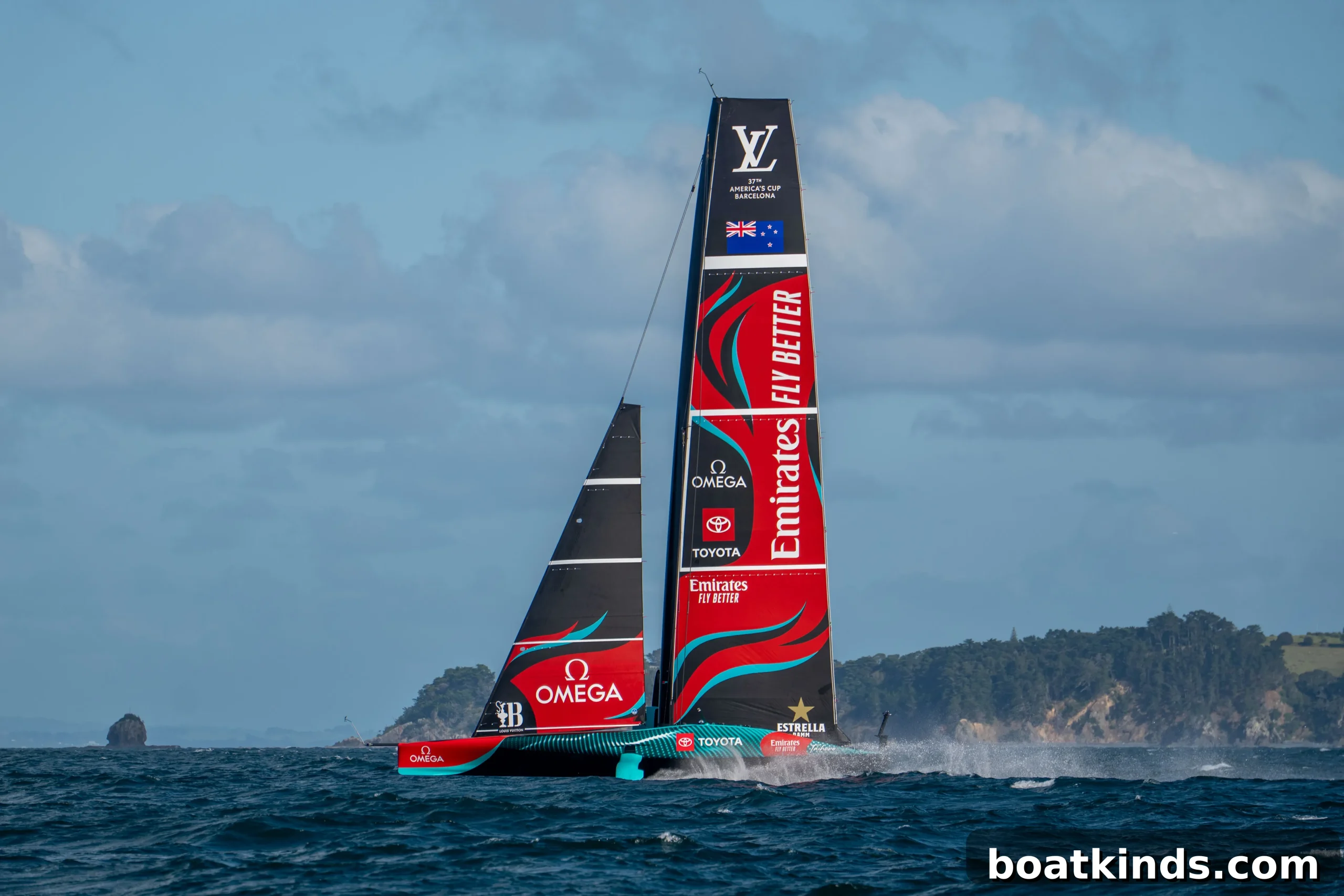
AC75 foiling monohulls are designed around performance at speed. Unlike prior yachts, they lift onto ballasted hydrofoils mounted to foil arms on each side of the hull, controlled by hydraulic systems. The AC75 is a box-rule design: while some systems are standardized, teams were free to innovate hulls, foils, and sails within limits.
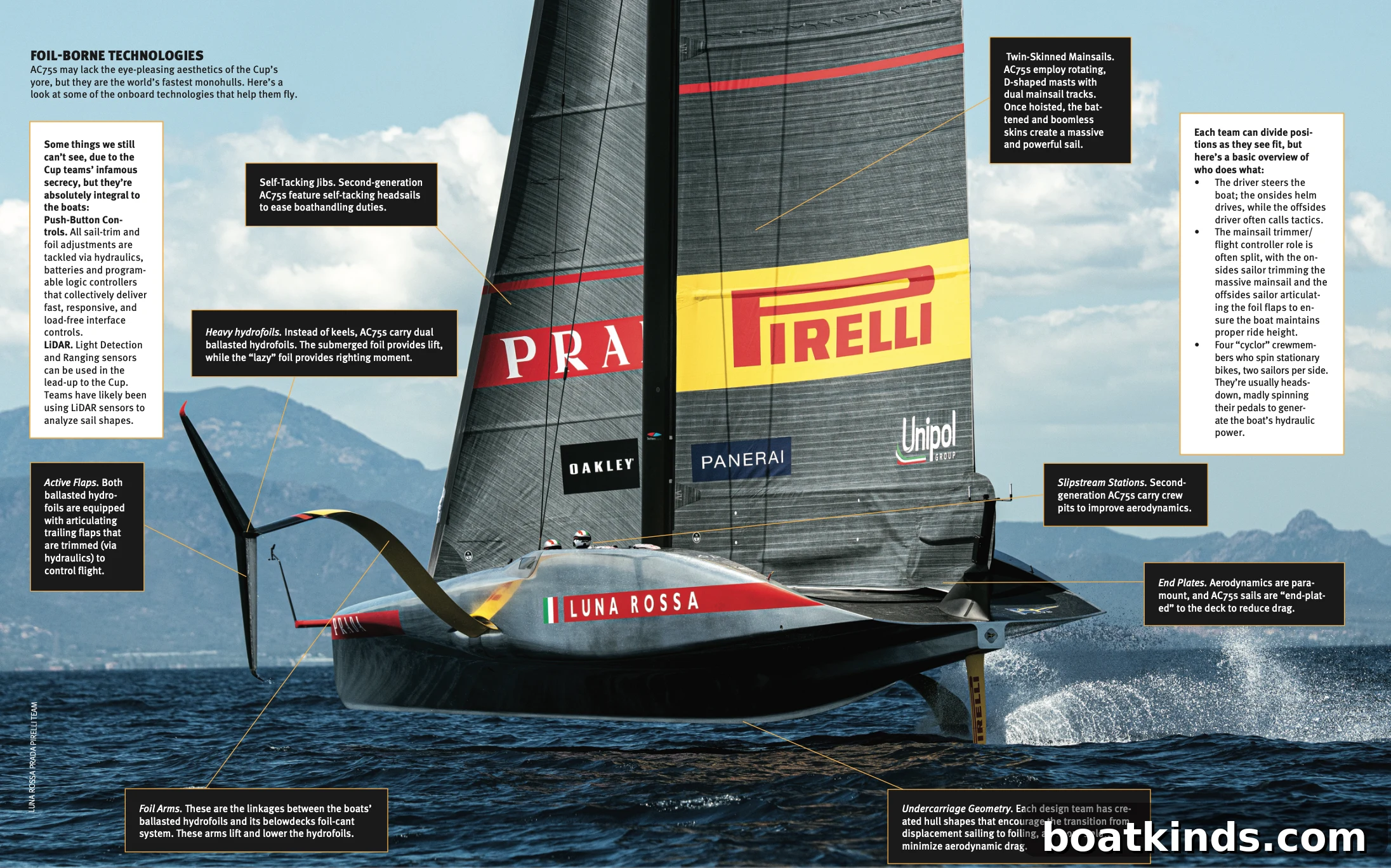
The new, second-generation AC75s are significantly lighter and more efficient than their predecessors. Naval architect Andres Suar of Luna Rossa Prada Pirelli notes these version two boats are roughly 1,985 pounds lighter in sailing trim. Crew reductions—from 11 to eight—account for part of that savings, while redesigned foils and the removal of heavier sails and systems contribute further weight drops. These changes make the boats quicker to take off and much faster in light winds, and still blisteringly quick in stronger breeze where speeds can exceed 50 knots.
Foil design remains the single most important performance factor. Small geometric changes to foil sections can produce larger speed gains than comparable changes to the hull. Teams are restricted to three foils (one-and-a-half sets) and must choose their foil package before racing, so designers are building shapes with broad “sweet spots” that perform across a range of conditions rather than extreme, niche foils that only work in specific wind ranges. Hull aerodynamics and the interaction between hull and sails are also a major focus, with teams exploiting every rules-compliant efficiency.
Crew roles have shifted too. With fewer sailors and the need to manually pressurize hydraulic systems, teams now include dedicated “power” sailors who operate stationary cyclors to feed the hydraulics. The version two rules also require fixed crew workstations, changing how maneuvers are executed and how onboard systems are laid out.
The Teams
The Defender: Emirates Team New Zealand
Emirates Team New Zealand traces its Cup roots to the 1987 challenge and rose to prominence under leaders like Sir Peter Blake and Russell Coutts. ETNZ has become synonymous with innovation—being the first to hydrofoil successfully at speed—and has repeatedly pushed design boundaries. The Kiwis defended successfully in 2021 and remain at the forefront of AC75 development.
The Challengers
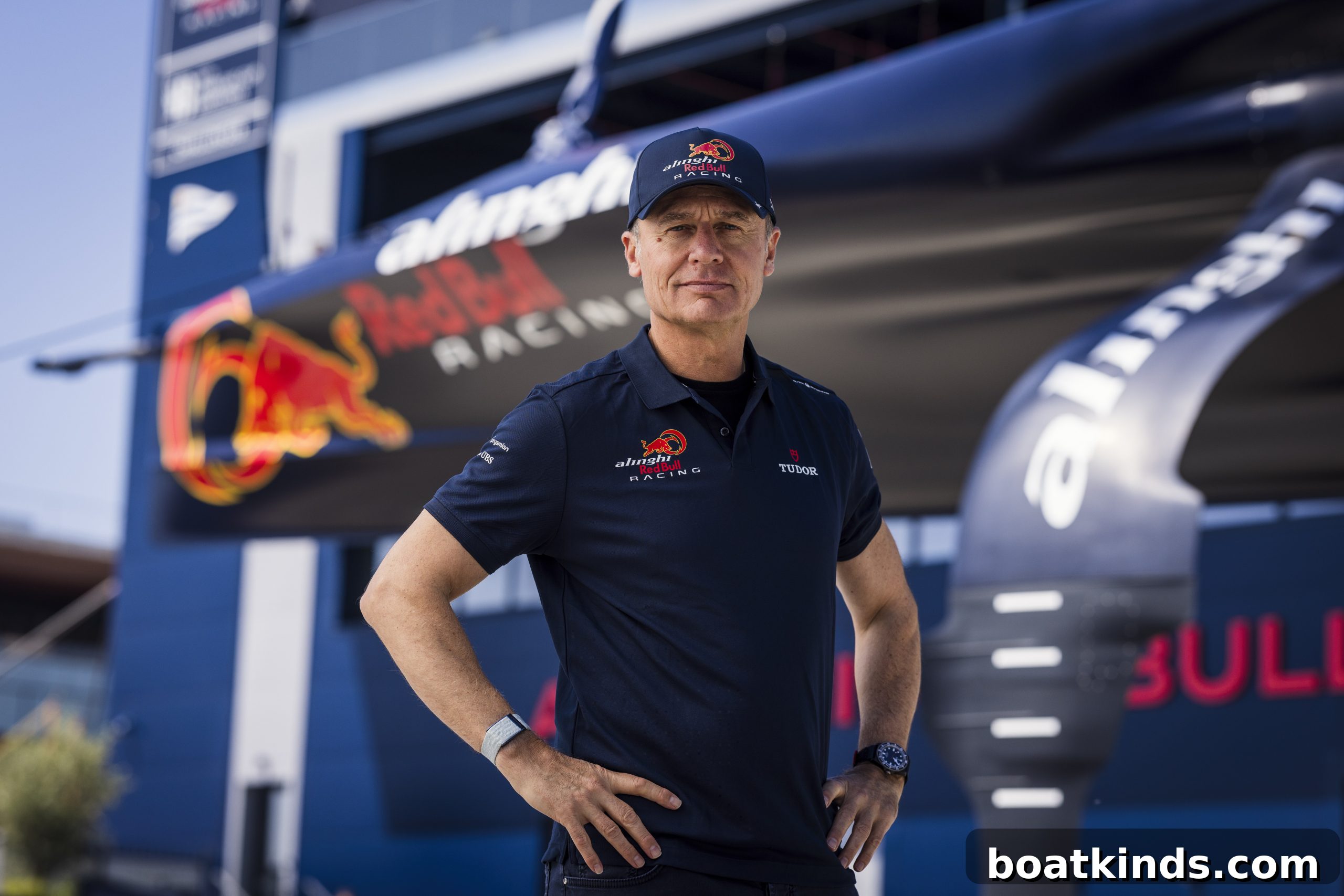
Alinghi Red Bull Racing — Ernesto Bertarelli’s Alinghi made history as a start-up Cup winner in 2003 and defended in 2007. After a long hiatus the team re-emerged as Alinghi Red Bull Racing, pairing Bertarelli’s Cup experience with Red Bull’s high-performance design and F1 pedigree.
INEOS Britannia — Born from a long-standing British desire to reclaim the Cup, INEOS Britannia is the product of Sir Ben Ainslie’s ambitions and Sir Jim Ratcliffe’s resources. The team collaborates with Mercedes-AMG F1 Applied Science and represents one of the deepest design and talent pools among the challengers.
Luna Rossa Prada Pirelli — Patrizio Bertelli’s Prada-backed team has been a persistent threat across multiple cycles. Luna Rossa brought innovative tactics to 2021 and is expected to present advanced designs and race-proven strategies once again.
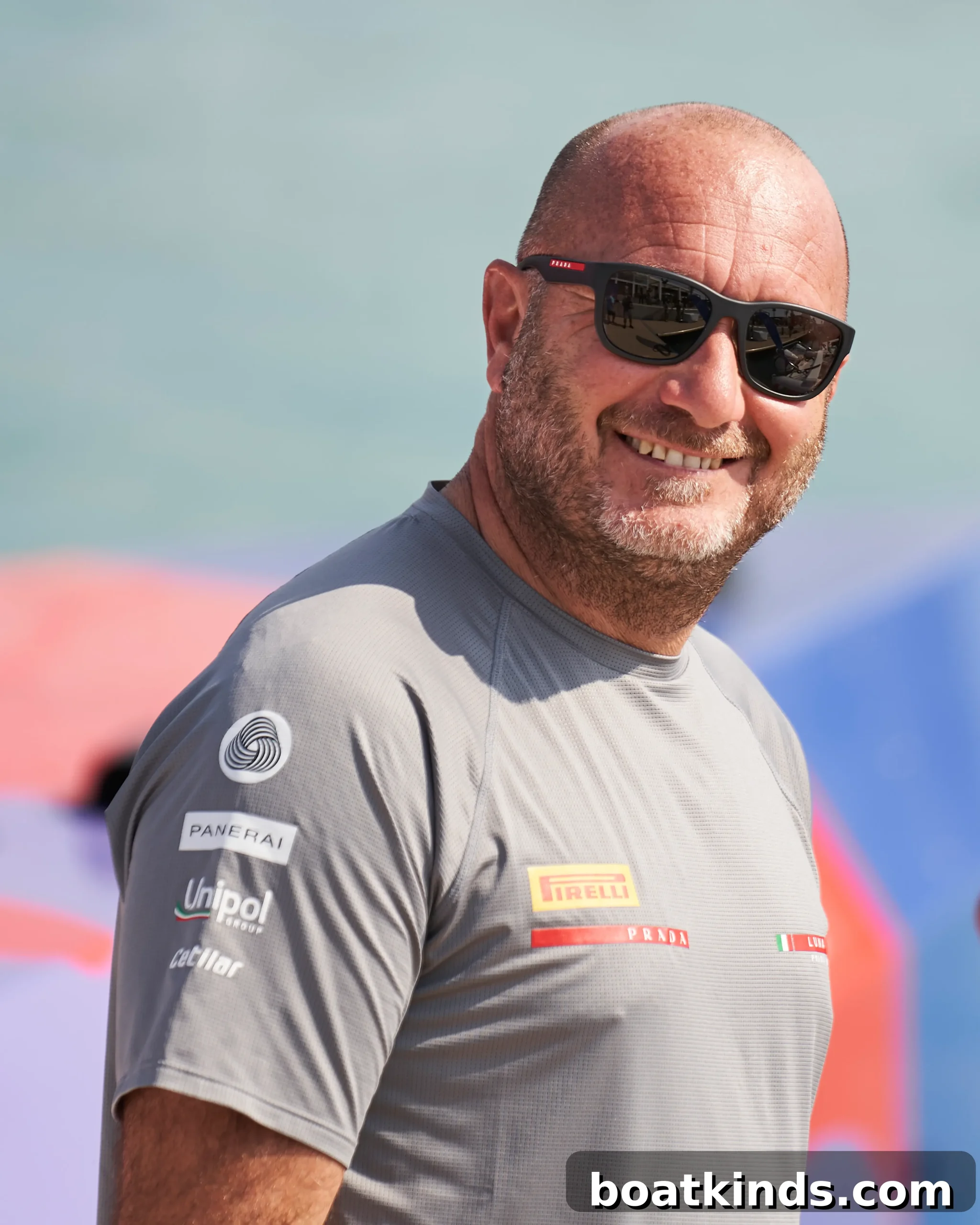
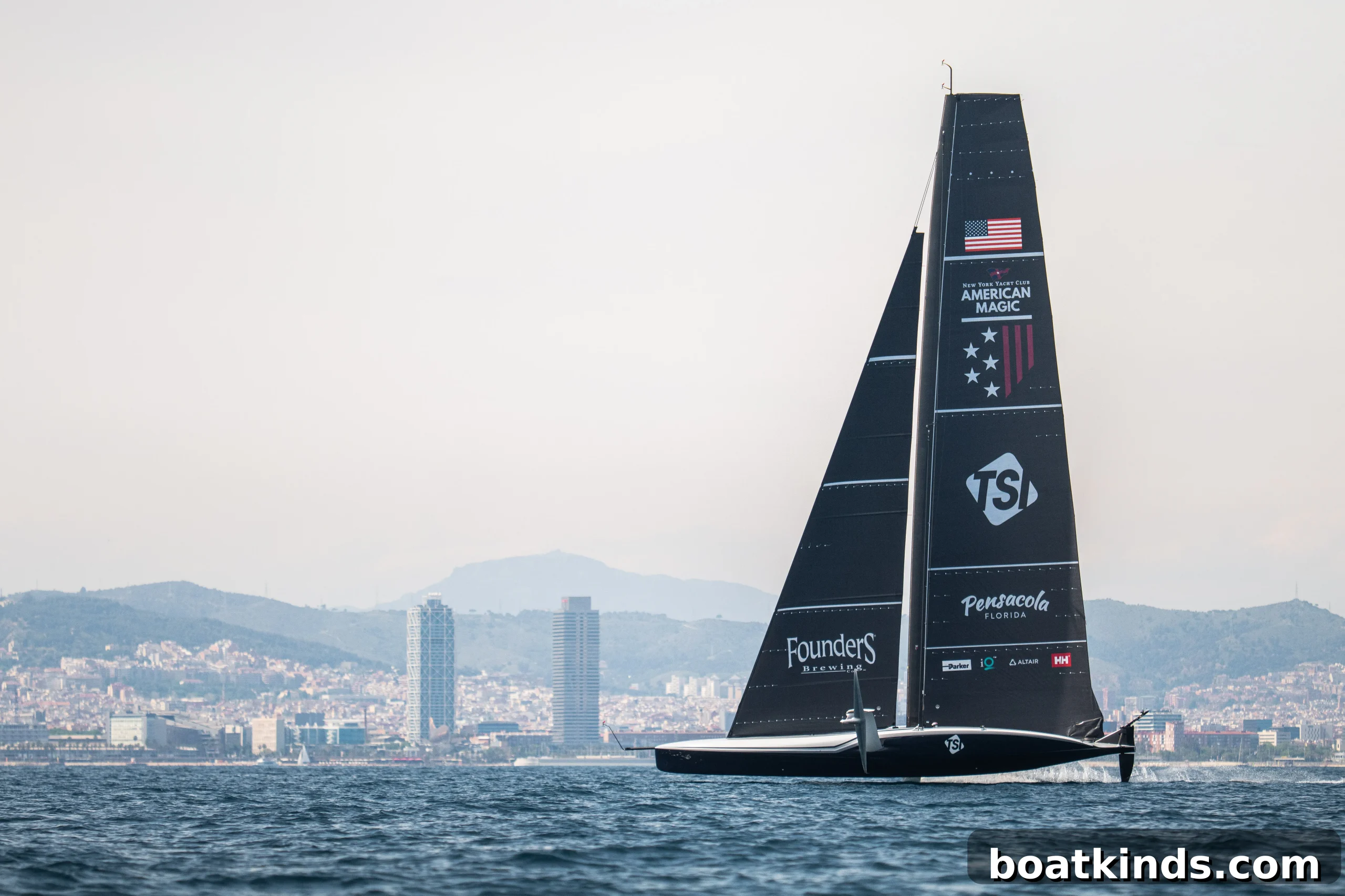
NYYC American Magic — The New York Yacht Club’s American Magic campaign combines deep historical ties to the Cup with professional management and top sailing talent. After setbacks in 2021, the team regrouped with experienced sailors and remains a serious contender.
Orient Express Racing Team — Launched from French sailing projects and technology incubators, Orient Express Racing brings fresh energy to the fleet. Operating with more limited resources than some rivals, the team emphasizes innovation and strategic partnerships.
Women and Youth: New Pathways into the America’s Cup
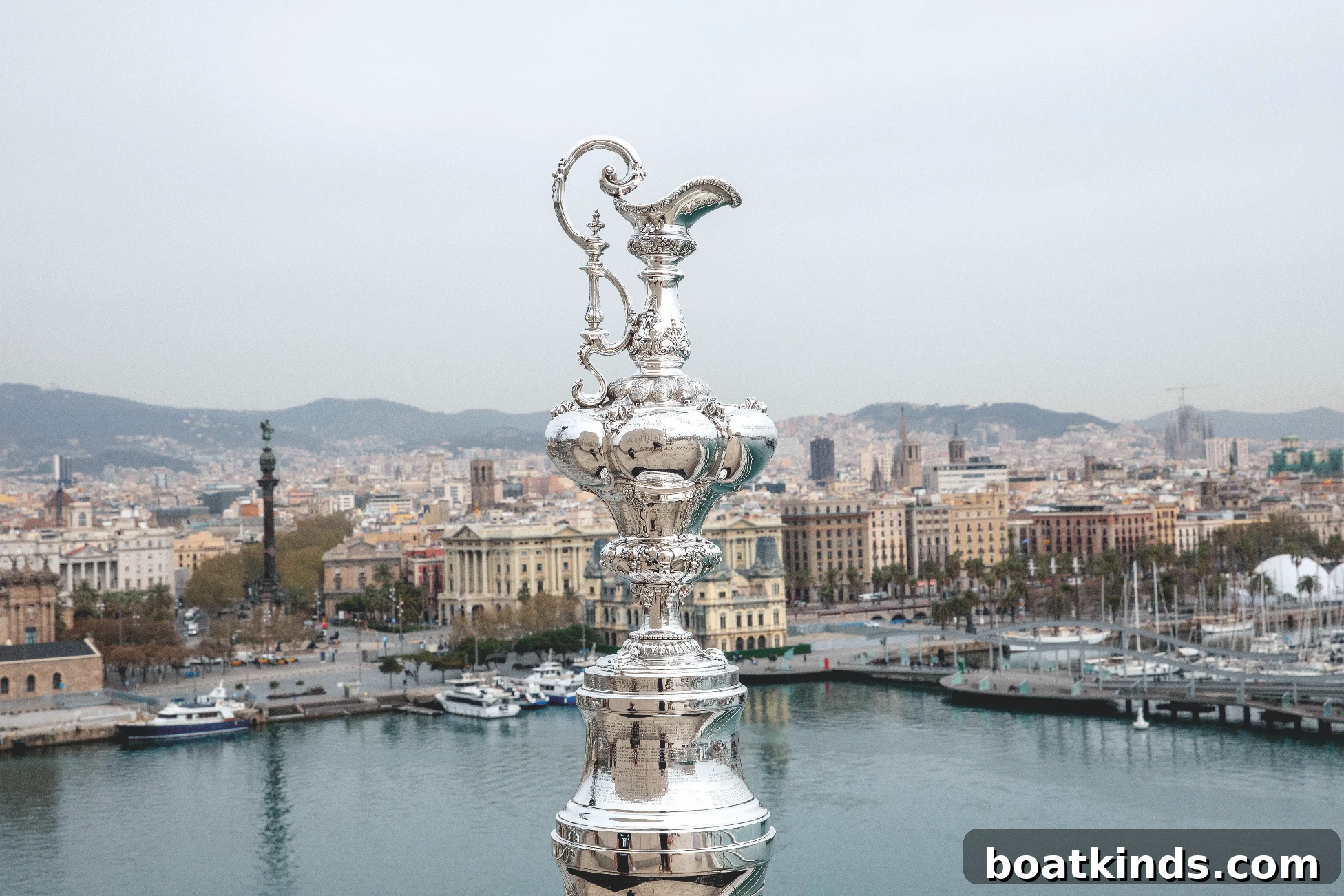
This Cup cycle introduces the Puig Women’s America’s Cup and the Unicredit Youth America’s Cup—two events designed to develop the next generation of foiling sailors and make top-level sailing more inclusive. Historically, women have been underrepresented in the America’s Cup; the Puig Women’s America’s Cup seeks to change that by racing AC40 foiling monohulls in a highly competitive format and providing targeted training.
AC40s are one-design foiling monohulls sailed by four-person crews and are electrically assisted, using battery-powered systems and automated flight controls. Controls are push-button, and crew remain in fixed positions for maneuvers. These boats can reach speeds near 50 knots, emphasizing tactics and strategy as much as raw boat speed.
The Puig Women’s America’s Cup will include the Defender and five challenger teams, plus invited teams from Australia, Canada, the Netherlands, Germany, Spain, and Sweden. Racing begins with a qualification series (October 5–9) followed by a final series (October 11) and concluding match races (October 13). The Unicredit Youth America’s Cup (September 17–26) follows a similar 12-team format, providing a talent pipeline for future Cup campaigns. Notable sailors involved include Olympic medalists and world-class competitors, underscoring the high standard of racing.
These parallel events aim to ensure that foiling expertise and Cup opportunities extend to women and younger sailors, helping to build a more inclusive future for the America’s Cup and ensuring the sport continues to evolve both technologically and culturally.
This article was originally published in the August 2024 issue.