
Oyster Trails: Tasting Oysters at Their Source
Now you can taste oysters before they ever reach shore.
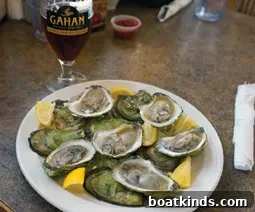
No delicacy divides opinion like the raw oyster. Some people dislike its texture; others find the briny flavor off-putting. Yet for many, a simple platter of iced, raw oysters is more desirable than almost any other dish. Indifference rarely applies.
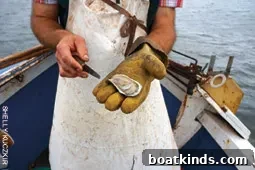
Why Oysters Deserve Our Respect
Even those who do not relish the taste can appreciate oysters for their environmental value. A single oyster can filter more than 25 gallons of water a day, improving the health of estuaries and coastal ecosystems. Oysters are also a sustainable source of protein, rich in nutrients and low in fat and cholesterol. And, for those intrigued by lore, oysters have a long-standing reputation as an aphrodisiac.
Merroir: How Water Shapes Flavor
To fully appreciate oysters, it helps to taste them in the waters where they grow. Similar to the wine concept of terroir, oysters carry the imprint of their environment — a quality often called merroir. Salinity, the riverbed’s composition, water temperature and other local factors shape an oyster’s flavor. Today many oysters are cultivated in clean estuaries, where fresh and salt water mix within tidal marshes.
Starting the Tour: Maine’s Oyster Revival
For a taste of the oyster renaissance, I began in the Old Port district of Portland, Maine, a region central to the shellfish comeback. Maine offers named appellations that speak to local identity and flavor: Glidden Point, known for a deep cup and briny, succulent meat, and Pemaquid are among the state’s best-known varieties.
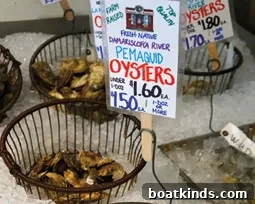
To plan my route I used the Maine Oyster Trail, a map compiled by Maine Sea Grant that helps visitors find oyster farms, meet growers and locate restaurants and raw bars serving Maine oysters. The trail, created in 2011, is updated each spring to reflect active farms and venues.
On the Water: Nonesuch Oysters
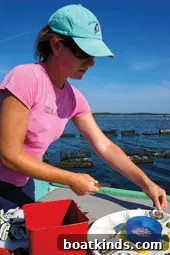
My first hands-on experience was a tasting at Nonesuch Oysters in Scarborough aboard a workboat captained by owner Abigail Carroll. Carroll, who fought to change Maine aquaculture laws so farmers could sell directly to customers, runs tours of her farm on the Scarborough River estuary. She raises spat in a floating upweller and matures oysters in floating bags at the grow site. On the boat she shucked oysters for guests and offered a simple mignonette, although the Nonesuch oysters’ tender, grassy, salty-sweet flavor stands well on its own.
Damariscotta River: A Fertile Oystering Region
Next I traveled to the Damariscotta River region, about 50 miles north of Portland. This 19-mile estuarine finger is one of Maine’s most productive oystering areas. Near its headwaters lies the Glidden Midden, an ancient shell deposit created by Native Americans centuries ago. Glidden Point Oyster Sea Farm benefits from deep, cold water and long growing cycles; some of the oysters spend four years on the riverbed in 40 feet of water, producing a distinct flavor prized by chefs and diners.

The river and nearby towns such as Damariscotta and Newcastle offer excellent boating, local shops and raw bars where you can enjoy oysters straight from the estuary.
Heading South: Chincoteague’s Salty Oysters
I then headed south to Chincoteague Island, a remote barrier island off Virginia known for its wild ponies and exceptionally salty oysters. Much of the island falls within the Chincoteague National Wildlife Refuge, and the region’s unspoiled coastline and tidal flows create very saline conditions that flavor local shellfish.
At Ballard Fish & Oyster Co. in Cheriton, I toured a hatchery that has farmed oysters since 1895. The company grows multiple varieties and produces triploid seed — oysters with three sets of chromosomes that are effectively sterile, allowing them to grow plumper and faster than fertile counterparts. Ballard’s signature Chincoteague Cultured Salt and the Chincoteague Wild Salt oysters are known for pronounced salinity and robust flavor.
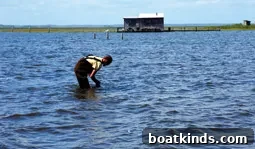
Out on the water, I visited grow sites near Morris Island, passing watch houses — small structures once used by watermen to guard oyster beds. Poaching remains a concern, so growers and watermen continue to watch their leases closely. The oysters I tasted in Chincoteague ranked among the saltiest and most flavorful I’ve encountered.
Prince Edward Island: Cool Water, Bright Flavor
In late October I visited Prince Edward Island, with its rolling landscape, steep coasts and distinctive reddish-brown till. I sampled regional varieties like the Conway Cup, the Daisy Bay and Colville Bay oysters — all noted for clean, crisp flavors. The island’s cool summers, cold winters and deep Atlantic-influenced waters contribute to a flavor profile many consider legendary.
A highlight was an oyster safari on the Pinette River with John Gillis of Pinette River Oyster Co. Gillis invites visitors to tong for oysters themselves, offering boots, gloves, a heavy rubber apron and long-handled tongs. Tonging requires feeling for oysters along the riverbed; Gillis’ oysters take three to four years to mature and show a meaty texture with medium brininess that finishes with a copper note from the local till.
Back Home: Finding Fresh Oysters Locally
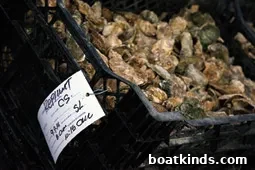
Returning to my home port of Charleston, South Carolina, I tried to apply what I’d learned. Even in celebrated seafood towns, oysters served in restaurants are often several days old. A practical tip: ask to see the oyster tags. These tags list the producer, harvest location and the date and time of harvest. U.S. restaurants are required to keep oyster tags for 90 days so producers and harvest sites can be traced if an illness occurs. Checking the tag is the best way to verify freshness and origin.
Plan Your Own Oyster Journey
Following oyster trails from Maine to Prince Edward Island to Chincoteague revealed the many faces of merroir. Visiting farms, meeting growers and tasting oysters on the water are the best ways to understand how environment shapes flavor. If you love oysters, consider traveling to the region where your favorite variety is grown — the experience is a delicious way to connect food, place and stewardship.
See related article: Pearls of wisdom
April 2015 issue