
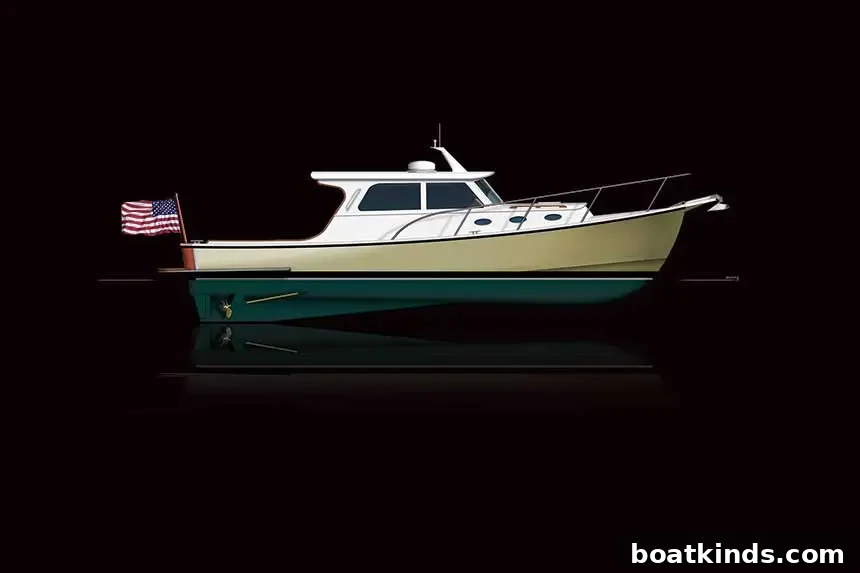
Thomas Point 43: Where Classic Downeast Lines Meet Modern Powerboat Performance
The Thomas Point 43 blends the best qualities of traditional Downeast and workboat design with contemporary engineering and systems. The boat’s aesthetic nods to New England lobster boats and Chesapeake Bay deadrise workboats, while its underbody, systems and accommodations reflect modern expectations for cruising comfort, safety and efficiency. The result is a vessel that appeals to owners who value heritage styling but want up-to-date performance and reliability for extended cruising.
Design Heritage and Naval Architecture
Designed by Mike Kaufman of Annapolis, Maryland, the Thomas Point 43 draws from proven East Coast workboat traditions. Kaufman took inspiration from the deep-V forefoot and bow flare common to lobster and deadrise boats to create a hull that offers a soft entry and effective spray protection in choppy conditions. Midships the hull carries a hard chine that transitions to a shallower V aft, a combination that promotes predictable handling, initial stability and easier planing when the boat is pushed onto plane.
Those lines are not purely aesthetic: they are intended to make the 43 capable in rough water while maintaining the efficiency and seaworthiness expected of a serious cruising powerboat. The Thomas Point 43 therefore appeals to owners who want a traditional profile without compromising contemporary seakeeping and ride quality.
Construction: Cold-Molded Craftsmanship
Mast & Mallet Boatworks in Edgewater, Maryland, built the first Thomas Point 43 using cold-molded construction. The method used two layers of cedar laid fore and aft against internal frames and then sheathed in fiberglass. Cold-molded construction is prized for its favorable strength-to-weight ratio, resistance to rot when properly finished, and the capacity to produce strong, durable hulls well suited to long-distance cruising. The cedar core gives the hull a degree of stiffness and resilience, while the fiberglass overlay protects and adds structural support.
Power and Systems
The Thomas Point 43 was offered with twin-diesel propulsion, and buyers could choose from reputable marine diesel brands such as Yanmar or Cummins. Twin diesels provide redundancy and reliable cruise capability for coastal and inland voyages. Semi-custom arrangements allowed owners to select engine options and interior layouts to suit their cruising style, whether prioritizing extended range, economical cruising speeds or comfortable onboard living spaces.
Voyaging and Practical Use
The design and construction of the Thomas Point 43 proved its capability on long voyages. One example of the model completed a 7,500-mile Great Loop cruise along the U.S. East Coast, through the Great Lakes and the nation’s inland waterways, including the Mississippi River, and continued into the Bahamas. Such passages demonstrate the boat’s suitability for extended trips, showing the combination of seakeeping, range and onboard systems needed for serious cruising.
Model Line and Customization
Thomas Point models—named for the Chesapeake Bay’s Thomas Point shoal and its iconic screwpile lighthouse—range from single- and twin-engine variants between approximately 26 and 44 feet. As semi-custom builds, these boats were offered with a variety of interior configurations and finishes, allowing owners to tailor the layout to preferences for berths, galley arrangements and storage. The flexibility in engine choice and interior options helped the design attract a range of owners, from weekenders to long-distance cruisers.
Owner Impressions and Reputation
Owners and enthusiasts have praised the Thomas Point 43 for looking and feeling like a “real boat” — a compliment that points to the effective marriage of traditional styling with modern functionality. In marinas and online boating communities, owners often highlight the boat’s handsome lines, solid construction and the balance of New England and Chesapeake Bay workboat characteristics. For many, the Thomas Point 43 represents a vessel that respects classic design while delivering the reliability and comfort required by contemporary cruising sailors and powerboaters.
Conclusion
The Thomas Point 43 is a compelling example of how classic boatbuilding ideas can be blended with modern techniques to produce a practical, attractive and capable cruising boat. From its deep-V forefoot and hard-chine hull to its cold-molded cedar-and-fiberglass construction and twin-diesel propulsion options, the 43 was created to handle coastal conditions and longer voyages while retaining the timeless appeal of Downeast workboat lines.