Boating with Dogs: Practical Tips for Safety and Comfort
Many boaters bring their dogs aboard to share every aspect of life on the water — from standing at the bow with their noses in the breeze to joining in paddleboarding, kayaking, or simple dinghy rides. With the right preparation and training, most dogs can safely enjoy boating and water activities alongside their human companions. Below are practical, easy-to-follow tips to help keep your dog safe, comfortable, and happy while on board.
Safe Boarding and Exiting
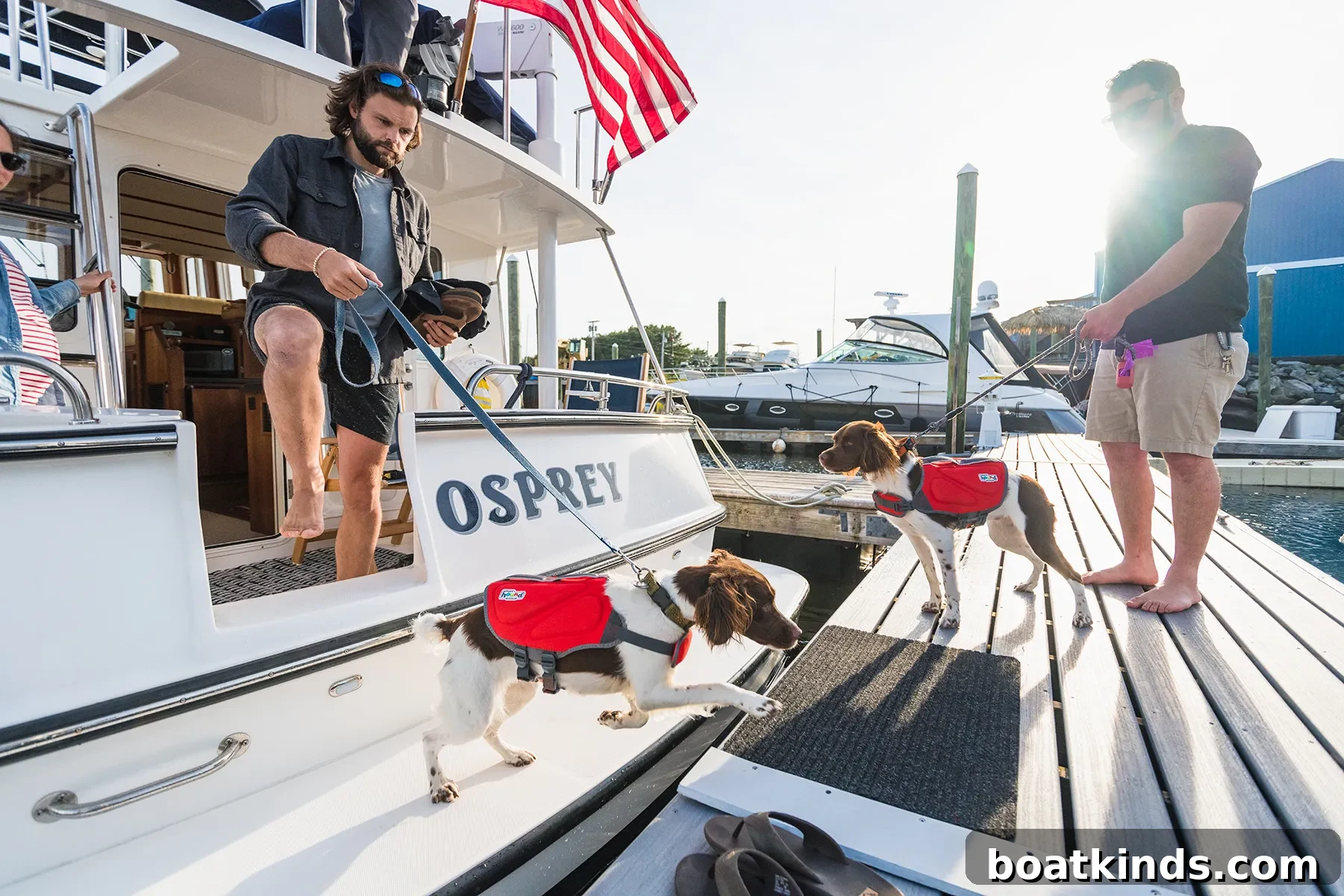
Getting a dog on and off the boat safely is the first priority. Provide a reliable, confidence-building path for your pet — whether that’s a ramp, a small gangway, or a familiar set of steps. Mike Valtaro of BoatUS built a simple ramp for his Nova Scotia Duck Tolling Retriever, Finn. It acted like a small passerelle and gave Finn a predictable route to the swim platform and into the boat. If you switch boats or need a portable solution, there are inflatable ramps and purpose-built pet planks that attach to swim platforms.
Proper Dog Life Jacket Fit
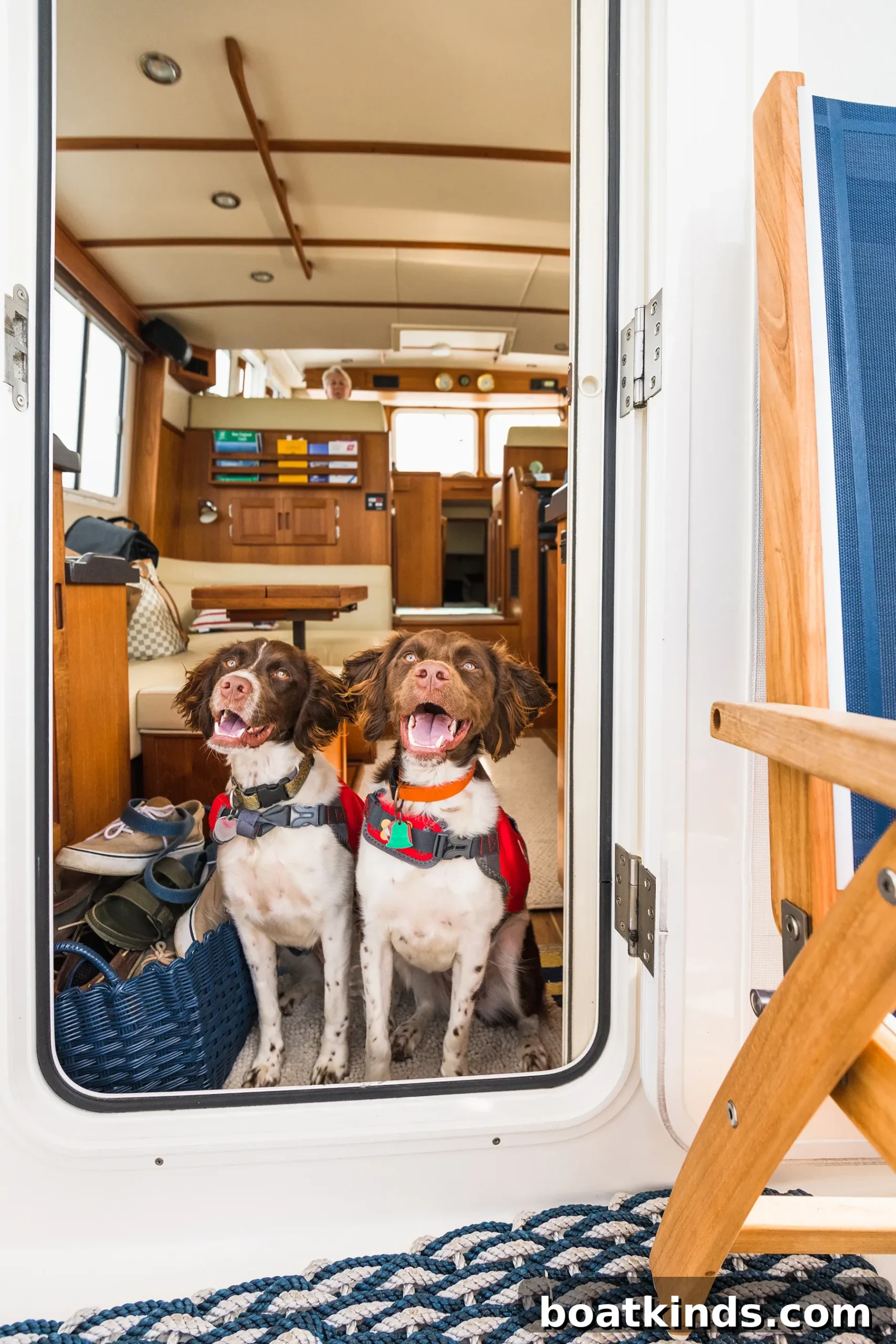
Whenever a dog is on the water, a life jacket (pet personal flotation device, or PFD) is essential. Fit is crucial: try several models on your dog before buying, and check that straps and buckles sit comfortably without pinching. A loose jacket can be dangerous if a limb gets trapped, so choose a secure, well-adjusted design. Many owners prefer jackets with a strong lifting handle to make retrieving a dog from the water safer and easier. Bright-colored jackets help visibility on the water.
Introduce the Life Jacket Gradually
Before your first trip, let your dog become familiar with the jacket on land. Have treats and toys ready so the experience is positive and low-stress. Once they accept wearing it, practice in shallow, calm water and encourage gentle walking and short swims while supervised. The American Kennel Club recommends using toys and rewards during this acclimation to build confidence.
Practice Swimming and Watch for Fatigue
Not all dogs are natural swimmers. While some will eagerly paddle out, others need coaxing and short, structured practice sessions. Monitor energy levels closely: swimming is physically demanding — for many dogs, one minute of swimming can be equivalent to several minutes of running on land. Watch for signs of fatigue and bring your dog in before it becomes exhausted. If your dog splashes or bites at the water obsessively, use toys or a change of activity to distract and limit swim time.
Bathroom Breaks and Onboard Spaces
Before departure, take your dog for a walk so they can relieve themselves. For longer outings, designate a bathroom spot on board — many owners use absorbent pads or small areas of artificial turf to signal a place for pets to use. A regular routine helps prevent accidents and keeps the boat comfortable for everyone.
Leashes, Lines and Containment
If your dog gets excited or tends to roam, use a leash on deck and during docking or undocking. Valtaro kept Finn leashed on the flybridge and indoors while the crew prepared to dock to prevent risky jumps. For swimming, a ski line or short tether attached to the jacket can prevent a dog from drifting or swimming too far from the boat while still allowing movement and exercise.
Hazards to Watch For
Keep an eye out for potential dangers: swallowing too much seawater can cause water intoxication, and brightly colored buoys or crab pot markers can attract curious dogs. Be mindful around fishing gear and traps. Always supervise play near these hazards and steer your dog away from anything that could entangle or injure them.
Hydration and Heat Management
Boating in the sun can raise temperatures quickly. Pack plenty of fresh, cold drinking water and offer it regularly, especially after activity. Provide shaded resting places on deck so your dog can cool down between swims or play sessions.
Active Supervision for a Better Day on the Water
The best way to enjoy boating with your dog is active supervision and a few smart preparations: secure, comfortable boarding options; a well-fitted life jacket; gradual acclimation to water; designated bathroom areas; and vigilant monitoring for fatigue and hazards. As Valtaro says, many people treat their pets as family and want them included — with the right approach, a trip on the water can be safe, fun, and memorable for everyone on board.
This article was originally published in the June 2024 issue.