
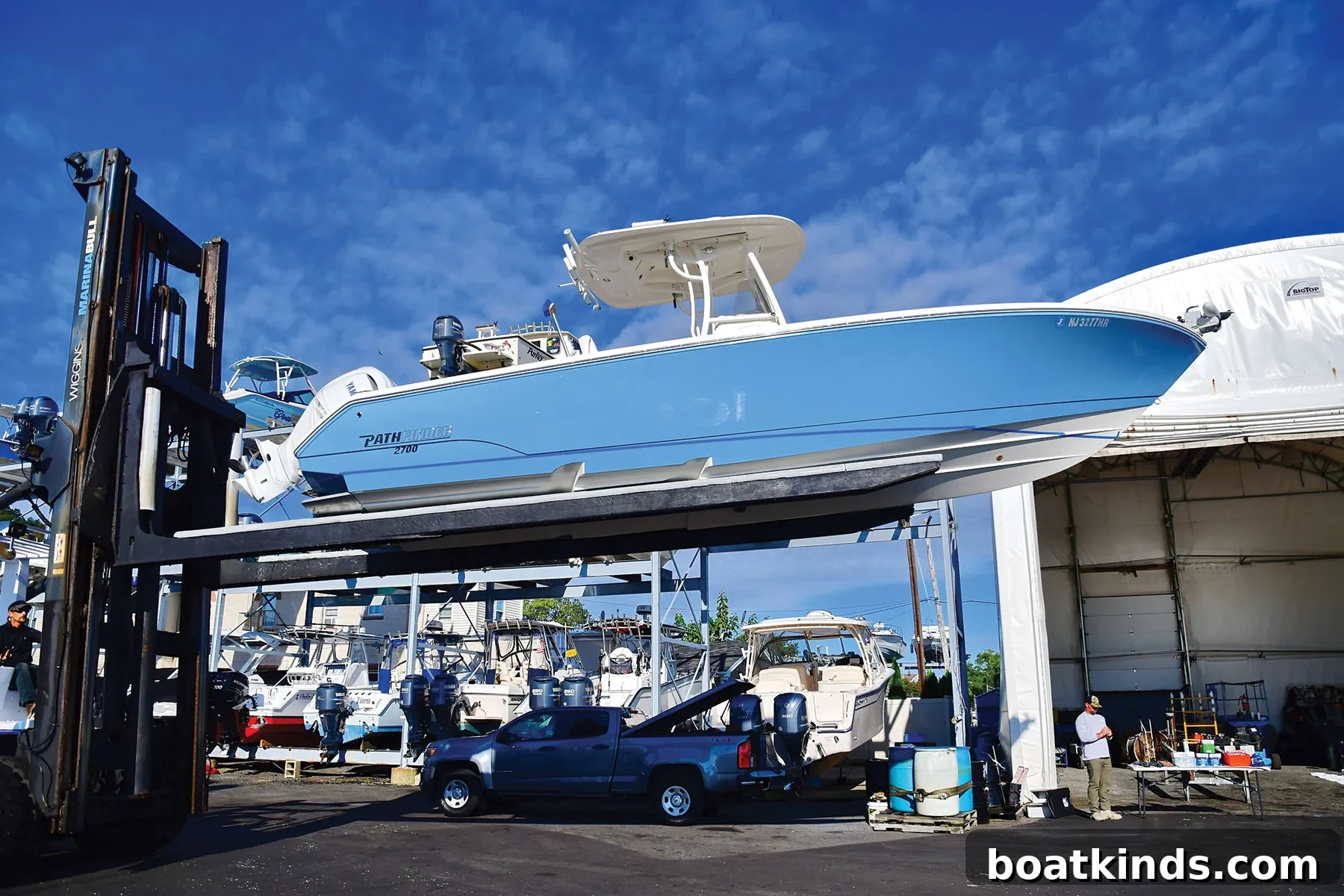
After more than 25 years with the same boat, I finally ordered a new Pathfinder 2700 Open—a hybrid that blends the handling of a large bay boat with the offshore capabilities of a midsize center console. I bought it with a matching Ameratrail trailer so I could chase fish by road when I wanted, but most of the year it would live in a slip on a tidal river. That meant dealing with hull fouling, and the thought of sanding the pristine white gelcoat on a brand-new hull was something I wanted to avoid.
I had experience with the usual, labor-intensive methods for prepping a hull for bottom paint and wanted an alternative that preserved the factory finish. My research led me to a no-sand application process using Interlux products. I called Jay Smida, a sales and technical representative at AkzoNobel Yacht Coatings Division, and learned this approach preserves the gelcoat while still delivering effective antifouling protection.
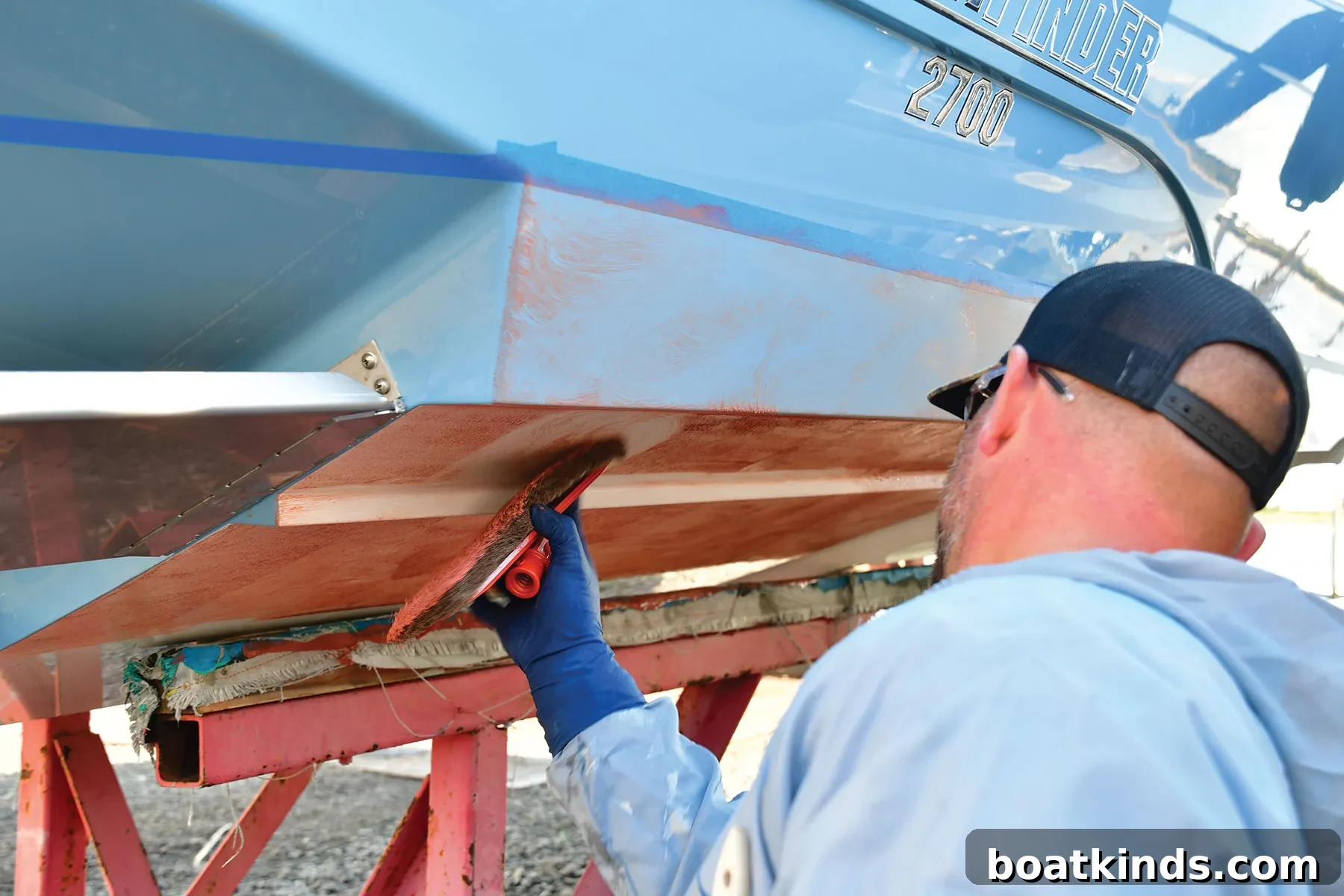
The process centers on Interlux Fiberglass Surface Prep and the latest Micron antifouling paint, Micron Navigator. Both the prep and the paint are water-based, and the EPA-approved Surface Prep can be rinsed to sewer systems or waterways according to local regulations, making it practical for many marinas and yards. Micron Navigator is also available in white, which matched the color scheme of my blue-and-white Pathfinder.
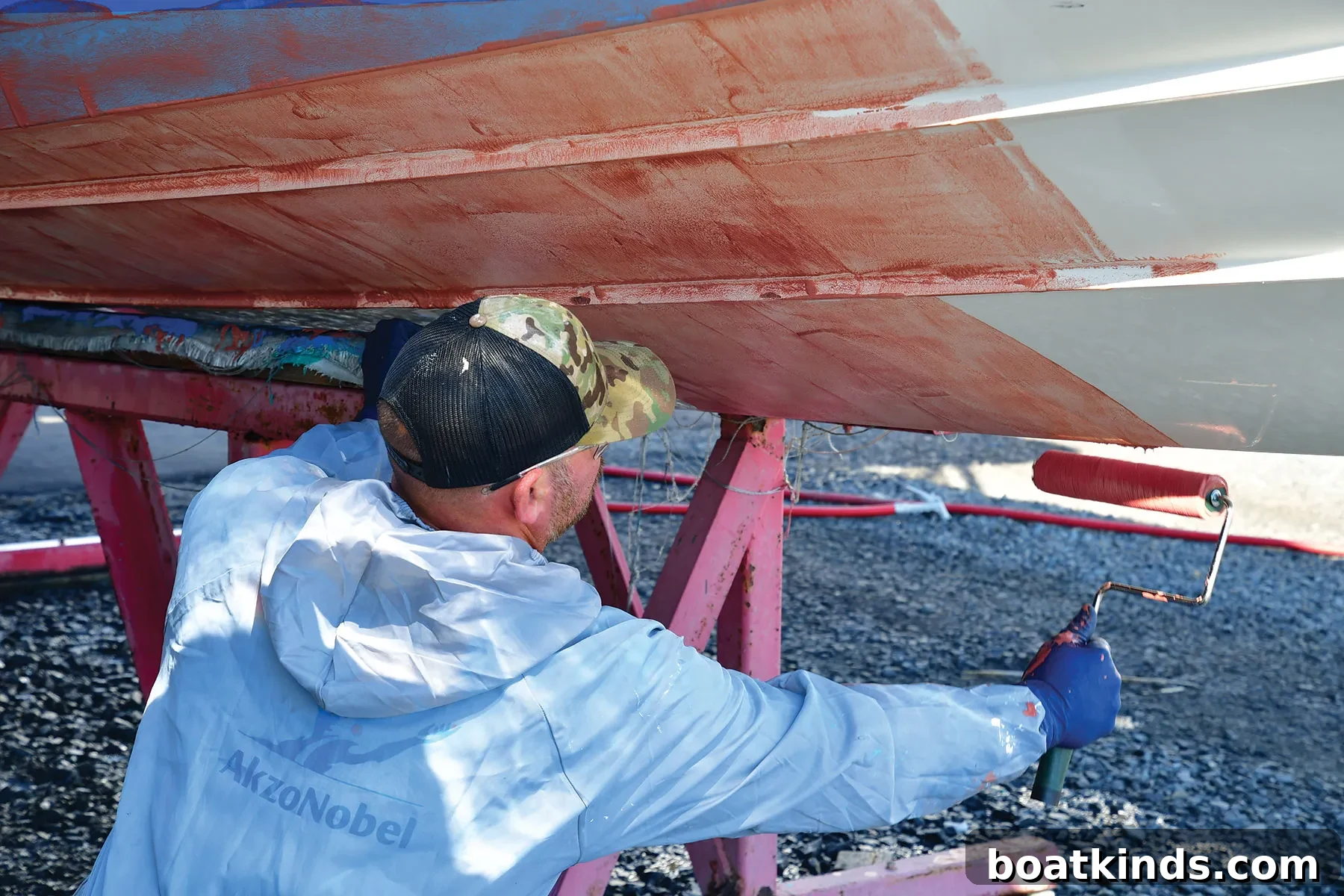
Although the no-sand method works without an epoxy barrier, we added a single thin coat of InterProtect 2000E as an indicator layer. Navigator is an ablative antifouling—its surface slowly erodes during use to keep biocides fresh. Because my bottom paint and gelcoat were both white, Jay suggested applying a thin gray coat of InterProtect 2000E so that, as the Navigator wears, the gray would begin to show through and signal when it was time to recoat. It’s a practical, low-tech way to monitor remaining paint life without risking the hull finish.
When it was time to paint, Jay and Todd Ketchow, manager at Gateway Marina in Highlands, New Jersey, helped handle the job. Todd marked the waterline on both sides and across the transom, hauled the boat onto a rack, and performed an acid- and power-wash. He then masked the hull 1-1/2 inches above the waterline to ensure a clean edge.
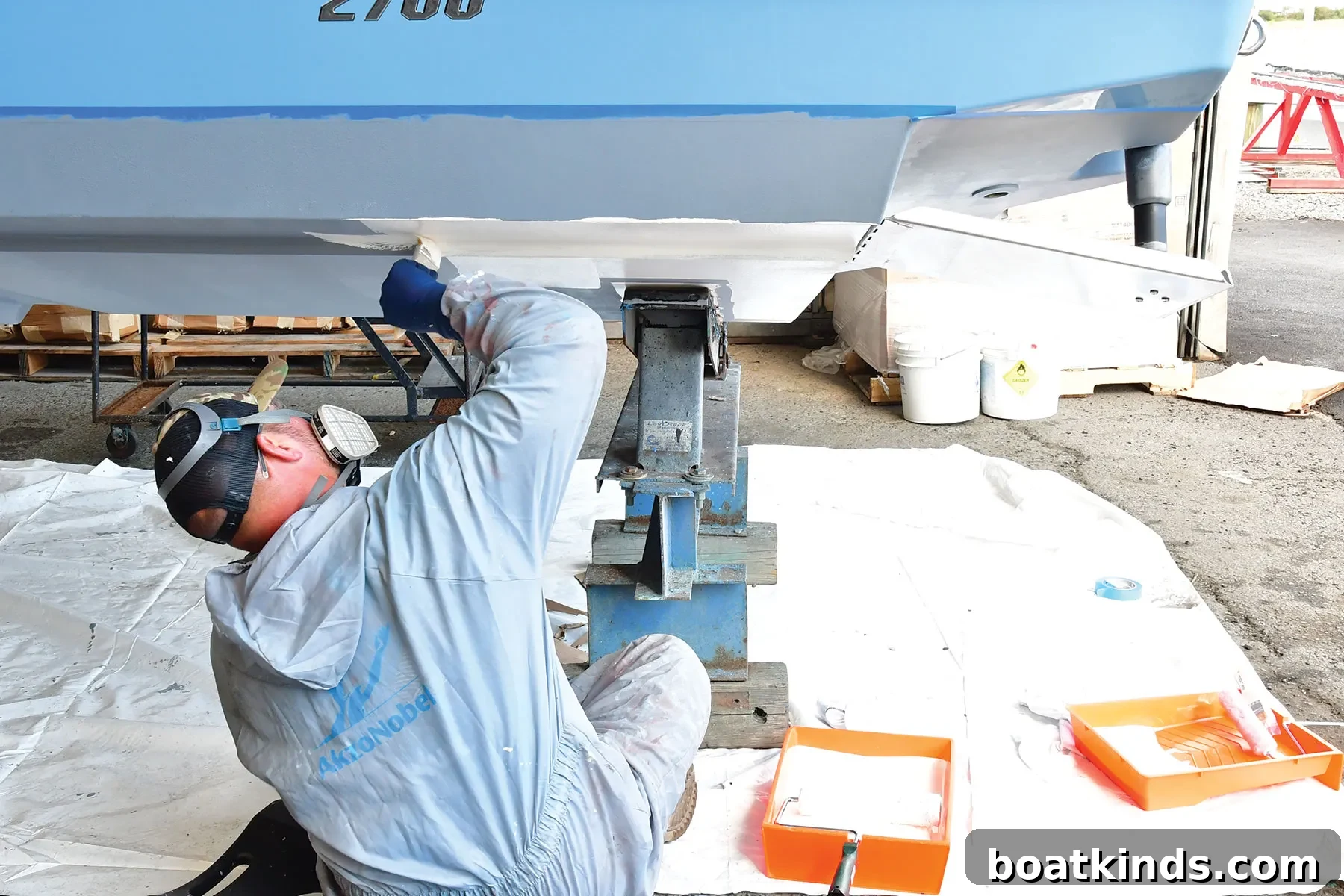
In the paint shed, Jay mixed a gallon of Surface Prep into a thin slurry using a spiral paddle on an electric drill to keep the mild abrasives evenly suspended. Working in sections, he rolled the product onto the gelcoat and we worked it with wet 3M Scotchbrite pads attached to a doodlebug handle. The goal is not aggressive sanding but dewaxing and creating micro-abrasions for paint adhesion. After scrubbing each area, we rinsed it thoroughly with fresh water—the correctly prepped surface should shed water in a continuous sheet rather than form beads. If beads appeared, we reapplied Surface Prep and scuffed the area again until the water sheeted off.
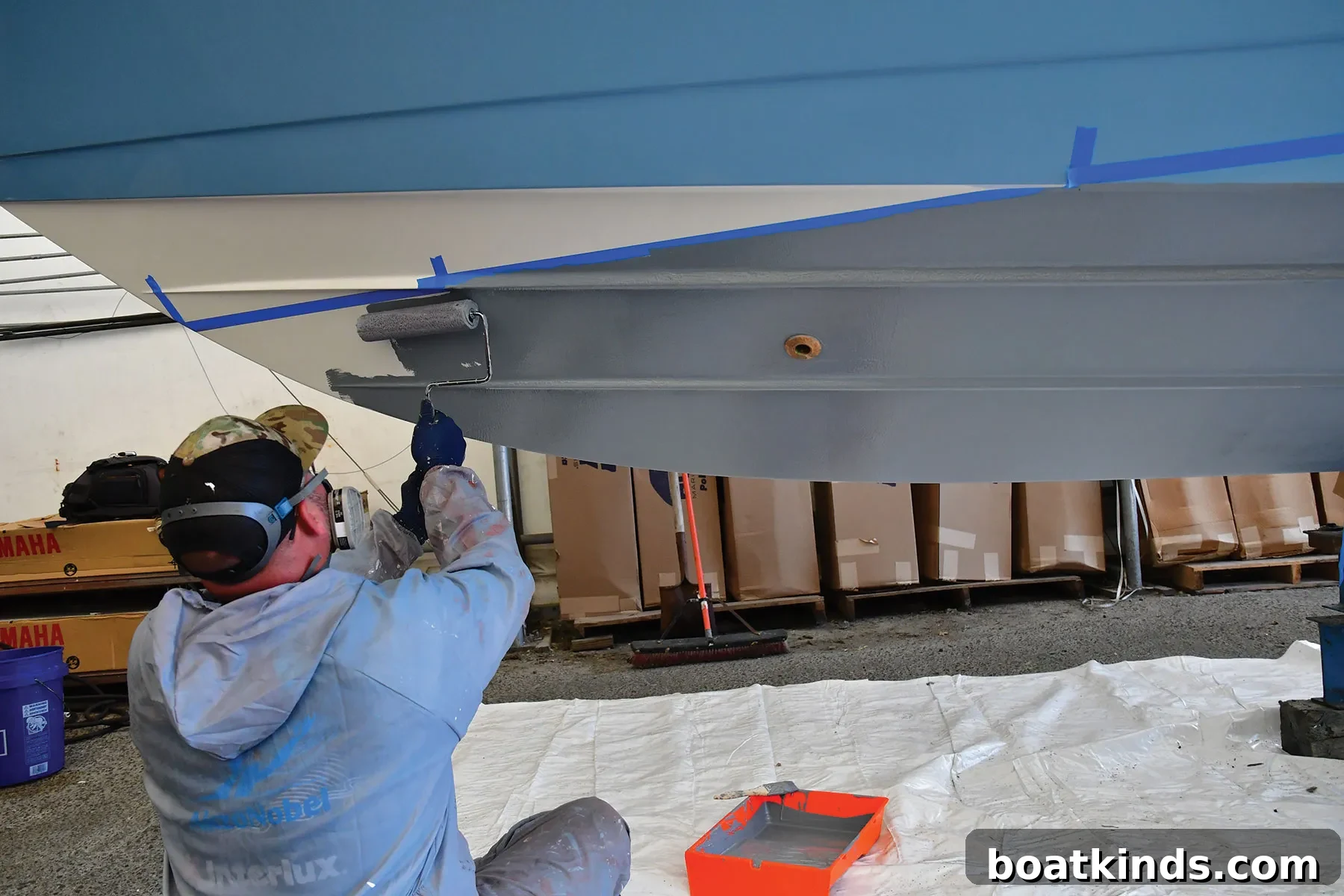
Next came the thin gray coat of InterProtect 2000E on the hull for my boat. If you’re painting a dark bottom over a light hull or vice versa, that step may not be necessary. We carefully painted around through-hull fittings, trim tabs, transducers, the jack plate and any exposed metal hardware. After the epoxy barrier cured according to manufacturer recommendations, we applied two coats of Micron Navigator, allowing proper dry time between coats—drying windows vary with temperature and humidity, so following product instructions is important.
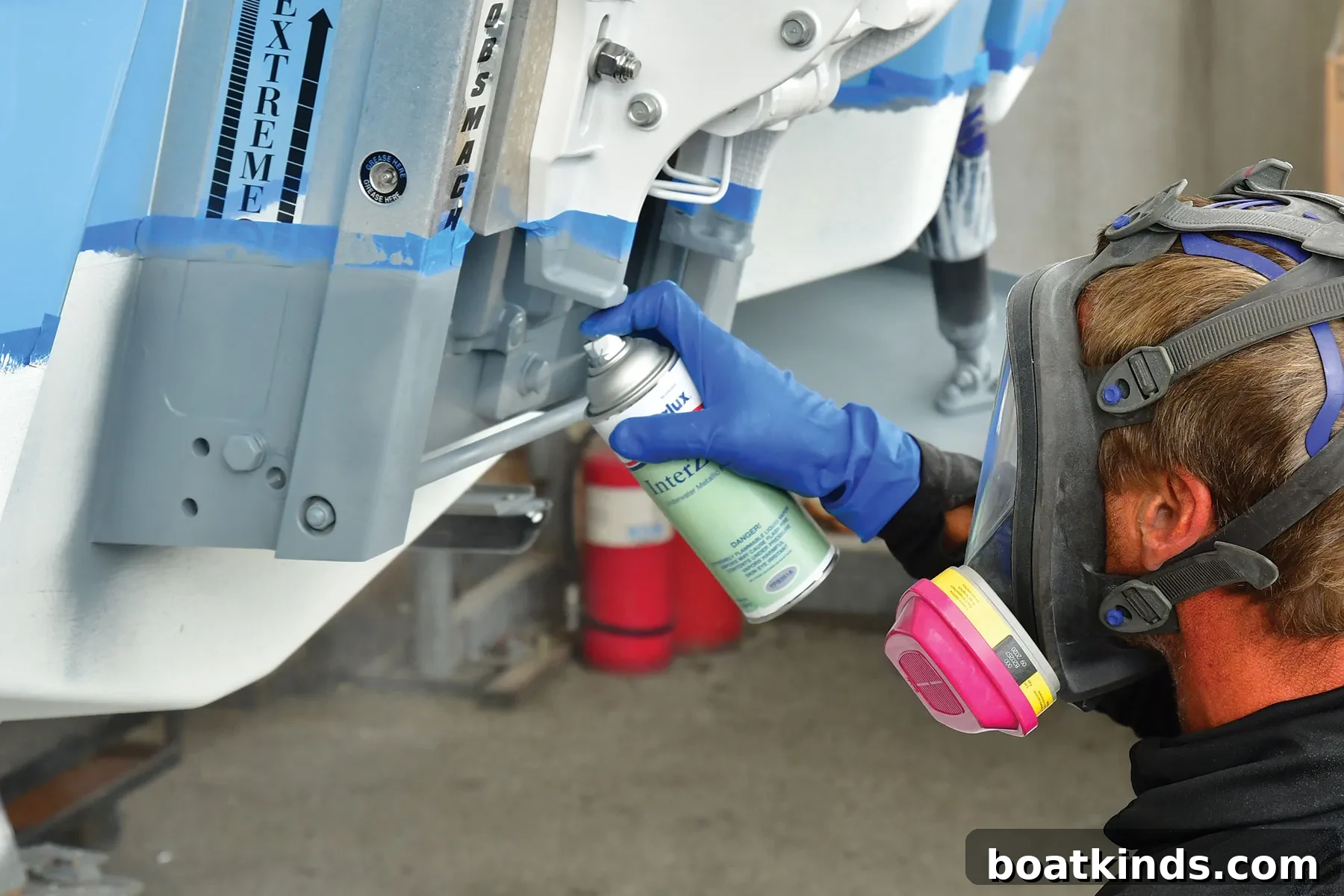
Micron Navigator uses Econea as an alternative to cuprous oxide to control hard-fouling organisms such as barnacles, and it includes Biolux to protect against soft growth like algae and slime. While the first coat dried, Todd sprayed two heavy coats of InterZinc antifouling paint on submerged metal parts and through-hulls to prevent galvanic corrosion and ensure long-term protection. He also applied Aquagard black transducer paint to the exposed faces of the boat’s transducers for a neat finished appearance.
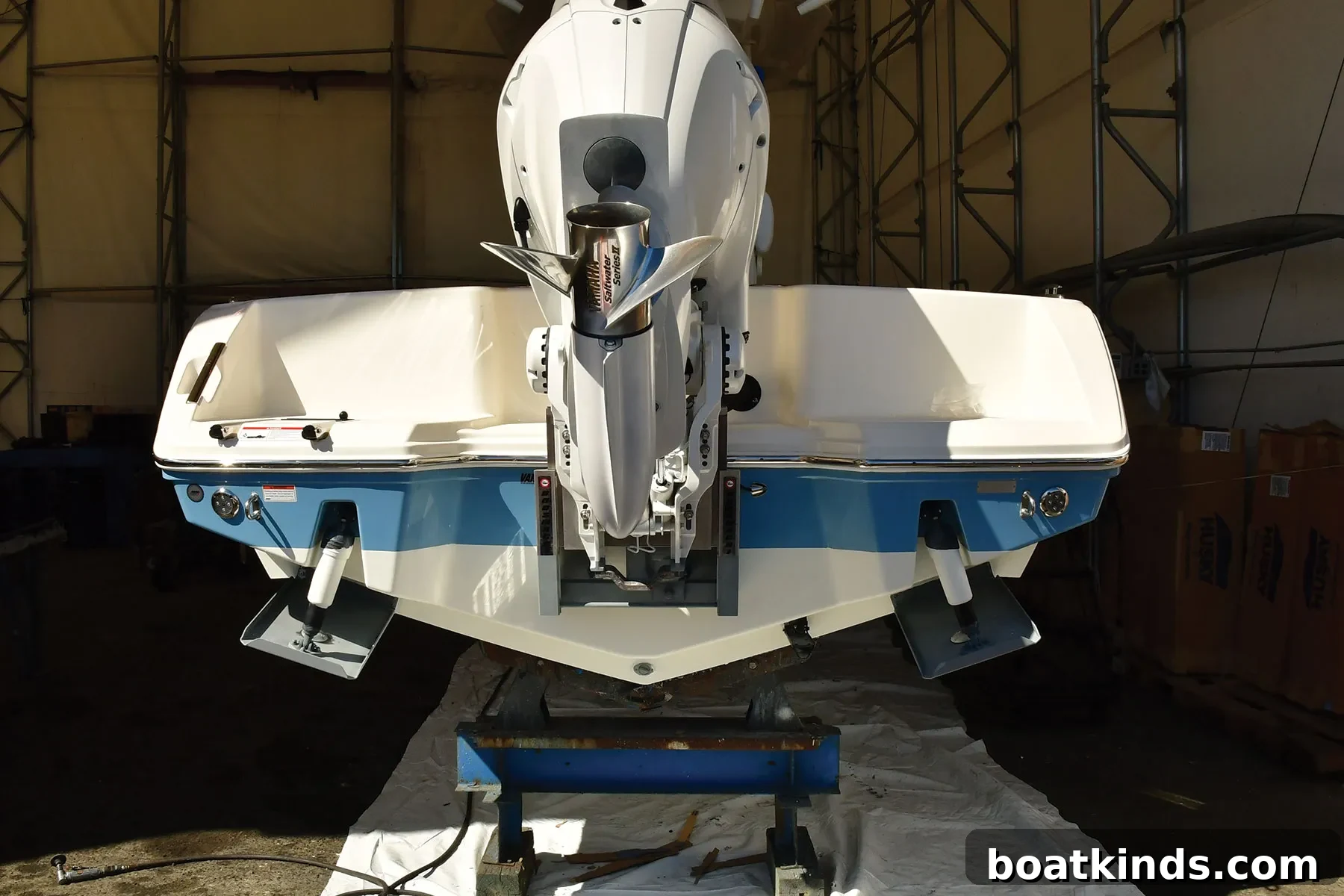
After the second coat of Navigator had fully cured, we let the boat rest overnight off the cradles, then splashed it for the season. The full procedure took two days, most of that waiting between coats, and the finished job looked professional and clean. The process preserved the new gelcoat, and I didn’t notice any measurable impact on top speed or fuel economy.
According to Jay, routine recoating with Micron Navigator is straightforward: in many cases a good pressure wash is sufficient preparation before adding a new layer. That makes the no-sand approach a practical, long-term antifouling solution for owners who want to protect a new hull without aggressive sanding or blasting.
This article was originally published in the March 2022 issue.