
Electronics expert
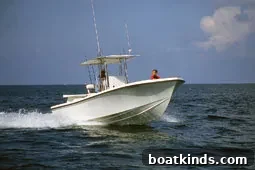
Al Herum is a longtime electronics evaluator and former Florida Keys charter captain who tests marine electronics in real-world conditions for his site www.marine-electronics-reviews.com, which he launched in 2007. A resident of Tavernier, Fla., Herum, 53, uses his 1992 Contender — a 25-foot center-console powered by a 250-hp Suzuki four-stroke — as his primary test platform for VHF radios, GPS/chartplotters, sounders and other marine electronics.
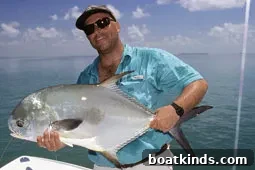
Over the years he has owned and operated a wide variety of boats, from rigid inflatable boats (RIBs) to a 50-foot sportfisherman. In addition to the Contender, he and his son restored and still run a 1974 20-foot SeaCraft.
Herum spent two decades as a pilot for a major U.S. airline and holds an aircraft mechanic’s license. After relocating from Chicago to the Keys in the late 1980s, he ran a 37-foot twin-screw Stapleton express fishing boat for six years, guiding clients to dolphin, grouper and sailfish.
In this interview he discusses what makes a good fishing boat, the direction of marine electronics and the one piece of safety gear he always keeps aboard.
Q: What was the first boat you owned?
A: My first boat in Florida was a 26-foot Mako center console with twin inboard gas engines and a tower. It had Chrysler 318 gas inboards and quickly became a maintenance headache. From that experience I vowed to avoid automotive-based gas inboards on boats; marine engines are used under very different conditions and require different engineering. Eventually I repowered the boat, but I now prefer either inboard diesel or outboards. After that I had a small flat-bottom skiff with a 30-hp outboard for easy running, a Hobie Cat sailboat, and a 19-foot Dusky with a 140-hp carbureted outboard. These simpler designs are what I favor today because they require less burdensome upkeep.
Q: You ran charter boats in the Keys for 10 years. Describe the main boat you used for business.
A: In the early 1990s I bought a 37-foot Stapleton built in Miami, an open-cockpit sportfisherman with a tower and twin 671 Detroit diesels modified by Johnson & Towers. They made a lot of horsepower but were loud and oily; I learned how to replace turbochargers quickly. The boat had a wide beam and an enormous cockpit, which made live-baiting easy and comfortable in a following sea. Its wide covering boards helped stability, but it lacked good bow protection and could take green water over the bow in four-foot seas.
Q: What other charter boats did you run?
A: After selling the Stapleton I ran a 16-foot Action Craft for flats fishing charters. It was light enough to pole, stable for anchoring in channels, and had a serviceable live well that I modified so the water level could be adjusted for different baits. Over the years I’ve also captained customer vessels and tested a variety of small-boat set-ups.
Q: Do you take your 25-foot Contender offshore?
A: Yes. I once made a 300-nautical-mile trip from the Keys to the southern end of Little Exuma in the Bahamas. I felt comfortable doing that because the boat is properly equipped: offshore life raft, EPIRB, and full safety gear. Going offshore responsibly means bringing the right gear and having the seamanship to use it. My EPIRB is on the boat at all times.
Q: Tell us about your website and its content.
A: The site focuses mainly on hands-on marine electronics reviews that I conduct myself. I also publish a few reader-submitted reviews. I test everything from handheld VHF radios to chartplotters, fishfinders/sounders, and AIS units using my Contender and my son’s SeaCraft. The site’s core is practical evaluation of performance and durability under real boating conditions.
Q: After a decade-plus of testing, what have you learned about marine electronics?
A: For the most part, many products meet their advertised capabilities, but there are clear differences in usability, display clarity and ruggedness. A product that’s easy to use and built for the marine environment stands out. Durability and sensible warranty support are key signals of quality.
Q: You also tested products for Powerboat Reports. What did that work teach you?
A: Testing a wide range of marine gear — from life jackets to bilge pumps and electronics — taught me to look beyond marketing claims. Some products exceeded expectations, others failed. Importantly, certain industry testing standards and advertised ratings don’t always reflect real-world performance.
Q: Can you give a concrete example of misleading ratings?
A: Bilge pump flow ratings are often inflated. Many manufacturers quote open-flow numbers obtained with the pump sitting in water with no hose attached — a condition you’d never see onboard. In service, the pump must push water up and through hose lengths and fittings, which reduces flow. A few manufacturers publish realistic flow rates at a specified head height, but others rely on open-flow specs that mislead buyers.
Q: How have small-boat electronics changed over the past decade and where are they headed?
A: The change has been dramatic. In the past, boats used Loran and paper charts; GPS had limited accuracy before selective availability ended. Today we have WAAS-capable GPS and integrated multifunction chartplotters that combine mapping, sonar and even autopilot control. Electronics are becoming more sophisticated and better integrated, and features that were once expensive have become more affordable for the average boater.
Q: What defines a high-quality marine electronic device?
A: Durability for the marine environment, user-friendly interfaces, and a warranty that reflects the manufacturer’s confidence in the product. Interoperability using common standards like NMEA 2000 is also important so devices from different brands can share data without complex adapters.
Q: What still needs improvement?
A: Durability and simpler, more intuitive user interfaces remain areas for improvement. While NMEA 2000 has helped, some manufacturers still prefer proprietary networks that limit compatibility. Consumers benefit when products play well together.
Q: Any favorite electronics or safety items?
A: I’ve had great experiences with the Garmin 740 series chartplotter/fishfinder; it brought touchscreen multifunction capabilities into an affordable range. For safety, I rely on a Winslow life raft and an ACR EPIRB when making long offshore runs in a single-outboard boat.
Q: Describe your current boat.
A: My 25-foot Contender is a straightforward, no-frills deep-vee center-console with a T-top. It’s powered by a single outboard, which keeps operating costs reasonable, and it balances offshore capability with manageable maintenance. It has a flat, open deck layout and rides well in rough water. I use it for both coastal runs and longer trips, and it has performed beyond my expectations.
Q: What are the essential elements of a good fishing boat?
A: Simplicity, durability and usable deck space matter most. I prefer a one-level deck from stem to stern — no raised foredecks or steps — because it provides stable footing when handling anchors or moving around during a fight. High gunwales forward, generous walkaround space, practical storage and effective live wells with rounded corners to keep bait alive are all important. Toekick space at the gunwales helps you stand comfortably and safely while fishing.
Q: Was running a charter operation a positive experience?
A: Absolutely. Chartering taught me a great deal about boats, fish behavior and customer service. I worked with excellent anglers, and during that era the Keys offered diverse and productive fishing. We targeted everything from reef species to offshore dolphin and sailfish, so there was never a shortage of learning.
Q: Any fishing tips?
A: If surface presentations aren’t working, fish deeper or change baits — fish often lock onto specific depths or offerings. Also match your leader to water clarity: heavier leaders can work in murky water, but in clear water you’ll often need lighter leaders to get bites.
Q: How has fishing in the Keys changed while you’ve been here?
A: The fishing has declined in many areas, particularly in Florida Bay, which has suffered significant degradation. Ocean-side and pelagic fishing like sailfish remains strong in places, but many bottom-fish populations have been reduced. Changes in fishing pressure locally and in neighboring countries have contributed to less abundant fisheries and smaller average fish sizes for some species.
Q: How has your aviation experience influenced your approach to boating?
A: Aviation taught me meticulous attention to detail, respect for changing conditions, and the discipline to prepare thoroughly — all of which transfer directly to safe and effective boating.
Q: Will more people choose low-maintenance boats in the current economy?
A: It’s hard to predict, but I still see many large multi-outboard boats on the water. One-person or budget-conscious buyers often prefer simpler, lower-maintenance designs, but trends in the market vary with buyer preferences and budgets.
Q: Is your son involved with boats and fishing?
A: Yes. My son Matt has been passionate about boats since childhood and has had his own boats since he was young. He helped rebuild our SeaCraft and uses it for spearfishing and coastal cruising. He’s pursuing maritime education and has been accepted to the U.S. Merchant Marine Academy while also seeking opportunities with the Coast Guard Academy.
This article originally appeared in the March 2011 issue.