
Buy the Boat You Can Afford: Realistic Advice on Boat Ownership and Maintenance
I’ve owned six boats over the past 40 years. I’ve cruised and raced them, crewed in countless regattas and spent a lifetime around boats of every description — sail and power, dinghies to superyachts. People always ask me what kind of boat they should buy. My answer is simple and firm: buy the boat you can truly afford.
When I say “afford,” I don’t mean the largest boat you can pay for outright. I mean a boat you can buy and then maintain properly without being blindsided by yard bills and repair costs. Too many buyers focus only on the purchase price and not on the ongoing expenses that come with boat ownership.
“If you buy a used boat in anything less than showroom condition, count on 15 to 20 percent of the purchase price annually for at least three years,” says David Doody, general manager of Safe Harbor Capri in Port Washington, New York. “After that, it could be between 10 and 15 percent. If you can’t afford it, buy a less-expensive boat.” Those percentages reflect a broad range of maintenance: routine service, winterizing, repairs, electronics updates, and unforeseen issues.

Many new owners are surprised by the size of yearly yard invoices. Boats are complex systems: engines, propulsion, electrical systems, plumbing, electronics, rigging and hull integrity all require attention. A $400,000 fishing boat, for instance, can easily generate a $40,000 yard bill in a year. Things break, components wear out, and sometimes safety-related items must be replaced before you head offshore. Accepting and budgeting for that reality is the sensible way to buy.
Unless you pay premium prices for a well-cared-for vessel, you’re likely to find a used boat that needs work. I learned that firsthand while helping my brother and his 20-year-old son look for a 28- to 30-foot sailboat to replace their 22-foot Catalina. Their budget was $14,000 to $23,000. The market in that range was discouraging: many boats were neglected or abused. If those boats had been pets, they would have been reported to animal welfare services.
We encountered boats left uncovered through winter, resulting in cracked fiberglass, leaking portlights, split wood trim, and rotten canvas. Gelcoat and exterior cabin sides were stained; hatch lenses were smoky and opaque. Rigging was pitted, spars unpainted, running rigging worn, and shafts and props looked like they might seize. Interior finishes were tired: unvarnished cabin soles, faded trim, stained cushions and bedding that looked far from inviting.
All of these issues stem from owners who purchased boats beyond what they could afford to maintain. The initial savings on buying a cheaper vessel are quickly erased by deferred maintenance and major repairs.
I own a 1993 Sabre 38 sloop named Sachem, which I bought 15 years ago. I’ve invested heavily to keep her in top condition — my annual yard bills amount to roughly the cost of a state college year. I can afford that, and I accept my financial limits: I cannot reasonably maintain a 70-footer. Instead, I focus on making the boat I can afford as reliable and pleasant as possible.
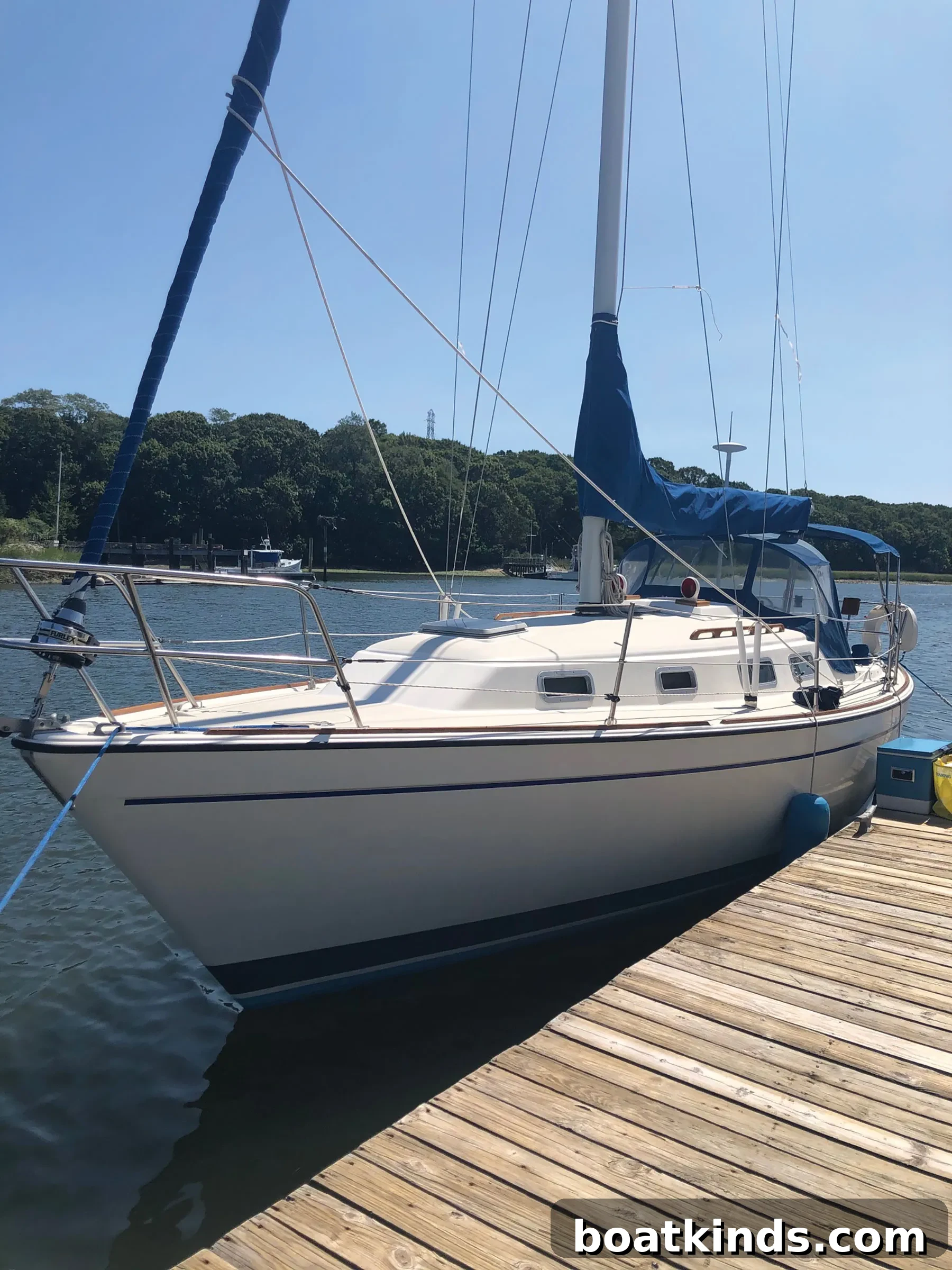
Over the years I’ve renovated nearly everything on Sachem. She’s had fresh hull paint, new canvas (twice), her underbody sanded and resealed with barrier coatings, and all exterior brightwork rewooded and revarnished. I installed new hatches and portlights, refurbished all interior wood surfaces including the cabin sole, upgraded electronics with an interior GPS monitor and a VHF radio with AIS, and renewed interior cushions with new foam. I even replaced the rudder and rudder post — an $11,000 job. Motor, shaft and prop maintenance is handled without cutting corners; if mechanics flag something as questionable, I replace it. The last thing I want is to be offshore with a part that was pushed beyond its useful life.
My brother and nephew followed the same budgeting logic when they looked for a new boat. Instead of chasing the lowest purchase price, they chose a vintage Pearson 303 that was in near-perfect condition: painted spars, gleaming gelcoat, good canvas and a beautifully customized interior completed by a carpenter-owner. Only the sails needed replacement. It was at the top of their stated range, but far less expensive in the long run when you factor in deferred maintenance and immediate repairs.
They will be able to spread desired upgrades over a few years and avoid the hidden costs that come with a neglected boat. Today they own a small yacht they can be proud of — and, crucially, one they can afford to maintain.
This article was originally published in the September 2021 issue.