
Boat Fuel Safety: Follow the One-Third Rule and Smart Fueling Practices
High gasoline and diesel prices may tempt captains to leave the dock with less fuel, but safety demands adherence to the one-third rule: use one-third of your fuel to travel out, one-third to return, and keep one-third as a reserve. That reserve covers unplanned delays such as changing weather, unexpected currents, or extended cruising. Running out of fuel and waiting for a tow—or worse, drifting offshore—is avoidable with proper planning.
Most boats have a fuel gauge, but inaccurate readings are common. Learn how your gauge behaves in different conditions so you can trust it. For example, if the sender unit sits near the rear of the tank, the gauge may read full while the boat is on plane and the bow rises. Slow down and the fuel will settle, revealing a lower level than you first saw. Older gauges, faulty floats, corroded electrical connections, or wiring issues can all produce false readings.
Gauges can also be misleading on unfamiliar vessels. On one delivery of a new 42-foot boat with triple outboards, I noticed the gauge face marked F and R and a few hash marks. I docked with the needle on R and topped off the 500-gallon tank with 490 gallons. R in that case meant refill, not reserve. Running a tank that low risks sucking up water or sediment that accumulates at the bottom, which can damage motors even on new tanks. That experience highlights why it’s best not to push tanks to the absolute minimum.
Keep a written fuel log at every fill-up. Record gallons added, engine hours, and trip details. Over time you’ll develop a reliable picture of fuel consumption for typical routes and conditions. Many modern engines display fuel burn, miles per gallon, and estimated range, but that data can disappear during electrical problems. A simple paper or digital log is a dependable backup.
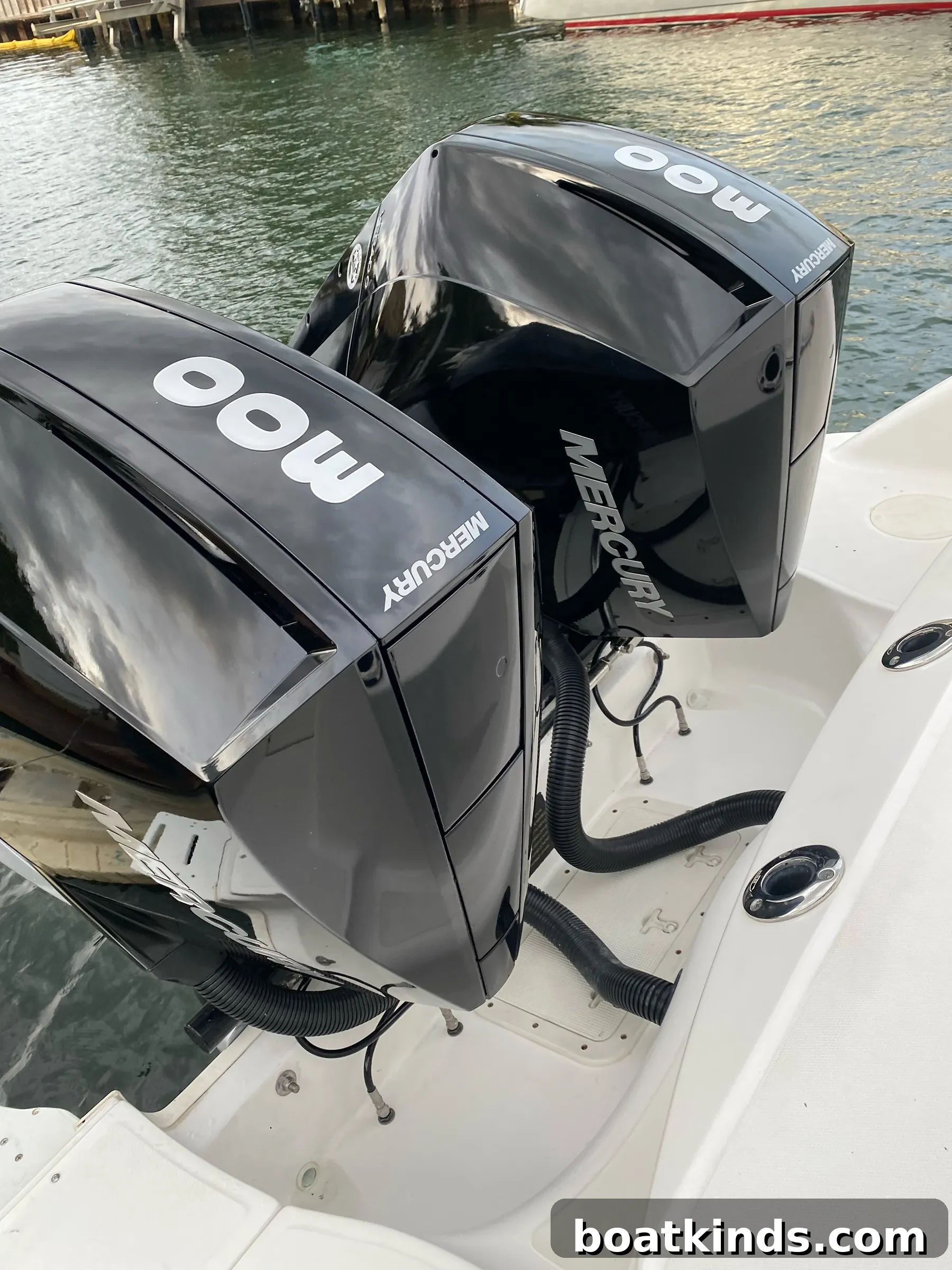
The trend toward larger outboard boats with triple and quad engines means more time at the fuel dock. Fueling is not a task to rush. Make sure you have adequate dock lines at the bow and stern, plus at least one spring line, and use ample fenders to protect the hull as other boats pass. Gasoline fumes are explosive—treat fueling with respect. Even a small spill in the bilge can create hazardous vapor that an errant spark could ignite. Because gasoline vapors are heavier than air, they collect in the lowest bilge areas.
Designate a single person—the skipper or an assigned crew member—to handle the pump nozzle and remain at the fill point until fueling is complete. Leaving the hose unattended risks overfilling and spills. Be especially careful around boats that carry both gasoline and diesel systems, such as outboard-powered vessels with diesel generators; never allow the fuels to be mixed. Verify that the dock attendant hands you the correct nozzle—swapping nozzles can cause costly and dangerous contamination.
Before fueling, shut down air-conditioning systems and close cabin doors and hatches to prevent fumes from entering living spaces. Larger inboard boats often have blowers and fume detectors, but many outboard boats lack those systems. Rely on common sense and your nose: if you smell gasoline, wait until the air clears and ventilate the cabin thoroughly before starting engines. After fueling and replacing fill caps, open doors and run blowers or fans to remove lingering fumes.
Avoid running portable or internal tanks near empty. Low fuel levels allow condensation to form on tank walls, increasing the risk of water contamination. While fuel filters and water separators protect the engines, preventing condensation and contamination is the best strategy for long-term reliability.
Manage fuel consumption to extend range and protect engines. On boats with multiple outboards, consider alternating engines while trolling to share running hours and reduce wear. To maximize range, find the throttle setting that delivers an efficient, comfortable ride rather than always chasing top speed; keep high-speed runs for calm seas when you truly want maximum performance. Understanding your boat’s most efficient cruise setting will save fuel and improve range.
This article was originally published in the September 2022 issue.