
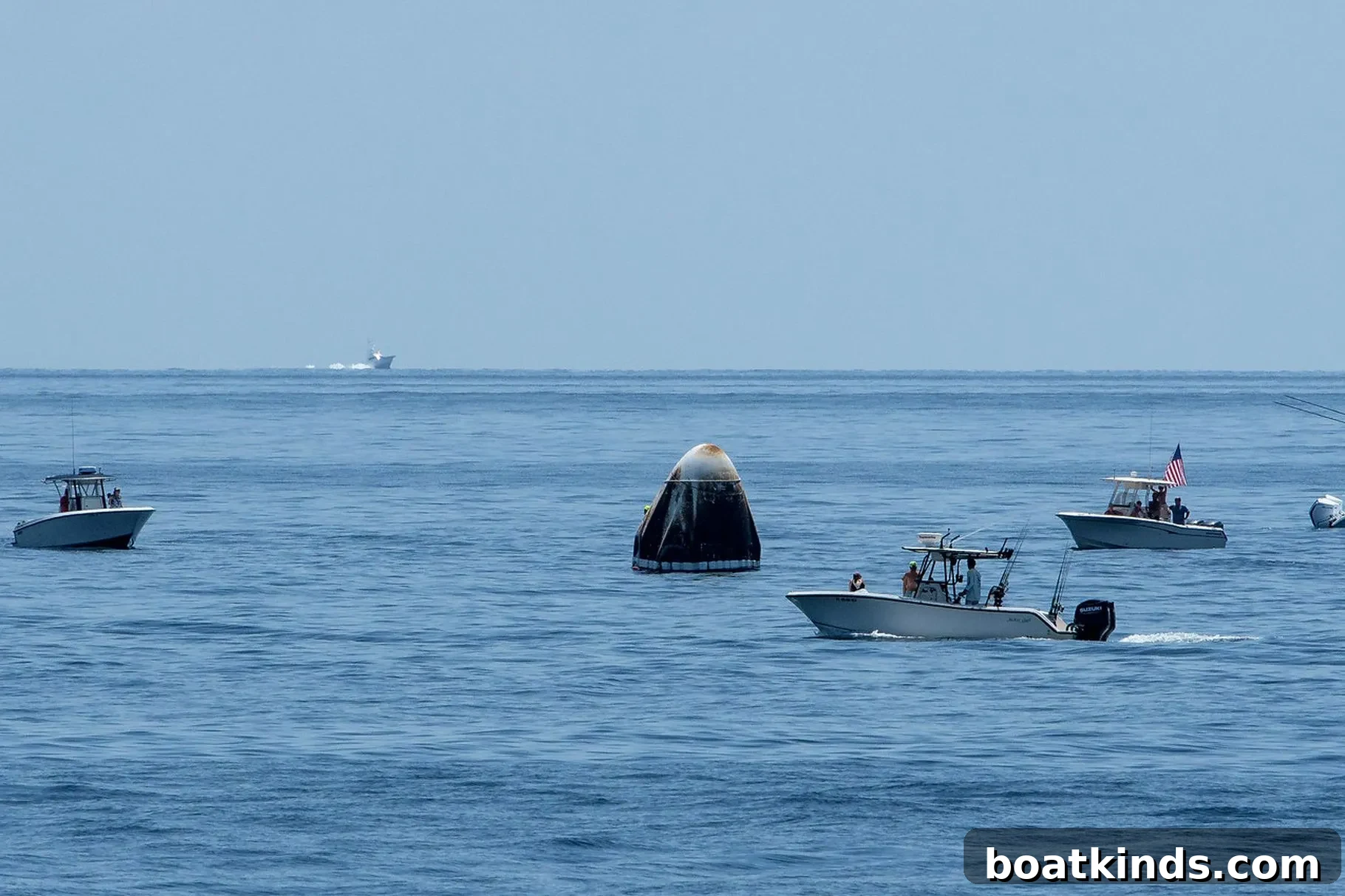
SpaceX Capsule Splashdown in Gulf of Mexico Surrounded by Private Boaters
When the SpaceX capsule carrying astronauts Robert Behnken and Douglas Hurley touched down in the Gulf of Mexico on Sunday, recovery teams expected to be first on scene. Instead, several recreational boats reached the floating spacecraft before official crews, surrounding the capsule and creating an unexpected situation for NASA and the U.S. Coast Guard.
Boaters Arrived Ahead of Recovery Crews
Multiple vessels with passengers converged around the capsule in the minutes after splashdown, drawing close enough that NASA officials said they were within feet of the vehicle. NASA Administrator Jim Bridenstine praised the Coast Guard for its work to clear waters for the landing, but acknowledged the agency had not anticipated private boaters would push into the recovery area so quickly.
Although the Coast Guard had advised mariners to keep clear of the splashdown zone, those advisories did not carry the force of law in this instance. As a result, many boaters who entered the zone could not be lawfully fined or cited by the Coast Guard at the time.
Safety Risks Cited by NASA Representatives
NASA representatives warned that approaching a recently landed spacecraft poses several hazards. NASA Ambassador Tony Rice outlined reasons why the Coast Guard advisory should have been followed, noting risks such as exposure to noxious or hazardous residues around the capsule, interference with recovery operations, and the potential to damage parachutes and other delicate equipment used during descent and splashdown.
NASA stressed that by getting too close, private boaters not only endangered their own safety but also complicated the work of trained recovery teams who must secure the capsule, check the astronauts, and prepare the vehicle for transport or inspection.
Coast Guard Authority and Operational Limits
The Coast Guard explained that a combination of limited on-scene assets and the absence of a formally established restricted area limited its ability to keep recreational vessels out of the recovery zone. Coast Guard Petty Officer Michelli told NASA officials that without a duly established restricted area, the service was unable to issue fines or other violations to recreational boaters who entered the zone.
Despite active attempts by Coast Guard personnel to direct vessels away from the splashdown location, numerous boaters ignored those requests and moved into the recovery area. The situation underscored the challenge of enforcing safety perimeters for maritime splashdowns when formal exclusion zones have not been declared.
Planned Review and Future Procedures
In response to the incident, the Coast Guard, NASA and SpaceX announced plans to conduct a comprehensive review of Sunday’s events ahead of the next launch and recovery. Officials said the review will examine communications, asset allocation, advisory procedures, and the legal mechanisms available to establish and enforce temporary restricted areas for splashdowns.
The agencies emphasized that the clear message for mariners is to remain well away from spacecraft recovery operations. When a capsule splashes down, trained professionals follow established procedures to ensure the safety of the crew, the public, and the vehicle itself; unexpected vessel traffic can impede those efforts and create unnecessary risks.
Guidance for Boaters Near Splashdown Zones
Authorities reiterated practical guidance for anyone observing spaceflight activity from nearby waters: heed Coast Guard and official advisories, steer clear of any marked or suggested recovery area, and allow recovery teams the space they need to perform their work. Even where advisories are not legally enforceable, following them protects both the public and mission personnel.
The events following the splashdown served as a reminder of the coordination required between launch providers, federal agencies, and the public to conduct safe and orderly recoveries. With a formal review underway, officials said they will consider ways to improve public awareness and the tools available to enforce safety perimeters for future operations. In the meantime, the agencies’ guidance is simple and direct: keep your distance from spacecraft recovery zones.