
Voyage to Newfoundland’s Southern Shore: A Rosborough SeaHag Adventure
It began as a daydream: take my boat, SeaHag, a 1996 Rosborough RF246 LSV, to the southern shore of Newfoundland. I had only three seasons of boating experience, mostly on Lake Ontario and the St. Lawrence near my home port of Cape Vincent, New York. Newfoundland’s southern coast, however, was a different world—wild, remote and dotted with tiny fishing outports, many now deserted after the collapse of the cod fishery. I wanted to see those places before they disappeared, and to explore the long, craggy fjords where there would be no services and the cruise would have to be entirely self-sufficient.
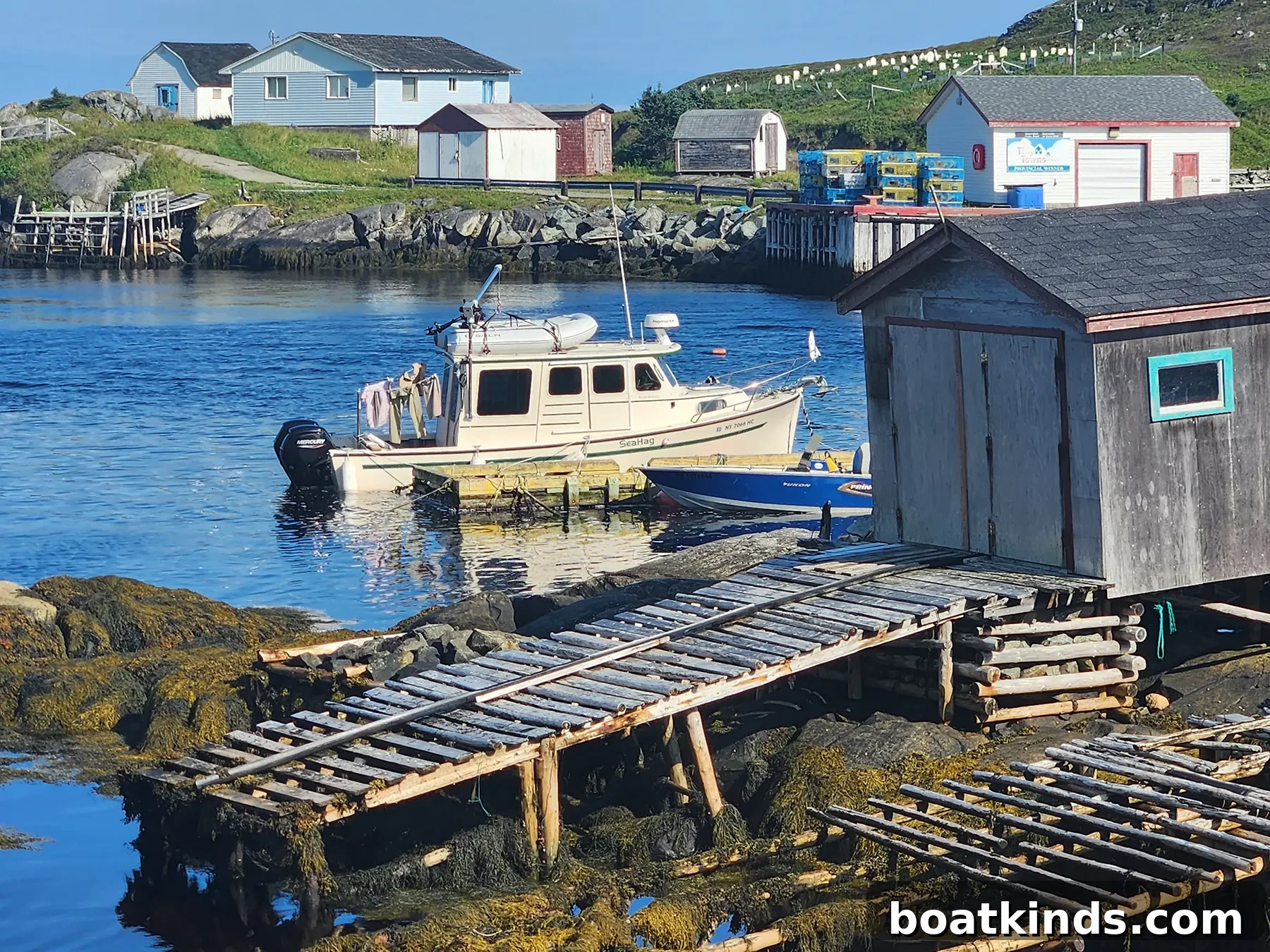
An opportunity arose when my friend Bill decided to finish a Down East loop with his friend Dick, including a side trip to Newfoundland in their Rosborough RF246 HSV, Salty Paws. Another association member, Otto, joined with Vega, his 22-foot Rosborough Sea Skiff. All three were experienced boaters, and the nostalgia was palpable: Rosboroughs have a long history in the Maritimes, built tough for these exact coastal conditions.
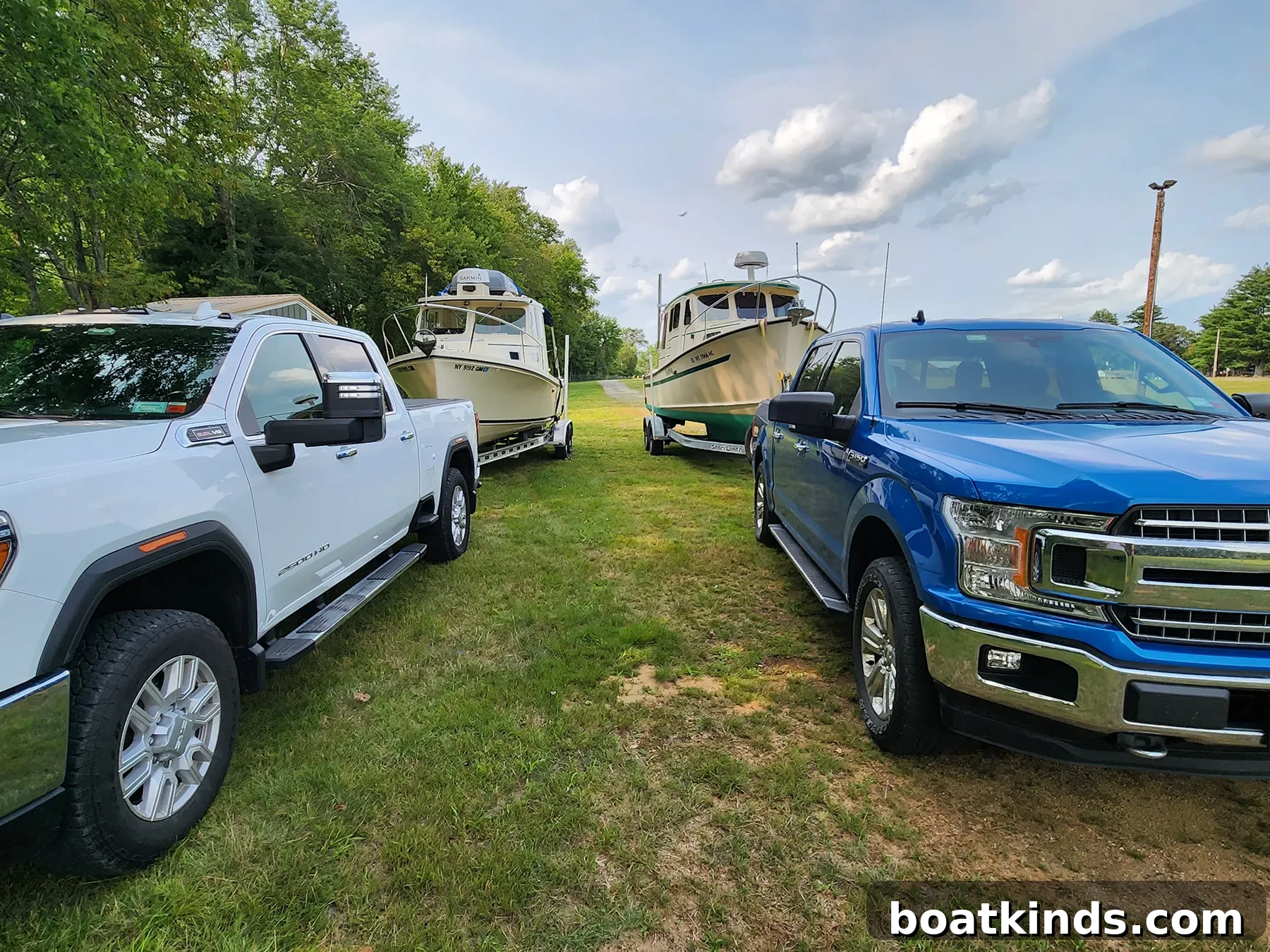
In early August, Otto trailered Vega from Rochester to Cape Vincent. From there our convoy began a three-day, 1,000-mile drive to St. Peter’s, Nova Scotia, where we met Bill and Dick. We cruised across Bras d’Or Lake to Baddeck, the area famous for Alexander Graham Bell. Bras d’Or is a vast tidal estuary and could easily fill a month of exploring; its sheltered waters and scenic coastline whetted my appetite for the open Atlantic ahead.
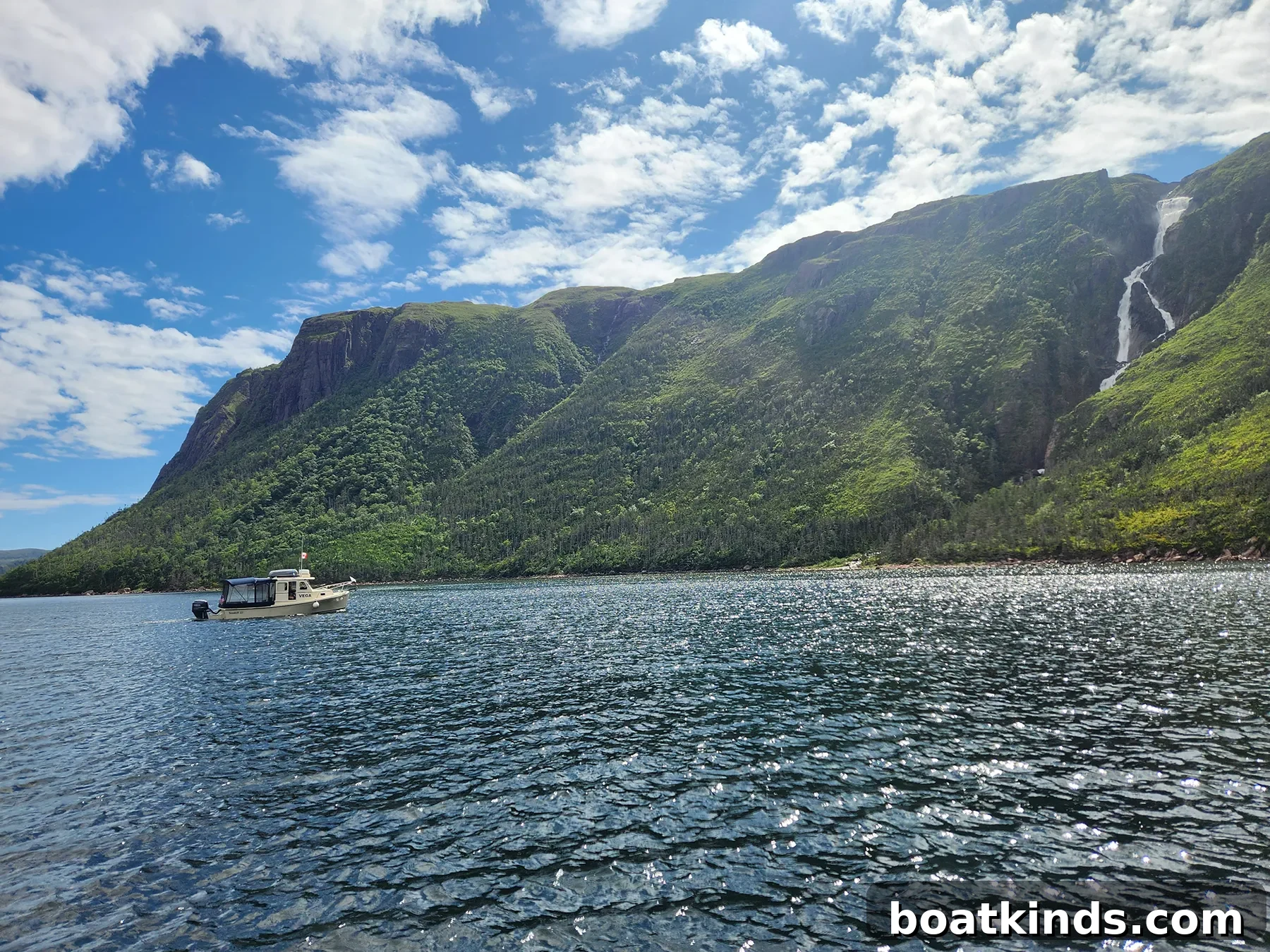
We topped off fuel, waited for a weather window, and sailed out toward the Atlantic. Calm seas favored our 96-mile passage from Ingonish to Harbour Le Cou. To conserve fuel I ran on one of SeaHag’s two 90-hp engines and throttled back to an economical 8.6 knots, turning what could have been a faster trip into a 12-hour passage. The placid water allowed views of porpoises, countless pilot whales and, at one point, a huge finback whale surfaced alongside my gunwale—an unforgettable moment.
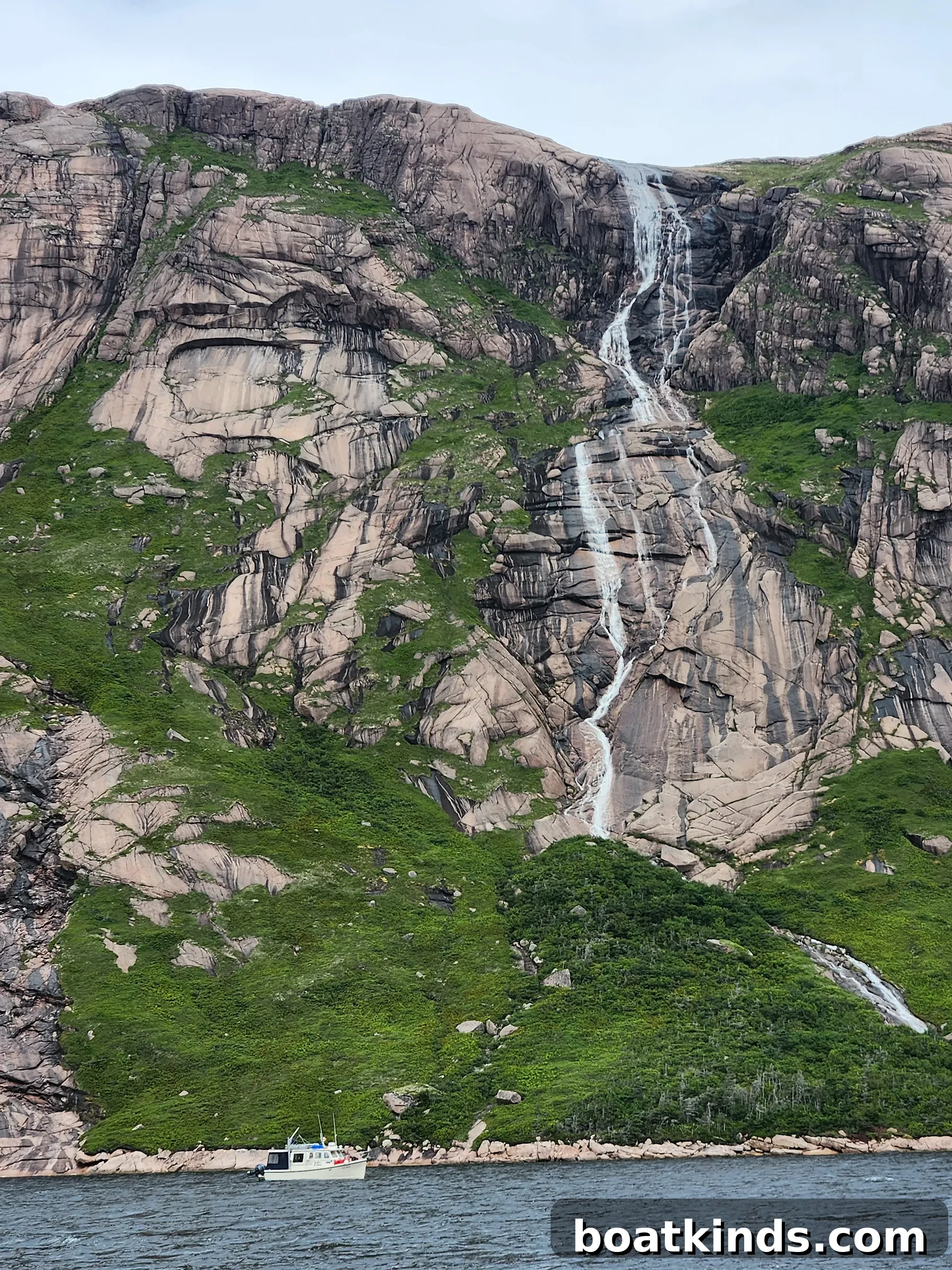
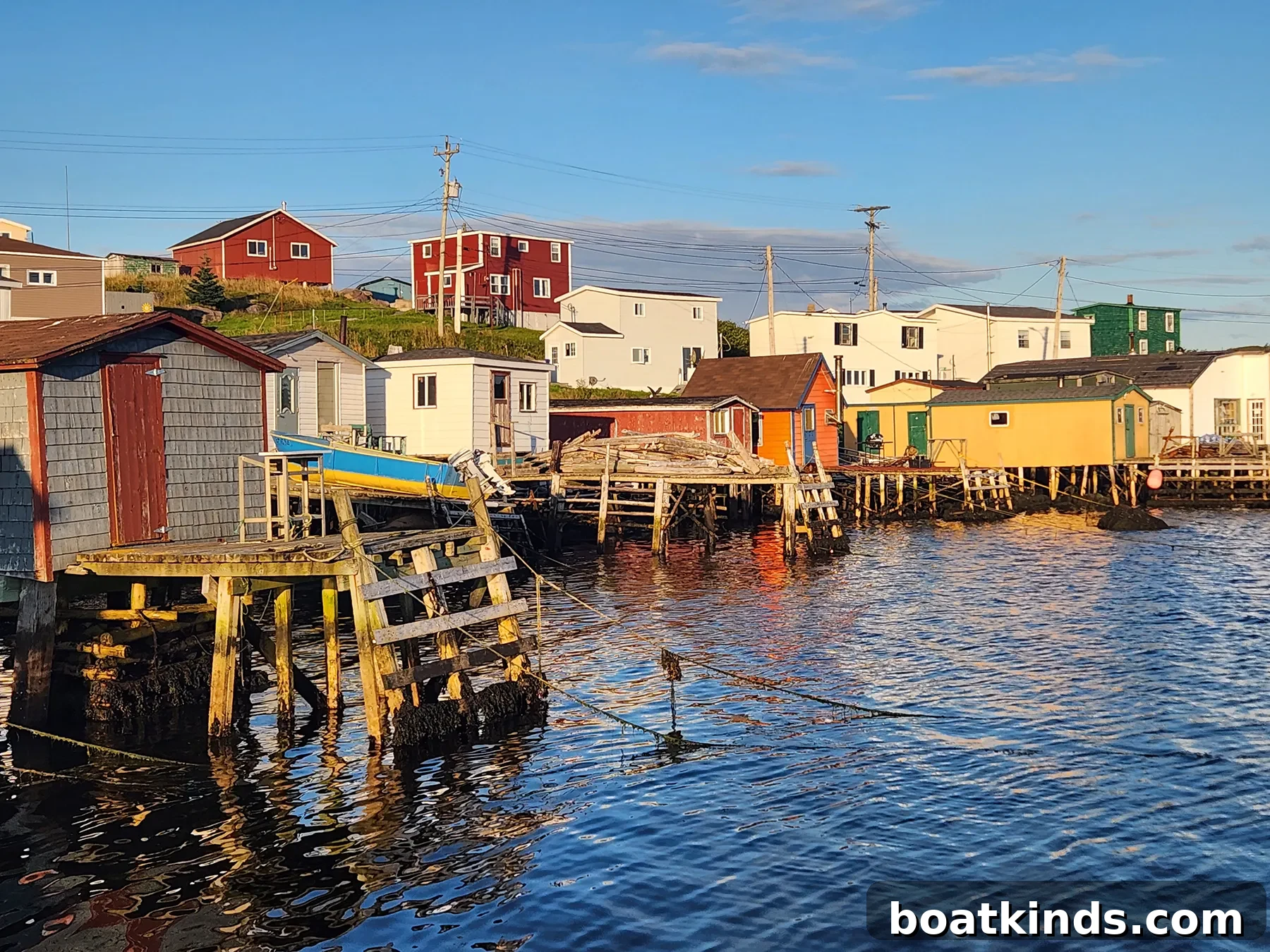
At Harbour Le Cou we anchored in the north basin and sheltered near a roaring waterfall while a storm passed. From there we moved to the abandoned outport of Grand Bruit. Walking its empty sidewalks was eerie and moving, imagining the rhythms of a once-busy fishing village now largely emptied out.
Our next stop, Ramea, was warm and welcoming. It was here we first learned Hurricane Franklin was tracking north. Tense memories of Hurricane Fiona lingered in people’s minds. Franklin was forecast to arrive within a week and would render the Cabot Strait impassable for small craft long before that. With the window closing, we pressed east, visiting spectacular fjords where rock walls rise over 1,000 feet, dripping with waterfalls and offering dramatic scenery at every turn. Those fjords were the highlight of the cruise—places I could have stayed indefinitely.
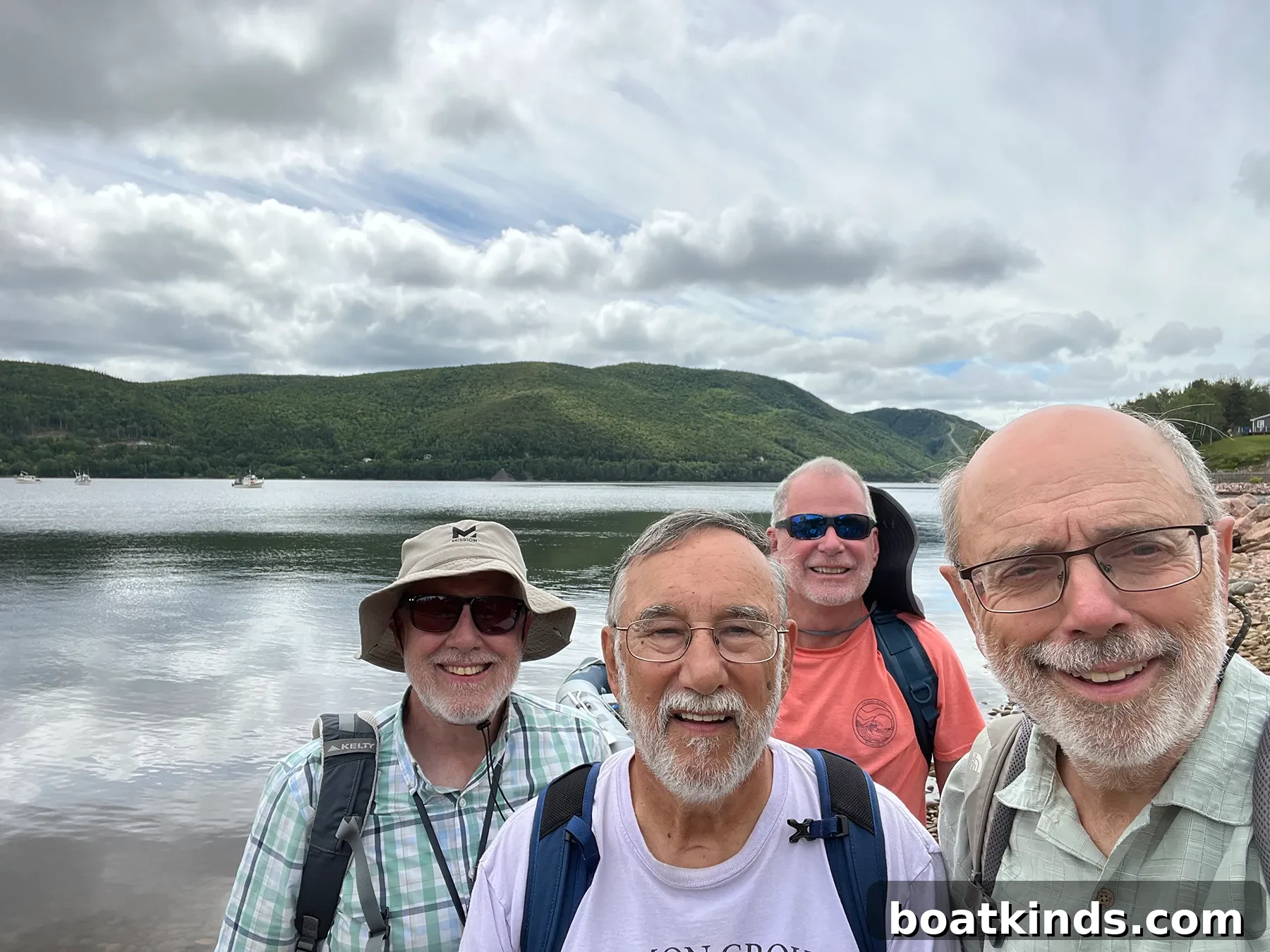
By the time we reached Francois, a small occupied village at the end of a rugged fjord, the forecast made the decision clear: our last reasonable chance to cross the Cabot Strait would be the next day. We cruised back to the Ramea Islands to refuel and gathered three weather briefings. The most optimistic forecast still pushed the limits of my comfort and experience. The worst conditions were forecast for nighttime, and my night-running experience at sea was minimal.
Several logistical and safety concerns convinced me not to attempt the crossing. Landing in Alder Harbor late at night would leave me 170 miles from the next reliable fuel stop in Baddeck. Rough seas would require both engines for control, stretching my fuel reserves beyond safe margins. Refueling at sea using jerry cans in an open cockpit, alone, in a tossing ocean, was not something I was comfortable attempting. Most importantly, I remembered my wife’s simple admonition before the trip: “Be safe and come home to me.” With those factors weighed, I made the difficult but responsible choice to stay ashore and protect SeaHag from the incoming storm.
Suitable dock space in Ramea was limited. A local captain warned against tying SeaHag to a mooring buoy in a narrow fjord since these inlets can create perilous, localized wind patterns in a gale. Instead I headed west 72 miles to Channel-Port aux Basques, a long, uncomfortable day of pounding waves. En route, a porpoise launched within arm’s reach of my open pilot door, met my gaze, and slipped back into the sea—a small, calming encounter amid the rough passage.
Arriving at Channel-Port aux Basques in the evening, I felt exhausted but safe. The next day I took the ferry to Sydney to pick up my truck and trailer and returned to prepare SeaHag for the journey home. A final ferry crossing with the boat in tow began my three-day drive back to New York—bringing SeaHag to shelter and putting distance between us and Hurricane Franklin.
Bill, Dick and Otto completed the crossing and continued on to Baddeck and St. Peter’s. From their account, I was relieved I had chosen differently. I covered roughly 400 miles on this trip and learned a great deal about planning, limits and judgment. The most important lessons were knowing your boat’s capabilities, understanding your own limits as a skipper, and establishing conservative thresholds for wind, waves and fuel reserves before committing to an offshore passage. Those limits made the tough call to turn back much easier.
And was the trip worth it? Absolutely. The fjords, wildlife and quiet outports offered experiences I’ll never forget—along with a valuable lesson in prudent seamanship.
This story was originally published in the June 2024 issue.