
Bequia: The Gaff-Rigged Wooden Cutter That Traveled from a Caribbean Beach to Marina del Rey
I was sailing down the inner channel of Marina del Rey beneath a warm red sunset when Nills, one of the crew, pointed toward a distinctive 40-foot gaff-rigged wooden cutter tied at the end of a dock. Its classic lines stood in sharp contrast to the modern fiberglass boats that fill the marina. With a softly curved sheer, high white topsides, a traditionally laid teak deck and beautifully varnished wooden spars, she looked like a vessel from another era.
“See that there? My friend Alejandro owns that boat,” Nills said. “Her name is Bequia, and she used to belong to Bob Dylan.”
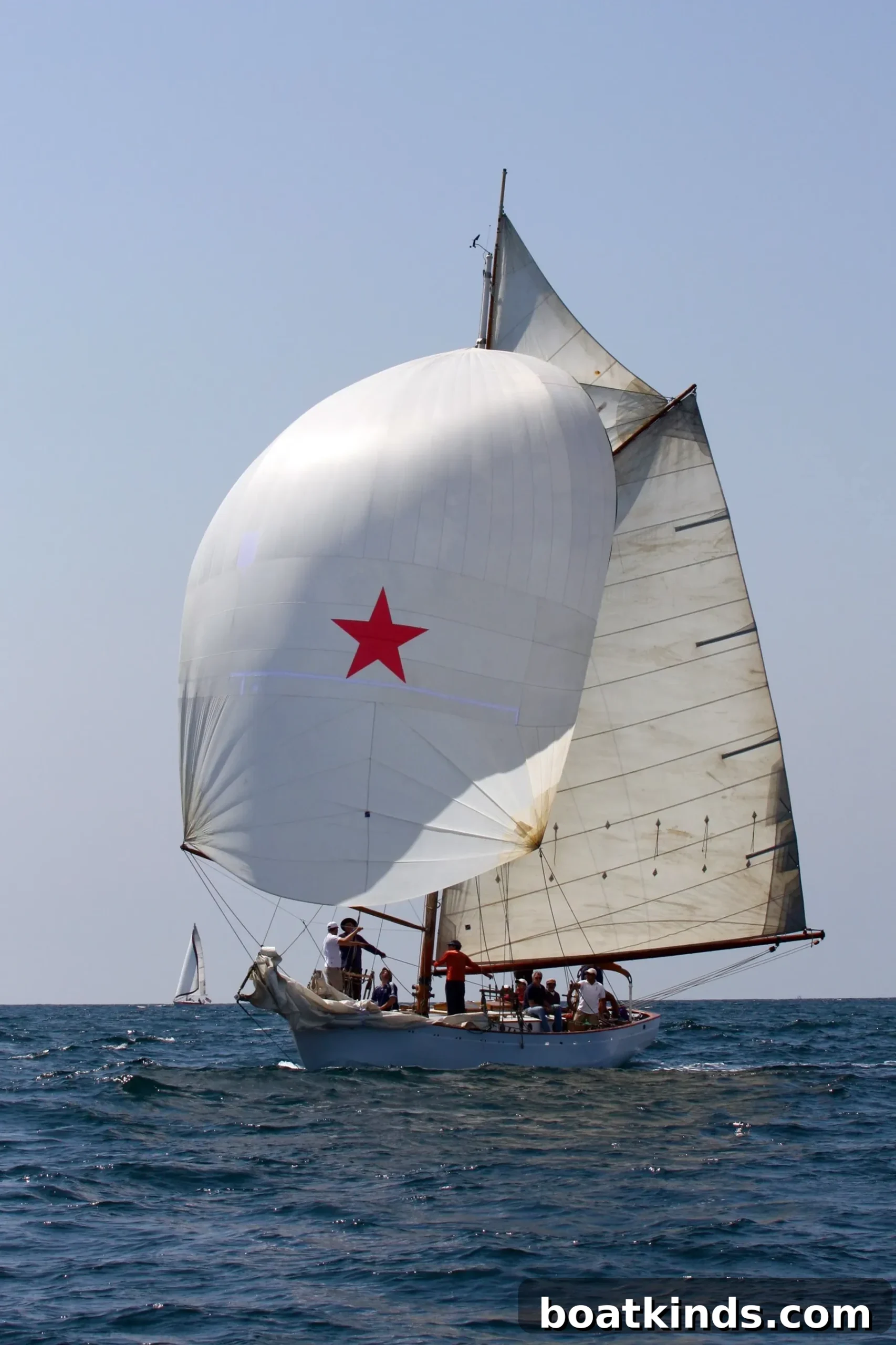
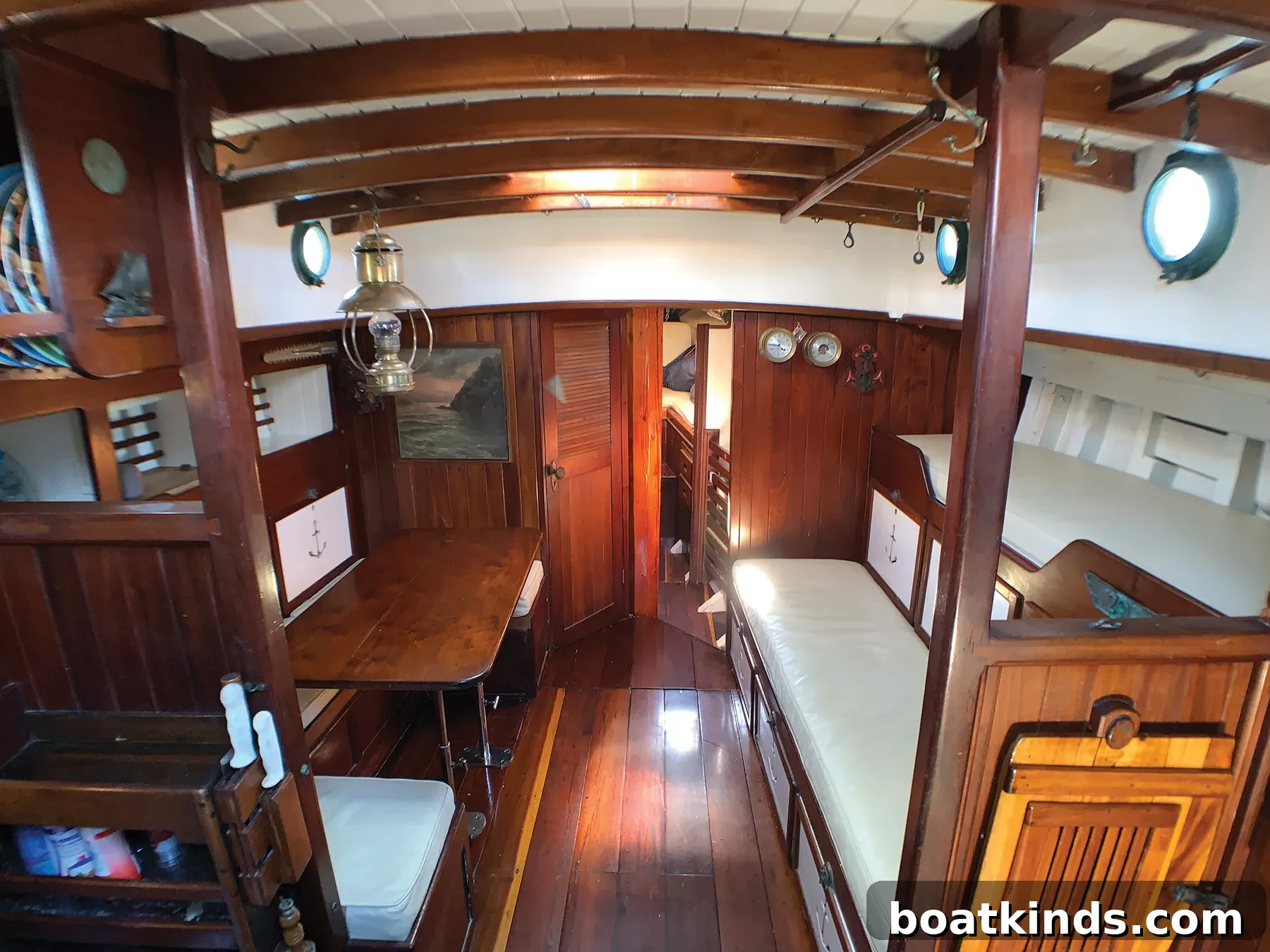
I didn’t know Bob Dylan had owned a wooden boat, and as a wooden-boat builder myself I was immediately curious. Nills gave me Alejandro Bugacov’s number. A week later I was sitting in the salon of Bequia, eating lunch and listening to Alejandro tell the boat’s story.
Bequia originally launched in 1976 as Just Now, built by California native Chris Bowman on the Caribbean island of Bequia. Construction took place on a beach beneath almond trees. Despite Bowman’s limited prior experience in wooden boatbuilding—he had never built a boat before—the finished vessel was impressively well crafted. At 25, Bowman was new to the Caribbean, learning the ropes as a charter captain. Humble and open to advice, he relied on a skilled local team of shipwrights to bring his vision to life.
Bowman based his lines on a 32-foot sloop designed by Sam Crocker, a Boston naval architect known for more than 300 designs from the early 20th century. Rather than commission formal stability calculations from a naval architect, Bowman leaned on the practical experience of his shipwrights and frequently consulted Howard Chapelle’s Yacht Designing and Planning while finalizing the design.
Construction began in 1976. Bowman sourced a substantial greenheart timber for the keel and lead ballast salvaged from an old beached English schooner. Local woods and silverballi from Guyana were used for framing and planking. A 60-foot mast was fashioned from timber salvaged from a schooner wrecked near Bequia. While the crew carved the heavy frames and planked the hull, Bowman—assisted remotely by his father in California—procured deck fittings and rigging hardware from marine suppliers in southern California and a salvage shop on St. Barts.
When Bowman returned to California in winter 1977 to visit family, a chance introduction to Bob Gilbert—who had built Bob Dylan’s Malibu home—changed the boat’s trajectory. Impressed by Bowman’s story, Gilbert proposed a partnership to build a 65-foot schooner called Water Pearl for Gilbert, Dylan and Bowman. Before Water Pearl was completed, Gilbert exchanged his share in the new schooner for ownership of Bowman’s smaller cutter, Bequia. Gilbert had the boat shipped to Los Angeles, where he upgraded the spartan interior and altered some deck arrangements, including replacing the tiller with a wheel.
After Water Pearl was finished in 1980, Bowman and his family lived aboard and ran day charters when Bob Dylan wasn’t using the schooner. The arrangement suited Dylan: he didn’t need to manage the boat, and when his touring schedule allowed he could fly down for Caribbean cruises. For Bowman, the partnership provided steady income and a close friendship with Dylan. Water Pearl continued as a Caribbean charter until she struck a reef and sank near the Panama Canal in 1988.
Some years later, Gilbert—aware of Dylan’s fondness for the sea—encouraged Dylan to buy Bequia. Without Bowman around, however, Dylan spent less time sailing, and after eight years of ownership he sold the cutter to Angel and Steve Lopez. It was Angel, an enthusiastic Star-Class racer, who later invited Alejandro Bugacov—another Star-Class sailor—out on Bequia for the Los Angeles One More Time Regatta. Bugacov, already accustomed to wooden boats, quickly fell in love with her.
“I didn’t know much of her history then, but I knew I wanted her,” Bugacov recalls. “I could see she had potential as a great daysailer to Catalina—a comfortable cockpit and a large teak deck that would be perfect at anchor.”
In 2016, when Bequia came up for sale, Bugacov and his partner Scott Sullivan bought her. The marine survey showed cosmetic wear and tear, but the structure was sound. Originally from Rosario, Argentina, Bugacov grew up sailing on the Paraná River and later moved to the United States to study physics. He is now a computer scientist at the University of Southern California.
Determined to restore the cutter, Bugacov and Sullivan hauled her for painting and tackled much of the topside work themselves after the yard painted the bottom. A local shipwright helped with initial woodworking, and they later learned to perform many repairs on their own. A specialist assisted with mast repairs, and friends helped with engineering challenges. Bugacov emphasizes stewardship: “You always want to make the boat better. My goal is to preserve her as much as possible and keep her ready to sail.”
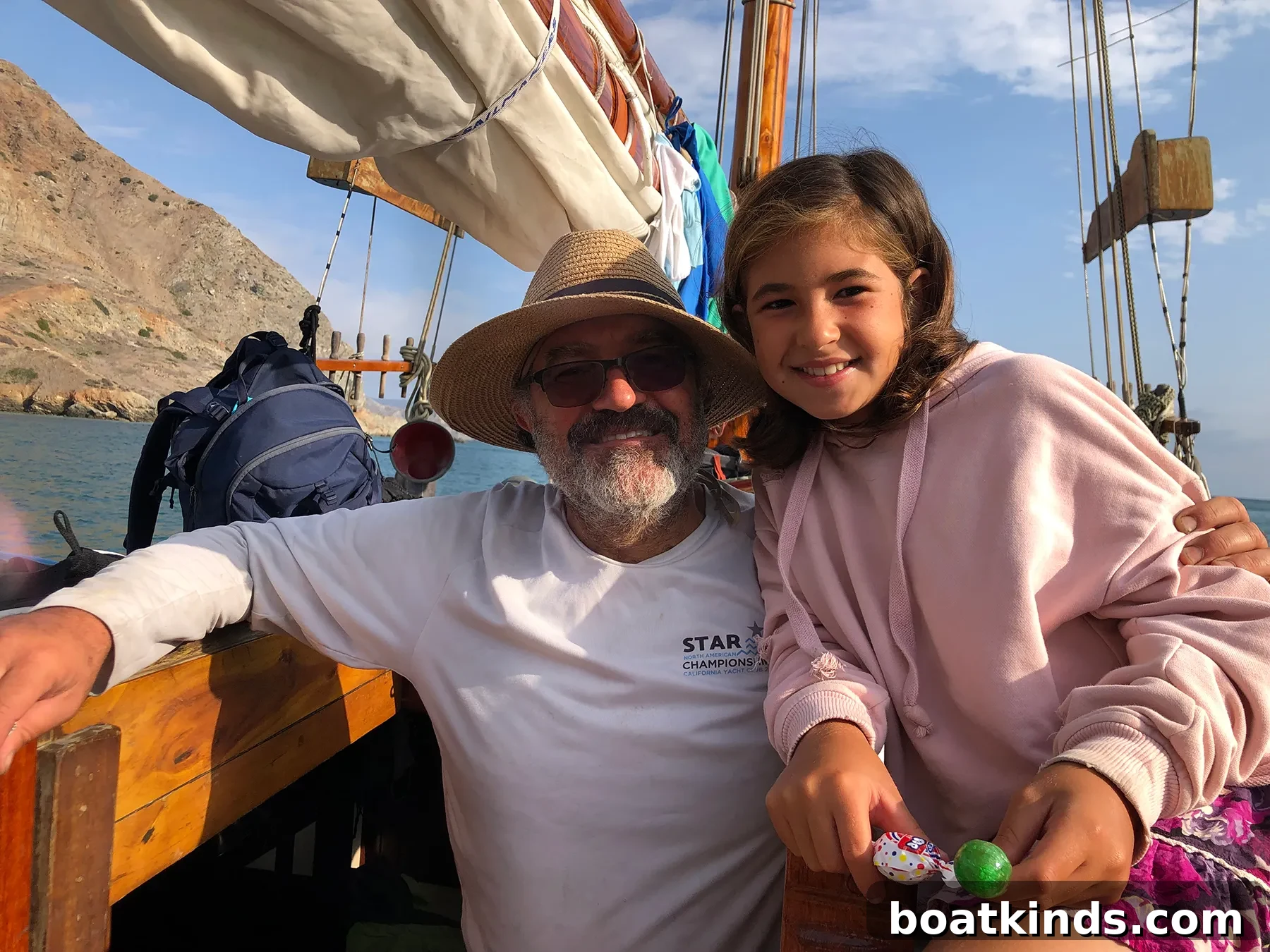
Bequia has become a family vessel for Bugacov. He sails with his four daughters, sharing his passion for sailing—his eldest sailed for UC Berkeley, and his youngest, an 11-year-old named Alexandra, races Optimists in regattas domestically and abroad. Bugacov himself has raced at the Star Worlds.
For family weekends to Catalina, Bequia is ideally suited. Her heavy displacement and full hull make the roughly 30-mile run from Marina del Rey to Isthmus Cove comfortable and steady. When conditions allow, Bugacov prefers to round the island’s northern tip to the unspoiled windward side—an extra 90 minutes under sail but worth it for the quiet beauty and a mooring in Cat Harbor.
Bugacov tries to sail Bequia every other weekend. The pandemic paused the family’s racing plans, but they intend to regroup and compete in classic yacht regattas, hoisting topsail and flying the spinnaker next summer. He also hopes to sail Bequia to the remote Channel Islands one day.
This article was originally published in the February 2023 issue.