
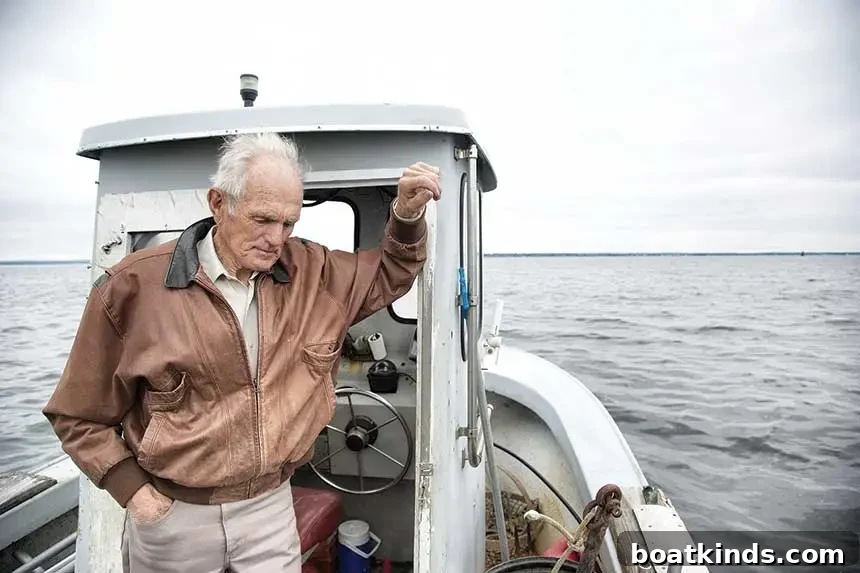
Dave Brayton carries the sea’s work in his hands. Born and raised around Narragansett Bay, he has supported himself by quahogging out of Bristol, Rhode Island, since 1958. At 83, he still heads out most days aboard Old Dog, his 23-foot Ocean Scout skiff driven by a 225-hp Yamaha outboard. The boat is a working vessel through and through: 32 years old and in Brayton’s service for 21 of them, she bears the marks of decades of tides, weather and hauling.
Brayton is among the most veteran quahoggers on Narragansett Bay, yet he keeps up with younger harvesters without complaint. For him, the work has always been straightforward: wake early, make the runs, set and retrieve the rakes, sort and sell the catch. He learned the trade on Prudence Island where he and his four brothers were taught to rake quahogs by their father, who worked as a quahog dealer for two decades. Of his brothers, Brayton is the only one who turned the craft into a lifelong occupation, balancing it with duties as a minister.
On a cool morning at the Colt State Park launch in Bristol, Brayton jokes that “the work beats your face up” as he backs his trailer and slides the skiff into the bay. Sun and salt have weathered him, but his eyes remain focused and steady. The launch opens onto a tranquil stretch of water with islands punctuating the horizon—perfect conditions for the methodical work ahead.
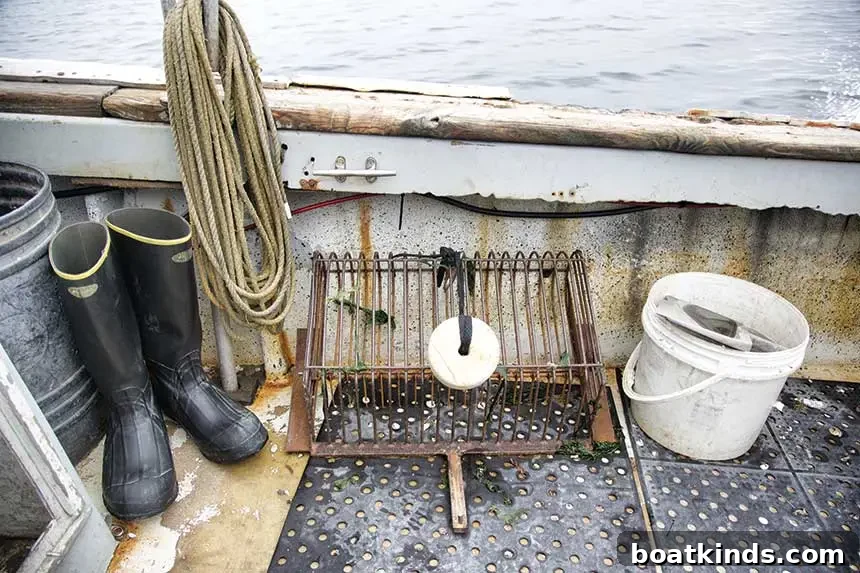
The wheelhouse of Old Dog is spare, with a stool and a GPS and nothing ornate. The deck carries only what’s needed: quahogging gear, a few leftover slipper shells and the four rakes Brayton prefers—“too many,” he admits, gathered over a long career. I sit on an overturned bucket while Brayton pilots us to the fishing grounds and explains his routine.
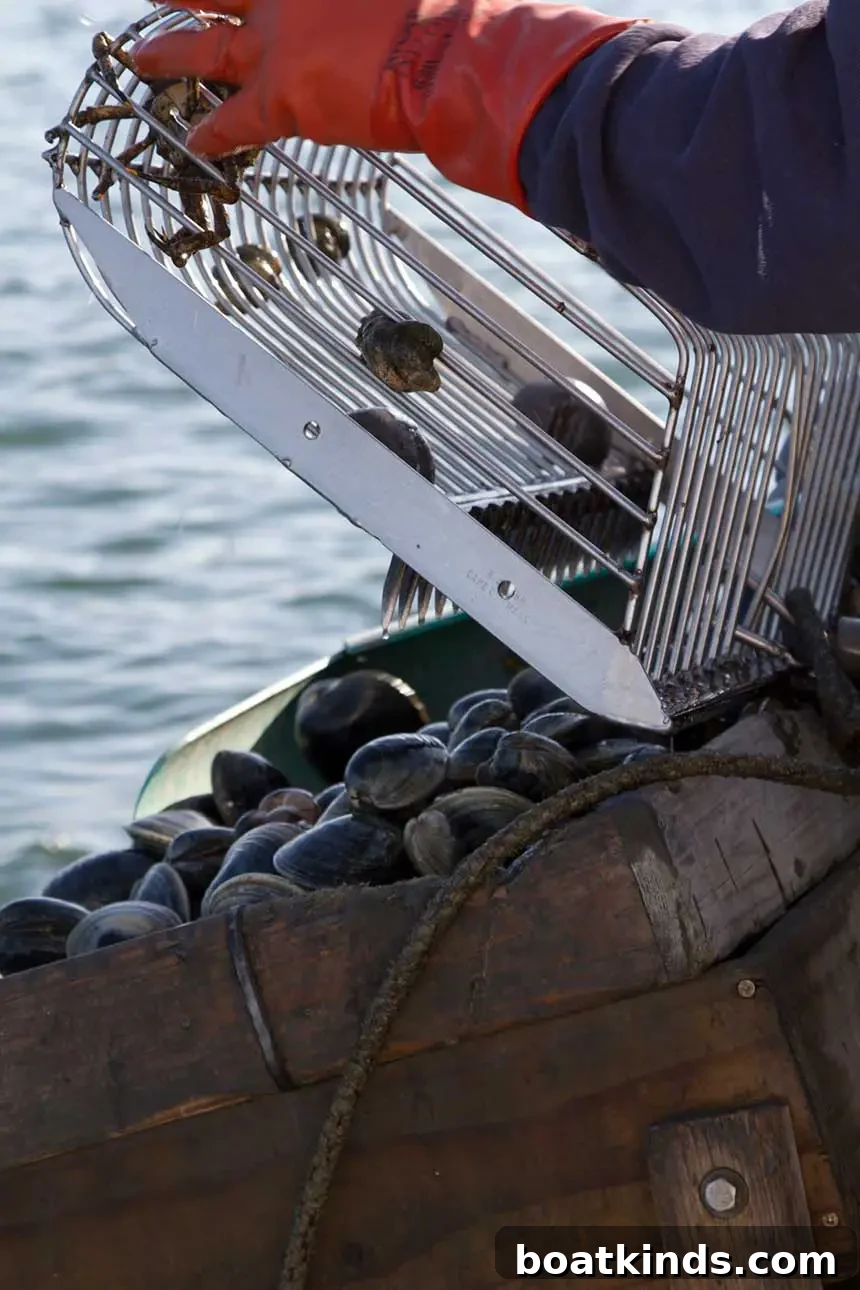
His day typically begins at 6:30 a.m. and runs about four hours. The technique he uses is bullraking: heavy metal rakes or basket attachments mounted on rods of varying length are worked through the mud in water roughly 10 to 11 feet deep to uncover quahogs. Each rake alone can weigh more than 20 pounds empty; when loaded with mud and shell they become much heavier. Brayton works one rake at a time, using an up-and-down motion to coax clams into the basket, then he sorts each drag on deck by size—from small littlenecks to cherrystones, top necks and the largest chowder clams.
One of the most important pieces of gear aboard is the pot hauler, a powered reel that eases the strain on his back by hauling the loaded rakes to the deck. “A full rake by hand is very heavy when it’s loaded up with mud,” Brayton says. He remembers when pot haulers were illegal, when regulators feared they would clear the bay too quickly. “They thought we were going to clean out the bay, but it doesn’t make that much difference,” he says. Eventually pot haulers were legalized after many pushed for the change.
The season for Brayton never really ends. He works year-round, in all seasons, with only a small propane heater in the wheelhouse during the coldest New England winters. At low tide, when he’s not on the boat, he uses a hand digger to rake the beach. His dedication has earned him a nickname among local fishermen: “Iron Man.” He’s not sure who first used it, but he believes it also reflects his efforts to elevate the reputation of quahogging.
Quahogging’s image has shifted over the decades. Brayton recalls a time when the profession carried stigma—some people associated it with drinking and poverty—and he was ridiculed for pursuing it after five years in the Marine Corps. Determined, he went out in all conditions to prove the work could provide a decent living. Today, he says the community of harvesters is different: sober, focused and passionate about the craft.
The industry itself has changed as well. From the mid-20th century to about 2000, New England—and Narragansett Bay in particular—supported many active quahoggers. In 1980, a large influx of license applicants swelled Rhode Island’s numbers to roughly 3,000, straining the resource and prompting tighter licensing rules. Today, fewer than 1,000 people hold quahogging licenses in the state, a reflection of stricter regulation and a smaller, more controlled workforce.
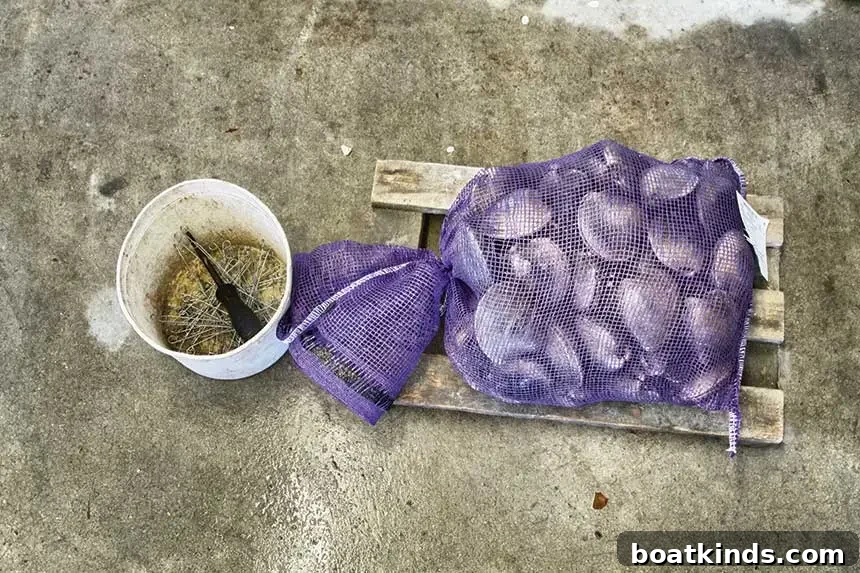
Quahoggers face ongoing pressures: environmental changes have reduced clam populations in some areas, and oyster farms have introduced new spatial competition for shallow-water habitat. Despite these challenges, Brayton believes quahogging will continue, though on a smaller scale. Economically, demand for hard-shell clams remains steady; Brayton sells his catch to a wholesaler for about 25 cents apiece, a noticeable increase from the 10 cents per pound he earned when he began his career.
At the helm of his wheelhouse, Brayton still looks entirely at home. He plans to keep going as long as he can safely manage the work and the roads that bring him to and from the boat ramp. “I’m gonna do it until I can’t, until I become a threat to the public driving my trailer around,” he says with a laugh. “I think this is a pretty good life, myself.”
This article originally appeared in the August 2019 issue.