
When a storm approaches, last-minute fixes are often too late. While you can add extra lines just hours before a blow, many protective measures must be planned and completed well in advance. Proper preparation not only helps you survive a specific storm but improves overall boating safety.

This guide outlines essential steps to prepare your boat for severe weather. Specific actions will vary by vessel type and location, but the following advice covers the most common vulnerabilities and practical solutions.
Know Your Boat
Obvious features are often overlooked until it’s too late. Scuppers, for example, are critical for draining rain and deck water. If scuppers clog with leaves or debris, an open cockpit or a boat ashore can fill with water quickly. Clear scuppers before the storm and take steps to prevent blockage during the event, especially if you’re docked near tall trees.
One simple protection is to place large screens upstream of scuppers to catch debris. Make sure the screens are large and secure so they don’t become a new obstruction. Don’t rely solely on bilge pumps: long heavy rain, combined with power loss, can deplete batteries and render pumps useless.
Ideally, a boat should have more than one bilge pump. Each pump should be on its own wiring and circuit breaker, with a protected float switch. Be cautious with modern electronic float switches that sit at bilge level; electronics exposed to prolonged submersion often fail. Inspect the bilge to ensure float switches are unobstructed and test pumps by partially flooding the bilge with a dock hose to confirm they both activate and shut off correctly.
Look for unexpected water entry points. Center consoles can have storage cavities under the deck that funnel rain into the bilge. Side-deck wells on cabin boats may trap water and channel it inside. Check transom scuppers fitted with one-way valves for debris accumulation and keep them clear so drainage remains effective.
Address built-in weaknesses before a storm. Small chocks, undersized cleats, or inadequate backing can fail under load. Backing plates should be robust—preferably heavy stainless—and deck hardware needs to be reinforced so spring lines and dock lines can be secured safely. Replace degraded hatch seals and O-rings, especially on boats with low stern freeboard, to prevent seawater intrusion under heavy waves.
Battery condition is crucial. If batteries are in doubt, replace them and consider adding deep-cycle batteries for sustained bilge pump operation. Starting batteries are not designed for prolonged deep discharge; assume shore power will be lost and plan accordingly.
Other Vulnerabilities
Wind can be as damaging as water. Remove or tightly secure canvas, sails, biminis, windshield covers, and loose windows. Orienting the boat to take seas head-on—bow into the wind and waves—often reduces stress on lines and dock structures. If your stern faces an open fetch, try to reposition so the bow faces the oncoming waves.

Consider vulnerable through-hulls, exhaust outlets, and engine risers. Waves and storm-driven currents can force seawater up exhausts and into engines. Exhaust flaps can help but age and stiffness reduce their effectiveness—replace them if needed. For large through-hulls, some owners use temporary plugs or close internal valves; if you do this, leave a clear, visible reminder at the helm that plugs or valves are in place to avoid catastrophic engine startup errors.
Tie ’er Down
Use strong, elastic nylon lines in good condition—avoid brittle or low-stretch materials like polypropylene. Double or triple lines where possible, and protect lines with adequate chafing gear. Chafing protection should allow water to penetrate and cool the rope; rugged fabrics like folded denim or similar materials are commonly effective. Secure chafing gear to prevent slipping and consider multiple sections of wear points so you can let out line if one area wears through.
Secure lines to the strongest fixed points on the dock—pilings are preferred. Cleats bolted to planks without proper backing can fail. Verify that dock cleats are well-backed through a series of stringers or directly through pilings. Floating docks can be very effective in protected areas, but ensure cleats and attachments are robust enough to handle surge and wind loads. In high surge areas, consider devices that allow lines to roll up and down the piling, enabling the boat to ride the tide while absorbing shock.
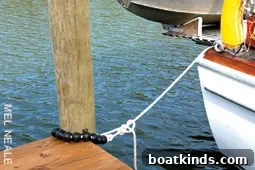
Spring lines are essential to limit fore-and-aft movement. Practice rigging spring lines at your dock so you can secure them quickly and correctly when a storm warning comes.
Be mindful of neighboring boats. Loose debris on nearby decks becomes airborne projectiles in high winds. If you find unsecured vessels or weakened lines on adjacent boats, notify marina staff or owners so they can be secured. Marinas often have policies allowing them to secure unattended boats in emergencies and may bill the owner afterward.
Boat Lifts
Many boats in lifts are damaged during storms. Ensure lifts are high enough to clear predicted surge and that the boat is positioned to drain through its scuppers. Waterlogged boats on lifts can become heavy enough to break transoms or collapse the lift structure. Even with a lift, blocked scuppers or bilge pump failure can let rainwater cause severe damage. If your lift cannot guarantee safety, consider hauling ashore.
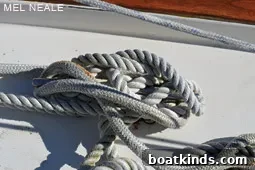
Safe Ashore?
Hauling a boat and storing it ashore can reduce some storm risks, but it introduces others. If hauled, secure the boat to ground anchors at multiple tie points—four or more are recommended—and remove loose gear, canvas, and sails. If stored on jack stands or a trailer, inspect stands, chocks, chains, and ground conditions carefully. Soft or sloping ground can undermine supports. If scuppers or through-hulls are open, think through whether plugs should be left in or removed based on local surge risk—recent storms have shown both approaches carry trade-offs.

Haulout yards may be full before a major storm and can require non-refundable deposits. If you plan to haul, make reservations early and confirm the yard’s securing procedures.
Insurance and Documentation
Read your insurance policy carefully long before a storm. Policies vary: study deductibles for named storms, coverage for salvage and wreck removal, liability for damage to other vessels, and requirements the insurer imposes to mitigate or report damage. Failure to follow required pre-storm steps or post-storm notifications can jeopardize a claim. Compare low-cost policies to more comprehensive coverage and consult your broker or underwriter if terms are unclear.
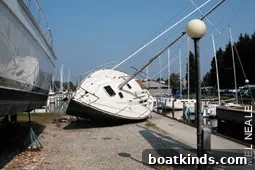
Coverage for pollution cleanup (fuel spills) and wreck recovery can be costly if omitted. Make sure you understand your responsibilities and any insurer-mandated actions to protect the boat and the environment.
Preparing for a storm reduces anxiety and limits damage. This article highlights major areas—drainage, bilge systems, securing hardware, dock lines, lift safety, ashore precautions, and insurance—that every boater should review before severe weather. While no single checklist covers every scenario, addressing these core items will significantly improve your boat’s chances of surviving the big one.
January 2014 issue