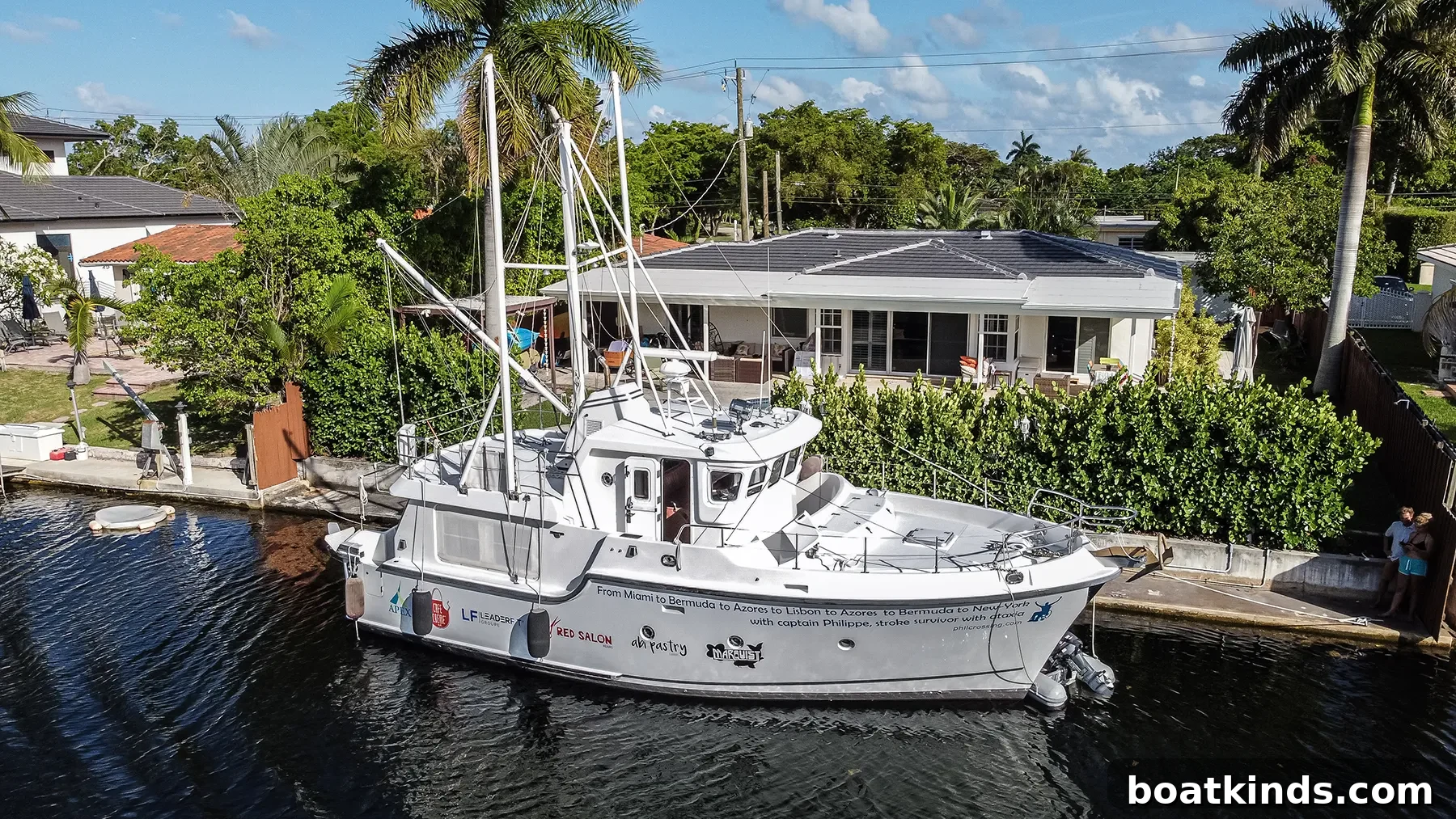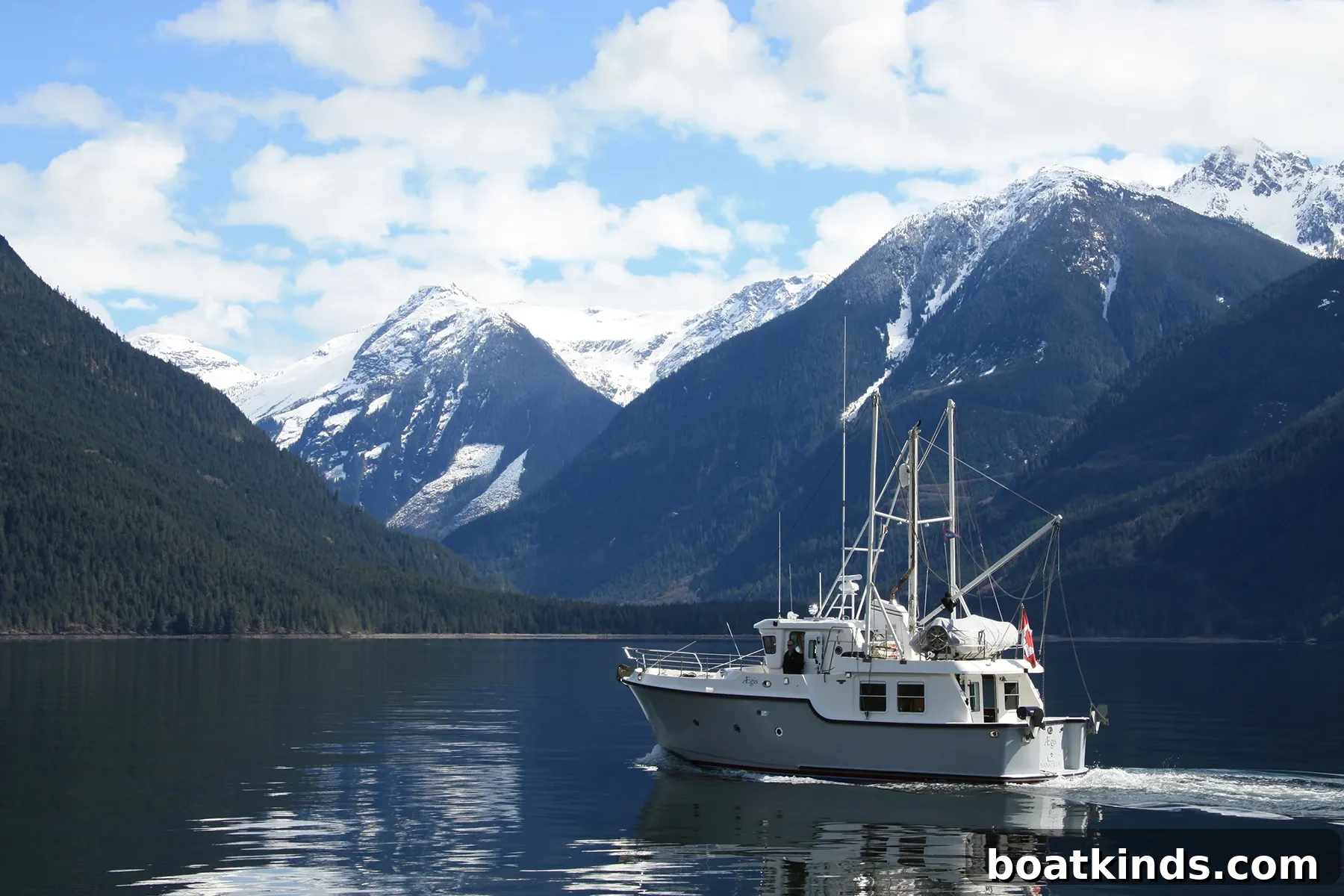
A decade ago, extended ocean passages were most commonly the realm of retirees: couples with time, savings and the health to spend months or years aboard exploring distant horizons. Today that profile has broadened dramatically. Jenny Stern, marketing director for Nordhavn, says the roster of owners making serious ocean crossings now includes a much wider range of ages and life stages.
“It used to be a retired couple who had time to go exploring. It was like a sweet spot, age 55 to 65,” Stern explains. “Now, we have a couple in their 80s who crossed the Atlantic, and we have people just turning 40 with young kids doing it.”
More than 160 Nordhavns have now completed ocean crossings, some owners testing the experience for the first time and others repeating long global passages. Interestingly, it isn’t only the largest models doing the heavy lifting; smaller, owner-operated yachts such as the Nordhavn 46 are believed to account for many of the most frequent crossings. Improvements in onboard communications and navigation gear have increased confidence for first-time ocean voyagers, and the pandemic spurred a stronger desire among many boaters to seize opportunities immediately rather than postpone plans.
“People seem less willing to wait until tomorrow,” Stern says. “They want to use the time they have now to get out and explore.”
Donna Trigg and Phil Jones
Donna Trigg and her husband, Phil Jones, didn’t start out as bluewater cruisers. Both grew up in Australia, where sailing and waterskiing were childhood activities, but they had not set out on extended cruising until buying a Nordhavn 57 they named Beyond Capricorn 1.
The idea of ocean passages came from Jones, who had spent 30 years in the oil business overseeing tows and large offshore movements. To nudge Trigg toward the idea of buying a boat, he gave her the book Honey, Let’s Get a Boat about cruising America’s Great Loop—an amusingly inexpensive purchase that ultimately led to a much larger investment. The couple decided they wanted to go farther than the Loop and found an N57 in Turkey. They spent 15 months there refitting the yacht and learning her systems before heading west.
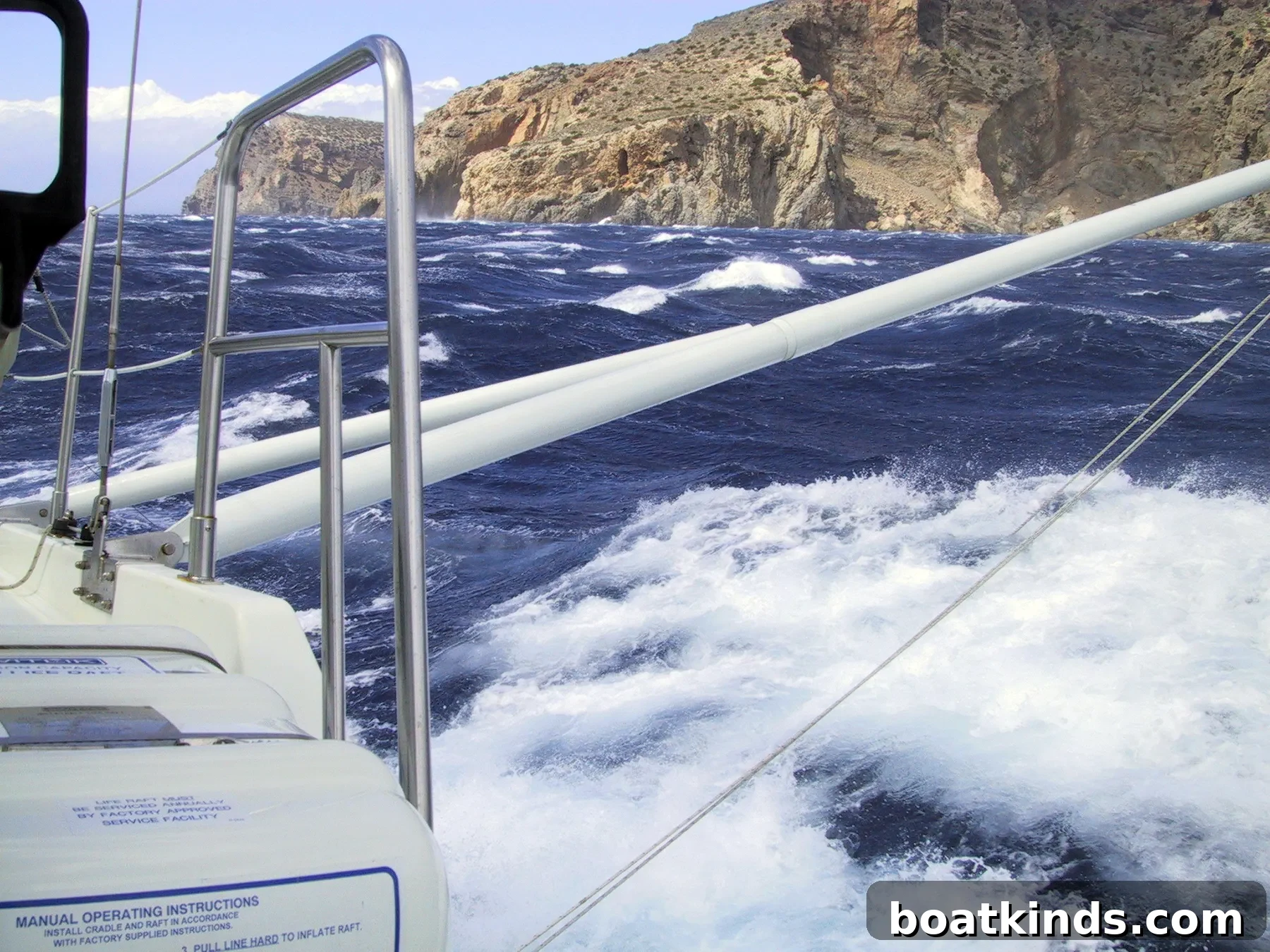
Their first major crossing, from Turkey to Croatia, proved harrowing. At that time boats leaving Turkey could not enter Greece, so there was no option but to keep moving. A six-day passage included a severe weather event on day three. They navigated around islands, lost their navigation lights at one point and later anchored to make repairs, only to have the wind shift and push them off anchor in winds over 40 knots. The vessel rolled in a heavy swell and interior items went flying.
Rather than quitting, the couple emerged more confident in their teamwork. They continued cruising the Mediterranean, then sailed from Gibraltar to the Canary Islands, on to Cape Verde, and after a long 12-day leg reached French Guiana. From there they moved to Trinidad and then up through the Caribbean to the Bahamas. After roughly 18,000 nautical miles and nearly four years living aboard, Trigg says they have no regrets.
“We’ve had an amazing almost four years living aboard,” she says.
The Chizik Family
Stu and Dominique Chizik planned a coastal lifestyle when they upgraded from lake boating in Canada to a Nordhavn 46. Their intention was to find a boat on the West Coast of the Americas and cruise locally, but chance led them elsewhere. The N46 they found in 2021, Lady Grey, happened to be in Oahu, Hawaii. After five months of repairs and system training, they made their first overnight ocean passage: a 14-day, 2,560-nautical-mile crossing to Ensenada, Mexico.
Originally, the plan had been for their 11-year-old daughter, Lillian, to stay with her grandmother for the passage. A last-minute change meant Grandma came out to the boat instead, and the family crossed together. Lillian was understandably nervous at first, but soon settled in.
The family’s decision to commit to cruising was influenced by a sobering near-miss on winter highways in Canada. The couple learned about a driver stranded for days in a ditch with no cell signal—an episode that made the relative safety of satellite communications at sea more appealing than some of the risks they faced on land. They sold part of a business and a second lakeside home to fund the purchase and the transition to full-time cruising.
Their Pacific crossing was largely uneventful, apart from losing a freezer on day four and having to rely on nonperishable meals. As of early August they were settled in Puerto Vallarta for the school year, planning to transit the Panama Canal and explore the Caribbean, with the Azores and further travels a possibility in the years ahead.
“I’ve wanted to sail around the world since I was a little kid,” Stu says. “I just didn’t know I would be traveling on a big motorboat. I am much more comfortable than I thought I would be.”
Philippe Guglielmetti
Former Arcoa shipyard CEO Philippe Guglielmetti always enjoyed Mediterranean cruising and long harbored a desire to cross the Atlantic. After suffering a stroke in 2015 that left him with a progressive condition and reliant on a wheelchair, he decided to undertake the journey while he still could.
Guglielmetti purchased a Nordhavn 40, named Embracing Life, and departed Miami bound for Tarragona, Spain, captaining the boat himself with a small crew. The crossing was notable for its challenges: the second half of the voyage—some 18 days at sea—was completed without functional stabilizers. Despite that, he managed long watches in the wheelhouse from his wheelchair, using an adapted, lengthened joystick to steer through the autopilot system and even performing watches lasting up to 12 hours.
When stabilizers failed, the crew made accommodations so he could lie flat in the salon instead of remaining confined in his chair during rough motion, demonstrating resourcefulness and determination. The experience strengthened his enthusiasm for future voyages.
“I am more than happy: I am proud,” Guglielmetti says. “When I came back from my trip, I told my wife, ‘Let’s go to Hawaii through the Panama Canal.’ I don’t know if I will cross again, but I love boating.”
This article was originally published in the October 2022 issue.