
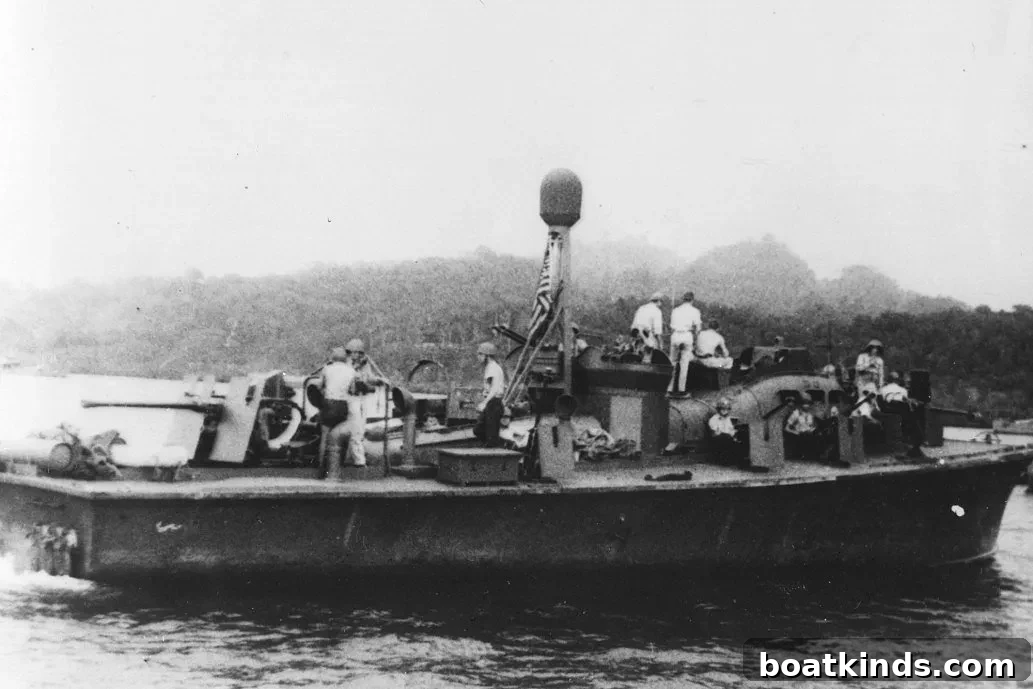
Discovery in the Harlem River: Could This Wreck Be JFK’s PT-59?
PT-109 is the best-known torpedo patrol boat associated with John F. Kennedy during World War II. The vessel sank after being struck by a Japanese destroyer while Kennedy was in command, an episode that has long been part of his wartime legacy. Less widely recognized but equally intriguing is PT-59, another patrol boat tied to Kennedy’s wartime service. Recent reports that the remains of a patrol boat found in the Harlem River may be PT-59 have revived public interest in the fate of these small, fast Navy craft and the men who commanded them.
The wreckage was revealed in sediment during a construction project intended to protect a railyard from flooding. Workers uncovered portions of a hull and other structural elements buried in mud, prompting questions about the vessel’s identity. Local authorities and preservation specialists have begun preliminary efforts to recover additional parts of the boat and to determine whether it can be definitively identified as PT-59.
Postwar Life of a Military Surplus Vessel
After World War II, many military vessels, including patrol torpedo boats, were declared surplus and sold into civilian hands. According to accounts connected with the recent discovery, PT-59 was reportedly sold and later used as a fishing boat. Civilian reuse of former military craft was common in the postwar era; hulls were repurposed for fishing, recreation, or even as stationary houseboats.
One particularly compelling anecdote comes from a former schoolteacher who says he lived aboard the patrol boat in the early 1970s. While living aboard, he reports having found a hull identification number that he believes ties the vessel to PT-59. Such firsthand accounts can be valuable leads, but they need to be corroborated by physical evidence and archival documentation before a positive identification can be made.
How Wreck Identification and Provenance Work
Identifying a submerged or partially buried vessel is a careful, methodical process. Investigators typically look for hull numbers, construction stamps, manufacturer plates, or other unique identifiers that can be matched to shipyard records and naval registries. Photographs, maintenance logs, purchase and sale records, and testimony from former owners or crew members are also used to build a chain of provenance.
When artifacts or structural components are recovered, conservators document, stabilize, and analyze materials to determine age, construction techniques, and any unique features that might confirm a vessel’s identity. In many cases, a combination of physical evidence and historical records is necessary to reach a reliable conclusion.
Conservation, Recovery, and Legal Considerations
Efforts to recover an historic vessel must balance the desire to preserve heritage with practical and legal constraints. Environmental regulations, property rights, and local preservation statutes all play a role in how and whether a wreck can be excavated or removed. Additionally, once recovered, fragile wood and metal require careful conservation to prevent rapid deterioration after exposure to air.
Local agencies, historical societies, and maritime archaeologists often collaborate on such projects. Their work includes documenting the find, conducting controlled recoveries if appropriate, and cataloging any artifacts. Public interest can be strong for vessels associated with well-known historical figures, so transparent methodology and adherence to conservation best practices are crucial.
Next Steps and Ongoing Investigations
Authorities and maritime specialists are reported to be working to recover more of the vessel and to assemble the evidence needed to establish provenance. Confirming a direct link to PT-59—and through that, any association with John F. Kennedy—will require both physical markers from the wreck and corroboration from archival sources.
Until conclusive identification is made, the discovery stands as a reminder of the many layered stories hidden beneath urban waterways: military surplus repurposed for civilian life, decades of local maritime history preserved in mud, and the painstaking detective work required to restore and interpret these fragments of the past. Whatever the final determination, the recovery effort underscores the importance of careful archaeological practice and thorough historical research when confronting discoveries tied to significant episodes in history.