
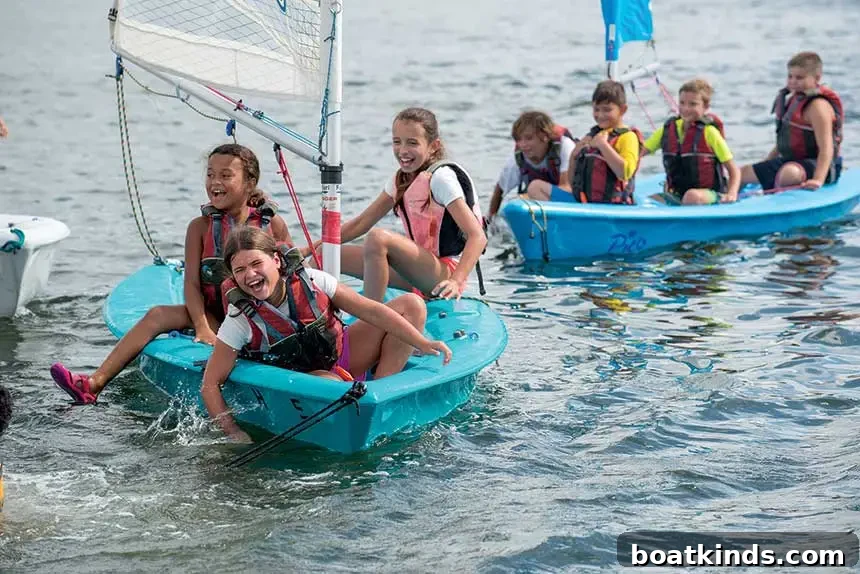
Community Boating Center: How New Bedford’s Youth Find Confidence on the Water
In 1995, social worker JoAnn Tschaen visited seven children living in a hot, crowded tenement in New Bedford, Massachusetts. Once a thriving whaling and manufacturing town, New Bedford had experienced severe economic decline. Job losses in manufacturing led to increased poverty and rising crime, and the children Tschaen saw were deeply affected by those conditions.
On her way home to nearby Fair Haven, Tschaen crossed a bridge and noticed sailboats in the harbor. That sight sparked an idea: New Bedford had one of the largest commercial fishing fleets in the country, yet many local children had no meaningful access to the water. Within three years she turned that idea into action, founding the Community Boating Center (CBC) to give neighborhood kids opportunities to learn, play and grow on the waterfront.
Andy Herlihy, who grew up sailing in Dartmouth, Massachusetts, was drawn to CBC because of his lifelong love of the water. In 2000 he joined the center as assistant director and spent several seasons teaching children to sail while living in a donated split-level home that remains the program’s New Bedford headquarters. He left for a time to raise a family and work other jobs, but the center stayed on his mind. In 2012 he returned as executive director. Today, at 44, Herlihy leads an organization that teaches more than 2,000 kids a year and—each summer—places about 600 children on the water from two shoreline locations.
CBC offers far more than a traditional summer sailing program. Its curriculum includes powerboating instruction for both youth and adults, hands-on boatbuilding, environmental education, and innovative coding lessons using radio-controlled boats. The center also partners with local schools, delivering educational programs for every fourth and fifth grader in the area, connecting classroom learning with the marine environment.
Boatbuilding sessions teach geometry, fractions and applied mathematics in a context students immediately understand. “Kids see that and say, ‘That’s why I need fractions,’” Herlihy says. Staff integrate STEM concepts throughout the programs to engage learners and show how math and science relate directly to boating, navigation and conservation.
The organization operates with a core team of 12 senior staff, but its junior instructor program is the engine that keeps everything running. Each summer, about 45 junior instructors—many of them former students who grew up in the CBC pipeline—supervise children on the water. The fleet now includes roughly 100 boats, with Bahias, 420s, Picos, Sonars, rowboats and motorboats available for instruction and free play.
“There’s one instructor for every four to five kids,” Herlihy notes. The center has intentionally moved away from single-handed boats like Optis to encourage teamwork and shared experiences: kids often sail together, sometimes with an instructor aboard, giving them social interaction as well as hands-on learning.
Referral networks help bring children to CBC. Social workers, police officers and community advocates play an important role identifying youngsters who would benefit from a structured summer activity, and word of mouth keeps families connected to the program. New Bedford students are transported to the waterfront location, where the center provides free breakfast and lunch—meals that, for some children, may be their healthiest of the day.
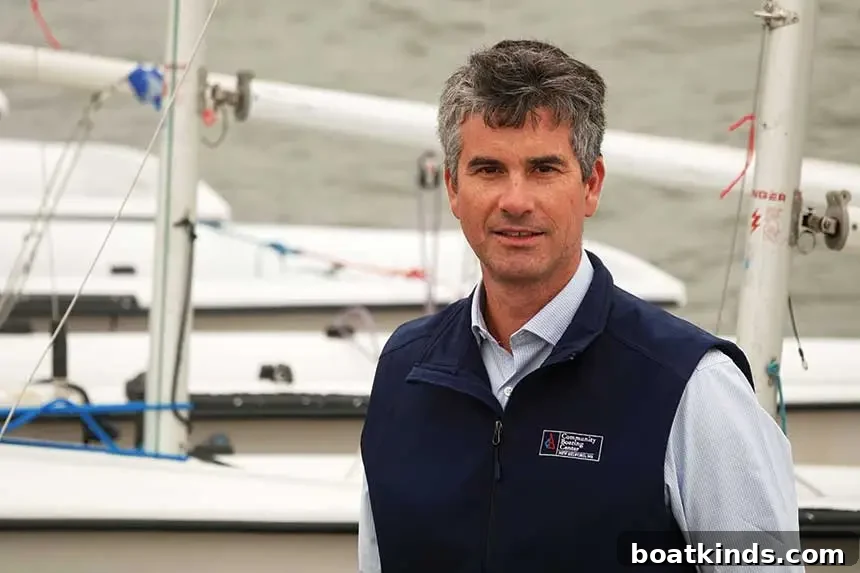
The program offers clear pathways for growth: a child can progress from participant to apprentice, then to junior instructor and ultimately to a paid adult instructor position. “We have 8- and 9-year-olds who talk about how many years until they get to be junior instructors,” says Andy Chin, CBC’s director of training for the past three years. This progression fosters responsibility, leadership and long-term engagement with the marine environment.
At its core, CBC aims to get kids on the water and let them discover what they enjoy. “We have kids who just like to sit on the bow and drag their feet through the water, and that’s fine by us,” Herlihy says. The center uses boating as a tool to push young people gently out of their comfort zones, build self-confidence and expand horizons—helping them explore possible future pathways whether or not they pursue maritime careers.
Participation helps children learn both preferences and limits. Some students discover a passion for boatbuilding; others try it and decide they never want to pick up a hammer again. “That’s just as valuable as knowing what they want to do,” Herlihy observes. The program’s emphasis on safety, fun and education creates an environment where young people can experiment and learn without fear of failure.
Now in its 21st season, the Community Boating Center has put an estimated 15,000 children on the water. The organization’s combination of accessible waterfront programming, STEM-based learning, hands-on boatbuilding and a strong mentorship model illustrates how community-focused boating programs can transform lives—offering safe recreation, meaningful skill development and a sense of belonging to kids from all socioeconomic backgrounds.
This article originally appeared in the July 2019 issue.