
Federal Government Declares a Dozen Historic Lighthouses Excess Property and Offers Transfers
When Race Rock Light emerges on the horizon during a Long Island Sound lighthouse cruise, local historian Robert G. Müller sees more than a picturesque Gothic Revival keeper’s house. He sees 132 years of maritime history: sailors warned away from jagged ledges, the flash of a fourth-order Fresnel lens first lit in 1879, and the lives of keepers and their families who tended the light through decades of harsh weather and isolation.
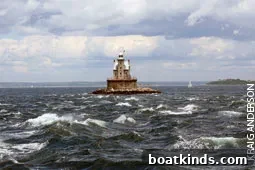
Müller knows the stories tied to Race Rock: ships that ran aground before the light was built, the extraordinary engineering required to erect a tower on a boulder-strewn rock in The Race, and the human cost of construction — including an early explosion aboard the steamer Wallace that killed the engineer and two workers. Race Rock is one of a dozen historic lighthouses recently declared excess federal property by a federal agency and offered for transfer.
On June 7, the government announced it would transfer ownership of these properties at no cost to eligible recipients: government entities, nonprofit corporations, historic preservation organizations, or community development groups that demonstrate the capacity to rehabilitate and maintain the structures. The Coast Guard says it will continue to operate and maintain the navigational aids themselves, while responsibility for the brick-and-mortar structures and surrounding land would pass to new stewards.
“The primary reason many of these lights are being listed is deterioration,” explains a Coast Guard cultural resources specialist. “Budget pressures mean maintenance funds have been reallocated, and many of these properties need new stewards who can secure resources for restoration and allow appropriate public access.” Transfers require recipients to commit to rehabilitation and to keep the sites available for public visitation. If a suitable nonprofit or government entity does not step forward, the properties will be offered at auction to the highest bidder. Even in that case, officials expect prospective buyers to demonstrate the ability to restore and maintain the historic structures and to obtain necessary licenses and permits.
Auctions and transfers of lighthouses have produced a range of outcomes. In 2007 the 14-foot Bank Lighthouse on Delaware Bay sold at auction for $200,000 to Nevada attorney and businessman Michael C. Gabriel, who planned a private summer retreat and proposed an on-site microbrewery to help offset upkeep costs. Other properties have become bed-and-breakfasts, museum sites, or volunteer-run historic attractions.
The DeTour Reef Light in Michigan provides a recent example of community-based stewardship. Owned by the DeTour Reef Light Preservation Society after two decades of lease arrangements with the Coast Guard, it now hosts volunteer keepers who act as docents, custodians and gift-shop managers. The keeper’s house is restored with period and modern conveniences — a 1931 electric range, refrigerator, coffee maker, and a modern bathroom with purified hot and cold running water — while maintaining the historic character of the structure. As with many offshore lights, the site is remote and exposed to severe weather: visitors and volunteers have watched waves rise to the second-story windows during storms.
Since the transfer program began in 2000, the Coast Guard has divested roughly 60 to 80 lighthouses, with more properties expected to be evaluated for transfer. That opportunity has attracted enthusiasts and investor groups, but prospective buyers should be warned: purchasing the lighthouse is only the start. Maintenance, restoration and logistics often far exceed the purchase price.
Bob Muller of Brunswick, Maine, who led an internet-based community effort to buy Ram Island Ledge Lighthouse, describes the true costs: “Buying the lighthouse is the least of your cost.” His group raised funds from members who paid to participate in the project, intending to install environmental sensors and streaming video so supporters could experience the site remotely. They ultimately lost the auction to another buyer. Muller estimates renovation costs for many automated lights at half a million to a million dollars, owing to decades of neglect, vandalism and removal of fixtures since automation in the 1970s. Common problems include guano accumulation, broken windows, stripped interiors and the need for major structural and mechanical repairs.
Logistics add another layer of expense. Transporting building materials, contractors and supplies to offshore towers is complex and expensive, particularly for structures located miles from shore in difficult seas. That reality discourages some potential stewards, even when interest in preservation is high.
Race Rock Light, sought by preservation advocates, illustrates both the appeal and the challenge. Located at the eastern end of Long Island Sound, The Race is famous for powerful, unpredictable currents and significant depth variation: the seabed drops from around 75 to 80 feet near the light to depths approaching 300 feet nearby. When tidal flows funnel through the gap, eddies, whirlpools and violent rips create extremely hazardous conditions for boats. Mariners and tour operators describe The Race as a place that can “get nasty,” which complicates access for restoration crews and public visits.
Preserving these lighthouses requires realistic planning, sustained funding, and a commitment to public access and historic integrity. For communities and organizations ready to take on that responsibility, transfers represent an opportunity to save maritime landmarks, interpret local history, and provide unique cultural and tourism assets. For others, the option to bid at auction remains, but with the clear caveat that stewardship and restoration demand long-term investment and careful logistical planning.
See related articles:
– Station acquired in 2006 is a work in progress
– 12 properties with water views
This article originally appeared in the December 2011 issue.