
Peter and Norma Stanford: Saving New York’s South Street Seaport
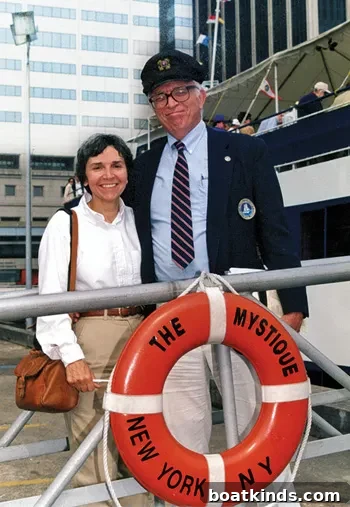
In 1967, New York City nearly lost the last vestiges of its historic maritime district in lower Manhattan. Peter and Norma Stanford left their uptown jobs and devoted themselves to founding the South Street Seaport Museum, rescuing dozens of historic vessels, buildings, and maritime artifacts from demolition or commercial redevelopment. Their work preserved an 11-block historic district that once formed Manhattan’s oldest neighborhood, with views over the East River and the Brooklyn Bridge.
Vision and Preservation
Jonathan Boulware, executive director of the museum, recalled Peter as “a persistent man, endlessly insisting that the apparently impossible could be achieved.” It was the Stanfords’ vision in the 1960s that led to the rescue and restoration of key structures in the Seaport, including the historic counting houses of Schermerhorn Row. Their efforts also built the fledgling museum’s membership to more than 20,000 within five years, bringing public attention and resources to maritime preservation in New York City.
Maritime Roots and Early Life
Peter Stanford grew up “messing about in boats” around Brooklyn and Long Island Sound. A Navy veteran and Harvard graduate, he sailed across the Atlantic as mate on the gaff cutter Iolaire to attend King’s College in England. During his time in the U.K., he worked in a London bookshop, pursued naval research at the National Maritime Museum, and competed in numerous bluewater races. Those experiences fed a lifelong commitment to seamanship, maritime history, and public education about the sea.
From Private Sailor to Public Advocate
Back in New York during the 1950s and 1960s, Stanford worked in market research and advertising while continuing to sail—often on his 25-foot sloop Whisper between Nova Scotia and Georgia. In 1964, he and Norma bought the 43-foot schooner Athena. That vessel later became part of the Seaport’s revival through sail training programs and public engagement, demonstrating how historic ships can serve both educational and community purposes.
Rescue of Iconic Ships
Beyond buildings and neighborhoods, the Stanfords played a central role in saving several notable vessels. Peter lent his energy and voice to efforts that preserved the schooner Ernestina (now Ernestina-Morrissey), the barque Elissa, the Liberty ship John W. Brown, the lightship Ambrose, the brigantine Black Pearl, the fishing schooner Lettie G. Howard, and the large sailing ship Wavertree. These rescues helped ensure that future generations could experience real examples of historic working ships.
Leadership and Scholarship
Although Peter stepped down as president of the South Street Seaport Museum in the 1970s, he remained involved in the district’s development as it grew into a cultural and tourist destination centered on the old Fulton Fish Market. He later served as president of the National Maritime Historical Society and edited its journal, Sea History. A prolific writer, Stanford authored hundreds of magazine articles and several books. Peter and Norma’s final joint book, A Dream of Tall Ships, was published in 2013.
Community Work and Activism
Peter Stanford’s contributions extended beyond maritime preservation. During the civil rights era, he marched with Dr. Martin Luther King and was jailed for helping to integrate a segregated park in Maryland, reflecting a commitment to social justice. At South Street, he helped create a marine-engine repair school aimed at offering practical training and a new start to former teenage drug users, connecting maritime heritage to vocational opportunity and community rehabilitation.
Legacy
Jonathan Boulware observed that without Peter and Norma Stanford, “we would have nothing left to preserve.” Their combined insistence on saving the Seaport’s buildings and ships placed South Street back at the forefront of historical, cultural, and educational activity in New York City. Peter Stanford’s persistence, scholarship, and hands-on leadership left a lasting imprint on maritime heritage, museum practice, and community programs tied to the sea.
Peter Stanford died March 24 at the age of 89. He is survived by Norma; his first wife, Eva; his children; and five grandchildren.
This article originally appeared in the June 2016 issue.